Antitubercular Drugs: Classification, Mechanism, Uses & Side Effects
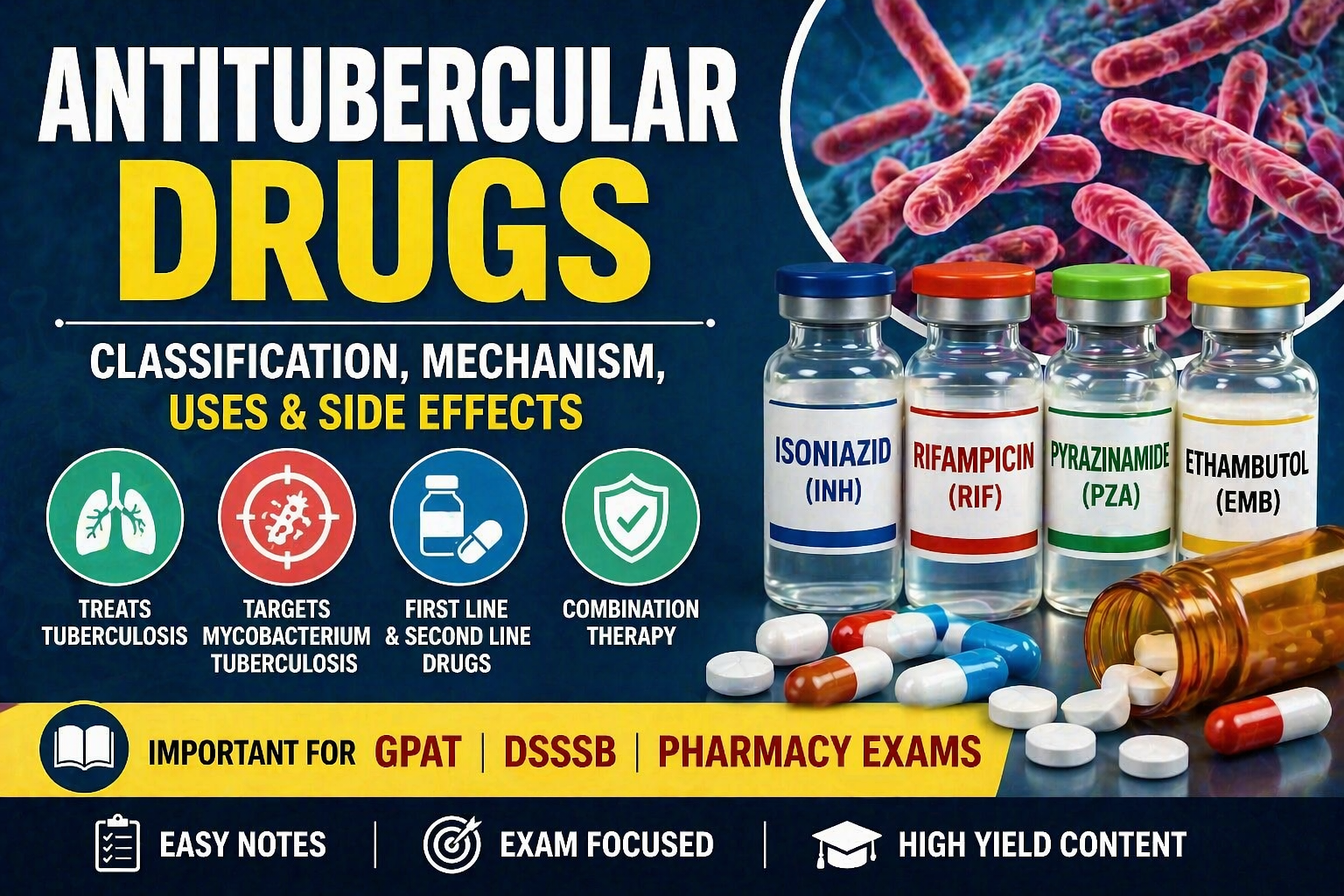
Antitubercular drugs are medicines used to treat tuberculosis (TB), an infectious disease caused mainly by Mycobacterium tuberculosis. These medicines are an important topic in pharmacology for B.Pharm, D.Pharm, GPAT, and pharmacist recruitment examinations. Understanding the classification, mechanism of action, therapeutic uses, and adverse effects of antitubercular drugs helps students prepare for examinations and build a … Read more
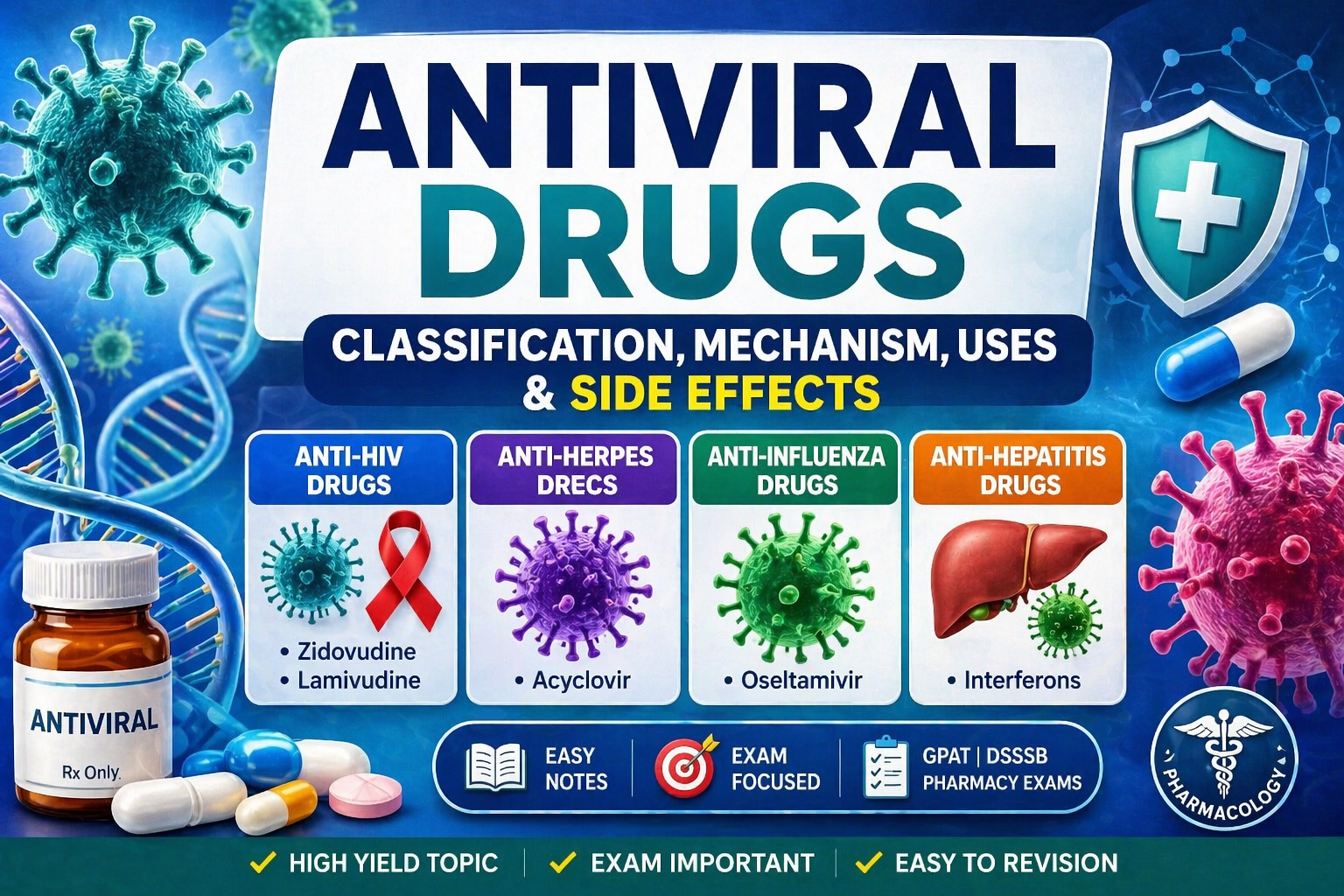
Top 30 MCQs on Antiviral Drugs with Answers & Explanation

Antiviral drugs are an important topic in pharmacology for B.Pharm, D.Pharm, GPAT, and pharmacist recruitment examinations. Questions commonly cover antiviral drug classification, mechanisms of action, therapeutic uses, adverse effects, and differences between drugs used for various viral infections. In this article, you will find 30 important multiple-choice questions on antiviral drugs, along with correct answers … Read more

Antiviral Drugs: Classification, Mechanism, Uses & Side Effects

Antiviral drugs are medicines used to prevent or treat specific viral infections. They work by interfering with different stages of the viral life cycle, such as viral entry, nucleic acid synthesis, protein processing, and the release of new virus particles. Antiviral drugs are important in the treatment of infections caused by viruses such as herpes … Read more

Top 30 MCQs on Antifungal Drugs with Answers & Explanation

Antifungal drugs are important in pharmacology and are frequently studied by B.Pharm and D.Pharm students preparing for GPAT and pharmacist recruitment examinations. These drugs are used to prevent or treat fungal infections by acting on different components of fungal cells, including the cell membrane, cell wall, and nucleic acid synthesis pathways. In this post, you … Read more

Antifungal Drugs: Classification, Mechanism, Uses & Side Effects

Introduction Antifungal drugs are medicines used to prevent or treat infections caused by fungi. These infections can affect the skin, nails, mouth, genital area, lungs, and other organs. Some fungal infections are mild, while others can become serious, particularly in people with weakened immune systems. Antifungal drugs work through different mechanisms, including inhibition of fungal … Read more

Top 30 MCQs on Antidiabetic Drugs with Answers & Explanation

Antidiabetic drugs are medicines used to control blood glucose levels in patients with diabetes mellitus. These drugs work through different mechanisms, including increasing insulin secretion, improving insulin sensitivity, reducing glucose production in the liver, and increasing glucose excretion through the kidneys. Understanding the classification, mechanism of action, therapeutic uses, and adverse effects of antidiabetic drugs … Read more

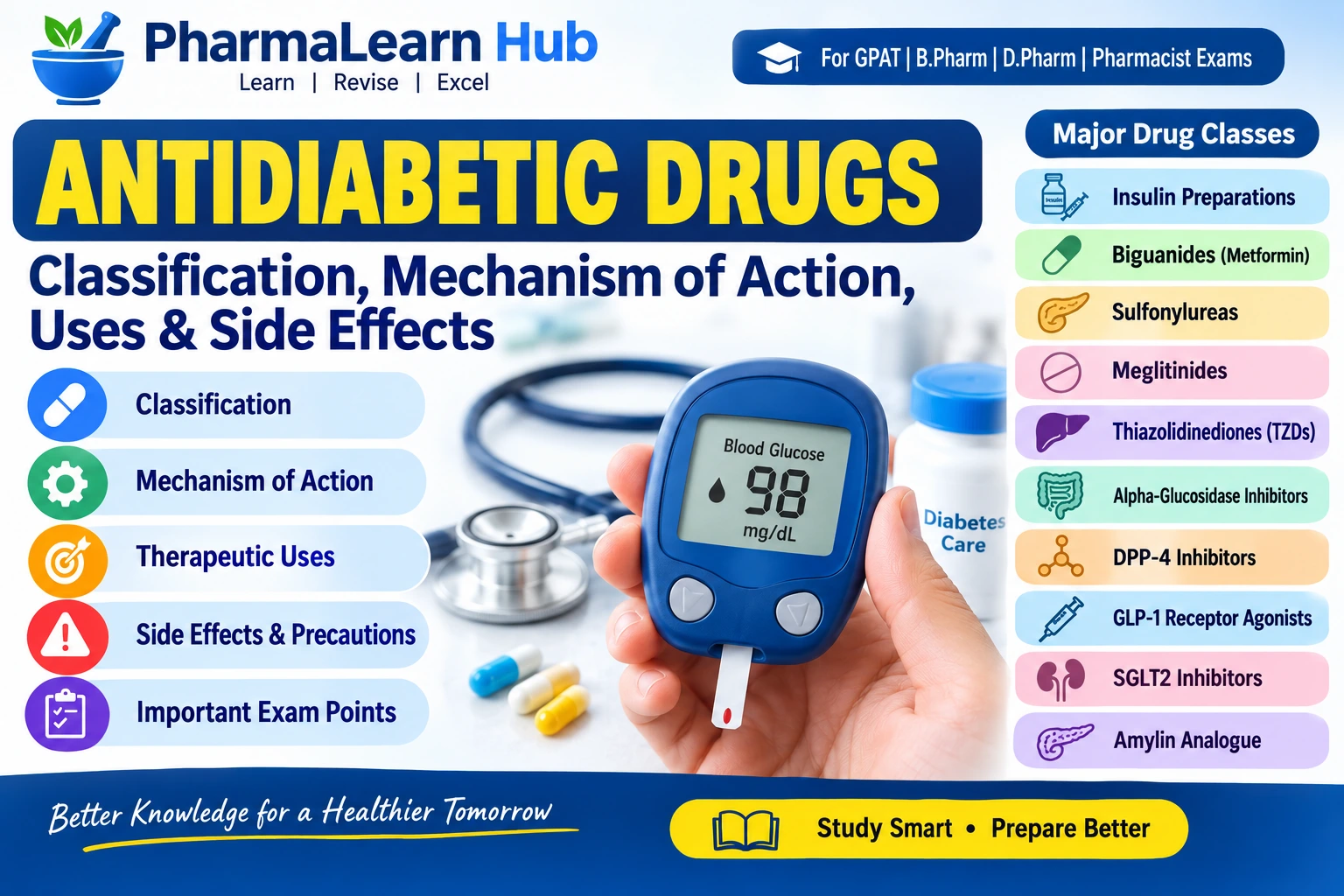
Antidiabetic Drugs: Classification, Mechanism, Uses & Side Effects

Diabetes mellitus is a chronic metabolic disorder characterised by elevated blood glucose levels due to insufficient insulin production, impaired insulin action, or both. The main types are: Type 1 diabetes, Type 2 diabetes, and gestational diabetes. If not properly managed, diabetes can lead to complications affecting the eyes, kidneys, nerves, heart, and blood vessels. Treatment … Read more

Top 30 MCQs on Antihypertensive Drugs with Answers & Explanation

Antihypertensive drugs are medicines used to manage high blood pressure and reduce the risk of complications such as stroke, heart failure, and kidney disease. Understanding their classification, mechanism of action, therapeutic uses, and adverse effects is essential for pharmacy students. These 30 MCQs on antihypertensive drugs with answers and explanations cover important pharmacology concepts for … Read more

Antihypertensive Drugs: Classification, Mechanism, Uses & Side Effects

Antihypertensive drugs are medicines used to lower elevated blood pressure and reduce the risk of complications associated with hypertension. These drugs act through different mechanisms, including reducing blood volume, decreasing cardiac output, relaxing blood vessels, or inhibiting the renin–angiotensin–aldosterone system (RAAS). For pharmacy students, understanding the classification, mechanism of action, examples, therapeutic uses, and adverse … Read more

Top 30 MCQs on Diuretics with Answers & Explanation

Diuretics are an important class of drugs in pharmacology that increase urine formation by promoting the excretion of sodium and water through the kidneys. They are widely used in the management of hypertension, edema, heart failure, and certain other medical conditions. For pharmacy students, understanding the classification, mechanism of action, therapeutic uses, and adverse effects … Read more