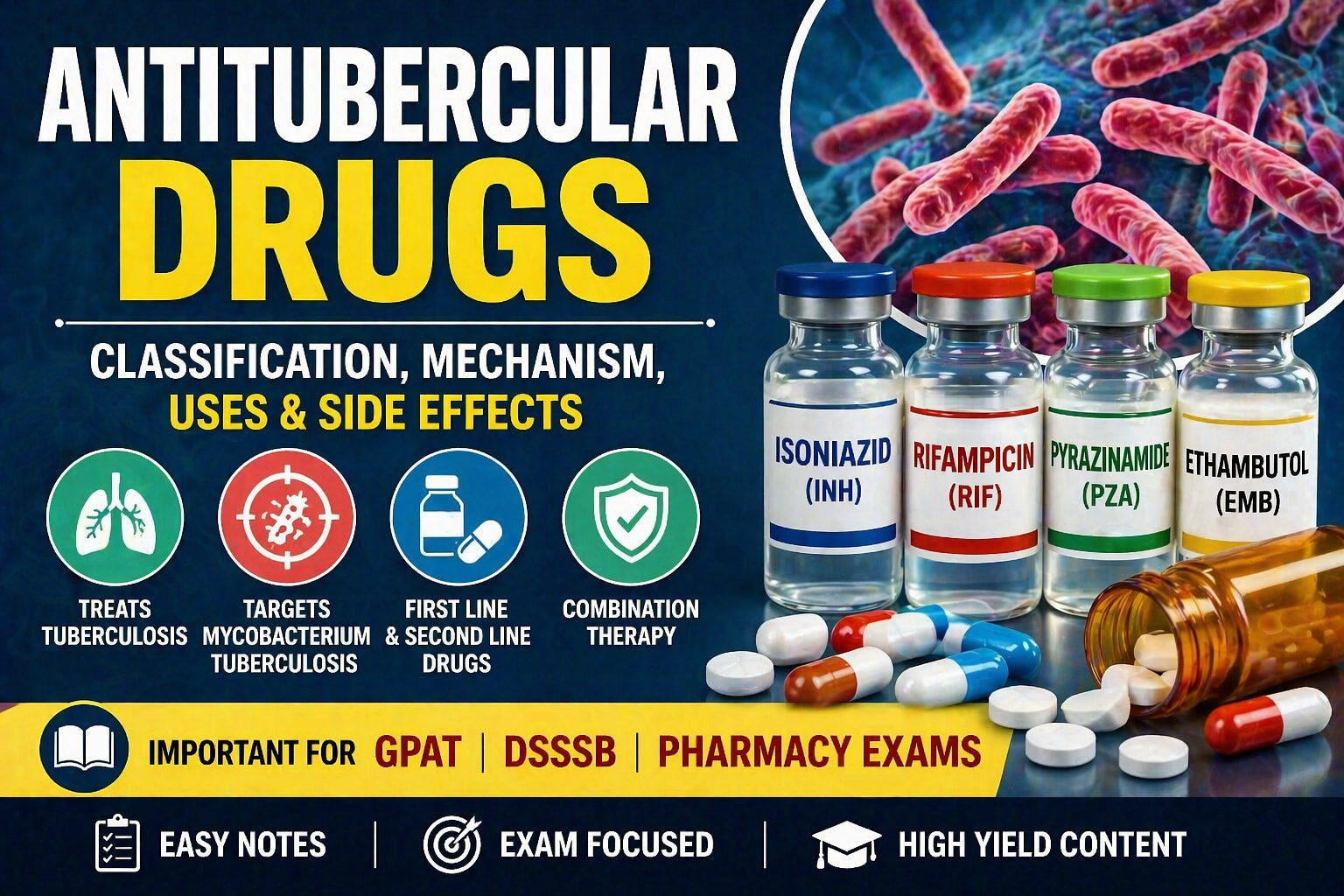
📌 Introduction
Antitubercular drugs are used in the treatment of tuberculosis (TB), a serious infectious disease caused by Mycobacterium tuberculosis. TB mainly affects the lungs but can also involve other organs.
This is a very important topic for GPAT, DSSSB, and other pharmacy exams, with frequent questions asked every year.
🔍 What is Tuberculosis?
Tuberculosis is a bacterial infection caused by Mycobacterium tuberculosis. It spreads through air when an infected person coughs or sneezes.
Types:
• Pulmonary TB → affects lungs
• Extrapulmonary TB → affects other organs
📝 Classification of Antitubercular Drugs
Antitubercular drugs are classified into:
• First-line drugs
Examples: Isoniazid, Rifampicin, Pyrazinamide, Ethambutol
• Second-line drugs
Examples: Streptomycin, Amikacin, Cycloserine
🧬 Mechanism of Action
• Isoniazid → inhibits mycolic acid synthesis
• Rifampicin → inhibits RNA synthesis
• Pyrazinamide → disrupts cell membrane
• Ethambutol → inhibits cell wall synthesis
🩺 Pharmacological Effects
• Kill Mycobacterium tuberculosis
• Prevent spread of infection
• Reduce disease progression
💊 Therapeutic Uses
Used in:
• Pulmonary tuberculosis
• Extrapulmonary tuberculosis
• Latent TB infection
🚨 Side Effects
• Hepatotoxicity (Isoniazid, Rifampicin)
• Peripheral neuropathy (Isoniazid)
• Optic neuritis (Ethambutol)
• Hyperuricemia (Pyrazinamide)
📑 Important Exam Points
• Isoniazid → most important drug
• Rifampicin → enzyme inducer
• Ethambutol → optic toxicity
• TB treatment requires combination therapy
🛑 Precautions
• Monitor liver function
• Avoid alcohol
• Use combination therapy to prevent resistance
🎯 Conclusion
Antitubercular drugs play a vital role in controlling tuberculosis. Understanding their classification, mechanism, uses, and side effects is essential for exams and clinical practice.
👉 Practice MCQs in evening post
1 thought on “Antitubercular Drugs: Classification, Mechanism, Uses & Side Effects (Easy Notes)”