Diuretics: Classification, Mechanism, Uses & Side Effects
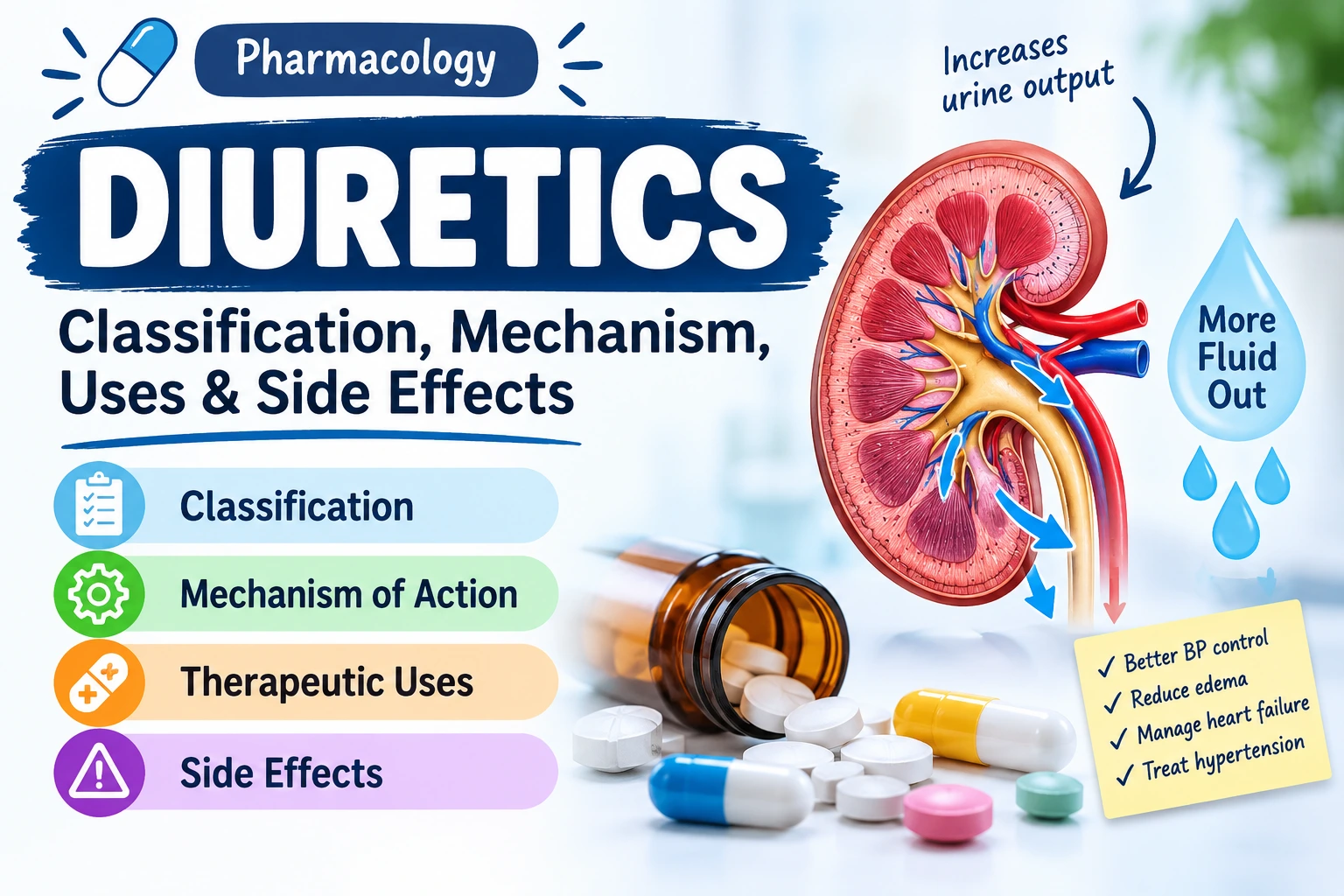
📌 Introduction Diuretics are an important group of drugs in pharmacology that increase the excretion of water and electrolytes through the kidneys. They are commonly used in the management of conditions such as hypertension, edema, heart failure, and certain kidney and electrolyte disorders. Because different diuretics act at different parts of the nephron, understanding their … Read more
Top 30 MCQs on Antihistamines with Answers & Explanation

Introduction Antihistamines are an important topic in pharmacology and are frequently studied by B.Pharm, D.Pharm, GPAT, and pharmacist recruitment exam candidates. These drugs are primarily used to manage allergic symptoms such as sneezing, itching, a runny nose, and urticaria. Most antihistamines discussed in allergy treatment act on histamine H1 receptors. They are broadly classified into … Read more

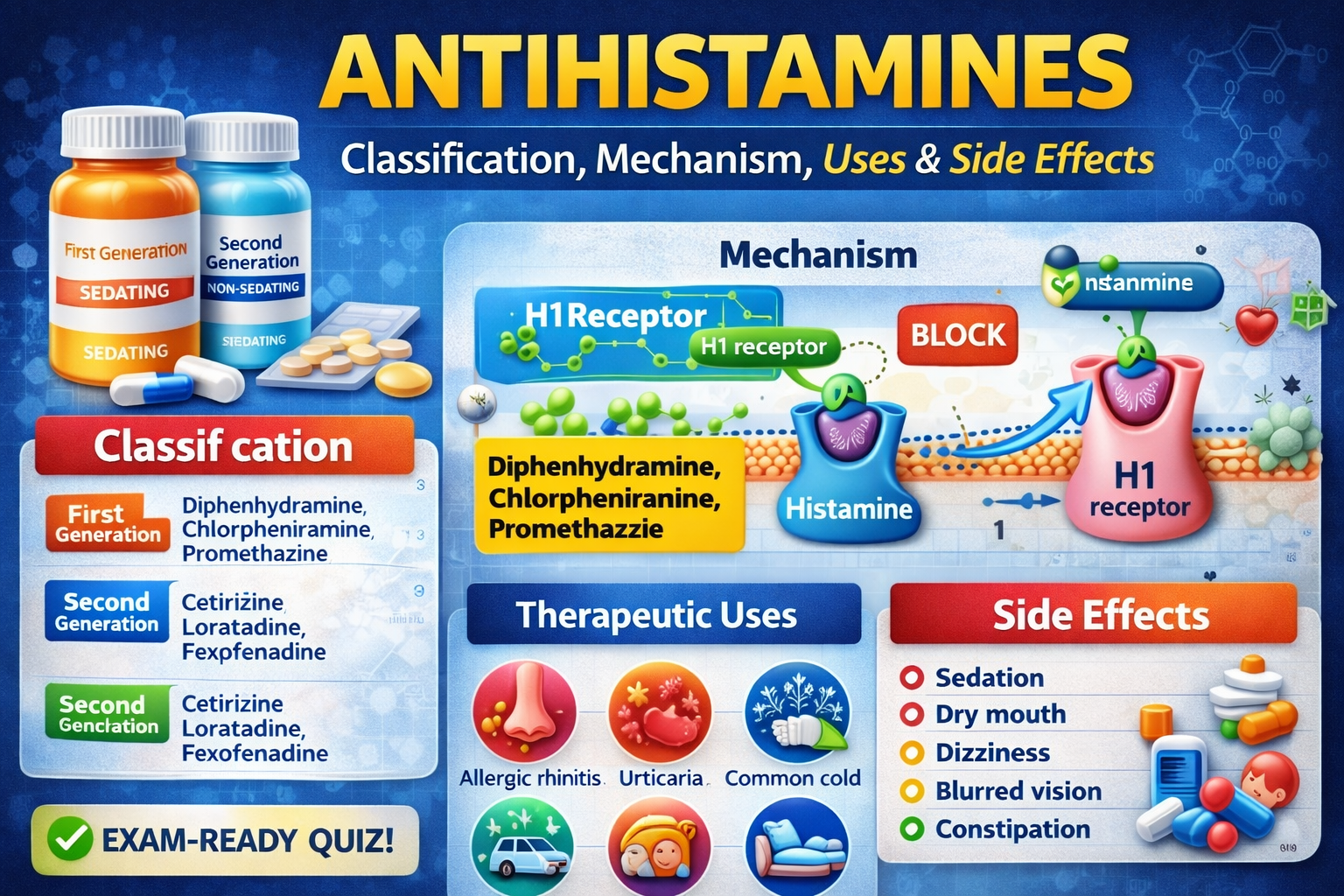
Antihistamines: Classification, Mechanism, Uses & Side Effects

Antihistamines are an important group of medicines used to control symptoms associated with allergic reactions. They are an important topic in pharmacology and are frequently included in pharmacy examinations and MCQs. Histamine is a naturally occurring chemical mediator involved in allergic and inflammatory reactions. When histamine acts on its receptors, it can contribute to symptoms … Read more

Top 30 MCQs on Antibiotics with Answers & Explanation

Antibiotics are an important topic in Pharmacology and are frequently tested in B.Pharm, D.Pharm, GPAT, pharmacist recruitment exams, and other competitive pharmacy examinations. This practice set covers important antibiotic classes, mechanisms of action, ribosomal targets, adverse effects, resistance mechanisms, and high-yield individual drugs. 1. Which bacterial structure is primarily targeted by β-lactam antibiotics? A. 30S … Read more

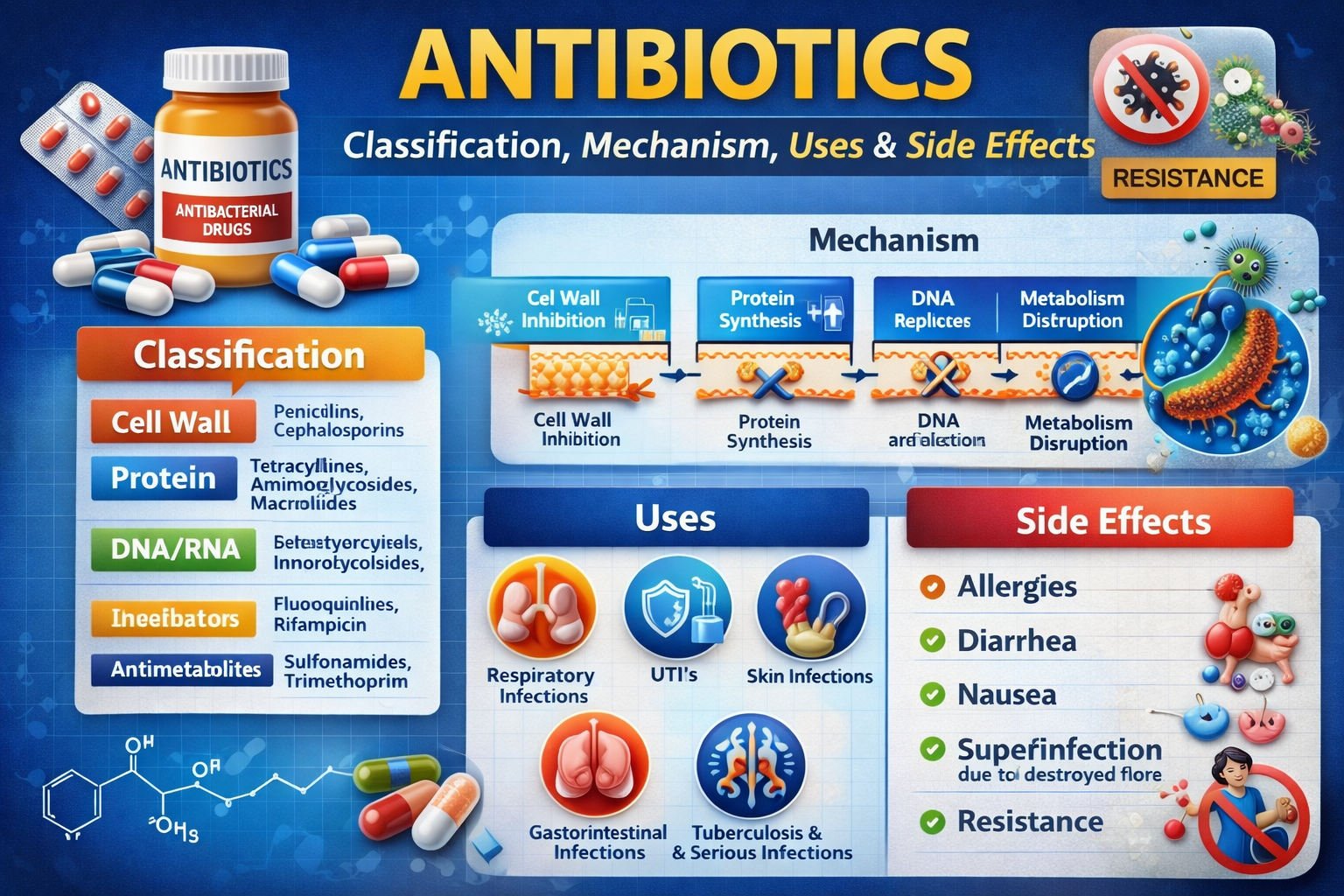
Antibiotics: Classification, Mechanism of Action, Uses, Adverse Effects & Resistance

Antibiotics are medicines used to treat infections caused by susceptible bacteria. They work by targeting important bacterial structures or processes such as cell-wall synthesis, protein synthesis, DNA replication, RNA synthesis, and folate metabolism. For pharmacy students, understanding the classification, mechanism of action, important examples, therapeutic uses, and adverse effects of antibiotics is essential for B.Pharm, … Read more

Top 30 MCQs on NSAIDs with Answers & Explanation

Nonsteroidal anti-inflammatory drugs (NSAIDs) are an important topic in pharmacology and are frequently asked in B.Pharm, D.Pharm, GPAT, pharmacist recruitment examinations, and other pharmacy competitive exams. NSAIDs mainly produce analgesic, antipyretic, and anti-inflammatory effects by reducing prostaglandin synthesis through inhibition of cyclooxygenase (COX) enzymes. However, individual NSAIDs differ in their COX selectivity, clinical uses, adverse … Read more

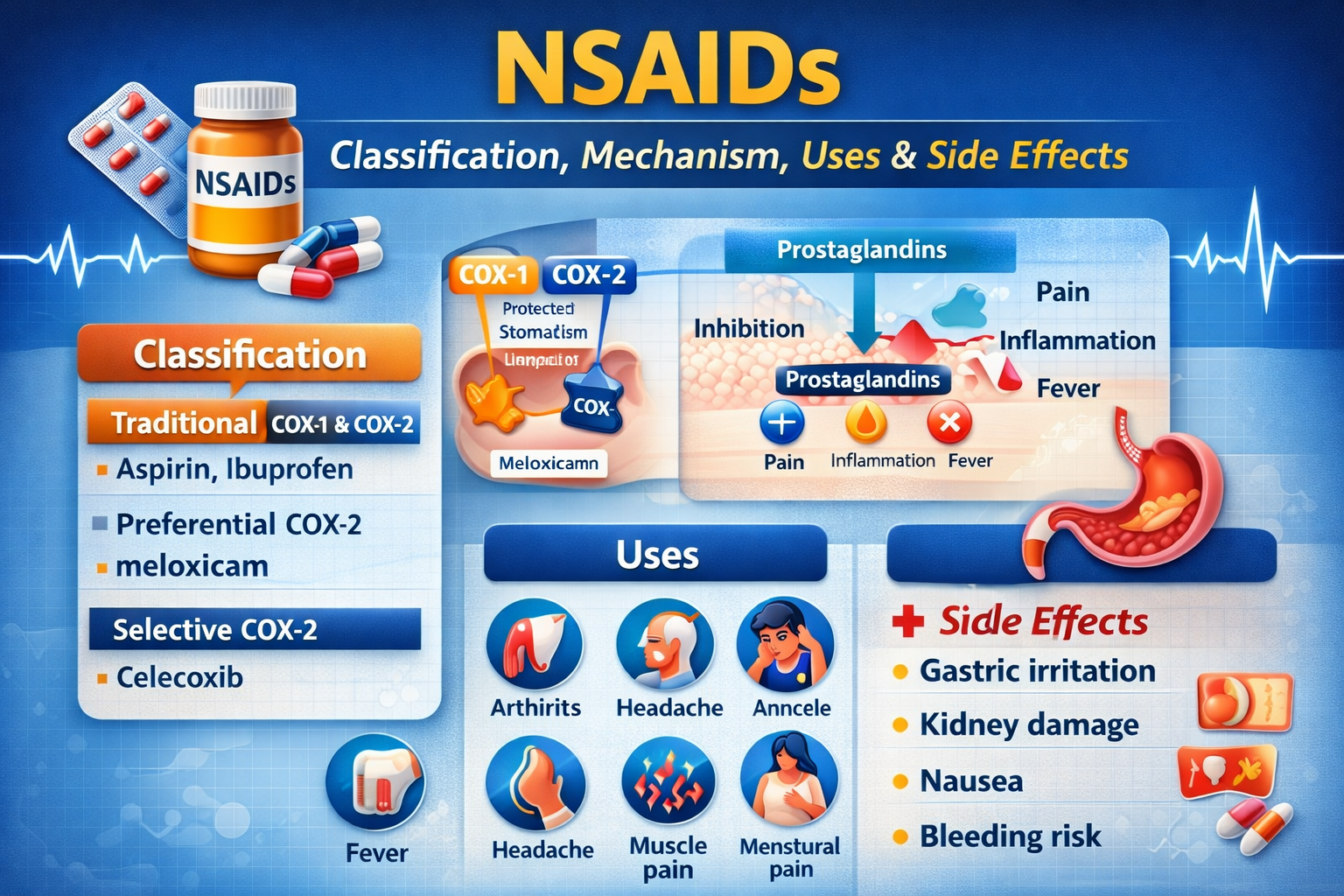
NSAIDs: Classification, Mechanism, Uses & Side Effects

Nonsteroidal anti-inflammatory drugs (NSAIDs) are an important group of medicines used to relieve pain, reduce fever and control inflammation. They are widely studied in pharmacology and are frequently included in GPAT, RRB Pharmacist, DSSSB Pharmacist, state pharmacist and other pharmacy competitive examinations. Most NSAIDs produce their effects by inhibiting cyclooxygenase (COX) enzymes, thereby reducing the … Read more

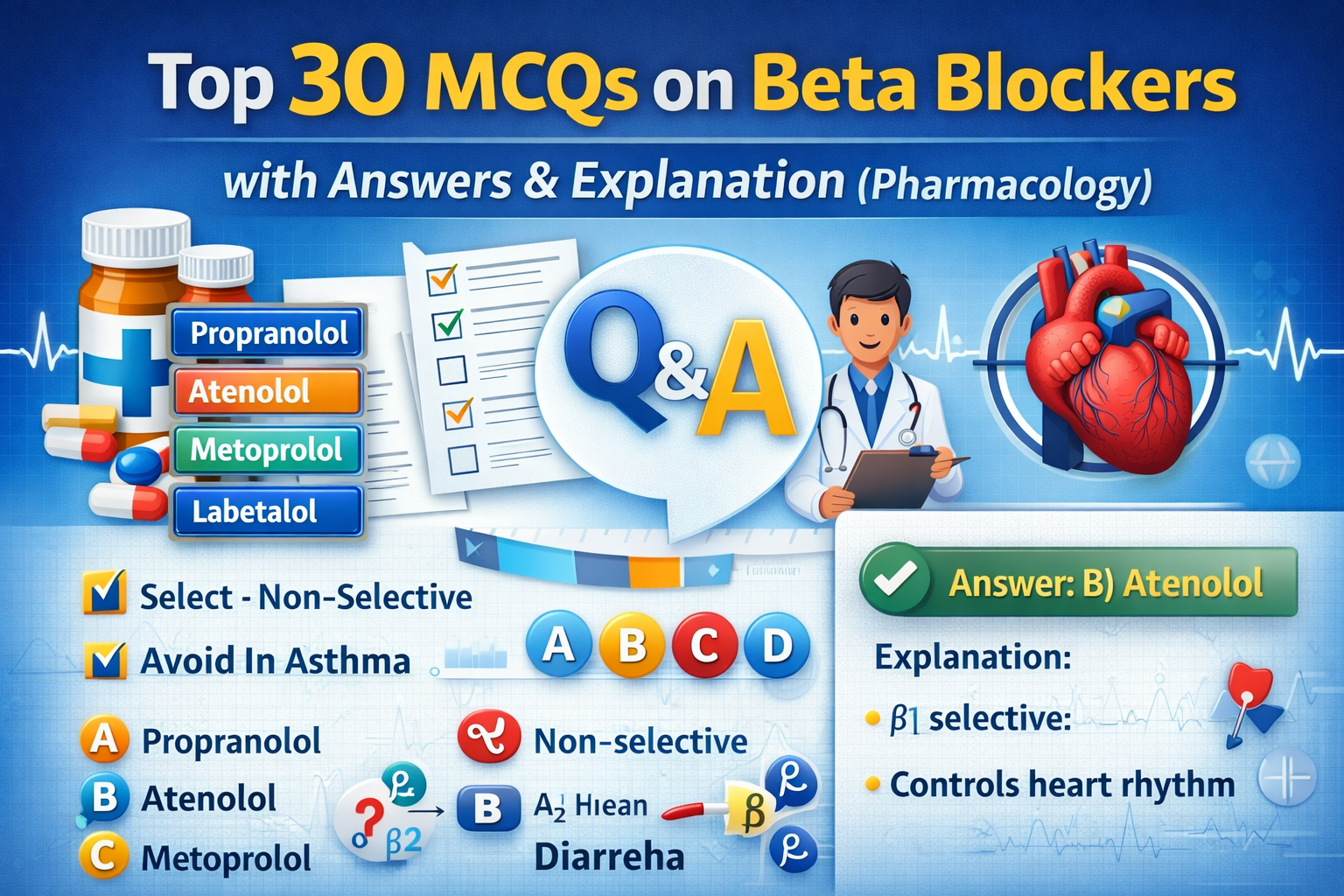
Top 30 MCQs on Beta Blockers with Answers & Explanation

Beta blockers are an important group of drugs in pharmacology and are frequently discussed in B.Pharm, D.Pharm, GPAT, pharmacist recruitment, and other pharmacy examinations. They mainly act by blocking beta-adrenergic receptors and are used in several cardiovascular and non-cardiovascular conditions. In this article, you will find 30 important Beta Blockers MCQs with answers and short … Read more

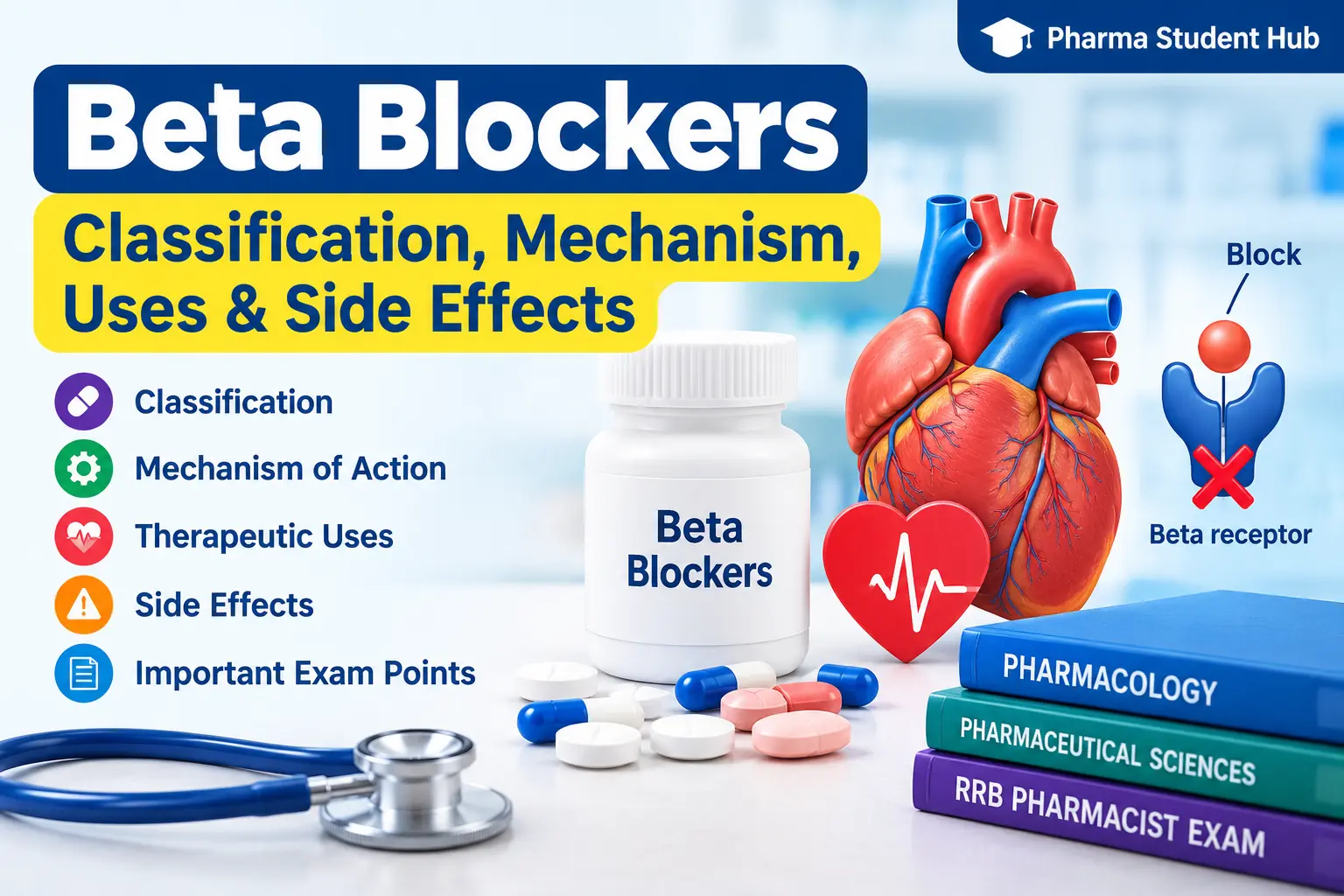
Beta Blockers: Classification, Mechanism, Uses & Side Effects

Beta blockers are an important group of drugs in pharmacology and are frequently studied for RRB Pharmacist, GPAT, DSSSB, state pharmacist examinations and other competitive pharmacy exams. These drugs primarily act by blocking the effects of catecholamines such as adrenaline and noradrenaline at beta-adrenergic receptors. Beta blockers are especially important in cardiovascular pharmacology because they … Read more

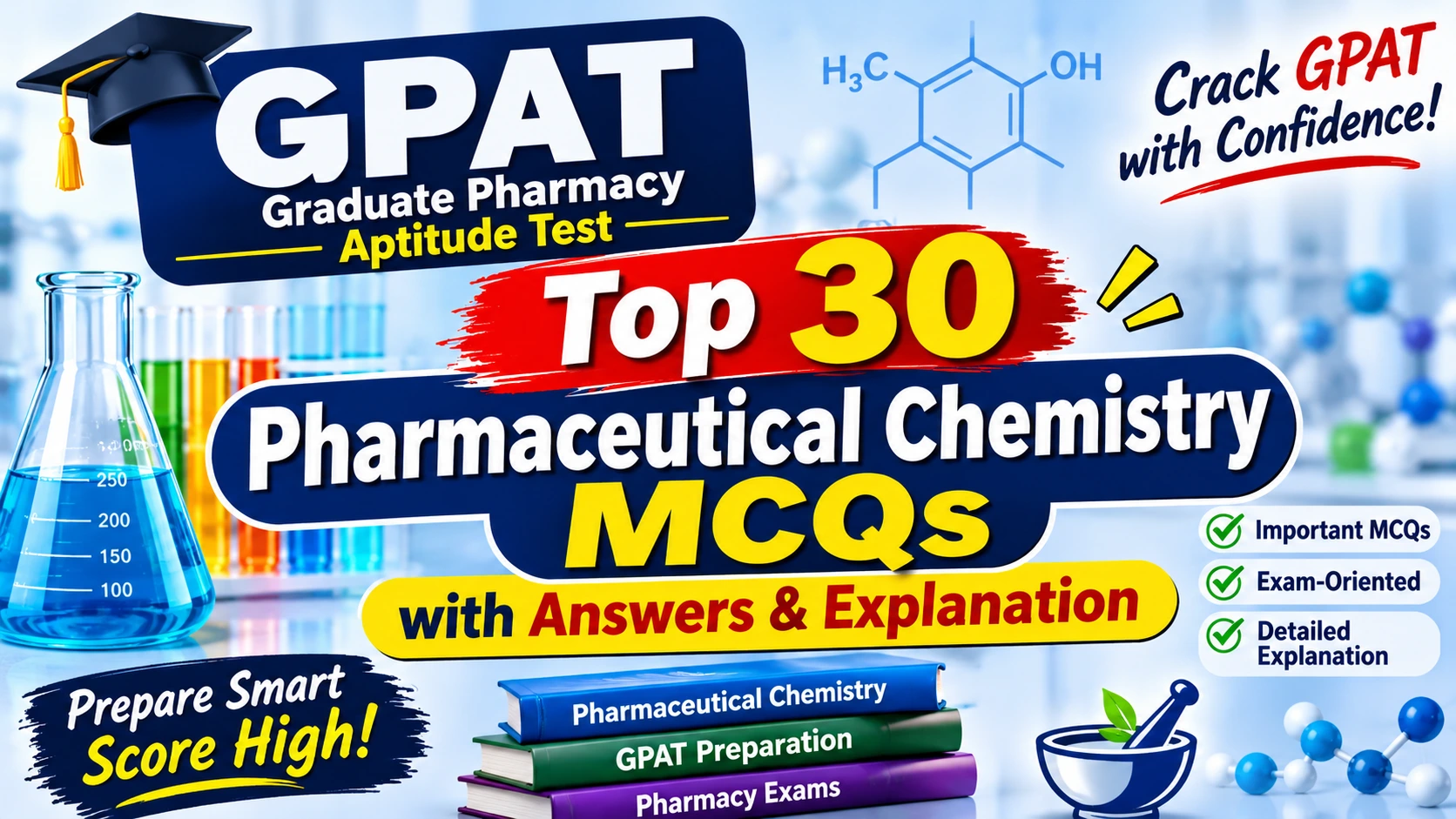
Top 30 GPAT Pharmaceutical Chemistry MCQs with Answers & Explanations

Pharmaceutical Chemistry is an important part of pharmacy education and covers the chemical aspects of medicines, including drug structures, functional groups, heterocyclic compounds, chemical properties, medicinal chemistry, drug synthesis, SAR and pharmaceutical inorganic chemistry. This set of 30 Pharmaceutical Chemistry MCQs with answers and explanations is designed for D.Pharm, B.Pharm, GPAT and other pharmacy competitive-exam … Read more