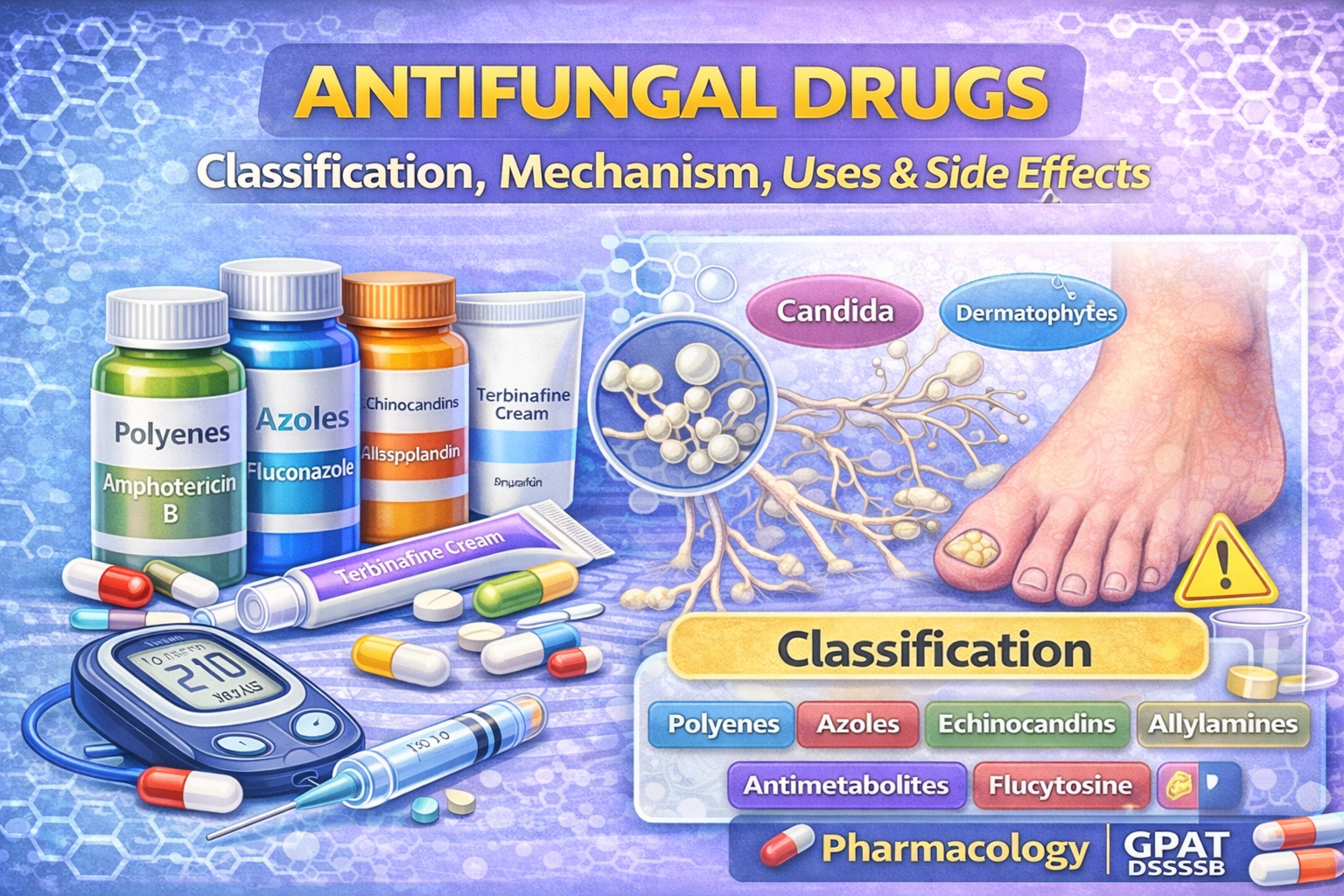
📌 Introduction
Antifungal drugs are an important group of antimicrobial agents used to treat fungal infections. Fungal infections range from superficial infections like skin and nail infections to serious systemic infections affecting internal organs.
With increasing use of antibiotics and immunosuppressive drugs, fungal infections are becoming more common. Therefore, antifungal drugs are frequently asked in GPAT, DSSSB, and other pharmacy exams.
🔍 What are Fungal Infections?
Fungal infections (mycoses) are caused by fungi such as Candida, Aspergillus, and Dermatophytes.
They are classified as:
• Superficial infections → skin, hair, nails
• Systemic infections → lungs, blood, organs
📝 Classification of Antifungal Drugs
Antifungal drugs are classified based on their mechanism of action:
• Polyenes
Examples: Amphotericin B, Nystatin
• Azoles
Examples: Fluconazole, Ketoconazole, Itraconazole
• Echinocandins
Examples: Caspofungin
• Allylamines
Examples: Terbinafine
• Antimetabolites
Example: Flucytosine
🧬 Mechanism of Action
Antifungal drugs mainly act on fungal cell membrane or cell wall:
• Polyenes → bind to ergosterol → create pores → cell death
• Azoles → inhibit ergosterol synthesis
• Echinocandins → inhibit cell wall synthesis
• Allylamines → inhibit squalene epoxidase
• Flucytosine → inhibit DNA/RNA synthesis
🩺 Pharmacological Effects
• Destroy fungal cells
• Stop fungal growth
• Treat superficial and systemic infections
💊 Therapeutic Uses
Antifungal drugs are used in:
• Skin infections (ringworm, athlete’s foot)
• Candidiasis
• Aspergillosis
• Systemic fungal infections
• Nail infections
🚨 Side Effects
• Nausea, vomiting
• Liver toxicity (azoles)
• Kidney toxicity (Amphotericin B)
• Skin rash
• Headache
📑 Important Exam Points
• Amphotericin B → most potent antifungal
• Fluconazole → widely used azole
• Terbinafine → for skin infections
• Flucytosine → antimetabolite
📍 Contraindications & Precautions
• Liver disease (use azoles carefully)
• Kidney problems (Amphotericin B caution)
• Pregnancy (some antifungals contraindicated)
🎯 Conclusion
Antifungal drugs are essential for treating a wide range of fungal infections. Understanding their classification, mechanism, uses, and side effects is crucial for exams and clinical practice. Regular revision and MCQs will help in mastering this topic.
👉 Practice MCQs in evening post
1 thought on “Antifungal Drugs: Classification, Mechanism, Uses & Side Effects”