Diabetes mellitus is a chronic metabolic disorder characterised by elevated blood glucose levels due to insufficient insulin production, impaired insulin action, or both.
The main types are: Type 1 diabetes, Type 2 diabetes, and gestational diabetes.
If not properly managed, diabetes can lead to complications affecting the eyes, kidneys, nerves, heart, and blood vessels. Treatment includes lifestyle modifications, regular blood glucose monitoring, and appropriate medications such as insulin and other antidiabetic drugs.
🔍What Are Antidiabetic Drugs?
Antidiabetic drugs are medications that help manage hyperglycemia, or abnormally high blood glucose levels. They are used mainly in Type 2 diabetes, while insulin is essential for treating Type 1 diabetes.
Depending on the drug class, these medicines may stimulate pancreatic insulin secretion, improve the response of body tissues to insulin, delay carbohydrate absorption, or increase urinary glucose excretion.
Along with medication, diabetes management may include a balanced diet, regular physical activity, blood glucose monitoring, and appropriate medical follow-up.
📝Classification of Antidiabetic Drugs
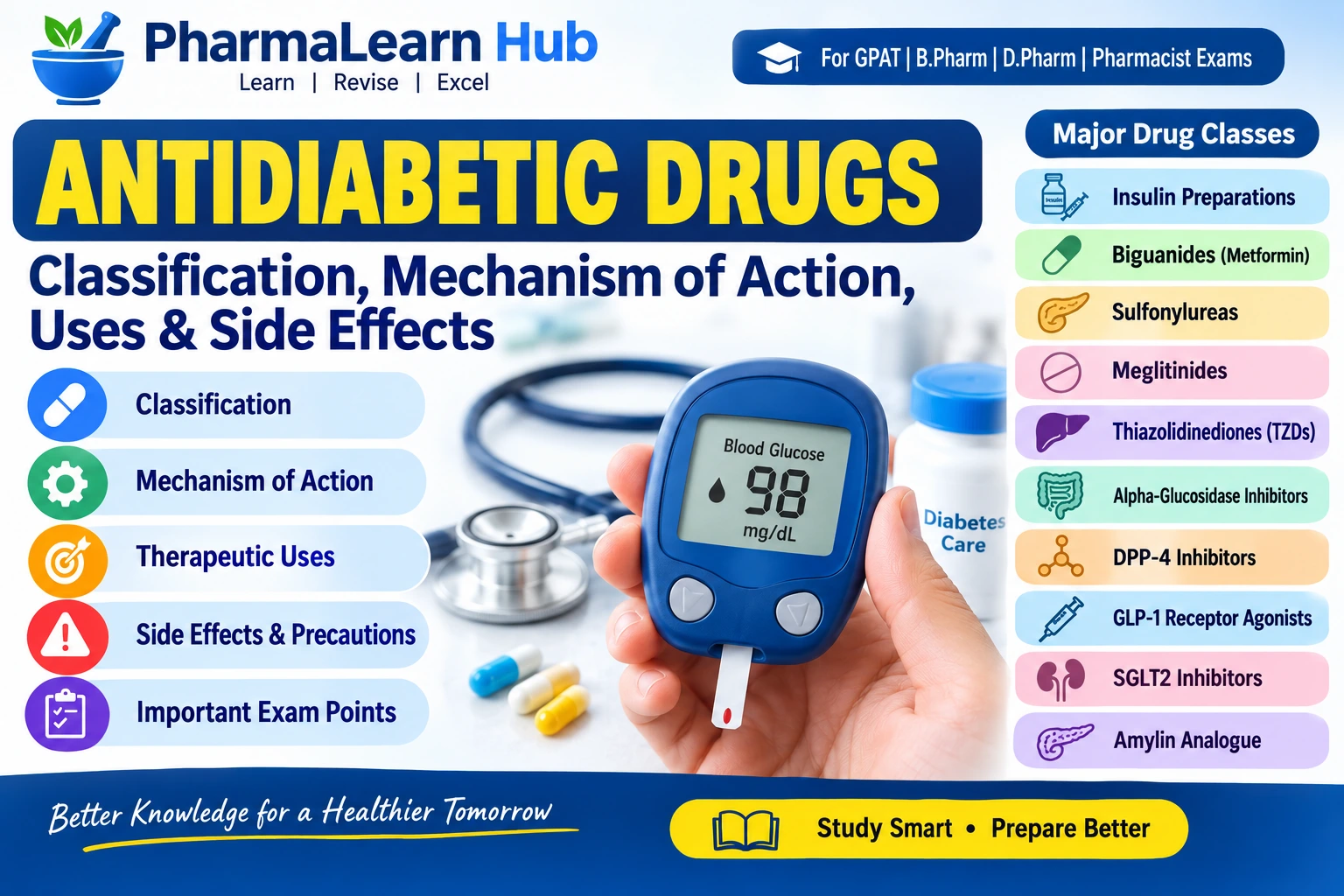
Antidiabetic drugs are broadly classified into insulin preparations and non-insulin glucose-lowering medicines.
1. Insulin Preparations
Insulin replaces or supplements the insulin produced by the pancreas.
Types of insulin:
- Rapid-acting insulin: Insulin lispro, insulin aspart
- Short-acting insulin: Regular insulin
- Intermediate-acting insulin: NPH insulin
- Long-acting insulin: Insulin glargine, insulin detemir
- Ultra-long-acting insulin: Insulin degludec
Mechanism of action: Insulin binds to insulin receptors on target cells, promoting glucose uptake in skeletal muscle and adipose tissue. It also reduces glucose production by the liver and supports glycogen synthesis.
Uses: Insulin is essential in Type 1 diabetes and may be required in Type 2 diabetes, gestational diabetes, or certain acute medical situations.
Important adverse effect: Hypoglycemia, which occurs when blood glucose falls below the normal range. Weight gain may also occur.
2. Biguanides
Example: Metformin
Mechanism of action: Metformin primarily reduces hepatic glucose production and improves insulin sensitivity. It also influences glucose metabolism in the intestine.
Uses: Commonly used for Type 2 diabetes, depending on the patient’s clinical condition and treatment requirements.
Adverse effects:
- Nausea and diarrhea
- Abdominal discomfort
- Possible vitamin B12 deficiency with long-term use
- Rare risk of lactic acidosis in susceptible patients
Exam point: Metformin generally does not cause hypoglycemia when used alone.
3. Sulfonylureas
Examples: Glimepiride, gliclazide, glipizide
Mechanism of action: Sulfonylureas close ATP-sensitive potassium channels in pancreatic beta cells. This causes cell depolarization, calcium influx, and insulin release.
Uses: Type 2 diabetes when additional insulin secretion is needed.
Adverse effects:
- Hypoglycemia
- Weight gain
- Gastrointestinal discomfort
Exam point: Sulfonylureas stimulate insulin secretion from pancreatic beta cells.
4. Meglitinides
Examples: Repaglinide, nateglinide
Mechanism of action: These medicines stimulate insulin release by acting on pancreatic beta-cell potassium channels.
Uses: Help control blood glucose increases around mealtimes in Type 2 diabetes.
Adverse effects: Hypoglycemia and weight gain may occur.
Exam point: Meglitinides are short-acting insulin secretagogues generally associated with mealtime dosing.
5. Thiazolidinediones (TZDs)
Examples: Pioglitazone, rosiglitazone
Mechanism of action: These drugs activate peroxisome proliferator-activated receptor gamma (PPAR-γ), improving insulin sensitivity in adipose tissue, skeletal muscle, and the liver.
Uses: Selected patients with Type 2 diabetes.
Adverse effects:
- Weight gain
- Fluid retention
- Increased risk of worsening heart failure in susceptible patients
- Increased fracture risk
Exam point: Pioglitazone improves insulin sensitivity rather than directly stimulating insulin secretion.
6. Alpha-Glucosidase Inhibitors
Examples: Acarbose, miglitol, voglibose
Mechanism of action: These drugs inhibit intestinal alpha-glucosidase enzymes, delaying the breakdown and absorption of carbohydrates.
Uses: Help reduce post-meal blood glucose increases.
Adverse effects:
- Flatulence
- Abdominal discomfort
- Diarrhea
Exam point: Alpha-glucosidase inhibitors delay carbohydrate digestion in the intestine.
7. DPP-4 Inhibitors
Examples: Sitagliptin, linagliptin, vildagliptin, saxagliptin
Mechanism of action: Dipeptidyl peptidase-4 (DPP-4) inhibitors prevent the rapid breakdown of incretin hormones. This enhances glucose-dependent insulin secretion and reduces glucagon secretion.
Uses: Type 2 diabetes, either alone in selected circumstances or in combination with other glucose-lowering medicines.
Adverse effects:
- Nasopharyngitis
- Headache
- Occasionally joint pain
- Pancreatitis has been reported
Exam point: DPP-4 inhibitors increase the activity of endogenous incretin hormones.
8. GLP-1 Receptor Agonists
Examples: Semaglutide, liraglutide, dulaglutide
Mechanism of action: These drugs activate glucagon-like peptide-1 (GLP-1) receptors. They increase glucose-dependent insulin secretion, suppress inappropriate glucagon release, slow gastric emptying to varying degrees, and increase satiety.
Uses: Type 2 diabetes. Certain agents also help manage obesity and provide cardiovascular benefits in appropriate patients.
Adverse effects:
- Nausea
- Vomiting
- Diarrhea
- Other gastrointestinal symptoms
Exam point: GLP-1 receptor agonists are injectable in many formulations, although oral semaglutide is also available.
9. SGLT2 Inhibitors
Examples: Dapagliflozin, empagliflozin, canagliflozin
Mechanism of action: Sodium-glucose cotransporter-2 (SGLT2) inhibitors reduce glucose reabsorption in the proximal renal tubules, increasing glucose excretion through urine.
Uses: Type 2 diabetes. Certain medicines in this class also provide important benefits for eligible patients with heart failure or chronic kidney disease.
Adverse effects:
- Genital fungal infections
- Increased urination
- Dehydration or low blood pressure in susceptible patients
- Rarely, diabetic ketoacidosis, which can occur even without markedly elevated blood glucose
Exam point: SGLT2 inhibitors lower blood glucose by increasing urinary glucose excretion.
10. Amylin Analogue
Example: Pramlintide
Mechanism of action: Pramlintide mimics amylin, a hormone normally secreted by pancreatic beta cells alongside insulin. It slows gastric emptying, suppresses post-meal glucagon secretion, and promotes satiety.
Uses: An adjunct to mealtime insulin in selected patients with diabetes.
Adverse effects: Nausea and hypoglycemia, particularly when used with insulin.
Mechanism of Action of Antidiabetic Drugs: Quick Revision
The main mechanisms can be remembered as follows:
- Metformin: Reduces hepatic glucose production.
- Sulfonylureas: Stimulate insulin release from pancreatic beta cells.
- Meglitinides: Stimulate short-acting, mealtime insulin release.
- Thiazolidinediones: Improve insulin sensitivity through PPAR-γ activation.
- Alpha-glucosidase inhibitors: Delay intestinal carbohydrate digestion.
- DPP-4 inhibitors: Prolong the activity of endogenous incretin hormones.
- GLP-1 receptor agonists: Increase glucose-dependent insulin secretion and promote satiety.
- SGLT2 inhibitors: Increase urinary glucose excretion.
- Insulin: Promotes glucose uptake and reduces hepatic glucose production.
- Pramlintide: Slows gastric emptying and reduces post-meal glucagon secretion.
Difference Between Insulin and Oral Antidiabetic Drugs
Insulin
- A peptide hormone administered by injection or other specialised delivery methods.
- Essential for Type 1 diabetes.
- Also used in Type 2 diabetes when clinically indicated.
- Can cause hypoglycemia and weight gain.
Oral antidiabetic drugs
- Include metformin, sulfonylureas, DPP-4 inhibitors, SGLT2 inhibitors, and other drug classes.
- Used primarily for Type 2 diabetes.
- Have different mechanisms and adverse-effect profiles.
- Some patients require combination therapy or insulin to achieve appropriate glucose control.
Important: Not every non-insulin antidiabetic drug is an oral medicine. For example, many GLP-1 receptor agonists are injectable.
Therapeutic Uses of Antidiabetic Drugs
Antidiabetic medicines are used for several purposes:
- To control elevated blood glucose levels in diabetes mellitus.
- To replace insulin in people with Type 1 diabetes.
- To improve insulin sensitivity in selected patients with Type 2 diabetes.
- To reduce post-meal blood glucose elevations.
- To help selected patients with Type 2 diabetes manage body weight.
- To reduce cardiovascular or kidney complications with particular medicines when supported by clinical evidence and patient-specific indications.
- To manage diabetes during pregnancy or acute illness using appropriate, clinician-directed treatment.
Treatment must be individualised. Drug selection depends on glucose control, kidney function, cardiovascular health, risk of hypoglycemia, adverse effects, cost, and patient preferences.
Common Side Effects and Precautions
Different antidiabetic drugs have different safety considerations.
- Hypoglycemia: Particularly associated with insulin, sulfonylureas, and meglitinides.
- Gastrointestinal effects: Common with metformin, alpha-glucosidase inhibitors, and GLP-1 receptor agonists.
- Weight gain: May occur with insulin, sulfonylureas, and thiazolidinediones.
- Genital infections: Associated with SGLT2 inhibitors.
- Fluid retention: An important concern with thiazolidinediones.
- Kidney function: May affect the choice or dose of several antidiabetic medicines.
- Vitamin B12 deficiency: Can occur with long-term metformin treatment.
Patients should not start, stop, or change diabetes medicines without appropriate medical advice. People using insulin or insulin secretagogues should understand how to recognise and manage hypoglycemia.
📑Important Exam Points for GPAT, B.Pharm and D.Pharm
Revise these high-yield facts before pharmacy examinations:
- Metformin belongs to the biguanide class.
- Glimepiride is a sulfonylurea.
- Repaglinide is a meglitinide.
- Pioglitazone activates PPAR-γ.
- Acarbose inhibits intestinal alpha-glucosidase enzymes.
- Sitagliptin is a DPP-4 inhibitor.
- Semaglutide is a GLP-1 receptor agonist.
- Dapagliflozin is an SGLT2 inhibitor.
- Insulin is essential in Type 1 diabetes.
- Sulfonylureas stimulate insulin secretion by acting on ATP-sensitive potassium channels.
- SGLT2 inhibitors increase urinary glucose excretion.
- Metformin generally does not cause hypoglycemia when used alone.
- GLP-1 receptor agonists can promote satiety and help with weight management.
- Insulin and sulfonylureas are important causes of medication-associated hypoglycemia.
📋Frequently Asked Questions (FAQs)
1. What are antidiabetic drugs?
Antidiabetic drugs are medicines used to control elevated blood glucose levels in people with diabetes mellitus.
2. What is the classification of antidiabetic drugs?
They include insulin preparations, biguanides, sulfonylureas, meglitinides, thiazolidinediones, alpha-glucosidase inhibitors, DPP-4 inhibitors, GLP-1 receptor agonists, SGLT2 inhibitors, and other agents.
3. What is the mechanism of action of metformin?
Metformin primarily reduces glucose production in the liver and improves insulin sensitivity.
4. Which antidiabetic drugs cause hypoglycemia?
Insulin, sulfonylureas, and meglitinides are important causes of hypoglycemia. The risk depends on the drug, dose, meals, activity, and other patient factors.
5. What is the mechanism of action of SGLT2 inhibitors?
They reduce glucose reabsorption in the kidney, allowing more glucose to be excreted in urine.
6. Which antidiabetic drug is essential in Type 1 diabetes?
Insulin is essential for treating Type 1 diabetes.
7. Which antidiabetic drugs help with weight management?
Certain GLP-1 receptor agonists and related medicines can help with weight management. The choice depends on the individual patient’s medical needs and approved indications.
🎯 Conclusion
Antidiabetic drugs help control blood glucose through different mechanisms, including increasing insulin secretion, improving insulin sensitivity, reducing hepatic glucose production, and increasing urinary glucose excretion. Understanding their classification, examples, mechanisms, uses, and adverse effects is essential for pharmacy students and healthcare professionals.
2 thoughts on “Antidiabetic Drugs: Classification, Mechanism, Uses & Side Effects”