
Antidiabetic Drugs: Classification, Mechanism, Uses & Side Effects
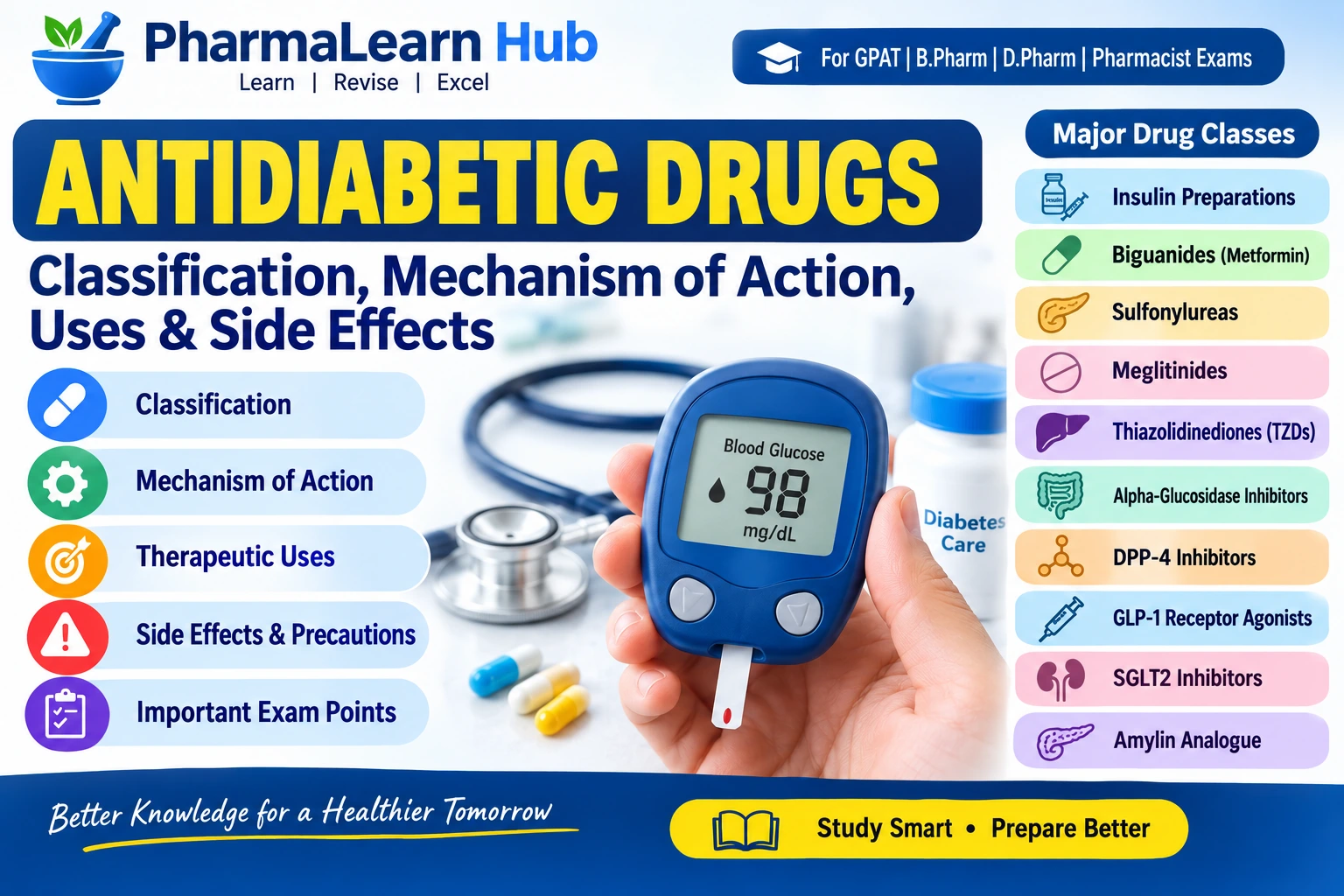
Diabetes mellitus is a chronic metabolic disorder characterised by elevated blood glucose levels due to insufficient insulin production, impaired insulin action, or both. The main types are: Type 1 diabetes, Type 2 diabetes, and gestational diabetes. If not properly managed, diabetes can lead to complications affecting the eyes, kidneys, nerves, heart, and blood vessels. Treatment … Read more
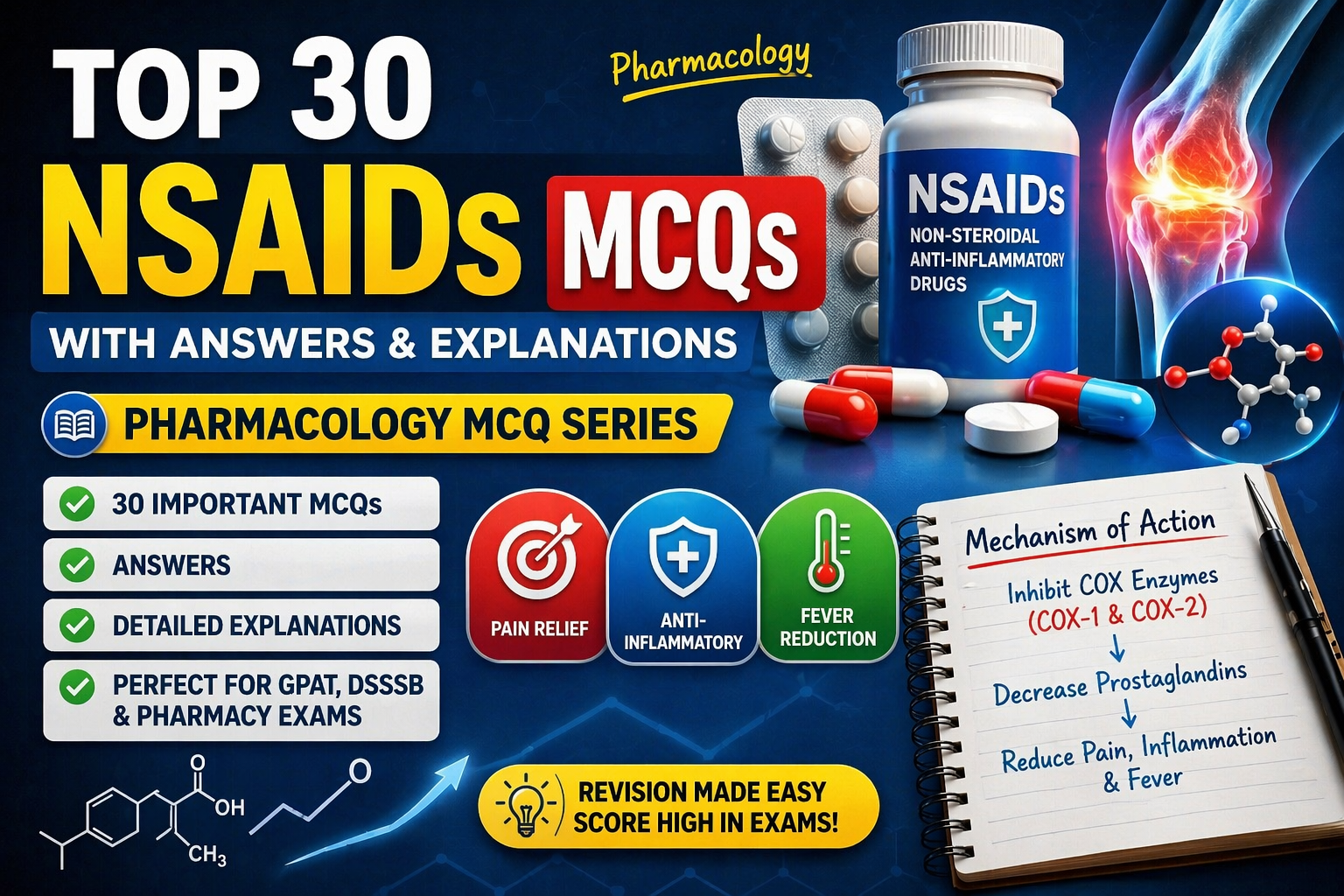

Top 30 MCQs on NSAIDs with Answers & Explanation

Nonsteroidal anti-inflammatory drugs (NSAIDs) are an important topic in pharmacology and are frequently asked in B.Pharm, D.Pharm, GPAT, pharmacist recruitment examinations, and other pharmacy competitive exams. NSAIDs mainly produce analgesic, antipyretic, and anti-inflammatory effects by reducing prostaglandin synthesis through inhibition of cyclooxygenase (COX) enzymes. However, individual NSAIDs differ in their COX selectivity, clinical uses, adverse … Read more

Beta Blockers: Classification, Mechanism, Uses & Side Effects

Beta blockers are an important group of drugs in pharmacology and are frequently studied for RRB Pharmacist, GPAT, DSSSB, state pharmacist examinations and other competitive pharmacy exams. These drugs primarily act by blocking the effects of catecholamines such as adrenaline and noradrenaline at beta-adrenergic receptors. Beta blockers are especially important in cardiovascular pharmacology because they … Read more