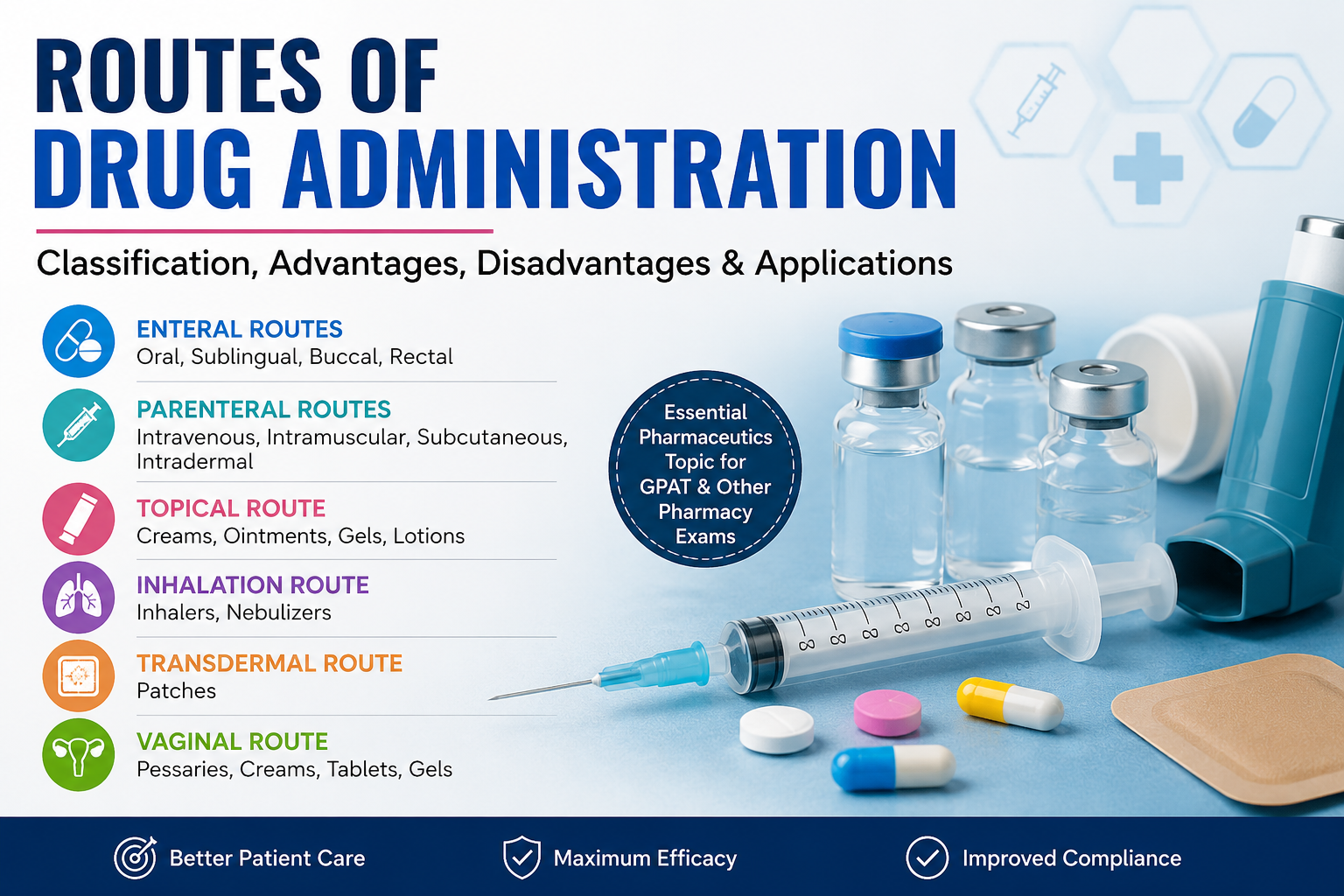
Routes of Drug Administration: Classification, Advantages, Disadvantages & Applications

📌Introduction Routes of drug administration refer to the pathways through which a drug is introduced into the body to produce its therapeutic effect. The choice of the appropriate route depends on factors such as the patient’s condition, the nature of the drug, the desired onset of action, and the duration of therapy. Selecting the correct … Read more

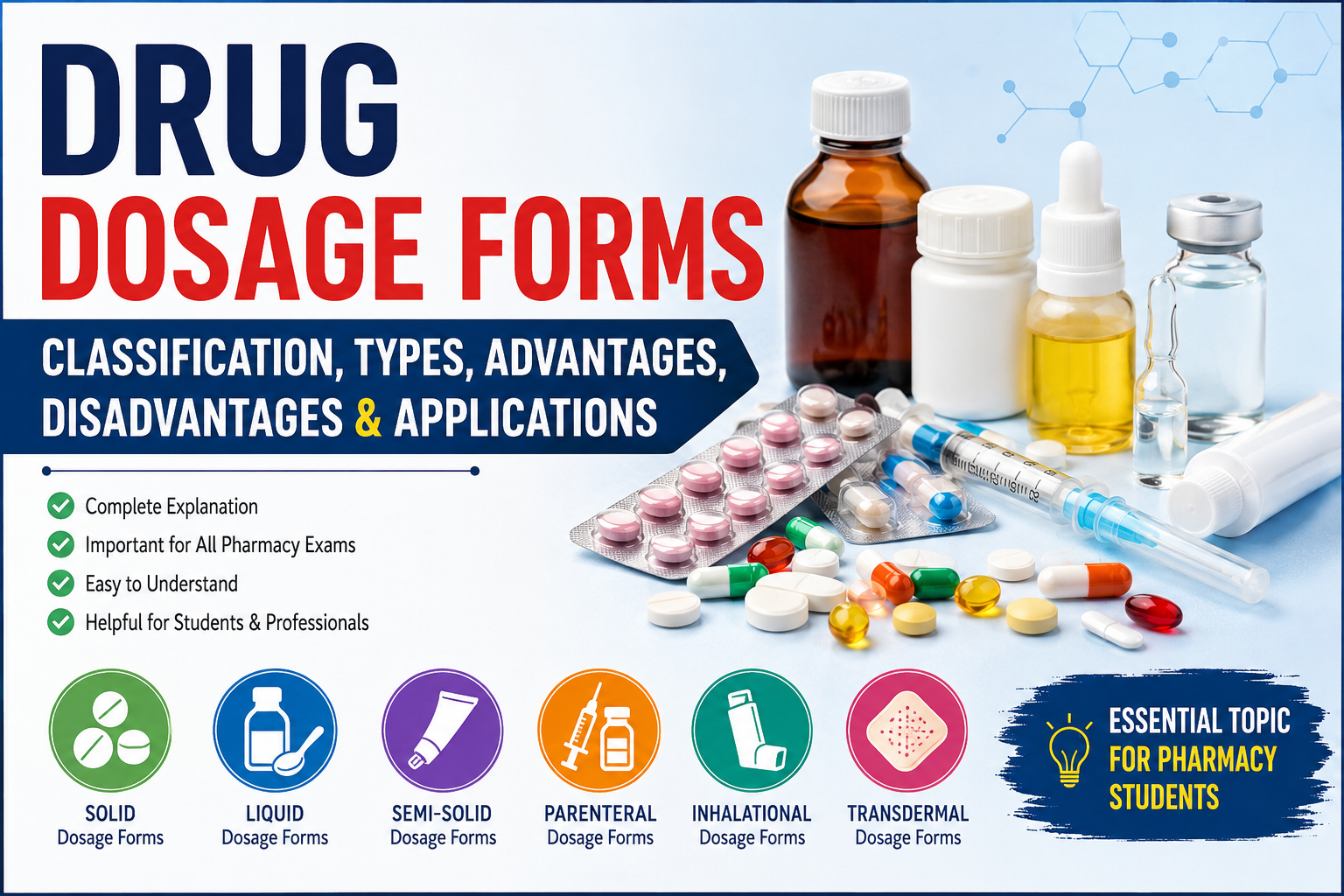
Drug Dosage Forms: Classification, Advantages, Disadvantages & Applications

📌Introduction Drug dosage forms are the physical forms in which medicines are prepared and administered to patients. They are designed to deliver the correct amount of drug safely, effectively, and conveniently. A suitable dosage form improves patient compliance, enhances therapeutic efficacy, protects the drug from degradation, and ensures accurate dosing. The selection of a dosage … Read more

Hormones: Classification, Functions, Mechanism of Action and Clinical Importance

📌Introduction Hormones are chemical messengers produced by endocrine glands that regulate various physiological processes in the human body. They travel through the bloodstream to target organs and tissues, where they control growth, metabolism, reproduction, stress response, and homeostasis. Even small changes in hormone levels can significantly affect health. The endocrine system consists of glands such … Read more

Top 30 Pharmacology MCQs for Government Pharmacist Exams (DSSSB, AIIMS, ESIC, UPSSSC, RRB)

1. Which receptor is primarily stimulated by adrenaline in the heart? A. α1 receptor B. α2 receptor C. β1 receptor D. β2 receptor Answer: C. β1 receptor 2. Atropine is classified as a: A. Cholinergic agonist B. Anticholinergic drug C. Adrenergic blocker D. Antihistamine Answer: B. Anticholinergic drug 3. Which drug is used as an … Read more

Drug-Food Interactions: Types, Examples, Prevention & Role of Pharmacists

📌Introduction Drug-food interactions occur when food, beverages, or dietary supplements affect the absorption, distribution, metabolism, or excretion of medications. These interactions may alter the effectiveness of a drug, increase adverse effects, or reduce therapeutic outcomes. Understanding drug-food interactions is important for healthcare professionals and patients to ensure safe and effective medication use. Drug-food interactions are … Read more

Drug-Drug Interactions: Types, Mechanisms, Examples & Prevention

📌Introduction Drug-drug interactions (DDIs) occur when the effects of one drug are altered by the presence of another drug administered simultaneously. These interactions may increase or decrease the therapeutic effect of a drug and can sometimes lead to serious adverse effects. Drug-drug interactions are a major concern in clinical practice, especially in patients receiving multiple … Read more

Medication Errors: Types, Causes, Prevention & Role of Pharmacists

📌Introduction Medication errors are among the most common preventable causes of patient harm in healthcare systems worldwide. These errors can occur at any stage of the medication-use process, including prescribing, dispensing, administering, and monitoring medications. Medication errors may result in adverse drug events, prolonged hospitalization, increased healthcare costs, and even death. The World Health Organization … Read more

Pharmacovigilance: Importance, Process, ADR Reporting & Scope

📌 Introduction Pharmacovigilance is an important branch of pharmacy that focuses on the detection, assessment, understanding, and prevention of adverse effects caused by medicines. It plays a major role in ensuring patient safety and improving the safe use of drugs. The word pharmacovigilance is derived from:• “Pharmakon” meaning drug • “Vigilare” meaning to keep watch … Read more

Top 30 MCQs on Anticholinergic Drugs with Answers & Explanation

📌 Introduction Anticholinergic drugs block the action of acetylcholine at muscarinic receptors and suppress parasympathetic nervous system activity. These drugs are widely used in asthma, COPD, motion sickness, Parkinson’s disease, and organophosphate poisoning. Anticholinergic drugs are highly important for GPAT, DSSSB, PCI, and other pharmacy examinations. 📝 MCQs 1. Anticholinergic drugs are also known as: … Read more

Anticholinergic Drugs: Classification, Mechanism, Uses & Side Effects

📌 Introduction Anticholinergic drugs are important pharmacological agents that block the action of acetylcholine at cholinergic receptors. These drugs mainly inhibit parasympathetic nervous system activity and are also known as parasympatholytic drugs or cholinergic blocking agents. Anticholinergic drugs are widely used in the treatment of asthma, chronic obstructive pulmonary disease (COPD), motion sickness, Parkinson’s disease, … Read more