
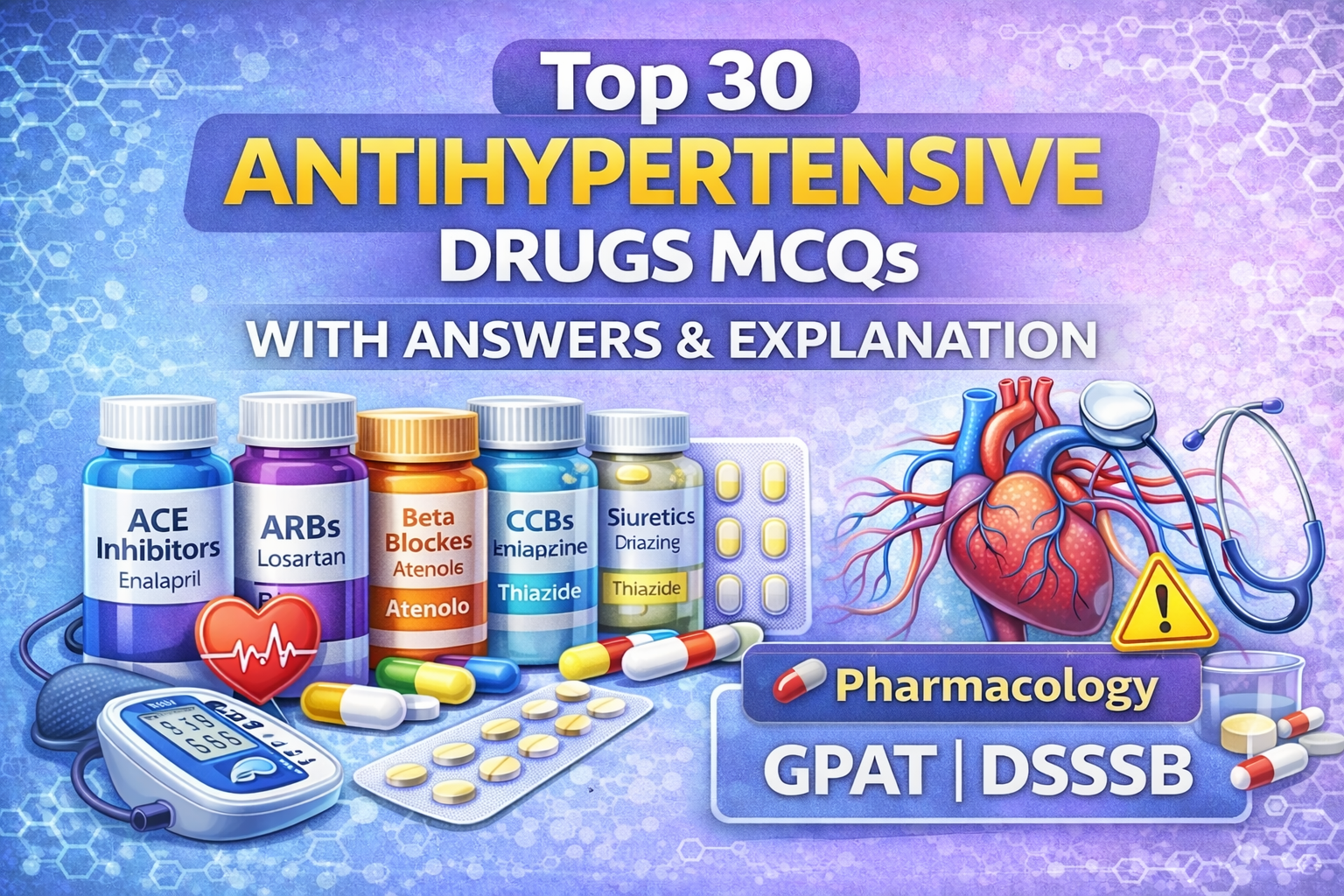
Antihypertensive drugs are medicines used to manage high blood pressure and reduce the risk of complications such as stroke, heart failure, and kidney disease. Understanding their classification, mechanism of action, therapeutic uses, and adverse effects is essential for pharmacy students.
These 30 MCQs on antihypertensive drugs with answers and explanations cover important pharmacology concepts for GPAT, B.Pharm examinations, and pharmacist recruitment examinations.
📝MCQs on Antihypertensive Drugs
1. Which of the following is an angiotensin-converting enzyme (ACE) inhibitor?
A. Losartan
B. Enalapril
C. Amlodipine
D. Propranolol
Correct Answer: B. Enalapril
Explanation: Enalapril inhibits ACE, reducing the formation of angiotensin II. This decreases vasoconstriction and aldosterone secretion, helping lower blood pressure.
2. Which antihypertensive drug belongs to the angiotensin II receptor blocker (ARB) class?
A. Captopril
B. Losartan
C. Atenolol
D. Hydrochlorothiazide
Correct Answer: B. Losartan
Explanation: Losartan blocks angiotensin II AT1 receptors, reducing vasoconstriction and aldosterone-mediated effects.
3. Which adverse effect is classically associated with ACE inhibitors?
A. Dry cough
B. Ototoxicity
C. Gingival hyperplasia
D. Severe constipation
Correct Answer: A. Dry cough
Explanation: ACE inhibition reduces the breakdown of bradykinin, which can contribute to a persistent dry cough. ACE inhibitors can also cause hyperkalemia and, rarely, angioedema.
4. Which of the following is a calcium channel blocker?
A. Metoprolol
B. Amlodipine
C. Enalapril
D. Losartan
Correct Answer: B. Amlodipine
Explanation: Amlodipine blocks L-type calcium channels, primarily relaxing vascular smooth muscle and reducing peripheral vascular resistance.
5. Which drug is a beta-1-selective beta-blocker at usual therapeutic doses?
A. Propranolol
B. Metoprolol
C. Carvedilol
D. Labetalol
Correct Answer: B. Metoprolol
Explanation: Metoprolol preferentially blocks beta-1 receptors in the heart at usual doses, reducing heart rate and contractility. Its selectivity is not absolute.
6. Thiazide diuretics primarily act on which part of the nephron?
A. Proximal convoluted tubule
B. Descending limb of the loop of Henle
C. Distal convoluted tubule
D. Collecting duct
Correct Answer: C. Distal convoluted tubule
Explanation: Thiazide diuretics inhibit the sodium-chloride cotransporter in the distal convoluted tubule, increasing sodium and water excretion.
7. Which diuretic inhibits the Na⁺-K⁺-2Cl⁻ cotransporter?
A. Hydrochlorothiazide
B. Furosemide
C. Spironolactone
D. Acetazolamide
Correct Answer: B. Furosemide
Explanation: Furosemide is a loop diuretic that inhibits the Na⁺-K⁺-2Cl⁻ cotransporter in the thick ascending limb of the loop of Henle.
8. Which antihypertensive drug is an aldosterone receptor antagonist?
A. Spironolactone
B. Furosemide
C. Amlodipine
D. Atenolol
Correct Answer: A. Spironolactone
Explanation: Spironolactone blocks mineralocorticoid receptors, reducing sodium retention and potassium excretion. It can cause hyperkalemia and gynecomastia.
9. Which drug commonly causes peripheral edema due to arteriolar dilation?
A. Amlodipine
B. Enalapril
C. Losartan
D. Atenolol
Correct Answer: A. Amlodipine
Explanation: Amlodipine can cause ankle or peripheral edema because it dilates arterioles and increases capillary hydrostatic pressure.
10. Which antihypertensive drug can cause bradycardia?
A. Amlodipine
B. Metoprolol
C. Hydralazine
D. Minoxidil
Correct Answer: B. Metoprolol
Explanation: Metoprolol blocks cardiac beta-1 receptors, reducing heart rate and myocardial contractility. Excessive beta-blockade may cause clinically significant bradycardia.
11. Which drug directly relaxes arteriolar smooth muscle and is used in selected cases of severe hypertension?
A. Hydralazine
B. Losartan
C. Enalapril
D. Atenolol
Correct Answer: A. Hydralazine
Explanation: Hydralazine directly relaxes arteriolar smooth muscle, reducing peripheral vascular resistance. Adverse effects can include headache, reflex tachycardia, and fluid retention.
12. Which antihypertensive drug is associated with drug-induced lupus-like syndrome?
A. Hydralazine
B. Amlodipine
C. Losartan
D. Hydrochlorothiazide
Correct Answer: A. Hydralazine
Explanation: Hydralazine can cause a lupus-like syndrome, particularly with prolonged exposure and higher cumulative doses.
13. Which drug class reduces blood pressure partly by decreasing circulating blood volume?
A. Diuretics
B. Antibiotics
C. Antihistamines
D. Antacids
Correct Answer: A. Diuretics
Explanation: Diuretics increase renal sodium and water excretion. The resulting reduction in extracellular fluid volume contributes to blood pressure reduction.
14. Which substance is reduced by ACE inhibitors?
A. Angiotensin II
B. Bradykinin
C. Insulin
D. Acetylcholine
Correct Answer: A. Angiotensin II
Explanation: ACE converts angiotensin I into angiotensin II. Inhibiting ACE reduces angiotensin II formation and aldosterone secretion.
15. Which drug is a centrally acting alpha-2 adrenergic agonist?
A. Clonidine
B. Amlodipine
C. Furosemide
D. Losartan
Correct Answer: A. Clonidine
Explanation: Clonidine reduces central sympathetic outflow, lowering peripheral vascular resistance and heart rate. It can cause sedation and dry mouth. Abrupt withdrawal may produce rebound hypertension.
16. Which antihypertensive drug blocks alpha-1 adrenergic receptors?
A. Prazosin
B. Propranolol
C. Enalapril
D. Spironolactone
Correct Answer: A. Prazosin
Explanation: Prazosin blocks alpha-1 receptors in vascular smooth muscle, causing vasodilation. It may produce postural hypotension, particularly after the first dose.
17. Which drug is a non-selective beta-blocker?
A. Propranolol
B. Metoprolol
C. Atenolol
D. Bisoprolol
Correct Answer: A. Propranolol
Explanation: Propranolol blocks both beta-1 and beta-2 adrenergic receptors. Beta-2 blockade can cause bronchoconstriction, so non-selective beta-blockers require particular caution in asthma.
18. Which adverse effect is associated with thiazide diuretics?
A. Hypokalemia
B. Severe hyperkalemia in every patient
C. Persistent dry cough
D. Bradycardia in every patient
Correct Answer: A. Hypokalemia
Explanation: Thiazide diuretics increase potassium excretion and may cause hypokalemia. They can also increase uric acid and affect glucose levels.
19. Which of the following is a commonly recommended first-line drug class for uncomplicated hypertension?
A. ACE inhibitors
B. Antibiotics
C. Corticosteroids
D. Antifungal drugs
Correct Answer: A. ACE inhibitors
Explanation: ACE inhibitors are one of several accepted first-line options for many adults. Depending on the patient and applicable guideline, ARBs, thiazide/thiazide-like diuretics, and long-acting dihydropyridine calcium channel blockers are also commonly recommended.
20. Which antihypertensive drug class blocks L-type calcium channels in vascular smooth muscle?
A. Calcium channel blockers
B. ACE inhibitors
C. ARBs
D. Beta-blockers
Correct Answer: A. Calcium channel blockers
Explanation: Dihydropyridine calcium channel blockers, such as amlodipine, inhibit calcium entry into vascular smooth muscle and promote vasodilation.
21. Which antihypertensive drug is commonly associated with hyperkalemia?
A. Enalapril
B. Furosemide
C. Hydrochlorothiazide
D. Acetazolamide
Correct Answer: A. Enalapril
Explanation: ACE inhibitors reduce aldosterone secretion, which can decrease potassium excretion. Serum potassium and renal function should be monitored when clinically indicated.
22. Which drug is an angiotensin receptor blocker that is also known to lower serum uric acid in some patients?
A. Losartan
B. Enalapril
C. Propranolol
D. Hydralazine
Correct Answer: A. Losartan
Explanation: Losartan has a uricosuric effect, meaning it can increase uric acid excretion. Its suitability depends on the patient’s overall clinical condition.
23. Which calcium channel blocker can slow atrioventricular conduction and is used for certain arrhythmias?
A. Verapamil
B. Amlodipine
C. Hydralazine
D. Minoxidil
Correct Answer: A. Verapamil
Explanation: Verapamil is a non-dihydropyridine calcium channel blocker that reduces AV nodal conduction and heart rate. It may cause bradycardia and is unsuitable in certain conduction disorders and some forms of heart failure.
24. Which drug may cause gynecomastia as an adverse effect?
A. Spironolactone
B. Amlodipine
C. Losartan
D. Enalapril
Correct Answer: A. Spironolactone
Explanation: Spironolactone has antiandrogenic effects that may cause gynecomastia and sexual adverse effects.
25. Which antihypertensive drug should generally be avoided during pregnancy because of fetal toxicity?
A. Enalapril
B. Labetalol
C. Methyldopa
D. Nifedipine
Correct Answer: A. Enalapril
Explanation: ACE inhibitors can cause serious fetal harm and should not be used during pregnancy. Appropriate alternatives depend on the clinical situation and should be selected by a healthcare professional.
26. Which drug is commonly used for hypertension during pregnancy when clinically appropriate?
A. Labetalol
B. Losartan
C. Enalapril
D. Aliskiren
Correct Answer: A. Labetalol
Explanation: Labetalol is a commonly used option for hypertension during pregnancy. Extended-release nifedipine and methyldopa may also be considered in appropriate circumstances.
27. Which of the following drugs is a direct renin inhibitor?
A. Aliskiren
B. Losartan
C. Enalapril
D. Amlodipine
Correct Answer: A. Aliskiren
Explanation: Aliskiren inhibits renin, reducing the conversion of angiotensinogen to angiotensin I. It is not appropriate for every patient and has important restrictions, including during pregnancy.
28. Which adverse effect is associated with abrupt withdrawal of clonidine?
A. Rebound hypertension
B. Permanent hypoglycemia
C. Severe hypocalcemia
D. Ototoxicity
Correct Answer: A. Rebound hypertension
Explanation: Abrupt clonidine withdrawal can cause a marked increase in sympathetic activity and a sudden rise in blood pressure. It should not be stopped suddenly without medical guidance.
29. Which antihypertensive drug class can mask some warning symptoms of hypoglycemia?
A. Beta-blockers
B. Calcium channel blockers
C. ARBs
D. ACE inhibitors
Correct Answer: A. Beta-blockers
Explanation: Beta-blockers can mask adrenergic warning symptoms of hypoglycemia, particularly tachycardia. Patients with diabetes may need appropriate glucose monitoring and counselling.
30. What is the primary long-term benefit of controlling hypertension?
A. Prevention of all infections
B. Reduced risk of cardiovascular and kidney complications
C. Immediate cure of diabetes
D. Increased blood glucose
Correct Answer: B. Reduced risk of cardiovascular and kidney complications
Explanation: Appropriate blood pressure control reduces the risk of complications such as stroke, heart disease, heart failure, and chronic kidney disease.
📑Quick Revision: Antihypertensive Drugs
Remember these important drug-class associations for pharmacology examinations:
- ACE inhibitors: Enalapril, ramipril, lisinopril — dry cough, hyperkalemia.
- ARBs: Losartan, valsartan, telmisartan — hyperkalemia; generally less likely to cause cough than ACE inhibitors.
- Beta-blockers: Metoprolol, atenolol, propranolol — bradycardia; some can cause bronchospasm.
- Calcium channel blockers: Amlodipine, nifedipine, verapamil — peripheral edema with amlodipine; constipation and conduction effects with verapamil.
- Thiazide diuretics: Hydrochlorothiazide, chlorthalidone — hypokalemia and increased uric acid.
- Loop diuretics: Furosemide — hypokalemia and possible ototoxicity.
- Potassium-sparing diuretics: Spironolactone — hyperkalemia and possible gynecomastia.
- Direct vasodilators: Hydralazine, minoxidil — reflex tachycardia and fluid retention.
- Centrally acting drugs: Clonidine, methyldopa — reduced sympathetic outflow; clonidine can cause rebound hypertension if abruptly stopped.
🎯 Conclusion
These 30 MCQs cover important antihypertensive drug classes, mechanisms of action, adverse effects, and clinical considerations. Practising them can help pharmacy students strengthen their pharmacology knowledge and prepare for GPAT, B.Pharm, and pharmacist recruitment examinations.
Want to study the topic in detail? Read our complete guide to Antihypertensive Drugs: Classification, Mechanism, Uses & Side Effects.
Disclaimer: This article is for educational purposes only. Antihypertensive medicines should be used under the guidance of a qualified healthcare professional.
1 thought on “Top 30 MCQs on Antihypertensive Drugs with Answers & Explanation”