Top 30 MCQs on Parkinson’s Disease Drugs with Answers & Explanation
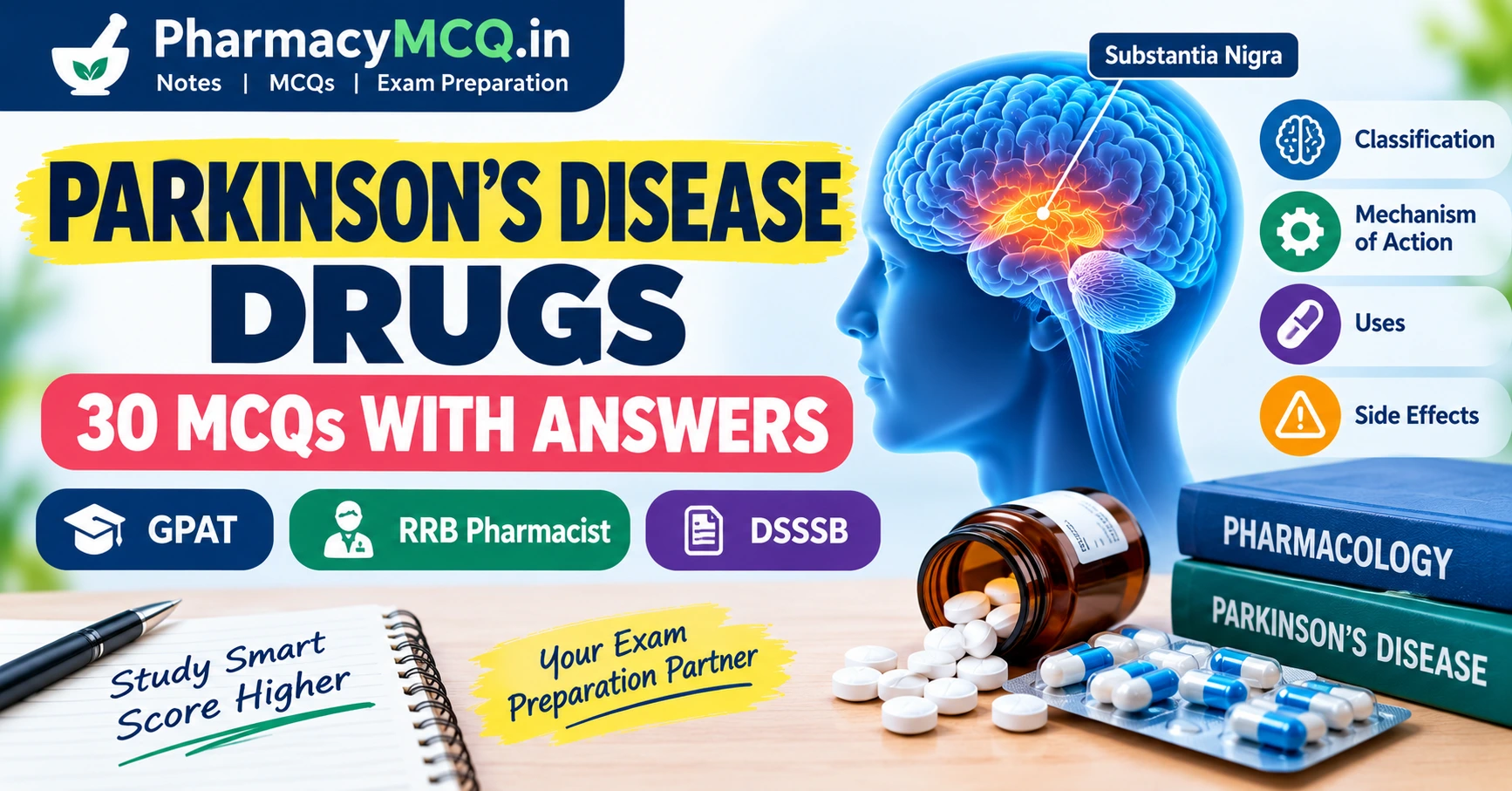
Parkinson’s disease is a progressive neurological disorder associated with the loss of dopamine-producing neurons in the substantia nigra. Drugs used in its management aim to improve motor symptoms such as tremor, rigidity, and bradykinesia. In this article, practise 30 important multiple-choice questions (MCQs) on antiparkinsonian drugs, including levodopa, carbidopa, dopamine agonists, MAO-B inhibitors, COMT inhibitors, … Read more
Anticancer Drugs: Classification, Mechanism, Uses & Side Effects

Anticancer drugs are medicines used to treat cancer by destroying cancer cells, stopping their growth, or interfering with the processes that allow them to multiply and spread.  Anticancer drugs include traditional chemotherapy agents, hormonal medicines, targeted therapies, and immunotherapies. Each group acts differently, and the choice of treatment depends on the type of cancer, its … Read more

Antimalarial Drugs: Classification, Mechanism, Uses & Side Effects

Antimalarial drugs are medicines used to treat malaria and, in selected circumstances, prevent infection. Malaria is a parasitic disease caused by Plasmodium species and transmitted mainly through the bite of an infected female Anopheles mosquito. Antimalarial drugs are an important topic in pharmacology for B.Pharm, D.Pharm, GPAT, Drug Inspector and pharmacist recruitment examinations. Understanding their … Read more

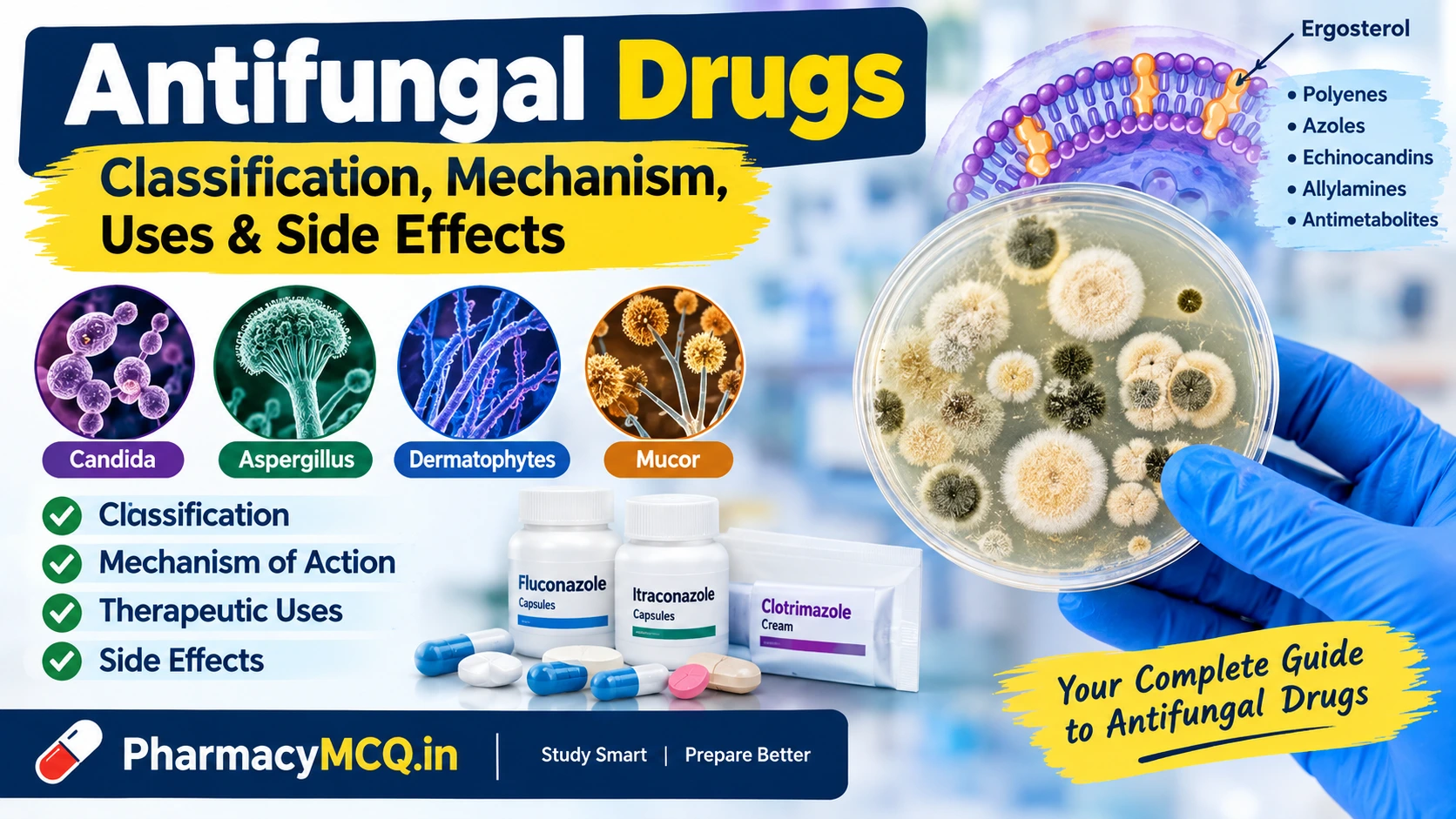
Antifungal Drugs: Classification, Mechanism, Uses & Side Effects

Introduction Antifungal drugs are medicines used to prevent or treat infections caused by fungi. These infections can affect the skin, nails, mouth, genital area, lungs, and other organs. Some fungal infections are mild, while others can become serious, particularly in people with weakened immune systems. Antifungal drugs work through different mechanisms, including inhibition of fungal … Read more