Anticancer Drugs: Classification, Mechanism, Uses & Side Effects

📌 Introduction   Anticancer drugs are used in the treatment of cancer by inhibiting the growth and spread of abnormal cells. Cancer is a condition characterized by uncontrolled cell division. This topic is very important for GPAT, DSSSB, and other pharmacy exams. 🔍 What is Cancer?   Cancer is a disease in which cells grow uncontrollably and … Read more

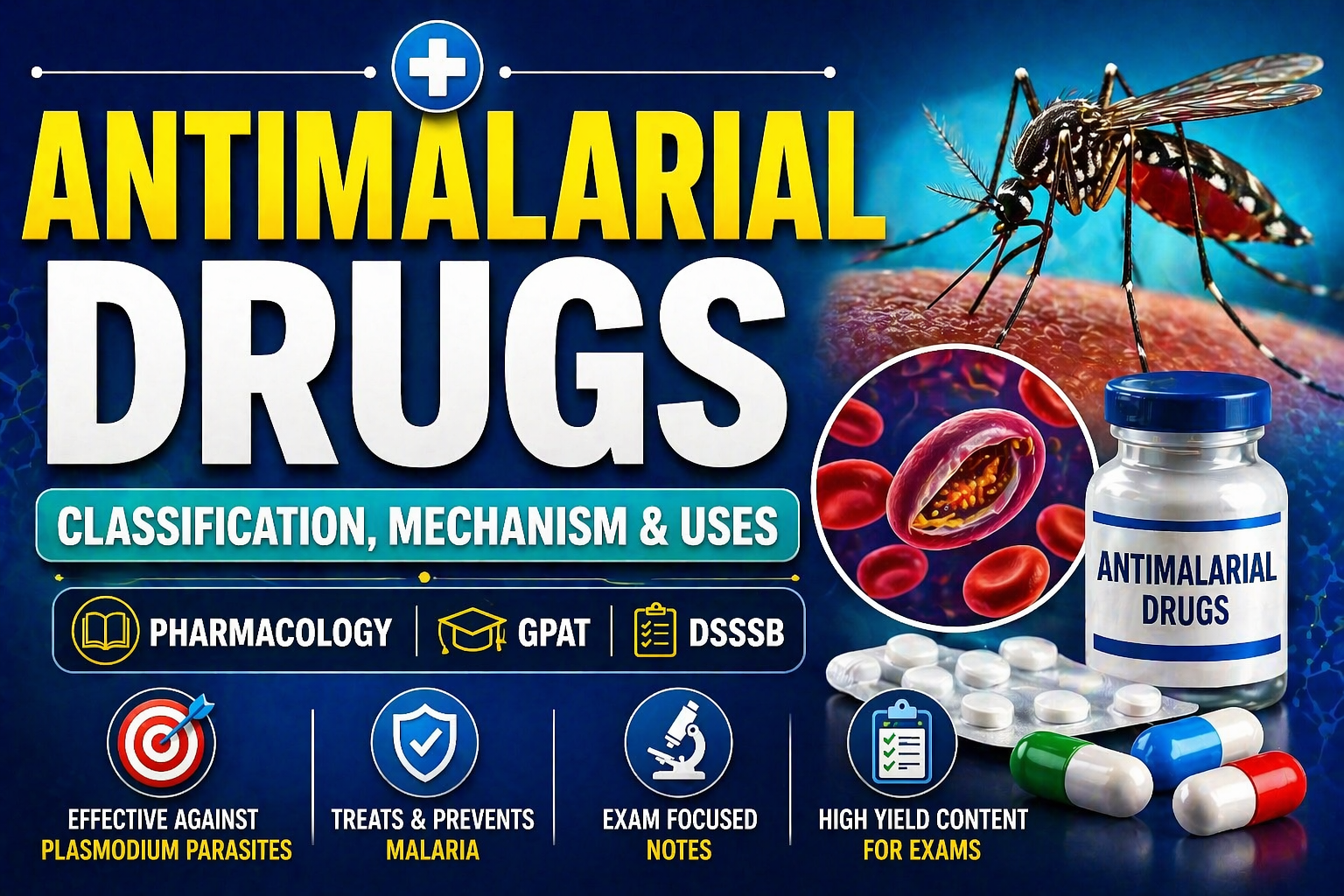
Antimalarial Drugs: Classification, Mechanism, Uses & Side Effects (Easy Notes)

 📌 Introduction   Antimalarial drugs are used to treat and prevent malaria, a serious parasitic disease caused by Plasmodium species. Malaria is transmitted through the bite of infected female Anopheles mosquitoes. This topic is highly important for GPAT, DSSSB, and other pharmacy exams. 🔍 What is Malaria?   Malaria is caused by parasites such as: • Plasmodium … Read more

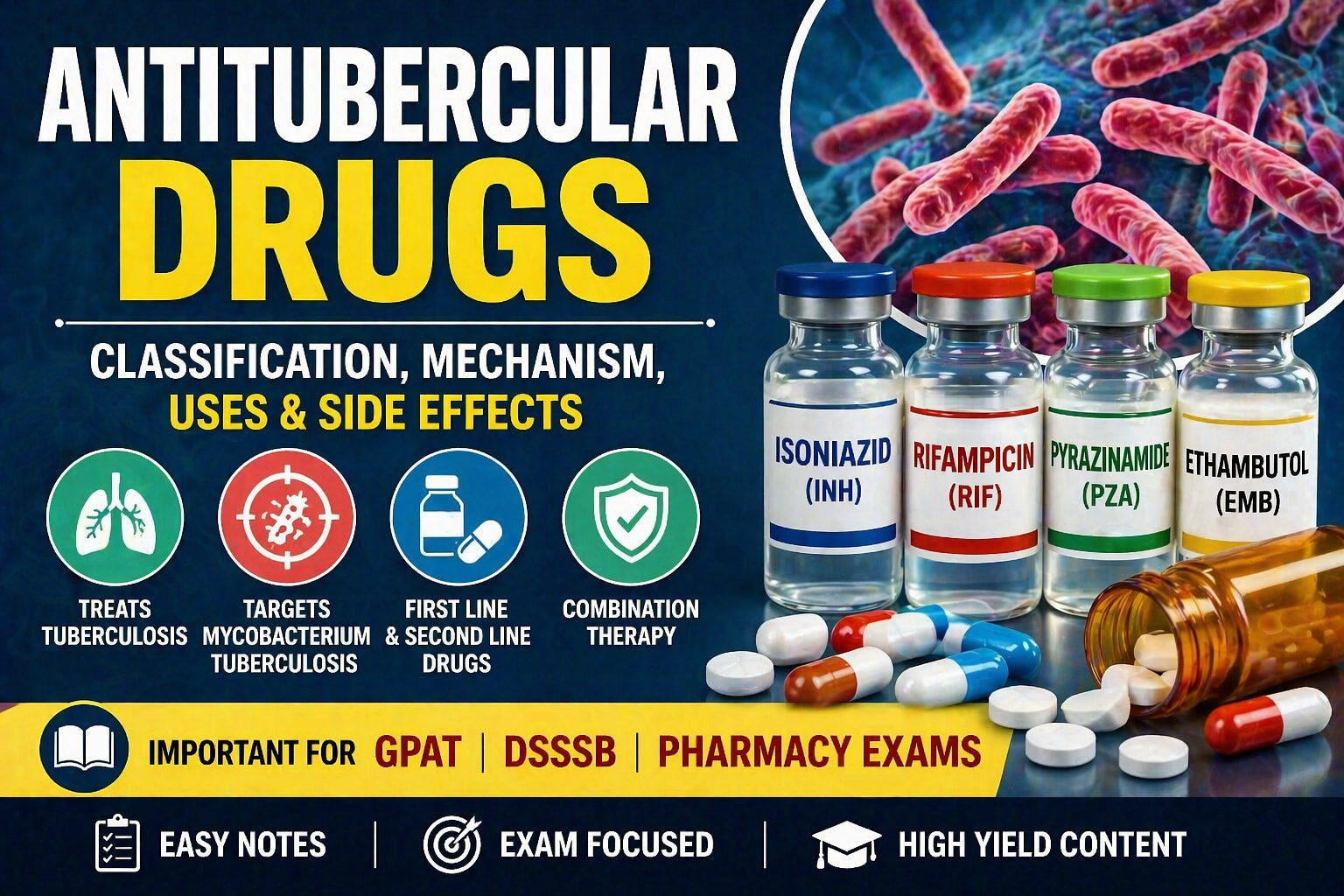
Antitubercular Drugs: Classification, Mechanism, Uses & Side Effects (Easy Notes)

📌 Introduction   Antitubercular drugs are used in the treatment of tuberculosis (TB), a serious infectious disease caused by Mycobacterium tuberculosis. TB mainly affects the lungs but can also involve other organs. This is a very important topic for GPAT, DSSSB, and other pharmacy exams, with frequent questions asked every year. 🔍 What is Tuberculosis?   Tuberculosis … Read more

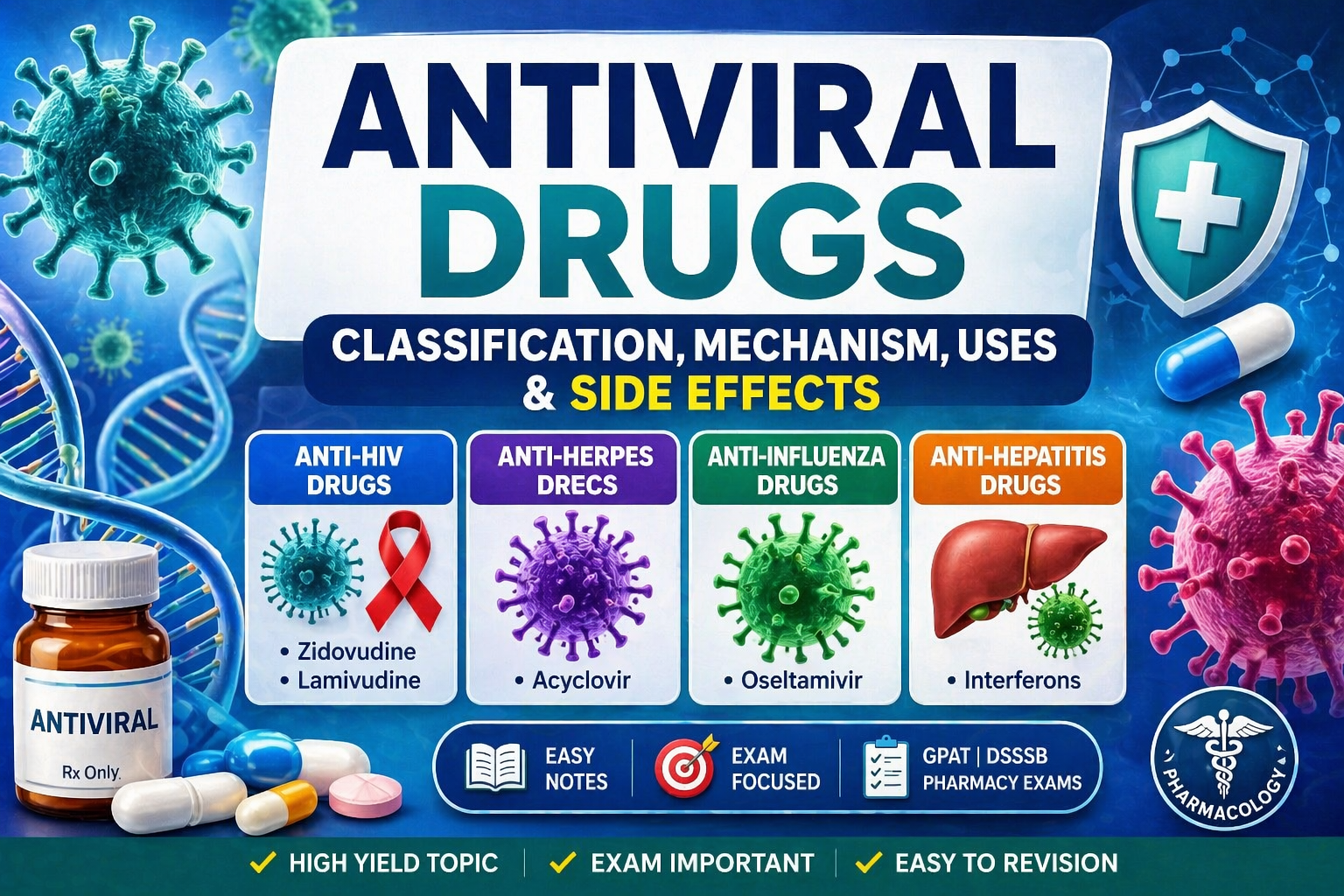
Antiviral Drugs: Classification, Mechanism, Uses & Side Effects (Easy Notes)

📌 Introduction   Antiviral drugs are used to treat viral infections by inhibiting the growth and replication of viruses. Unlike bacteria, viruses depend on host cells for survival, making them more difficult to treat. This topic is highly important for GPAT, DSSSB, and other pharmacy exams. 🔍 What are Viral Infections?   Viral infections are caused by … Read more

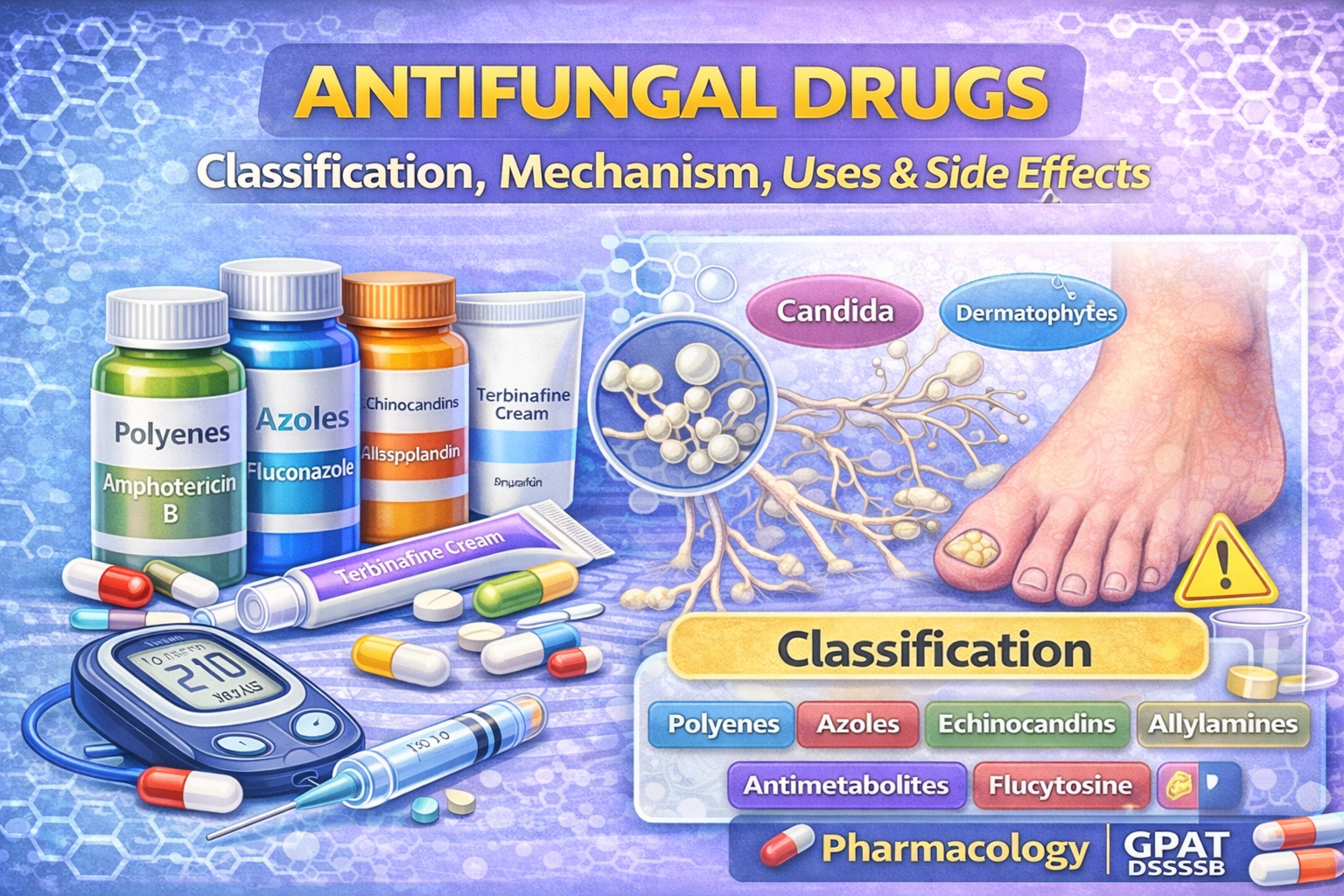
Antifungal Drugs: Classification, Mechanism, Uses & Side Effects

📌 Introduction   Antifungal drugs are an important group of antimicrobial agents used to treat fungal infections. Fungal infections range from superficial infections like skin and nail infections to serious systemic infections affecting internal organs.   With increasing use of antibiotics and immunosuppressive drugs, fungal infections are becoming more common. Therefore, antifungal drugs are frequently asked in … Read more

Diuretics: Classification, Mechanism, Uses & Side Effects

📌 Introduction Diuretics are an important class of drugs used to increase urine output and remove excess fluid from the body. They are widely used in conditions like hypertension, edema, and heart failure. This topic is frequently asked in GPAT, DSSSB, and other pharmacy exams, making it essential for students. Understanding diuretics helps in both … Read more

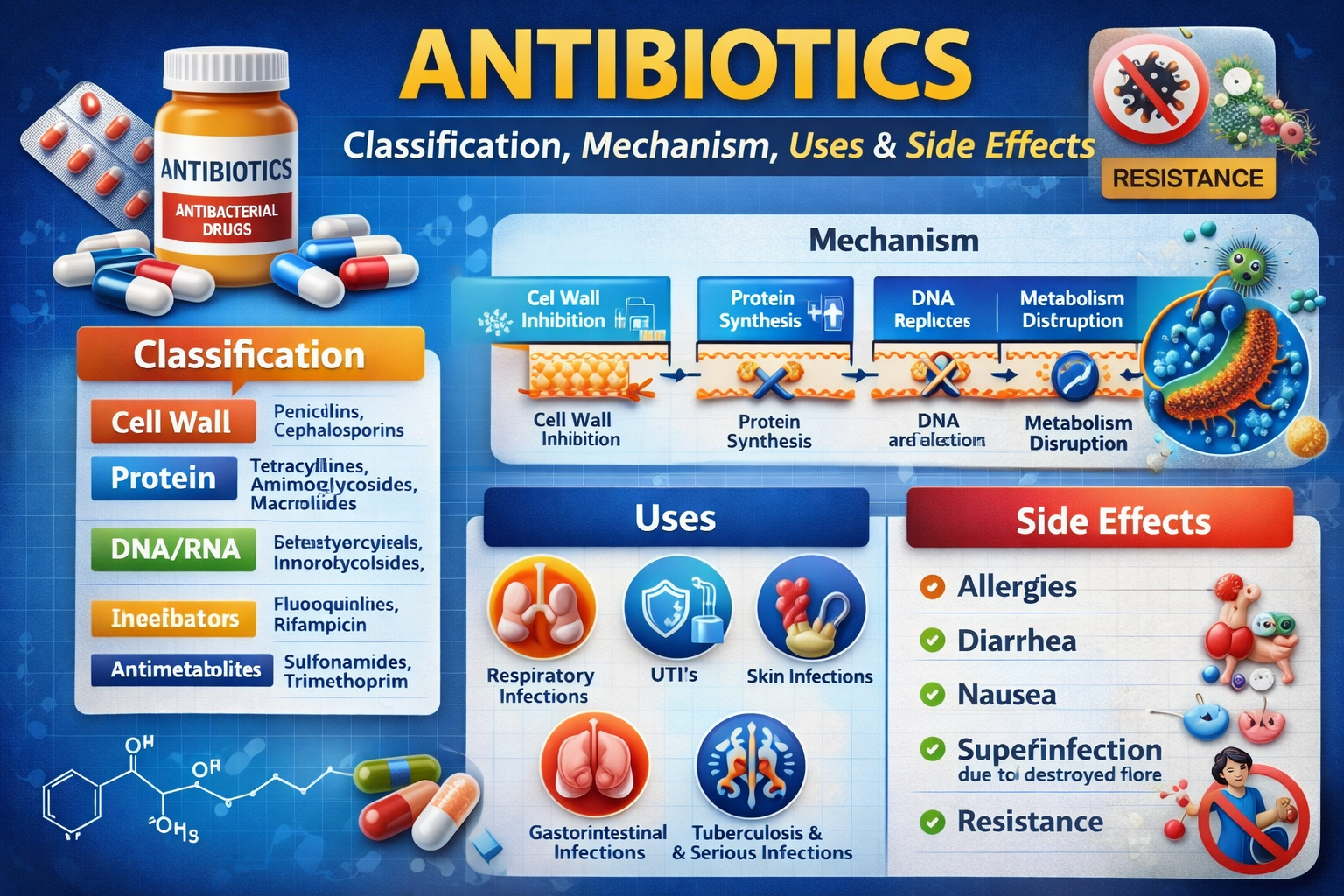
Antibiotics: Classification, Mechanism, Uses & Side Effects

📌 Introduction   Antibiotics are one of the most important and widely used drug classes in pharmacology. They are essential for treating bacterial infections and are frequently asked in competitive exams like GPAT, DSSSB, and other pharmacy exams. A clear understanding of antibiotics helps students not only in exams but also in clinical practice. With the … Read more

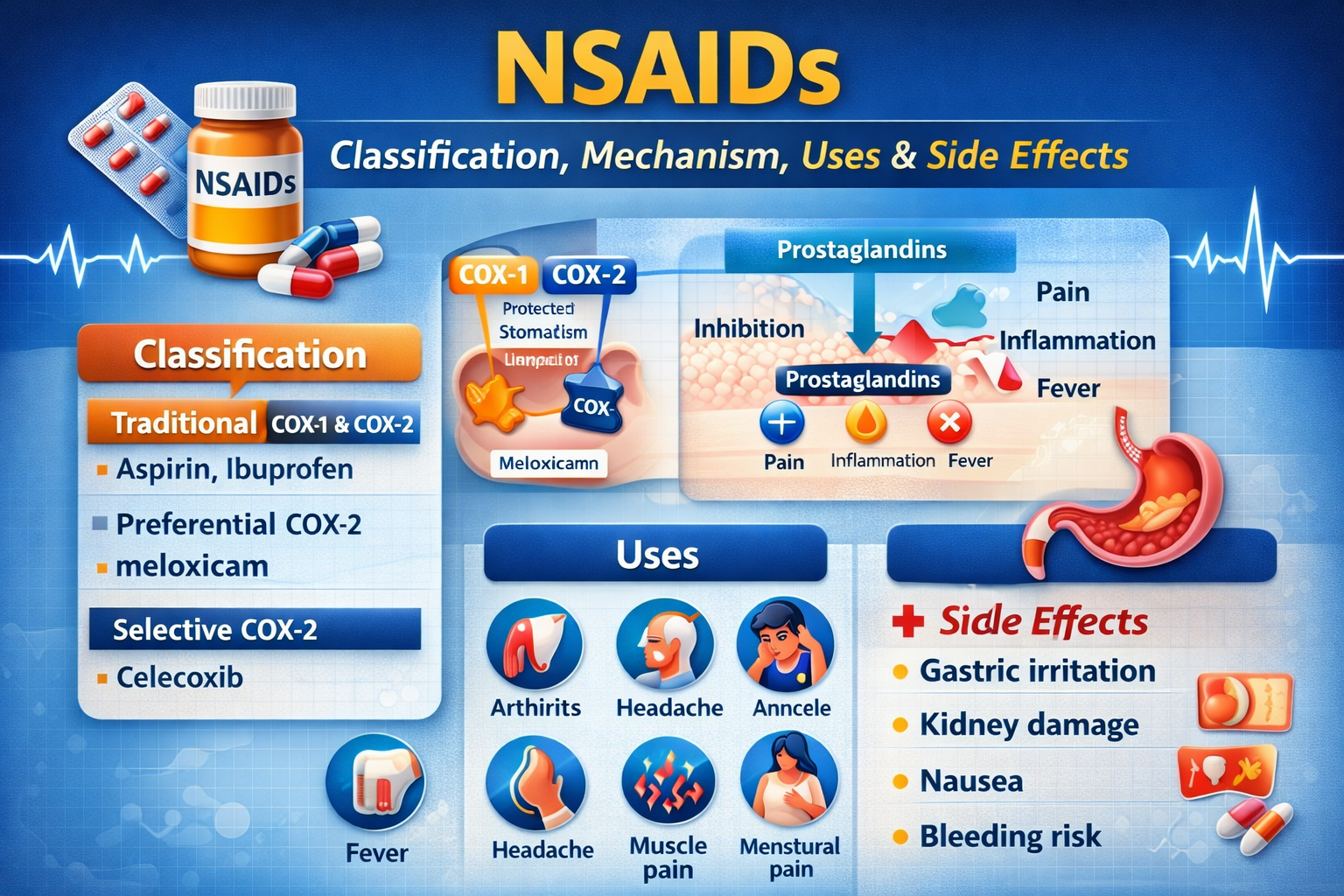
NSAIDs: Classification, Mechanism, Uses & Side Effects

📌 Introduction   Non-Steroidal Anti-Inflammatory Drugs (NSAIDs) are one of the most commonly used drug classes in pharmacology. They are widely prescribed for pain, inflammation, and fever. NSAIDs are very important for pharmacy students because they are frequently asked in competitive exams like GPAT, DSSSB, and other medical entrance tests. Understanding their classification, mechanism, uses, and … Read more