Top 30 MCQs on Antiviral Drugs with Answers & Explanation
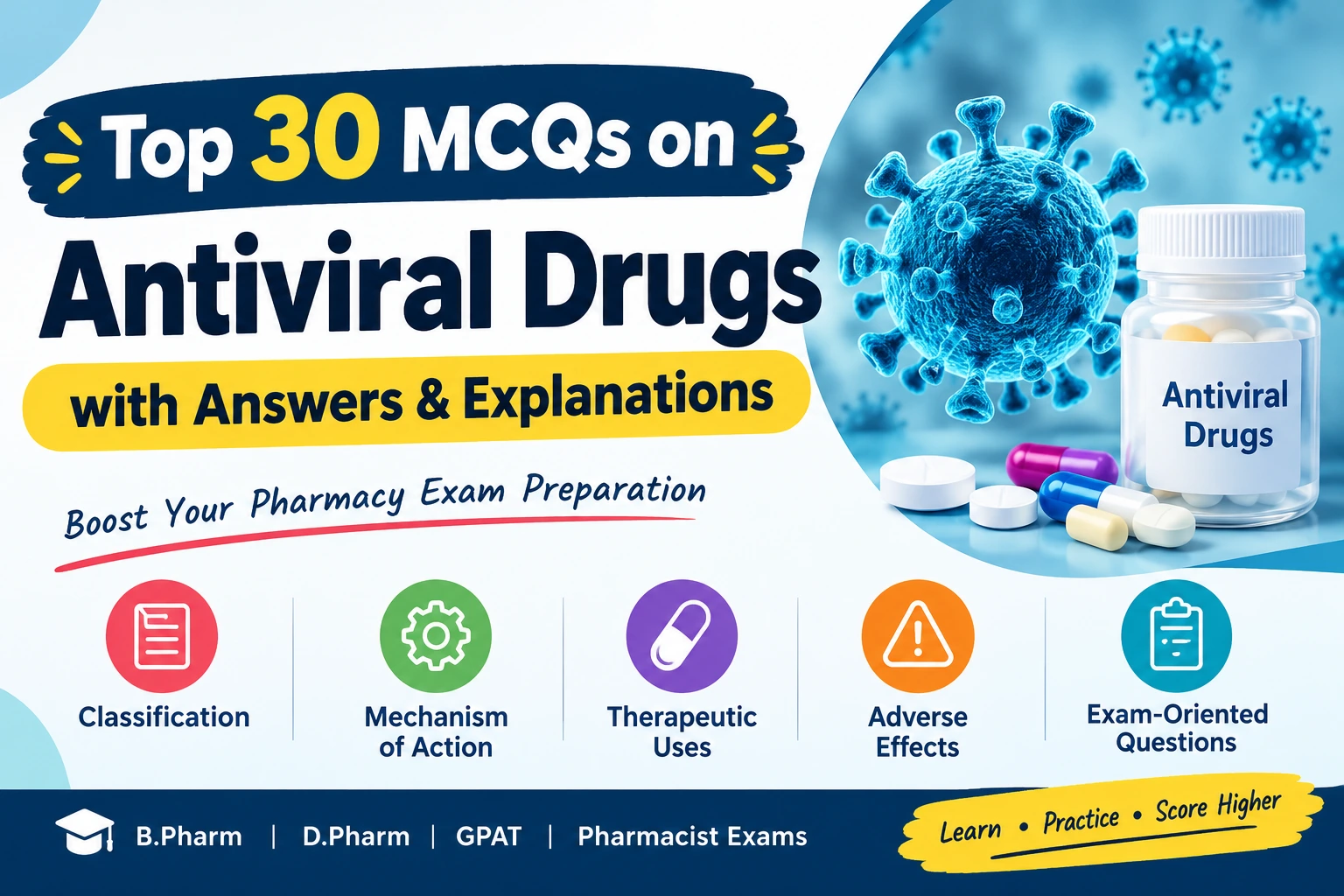
Antiviral drugs are an important topic in pharmacology for B.Pharm, D.Pharm, GPAT, and pharmacist recruitment examinations. Questions commonly cover antiviral drug classification, mechanisms of action, therapeutic uses, adverse effects, and differences between drugs used for various viral infections. In this article, you will find 30 important multiple-choice questions on antiviral drugs, along with correct answers … Read more
Top 30 MCQs on Antifungal Drugs with Answers & Explanation

Antifungal drugs are important in pharmacology and are frequently studied by B.Pharm and D.Pharm students preparing for GPAT and pharmacist recruitment examinations. These drugs are used to prevent or treat fungal infections by acting on different components of fungal cells, including the cell membrane, cell wall, and nucleic acid synthesis pathways. In this post, you … Read more

Top 30 MCQs on Antihypertensive Drugs with Answers & Explanation

Antihypertensive drugs are medicines used to manage high blood pressure and reduce the risk of complications such as stroke, heart failure, and kidney disease. Understanding their classification, mechanism of action, therapeutic uses, and adverse effects is essential for pharmacy students. These 30 MCQs on antihypertensive drugs with answers and explanations cover important pharmacology concepts for … Read more

Top 30 MCQs on Antihistamines with Answers & Explanation

Introduction Antihistamines are an important topic in pharmacology and are frequently studied by B.Pharm, D.Pharm, GPAT, and pharmacist recruitment exam candidates. These drugs are primarily used to manage allergic symptoms such as sneezing, itching, a runny nose, and urticaria. Most antihistamines discussed in allergy treatment act on histamine H1 receptors. They are broadly classified into … Read more

Top 30 MCQs on Antibiotics with Answers & Explanation

Antibiotics are an important topic in Pharmacology and are frequently tested in B.Pharm, D.Pharm, GPAT, pharmacist recruitment exams, and other competitive pharmacy examinations. This practice set covers important antibiotic classes, mechanisms of action, ribosomal targets, adverse effects, resistance mechanisms, and high-yield individual drugs. 1. Which bacterial structure is primarily targeted by β-lactam antibiotics? A. 30S … Read more

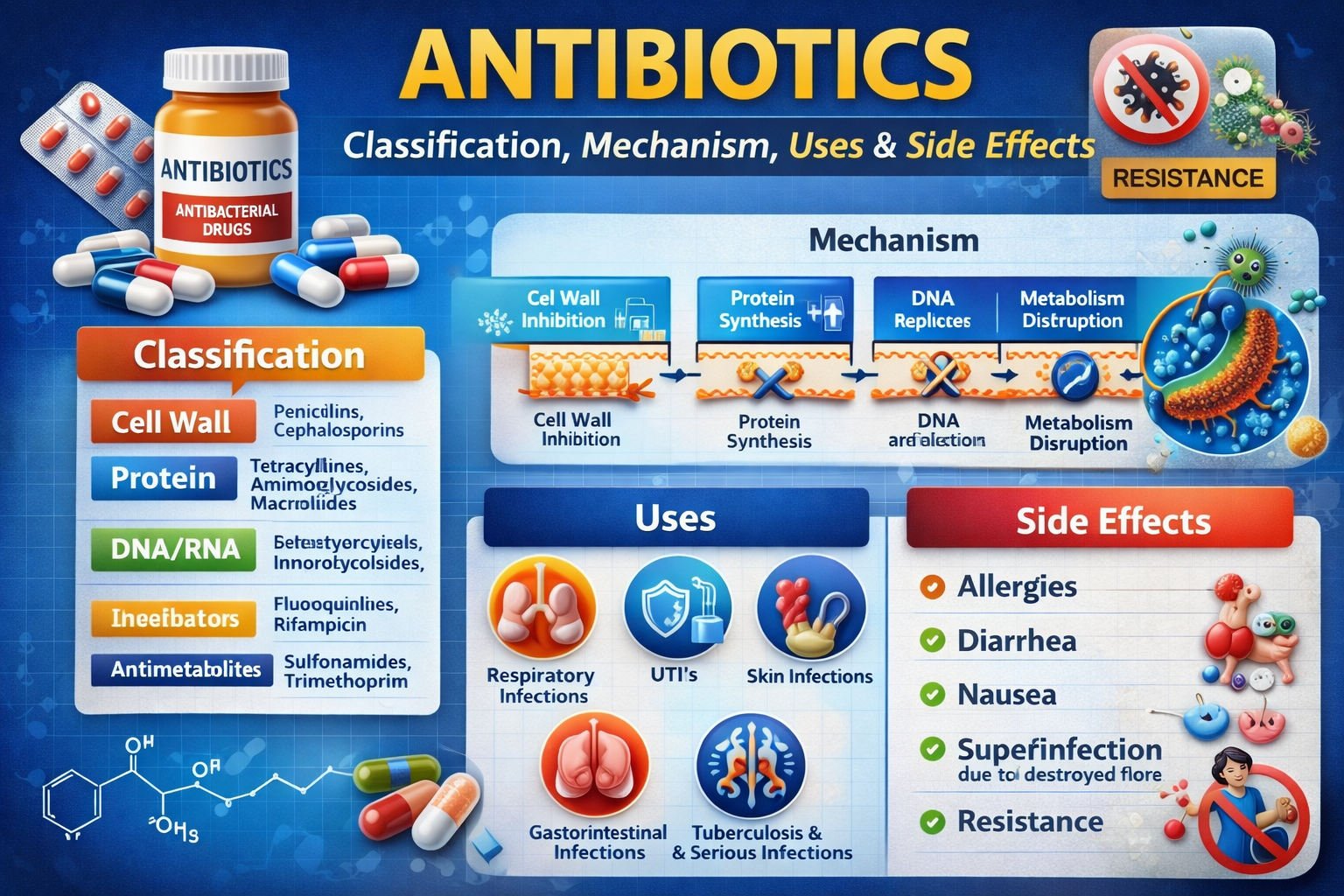
Antibiotics: Classification, Mechanism of Action, Uses, Adverse Effects & Resistance

Antibiotics are medicines used to treat infections caused by susceptible bacteria. They work by targeting important bacterial structures or processes such as cell-wall synthesis, protein synthesis, DNA replication, RNA synthesis, and folate metabolism. For pharmacy students, understanding the classification, mechanism of action, important examples, therapeutic uses, and adverse effects of antibiotics is essential for B.Pharm, … Read more

Top 30 MCQs on NSAIDs with Answers & Explanation

Nonsteroidal anti-inflammatory drugs (NSAIDs) are an important topic in pharmacology and are frequently asked in B.Pharm, D.Pharm, GPAT, pharmacist recruitment examinations, and other pharmacy competitive exams. NSAIDs mainly produce analgesic, antipyretic, and anti-inflammatory effects by reducing prostaglandin synthesis through inhibition of cyclooxygenase (COX) enzymes. However, individual NSAIDs differ in their COX selectivity, clinical uses, adverse … Read more

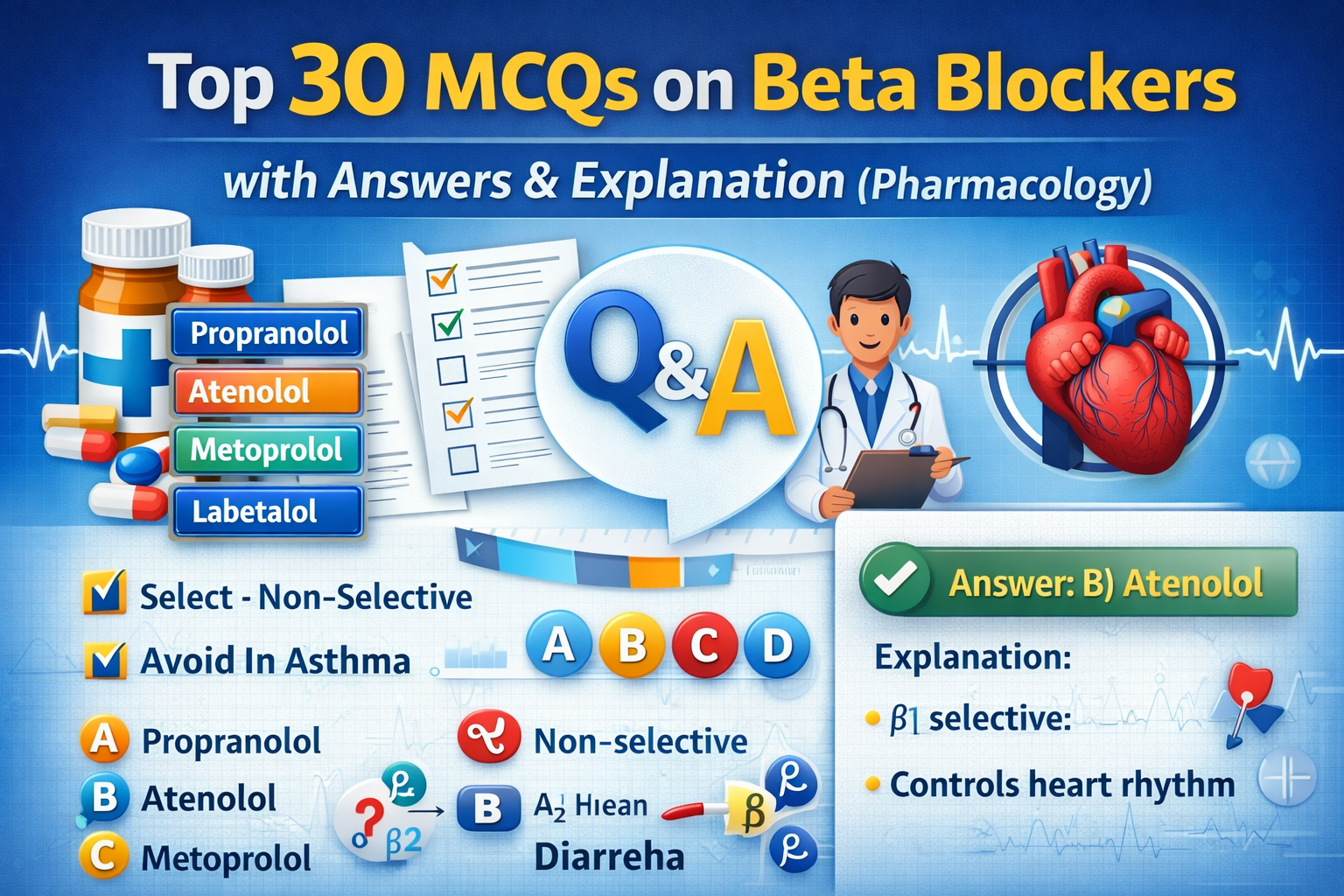
Top 30 MCQs on Beta Blockers with Answers & Explanation

Beta blockers are an important group of drugs in pharmacology and are frequently discussed in B.Pharm, D.Pharm, GPAT, pharmacist recruitment, and other pharmacy examinations. They mainly act by blocking beta-adrenergic receptors and are used in several cardiovascular and non-cardiovascular conditions. In this article, you will find 30 important Beta Blockers MCQs with answers and short … Read more

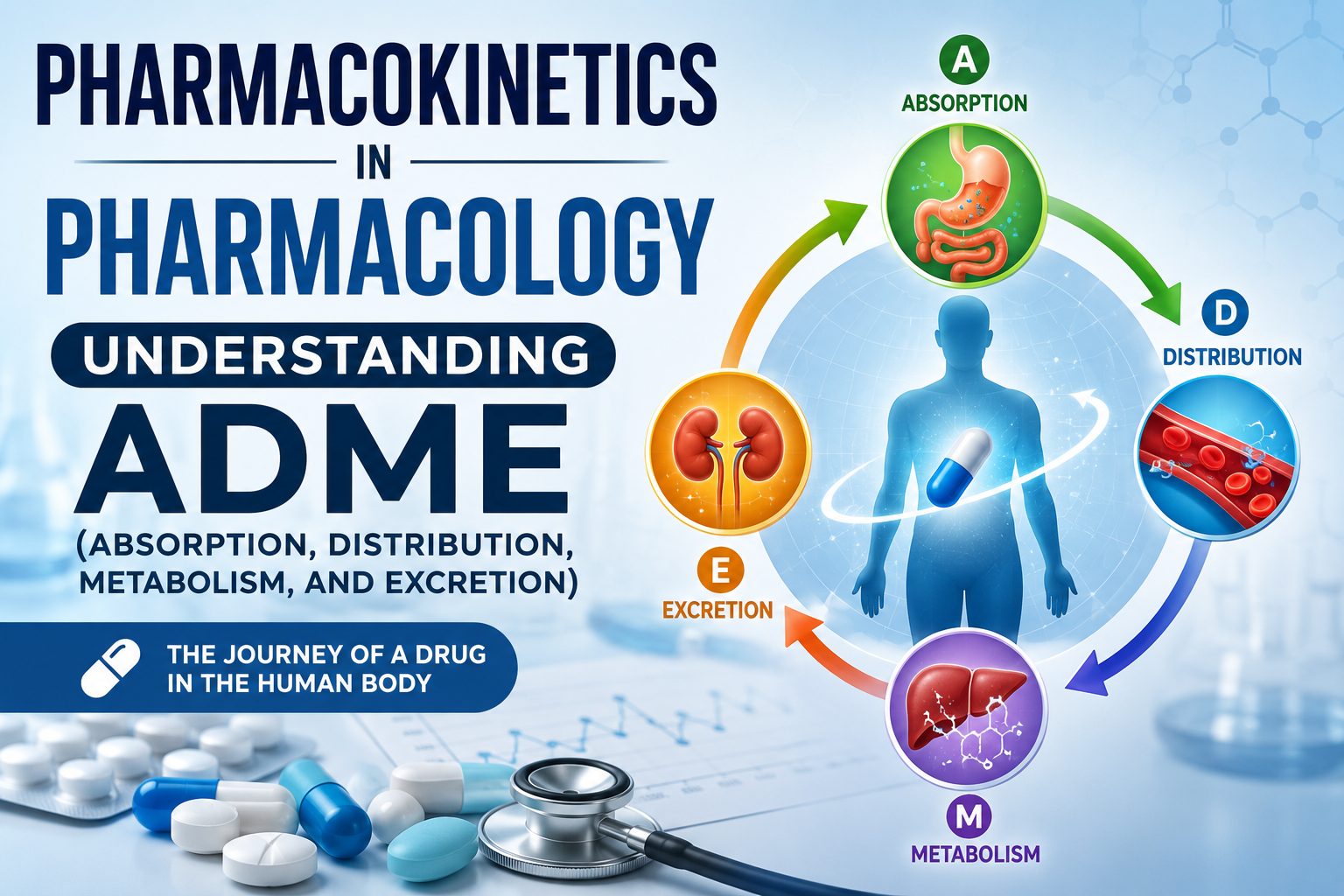
Pharmacokinetics in Pharmacology: ADME, Bioavailability, Half-Life & Drug Clearance

📌Introduction Pharmacokinetics is an important branch of pharmacology that explains what the body does to a drug after the drug is administered. It describes how a medicine enters the body, moves through different tissues, undergoes chemical changes, and is finally removed from the body. The major processes of pharmacokinetics are commonly represented by ADME: Understanding … Read more