
Microbiology: Definition, History, Scope and Importance in Pharmacy
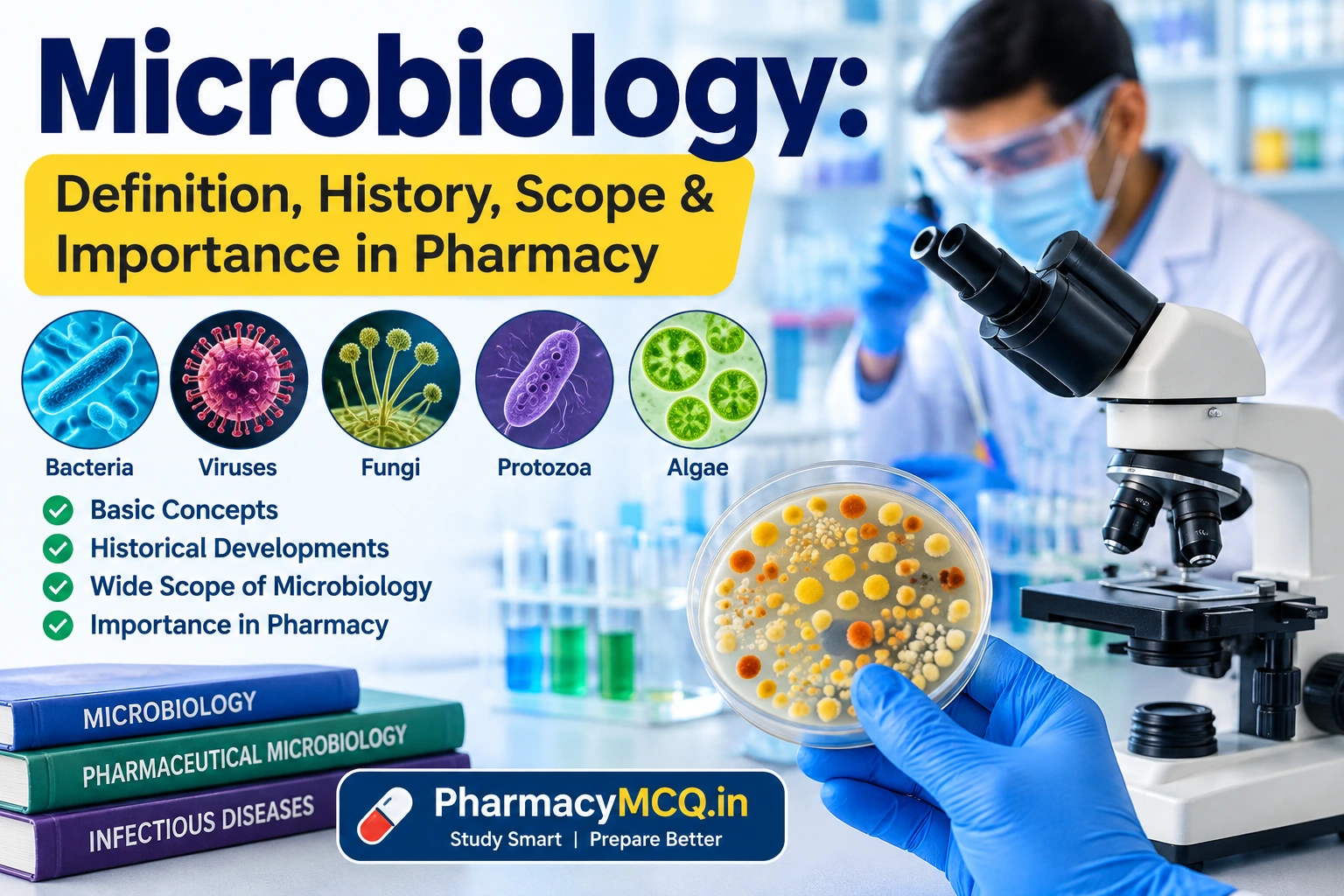
📌Introduction Microbiology is an important branch of pharmaceutical science that deals with the study of microorganisms, including bacteria, viruses, fungi, protozoa, and certain microscopic algae. These microorganisms play an essential role in human health, disease development, medicine production, and pharmaceutical manufacturing. In pharmacy, microbiology helps students understand how microorganisms cause infections, how antimicrobial drugs work, … Read more
Top 30 MCQs on Antibiotics with Answers & Explanation

Antibiotics are an important topic in Pharmacology and are frequently tested in B.Pharm, D.Pharm, GPAT, pharmacist recruitment exams, and other competitive pharmacy examinations. This practice set covers important antibiotic classes, mechanisms of action, ribosomal targets, adverse effects, resistance mechanisms, and high-yield individual drugs. 1. Which bacterial structure is primarily targeted by β-lactam antibiotics? A. 30S … Read more

Antibiotics: Classification, Mechanism of Action, Uses, Adverse Effects & Resistance

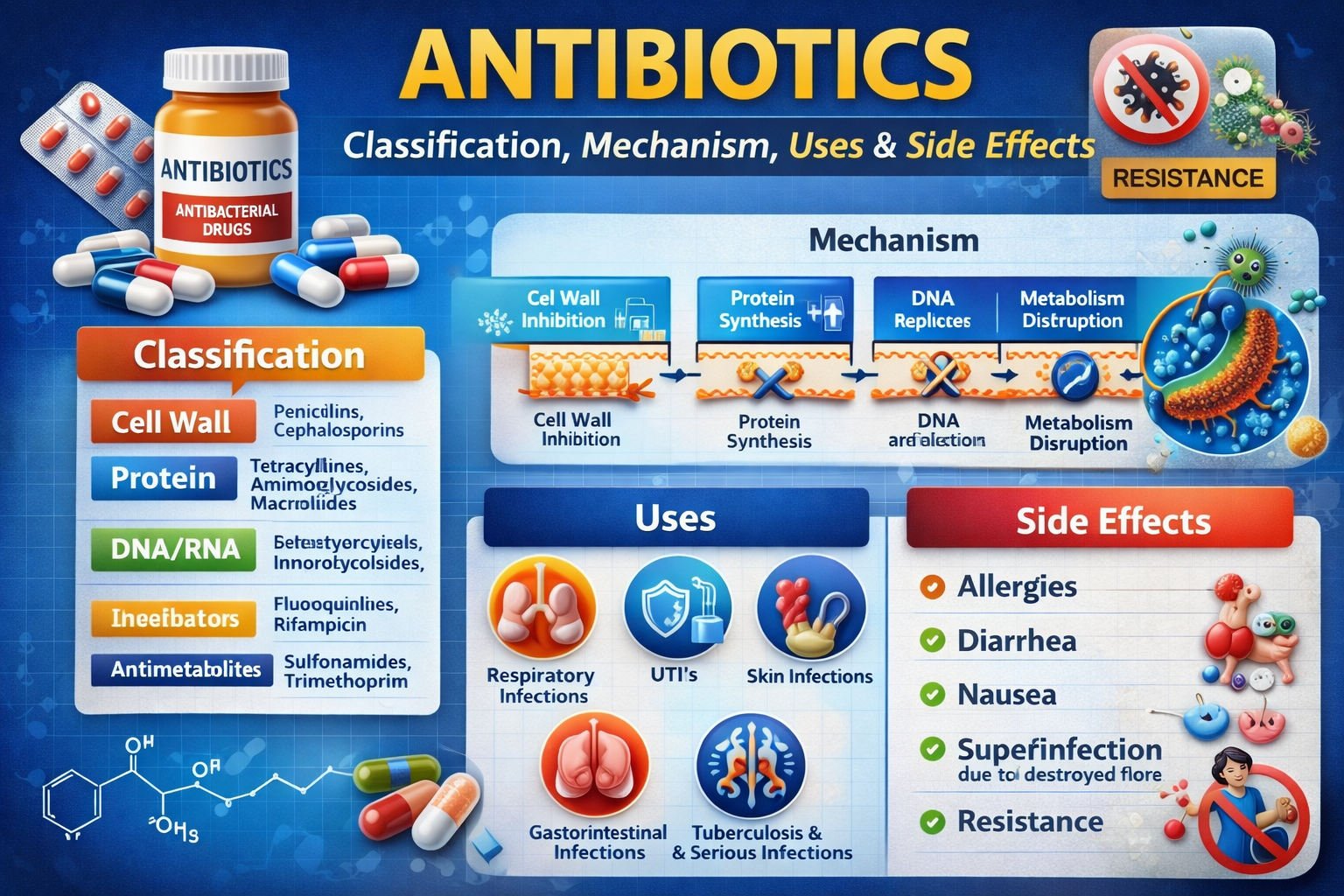
Antibiotics are medicines used to treat infections caused by susceptible bacteria. They work by targeting important bacterial structures or processes such as cell-wall synthesis, protein synthesis, DNA replication, RNA synthesis, and folate metabolism. For pharmacy students, understanding the classification, mechanism of action, important examples, therapeutic uses, and adverse effects of antibiotics is essential for B.Pharm, … Read more