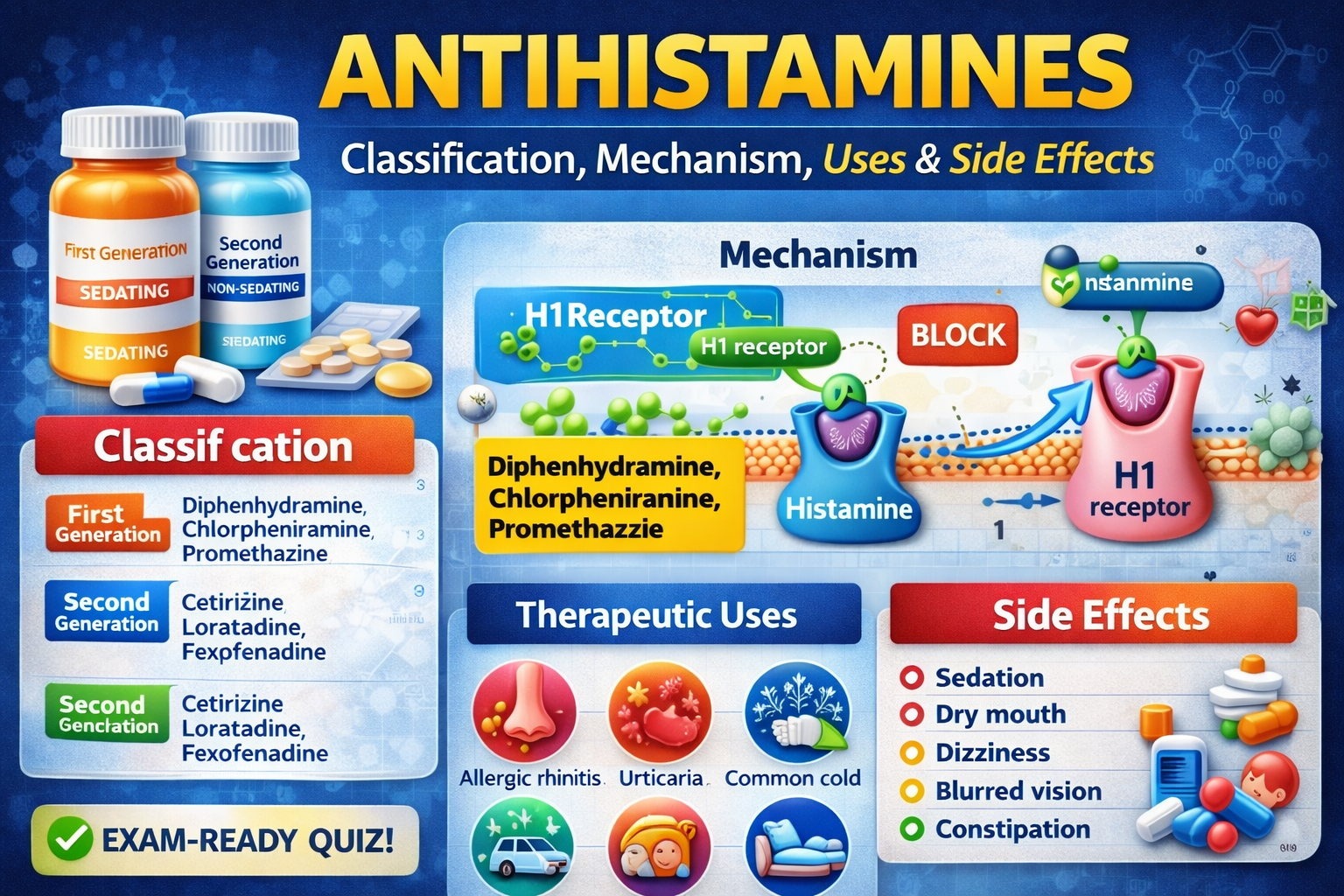
📌 Introduction
Antihistamines are an important group of medicines used to control symptoms associated with allergic reactions. They are an important topic in pharmacology and are frequently included in pharmacy examinations and MCQs.
Histamine is a naturally occurring chemical mediator involved in allergic and inflammatory reactions. When histamine acts on its receptors, it can contribute to symptoms such as sneezing, itching, runny nose, watery eyes, redness, and urticaria (hives).
Antihistamines reduce many of these symptoms by interfering with the action of histamine, particularly at H1 receptors.
For pharmacy students, understanding the classification, mechanism of action, therapeutic uses, adverse effects, and important examples makes this topic much easier to revise.
🟢What Is Histamine?
Histamine is a naturally occurring chemical messenger found in several tissues of the body. It participates in different physiological and pathological processes, including allergic reactions, gastric acid secretion, and certain functions of the nervous system.
Histamine produces its effects by binding to specific histamine receptors.
The four major histamine receptors are:
- H1 receptors
- H2 receptors
- H3 receptors
- H4 receptors
Among these, H1 and H2 receptors are particularly important in basic pharmacology.
H1 Receptors
H1 receptors are involved in many symptoms associated with allergic reactions. Activation of these receptors can contribute to:
- Itching
- Sneezing
- Runny nose
- Watery eyes
- Redness
- Swelling
- Urticaria
H1 antihistamines are therefore mainly used to reduce symptoms associated with allergic conditions.
H2 Receptors
H2 receptors are primarily associated with gastric acid secretion. H2 receptor antagonists such as famotidine are used mainly in acid-related gastrointestinal conditions and are different from the H1 antihistamines commonly used for allergies.
🔍What Are Antihistamines?
Antihistamines are drugs that reduce the effects of histamine by acting at histamine receptors.
When discussing allergy treatment, the term antihistamine usually refers to H1 receptor antagonists or H1 receptor inverse agonists.
They are commonly used for conditions such as:
- Allergic rhinitis
- Urticaria
- Allergic conjunctivitis
- Some allergic skin conditions
- Itching associated with certain allergic reactions
- Motion sickness with selected first-generation drugs
Antihistamines are available in different dosage forms, including:
- Tablets
- Capsules
- Syrups or oral liquids
- Nasal preparations
- Eye drops
📝Classification of H1 Antihistamines
H1 antihistamines are commonly classified into two broad groups:
- First-generation antihistamines
- Second-generation antihistamines
The major practical difference between these groups is their tendency to enter the central nervous system and produce sedation.
1. First-Generation Antihistamines
First-generation antihistamines can cross the blood-brain barrier relatively easily. As a result, they are more likely to produce central nervous system effects such as drowsiness and reduced alertness.
Many first-generation drugs also have anticholinergic properties, which can contribute to adverse effects such as dry mouth, blurred vision, constipation, and urinary retention.
Examples
Important first-generation antihistamines include:
- Diphenhydramine
- Chlorpheniramine
- Promethazine
- Hydroxyzine
- Dimenhydrinate
- Meclizine
- Cyproheptadine
Important Characteristics
First-generation antihistamines may:
- Cause sedation and drowsiness
- Reduce alertness
- Cause dizziness
- Produce anticholinergic effects
- Cause dry mouth
- Cause blurred vision
- Cause constipation
- Cause difficulty in urination
Because of their sedative effects, caution is required when driving or operating machinery.
Some first-generation antihistamines also have additional therapeutic uses. For example, dimenhydrinate and meclizine are used for motion sickness.
2. Second-Generation Antihistamines
Second-generation antihistamines were developed with the aim of providing effective H1 antihistamine activity with less penetration into the central nervous system.
They generally cause less sedation than first-generation antihistamines, although some individuals may still experience drowsiness.
Examples
Common second-generation antihistamines include:
- Cetirizine
- Levocetirizine
- Loratadine
- Desloratadine
- Fexofenadine
- Acrivastine
These medicines are widely used for allergic conditions such as allergic rhinitis and urticaria.
💊First-Generation vs Second-Generation Antihistamines
| Feature | First Generation | Second Generation |
|---|---|---|
| CNS penetration | Greater | Lower |
| Sedation | More common | Generally less |
| Anticholinergic effects | More common | Generally less |
| Duration of action | Often shorter | Often longer |
| Examples | Diphenhydramine, Promethazine | Cetirizine, Loratadine, Fexofenadine |
| Common uses | Allergy, motion sickness and other selected conditions | Allergic rhinitis, urticaria and other allergic conditions |
Easy Exam Tip
First generation → More sedation
Second generation → Less sedation
Remember that “less sedating” does not mean that every second-generation antihistamine is completely free from drowsiness.
🧬Mechanism of Action of Antihistamines
The main action of H1 antihistamines is to reduce the effects of histamine at H1 receptors.
During an allergic response, exposure to an allergen can trigger the release of histamine and other inflammatory mediators in a sensitized individual.
Histamine then acts on H1 receptors and contributes to symptoms such as:
- Sneezing
- Itching
- Runny nose
- Watery eyes
- Skin wheals and hives
H1 antihistamines interfere with this receptor-mediated action and therefore reduce many histamine-related symptoms.
Simple Mechanism
Allergen → Histamine release → H1 receptor activation → Allergy symptoms
H1 antihistamine:
H1 receptor blockade/inverse agonism → Reduced histamine-mediated effects → Reduced allergy symptoms
Modern pharmacology commonly describes many H1 antihistamines as inverse agonists, because they stabilize the inactive form of the H1 receptor rather than simply acting as traditional competitive blockers.
✒️Do Antihistamines Stop Histamine Release?
Not usually.
Antihistamines primarily reduce the effects of histamine at its receptors. They should therefore be distinguished from drugs that prevent the release of inflammatory mediators from certain cells.
This is an important distinction for pharmacology examinations.
🧪Effects of H1 Antihistamines
1. Reduction in Itching
Histamine can stimulate sensory nerves and contribute to itching. H1 antihistamines can reduce histamine-related itching, particularly in conditions such as urticaria.
2. Reduction in Sneezing
Histamine contributes to sneezing during allergic reactions. H1 antihistamines can help reduce this symptom.
3. Reduction in Runny Nose
H1 antihistamines can reduce some nasal symptoms associated with allergic rhinitis, particularly sneezing and rhinorrhea.
4. Reduction in Watery and Itchy Eyes
Antihistamines can help relieve allergic eye symptoms such as itching and watering. Specific antihistamine eye preparations are also available.
5. Reduction in Urticarial Symptoms
H1 antihistamines are commonly used to control the itching associated with urticaria, also known as hives.
🩺Therapeutic Uses of Antihistamines
Antihistamines have several important therapeutic applications.
1. Allergic Rhinitis
Allergic rhinitis can produce symptoms such as:
- Sneezing
- Runny nose
- Nasal itching
- Watery eyes
- Itchy eyes
H1 antihistamines can help control many of these symptoms.
Common examples include:
- Cetirizine
- Loratadine
- Fexofenadine
- Levocetirizine
For persistent allergic rhinitis, other treatments such as intranasal corticosteroids may also be considered depending on the clinical situation.
2. Urticaria
Urticaria, commonly called hives, is characterized by raised, itchy wheals on the skin.
Histamine has an important role in many cases of urticaria, making H1 antihistamines an important treatment option for symptom control.
Examples include:
- Cetirizine
- Loratadine
- Fexofenadine
- Levocetirizine
Treatment depends on the type and duration of urticaria and the individual patient’s circumstances.
3. Allergic Conjunctivitis
Allergic conjunctivitis may cause:
- Redness of the eyes
- Itching
- Excessive watering
Appropriate antihistamine eye preparations can help control these symptoms.
4. Allergic Skin Conditions and Itching
Some antihistamines are used to reduce itching associated with allergic skin reactions.
However, itching has many possible causes. Therefore, the underlying cause should be considered when selecting treatment.
5. Motion Sickness
Some first-generation antihistamines have activity in the central nervous system and can be used for prevention or treatment of motion sickness.
Examples include:
- Dimenhydrinate
- Meclizine
Their central nervous system effects contribute to their usefulness in this setting but can also contribute to drowsiness.
6. Nausea and Vomiting
Selected first-generation antihistamines may be useful for certain types of nausea and vomiting.
However, antihistamines are not interchangeable, and the specific indication depends on the individual drug.
7. Common Cold Symptom Relief
Some first-generation antihistamines may be included in combination products used for symptomatic relief of certain cold symptoms.
However, antihistamines do not eliminate the viral infection responsible for the common cold.
🛑Side Effects of Antihistamines
Adverse effects vary depending on the particular antihistamine, its dose, and whether it is a first- or second-generation drug.
1. Drowsiness and Sedation
Sedation is one of the most important adverse effects associated with many first-generation antihistamines.
Possible effects include:
- Sleepiness
- Reduced alertness
- Dizziness
- Slower reaction time
People taking a sedating antihistamine should be cautious about driving or operating machinery.
2. Dry Mouth
Some first-generation antihistamines have anticholinergic activity that can reduce salivary secretion and produce dry mouth.
3. Blurred Vision
Anticholinergic effects may contribute to blurred vision, particularly with some first-generation medicines.
4. Constipation
Anticholinergic activity can decrease gastrointestinal motility and may result in constipation.
5. Urinary Retention
Some first-generation antihistamines can make urination more difficult because of their anticholinergic effects.
This is particularly relevant in people who already have difficulty emptying the bladder.
6. Dizziness
Some antihistamines can cause dizziness or impaired alertness. This is more commonly associated with medicines that have greater central nervous system effects.
7. Paradoxical Excitation
Although sedation is common with many first-generation antihistamines, some individuals—particularly children—may experience paradoxical stimulation.
Possible symptoms include:
- Restlessness
- Irritability
- Nervousness
- Excitement
🔬Important Precautions
Extra caution may be required when using certain antihistamines in people with conditions such as:
- Glaucoma
- Difficulty passing urine
- Enlarged prostate
- Certain cardiovascular conditions
- Epilepsy
- Pregnancy
- Breastfeeding
The appropriate medicine depends on the individual patient’s medical history and other medicines being taken.
Patients should seek advice from a qualified healthcare professional when they are uncertain about which antihistamine is appropriate.
📖Why Are Second-Generation Antihistamines Often Preferred for Allergies?
Second-generation antihistamines generally enter the brain less readily than many first-generation agents. Therefore, they usually produce less sedation and fewer central nervous system effects.
Common examples include:
- Cetirizine
- Levocetirizine
- Loratadine
- Desloratadine
- Fexofenadine
However, individual responses vary. Some people can still experience drowsiness with certain second-generation antihistamines, including cetirizine.
Therefore, patients should understand how a particular medicine affects them before driving or performing activities that require full alertness.
Antihistamines in Allergic Rhinitis
Allergic rhinitis is a common condition in which the immune system responds to allergens such as pollen, dust mites, or animal allergens.
Common symptoms include:
- Sneezing
- Runny nose
- Nasal itching
- Watery eyes
- Itchy eyes
Antihistamines can reduce many of these symptoms.
Depending on the symptoms and their severity, treatment may also involve other medicines, including intranasal corticosteroids.
Antihistamines in Urticaria
Urticaria is characterized by itchy, raised wheals that may appear on different parts of the body.
Histamine is an important mediator in many cases of urticaria. H1 antihistamines can therefore reduce itching and other histamine-mediated symptoms.
Common examples include:
- Cetirizine
- Loratadine
- Fexofenadine
- Levocetirizine
The management of urticaria depends on whether it is acute or chronic and on the patient’s individual circumstances.
Antihistamines and Anaphylaxis
An important pharmacology and emergency medicine point is:
Antihistamines are not a substitute for epinephrine in anaphylaxis.
Anaphylaxis is a severe and potentially life-threatening allergic reaction. Epinephrine is the key emergency treatment and should be administered promptly when anaphylaxis occurs.
Antihistamines may sometimes be used as an additional treatment for certain symptoms, but they do not replace epinephrine and should not delay emergency treatment.
📍Important Examples of Antihistamines
First-Generation Antihistamines
- Diphenhydramine
- Chlorpheniramine
- Promethazine
- Hydroxyzine
- Dimenhydrinate
- Meclizine
- Cyproheptadine
Second-Generation Antihistamines
- Cetirizine
- Levocetirizine
- Loratadine
- Desloratadine
- Fexofenadine
- Acrivastine
📋Quick Revision Table
| Drug | Generation | Important Point |
|---|---|---|
| Diphenhydramine | First | Sedating |
| Chlorpheniramine | First | Sedating |
| Promethazine | First | Sedating |
| Hydroxyzine | First | Sedating |
| Dimenhydrinate | First | Used for motion sickness |
| Meclizine | First | Used for motion sickness |
| Cetirizine | Second | Generally less sedating |
| Levocetirizine | Second | Generally less sedating |
| Loratadine | Second | Generally less sedating |
| Desloratadine | Second | Generally less sedating |
| Fexofenadine | Second | Very low CNS penetration |
First-Generation Antihistamines: Important Exam Points
For quick revision, remember:
First generation → Greater CNS penetration → More sedation
They may also produce more anticholinergic adverse effects.
Important examples:
Diphenhydramine, Chlorpheniramine, Promethazine
Second-Generation Antihistamines: Important Exam Points
Remember:
Second generation → Lower CNS penetration → Less sedation
Important examples:
Cetirizine, Loratadine, Fexofenadine, Levocetirizine
📑Easy Memory Trick
First Generation
Think:
“First = Sleepy”
First-generation antihistamines are generally more likely to cause sedation.
Examples:
- Diphenhydramine
- Promethazine
- Chlorpheniramine
Second Generation
Think:
“Second = Less Sleepy”
Second-generation antihistamines generally cause less sedation.
Examples:
- Cetirizine
- Loratadine
- Fexofenadine
- Levocetirizine
Remember: less sedating does not mean completely non-sedating.
📝Frequently Asked Questions
1. What is the main action of antihistamines?
H1 antihistamines reduce the effects of histamine at H1 receptors, helping relieve symptoms such as itching, sneezing, runny nose, and watery eyes.
2. Which antihistamines are more sedating?
First-generation antihistamines are generally more sedating because they enter the central nervous system more readily.
3. Give examples of second-generation antihistamines.
Examples include:
- Cetirizine
- Levocetirizine
- Loratadine
- Desloratadine
- Fexofenadine
4. What are the common uses of antihistamines?
They are commonly used for allergic conditions such as allergic rhinitis, urticaria, and allergic conjunctivitis. Selected first-generation antihistamines also have uses such as motion sickness.
5. Can antihistamines permanently cure allergies?
No. Antihistamines mainly control symptoms. Allergy management may also involve avoiding triggers and using other appropriate treatments.
6. Are antihistamines useful in anaphylaxis?
Antihistamines may help with certain symptoms, but they do not replace epinephrine, which is the key emergency treatment for anaphylaxis.
🎯Conclusion
Antihistamines are an important group of drugs used mainly to control symptoms associated with histamine, particularly in allergic conditions.
For pharmacy students, the most important concept is the distinction between first- and second-generation H1 antihistamines.
First-generation antihistamines → Greater CNS penetration → More sedation and anticholinergic effects
Second-generation antihistamines → Lower CNS penetration → Generally less sedation
The basic mechanism is reduction of histamine activity at H1 receptors, which helps control symptoms such as itching, sneezing, runny nose, watery eyes, and urticaria.
Important first-generation examples include diphenhydramine, chlorpheniramine, and promethazine, while important second-generation examples include cetirizine, loratadine, fexofenadine, and levocetirizine.
Understanding the classification, mechanism, uses, and adverse effects of antihistamines can make this topic easier to revise for pharmacy examinations and MCQs.
Disclaimer
This article is intended for educational purposes, particularly for pharmacy students and exam preparation. It provides general information about antihistamines and is not a substitute for professional medical advice, diagnosis, or treatment. Always consult a qualified healthcare professional before using medicines for a medical condition.
2 thoughts on “Antihistamines: Classification, Mechanism, Uses & Side Effects”