📌 Introduction
Non-Steroidal Anti-Inflammatory Drugs (NSAIDs) are one of the most commonly used drug classes in pharmacology. They are widely prescribed for pain, inflammation, and fever. NSAIDs are very important for pharmacy students because they are frequently asked in competitive exams like GPAT, DSSSB, and other medical entrance tests. Understanding their classification, mechanism, uses, and side effects is essential for both exams and clinical knowledge.
NSAIDs are easily available and widely used, but they must be used carefully due to their side effects. This makes them a high-yield topic in pharmacology.
🔍 What are NSAIDs?
NSAIDs are a group of drugs that provide analgesic (pain relief), antipyretic (fever reduction), and anti-inflammatory effects. Unlike steroids, they do not contain steroid structure, which is why they are called non-steroidal drugs.
These drugs work by inhibiting enzymes responsible for inflammation and pain in the body. They are commonly used in conditions like headache, arthritis, muscle pain, and fever.
📝 Classification of NSAIDs
NSAIDs are classified based on their chemical structure and selectivity:
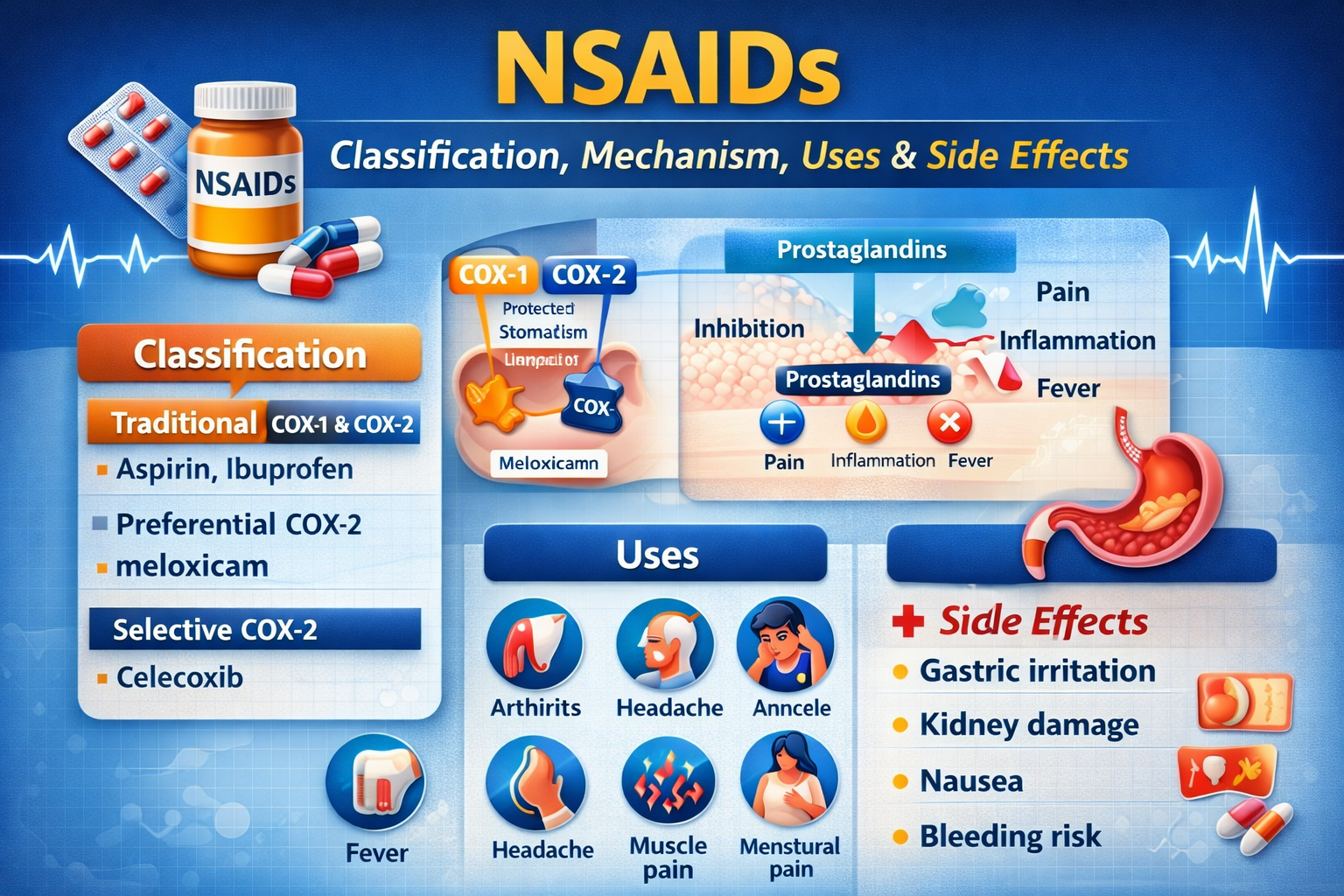
• Traditional NSAIDs (Non-selective COX inhibitors)
These drugs inhibit both COX-1 and COX-2 enzymes.
Examples include aspirin, ibuprofen, diclofenac, and indomethacin.
• Preferential COX-2 inhibitors
These drugs mainly inhibit COX-2 enzyme but still affect COX-1 to some extent.
Examples include meloxicam and nimesulide.
• Selective COX-2 inhibitors (Coxibs)
These drugs selectively inhibit COX-2 enzyme and have fewer gastric side effects.
Examples include celecoxib and etoricoxib.
This classification is very important for exams and clinical use.
🎯 Mechanism of Action
NSAIDs work by inhibiting cyclooxygenase (COX) enzymes, which are responsible for the synthesis of prostaglandins. Prostaglandins are chemicals that cause pain, inflammation, and fever.
There are two main types of COX enzymes:
• COX-1 → protects stomach lining and maintains normal functions
• COX-2 → involved in inflammation and pain
By inhibiting these enzymes, NSAIDs reduce prostaglandin production, leading to decreased pain, inflammation, and fever.
🩺 Pharmacological Effects
NSAIDs produce several important effects in the body:
• Analgesic effect → reduces pain
• Antipyretic effect → lowers fever
• Anti-inflammatory effect → reduces swelling and inflammation
Some NSAIDs like aspirin also have antiplatelet effects, which help in preventing blood clot formation.
🖋️ Therapeutic Uses
NSAIDs are widely used in clinical practice due to their effectiveness.
Common uses include:
• Fever (antipyretic use)
• Headache and migraine
• Arthritis (rheumatoid and osteoarthritis)
• Muscle pain and injury
• Dental pain
• Dysmenorrhea (menstrual pain)
They are among the most commonly used drugs worldwide.
🚨 Side Effects
Despite their benefits, NSAIDs can cause several side effects, especially with long-term use.
Common side effects include:
• Gastric irritation and ulcers
• Nausea and vomiting
• Kidney damage (with prolonged use)
• Increased risk of bleeding
• Cardiovascular risks (especially COX-2 inhibitors)
Gastric side effects are mainly due to inhibition of COX-1, which protects the stomach lining.
🛑 Contraindications and Precautions
NSAIDs should be used carefully in certain conditions:
• Avoid in peptic ulcer patients
• Use cautiously in kidney disease
• Avoid in severe heart disease
• Not recommended in late pregnancy
• Avoid combination with alcohol (increases gastric risk)
Doctors often prescribe proton pump inhibitors (PPIs) along with NSAIDs to reduce gastric side effects.
💊 Important Exam Points
For exams, remember these key facts:
• Aspirin → irreversible COX inhibitor
• Ibuprofen → commonly used NSAID
• Diclofenac → strong anti-inflammatory
• Celecoxib → selective COX-2 inhibitor
• NSAIDs cause gastric irritation
These points are frequently asked in MCQs.
📌 Conclusion
NSAIDs are an important group of drugs widely used for the management of pain, inflammation, and fever. Most NSAIDs produce their effects by inhibiting cyclooxygenase (COX) enzymes, thereby reducing the formation of prostaglandins responsible for pain, inflammation, and fever.
Understanding the classification, mechanism of action, therapeutic uses, adverse effects, and important examples of NSAIDs is essential for pharmacy students and competitive examinations. Although these drugs are effective, inappropriate or prolonged use may increase the risk of gastric irritation, gastrointestinal bleeding, kidney problems, and cardiovascular complications.
Therefore, NSAIDs should be used at the appropriate dose and for the appropriate duration, considering the patient’s condition and risk factors. A clear understanding of NSAIDs helps pharmacy students make better decisions in pharmacology and provides a strong foundation for learning other analgesic and anti-inflammatory drug classes.
1 thought on “NSAIDs: Classification, Mechanism, Uses & Side Effects”