
Human Endocrine System: Major Glands, Hormones & Functions
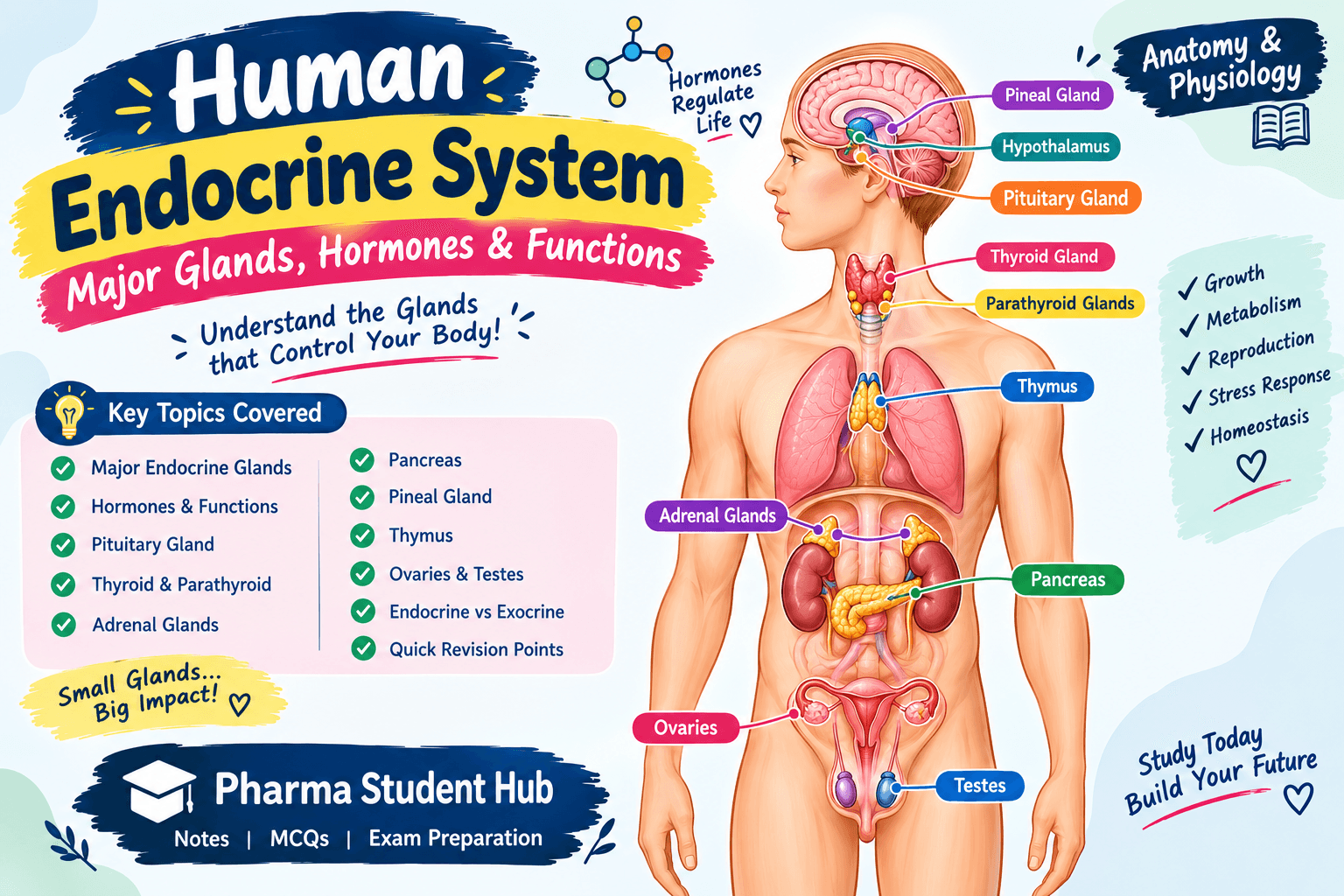
📌Introduction The human endocrine system is an important system that helps control and coordinate many activities of the body. It consists of specialized glands that produce and release chemical messengers called hormones. Hormones travel through the blood to specific target cells or organs and regulate functions such as growth, metabolism, reproduction, stress response, water balance, … Read more
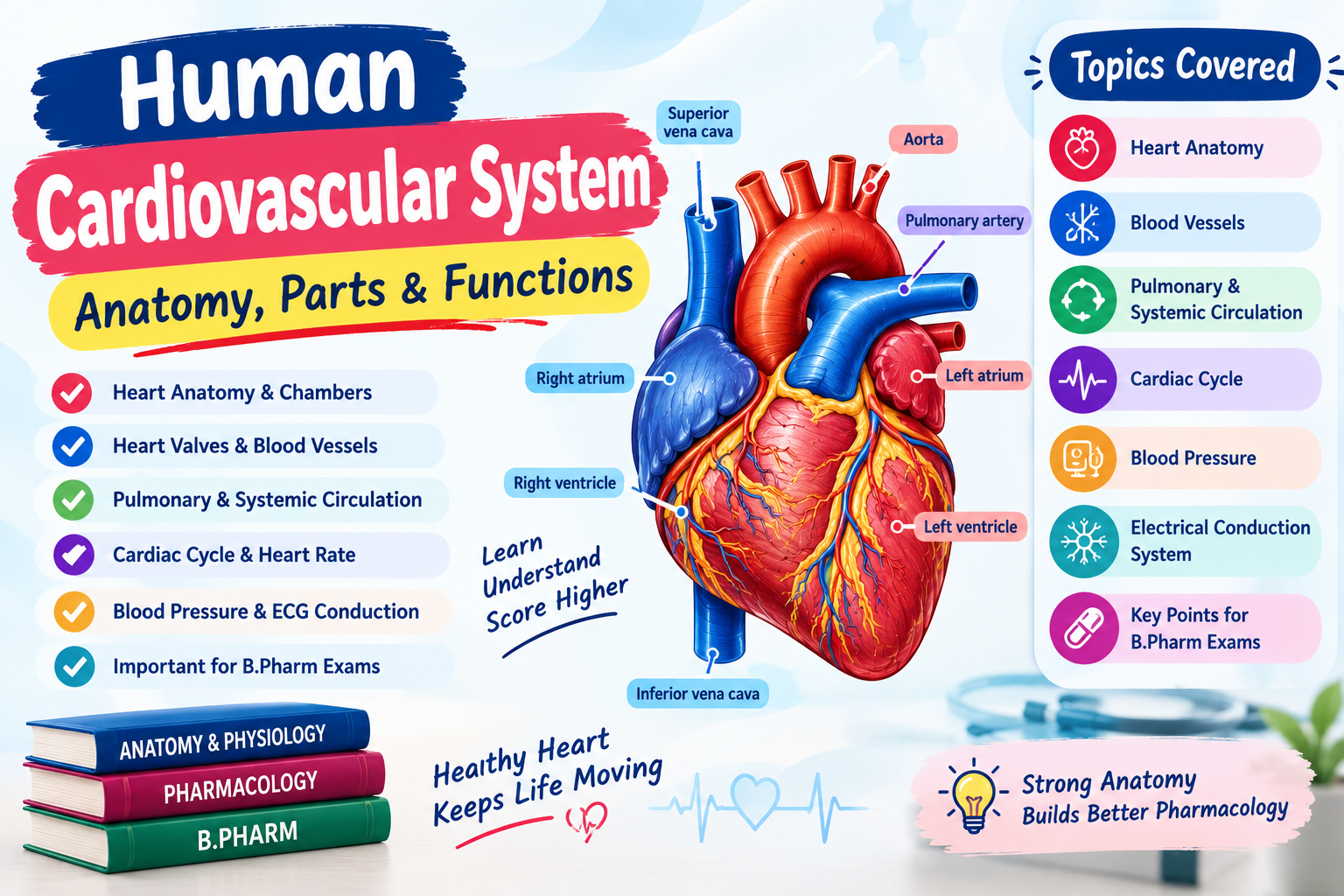
Human Cardiovascular System: Anatomy, Parts & Functions

📌Introduction The human cardiovascular system is one of the most important systems of the body. It is responsible for continuously circulating blood throughout the body and supplying tissues with oxygen and nutrients. The cardiovascular system also removes carbon dioxide and other waste products from tissues. It plays an important role in maintaining body temperature, fluid … Read more

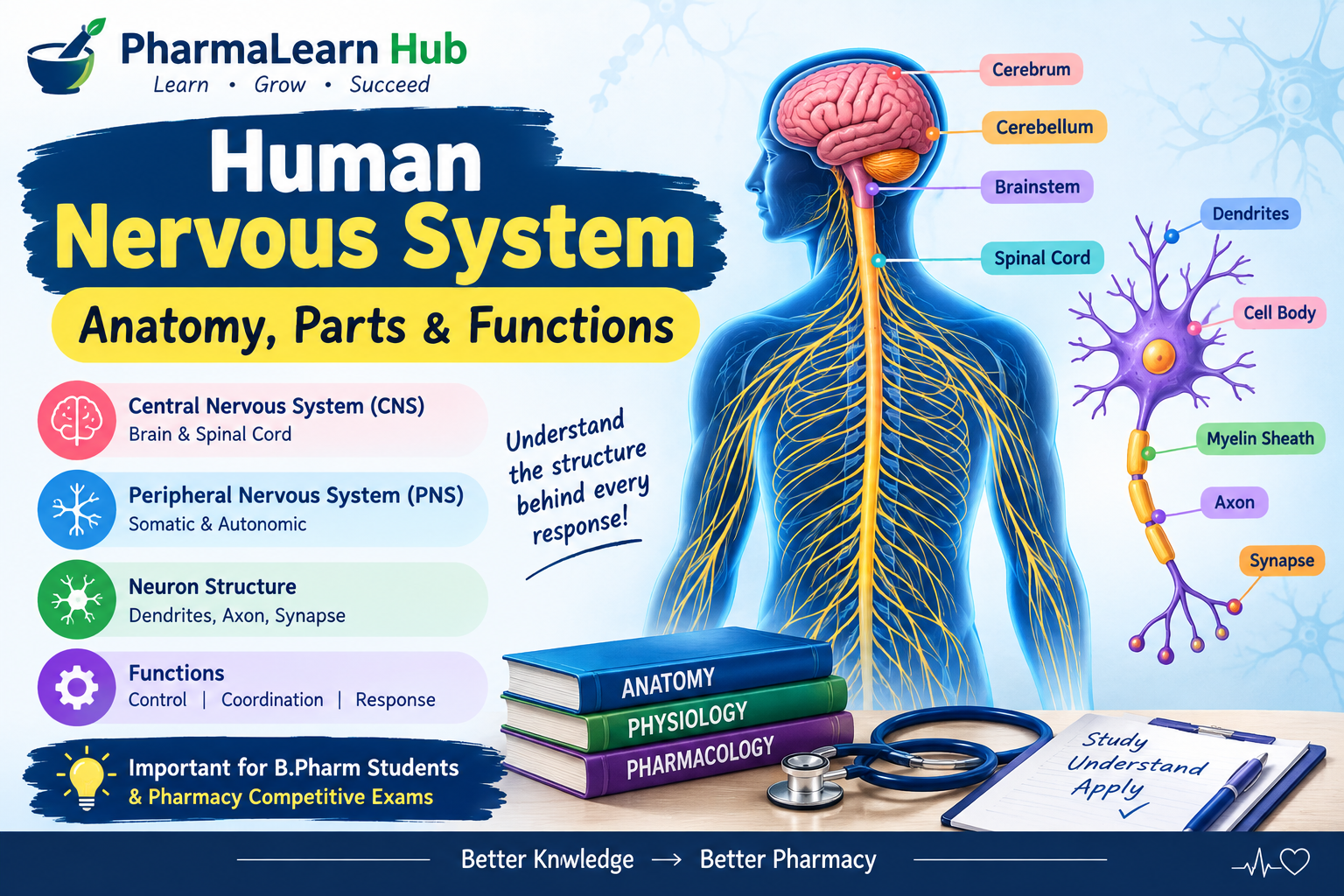
Human Nervous System: Anatomy, Parts & Functions

📌Introduction The human nervous system is one of the most important systems of the body. It controls and coordinates almost every activity of the body, including movement, sensation, thinking, memory, breathing, heartbeat, and responses to external stimuli. For pharmacy students, understanding the anatomy of the nervous system is particularly important because many drugs act on … Read more