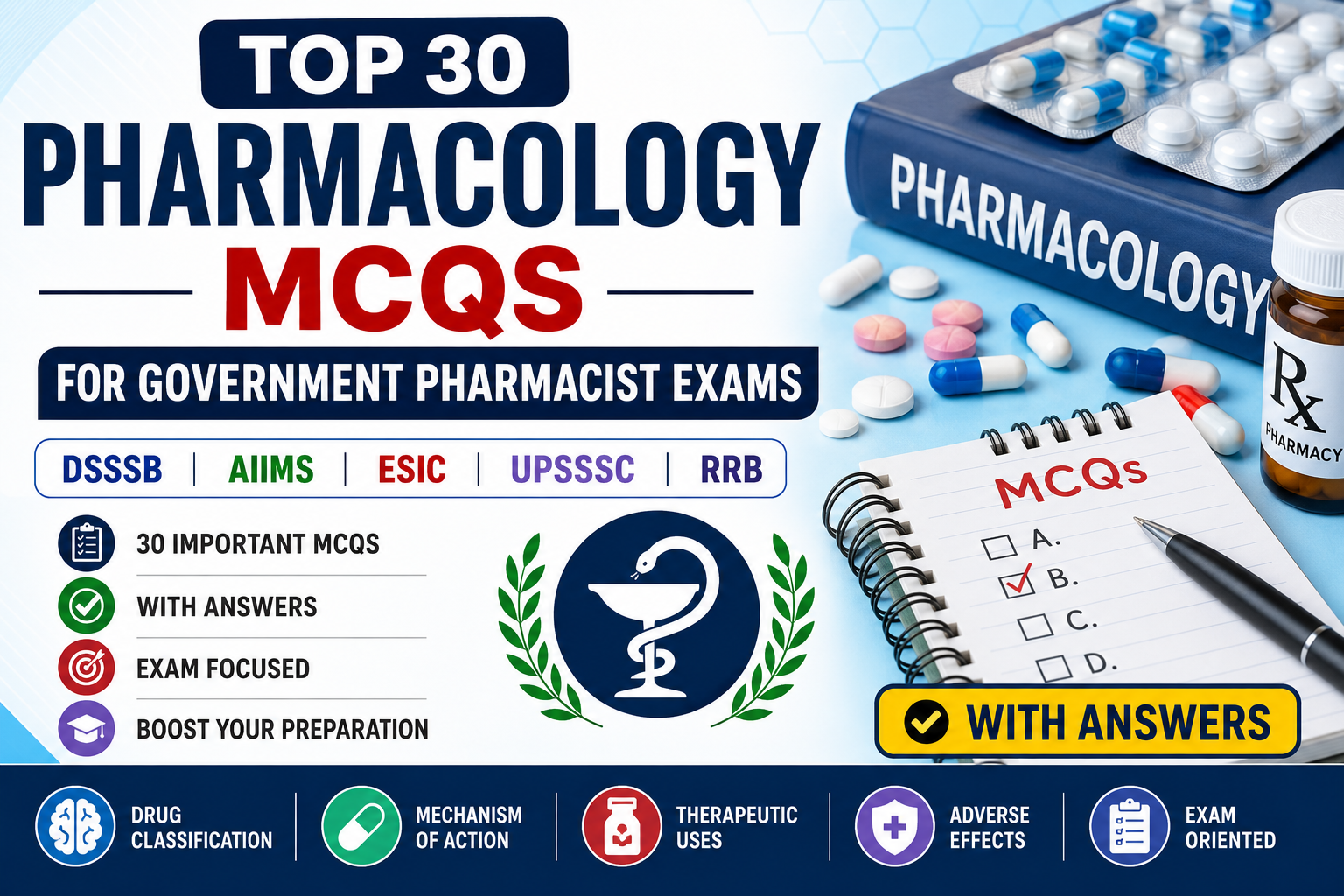
Top 30 Pharmacology MCQs for Government Pharmacist Exams (DSSSB, AIIMS, ESIC, UPSSSC, RRB)

1. Which receptor is primarily stimulated by adrenaline in the heart? A. α1 receptor B. α2 receptor C. β1 receptor D. β2 receptor Answer: C. β1 receptor 2. Atropine is classified as a: A. Cholinergic agonist B. Anticholinergic drug C. Adrenergic blocker D. Antihistamine Answer: B. Anticholinergic drug 3. Which drug is used as an … Read more

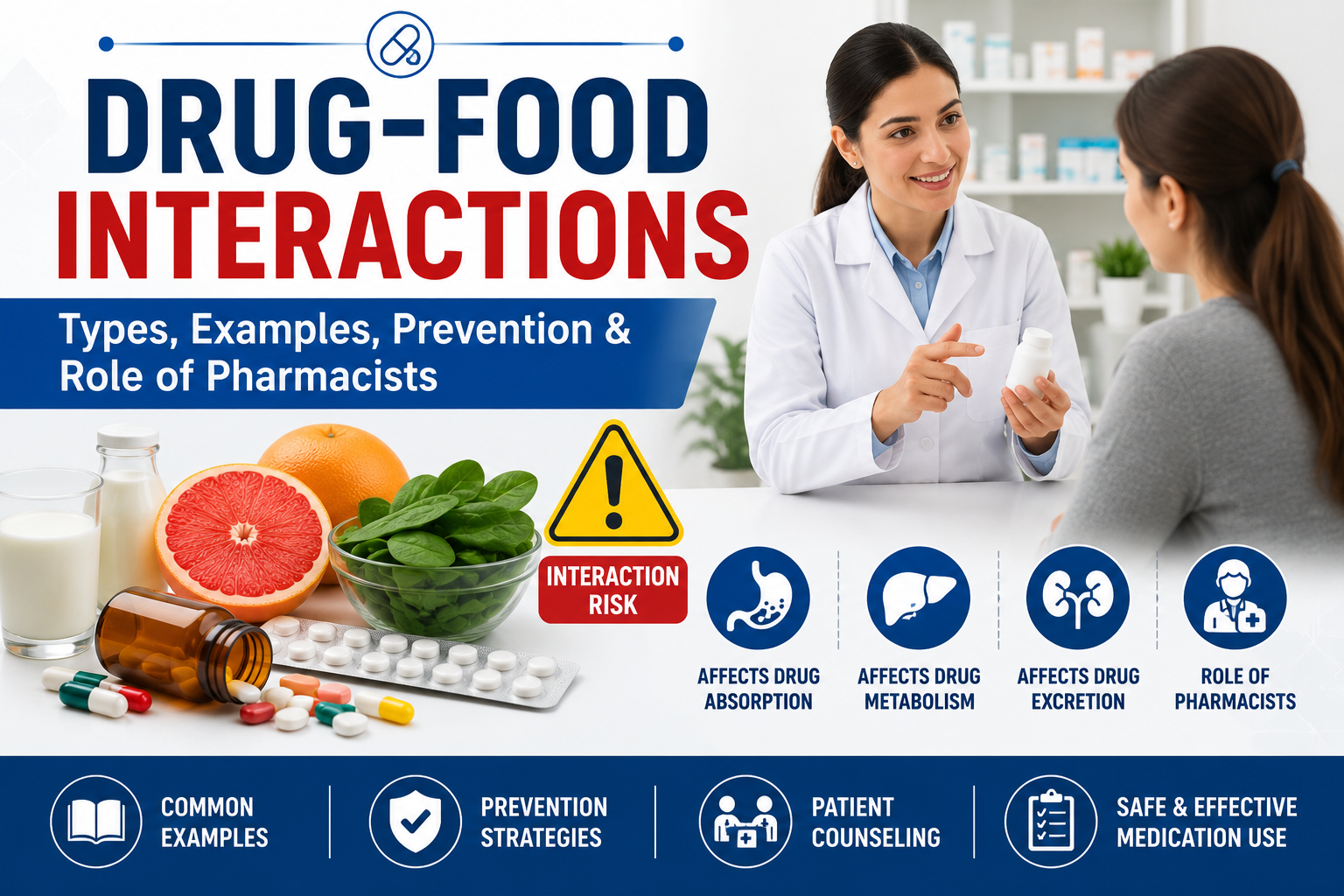
Drug-Food Interactions: Types, Examples, Prevention & Role of Pharmacists

📌Introduction Drug-food interactions occur when food, beverages, or dietary supplements affect the absorption, distribution, metabolism, or excretion of medications. These interactions may alter the effectiveness of a drug, increase adverse effects, or reduce therapeutic outcomes. Understanding drug-food interactions is important for healthcare professionals and patients to ensure safe and effective medication use. Drug-food interactions are … Read more

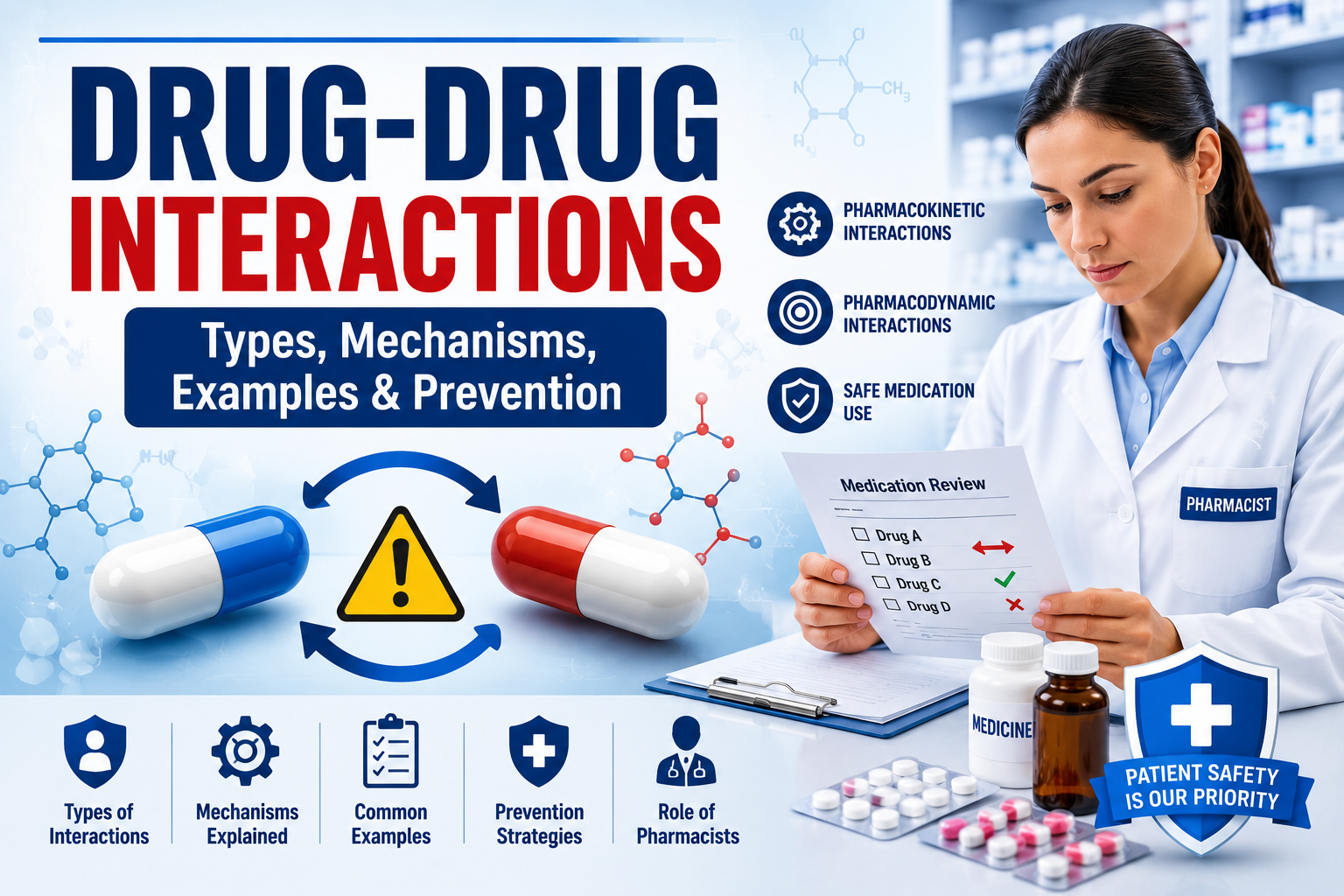
Drug-Drug Interactions: Types, Mechanisms, Examples & Prevention

📌Introduction Drug-drug interactions (DDIs) occur when the effects of one drug are altered by the presence of another drug administered simultaneously. These interactions may increase or decrease the therapeutic effect of a drug and can sometimes lead to serious adverse effects. Drug-drug interactions are a major concern in clinical practice, especially in patients receiving multiple … Read more

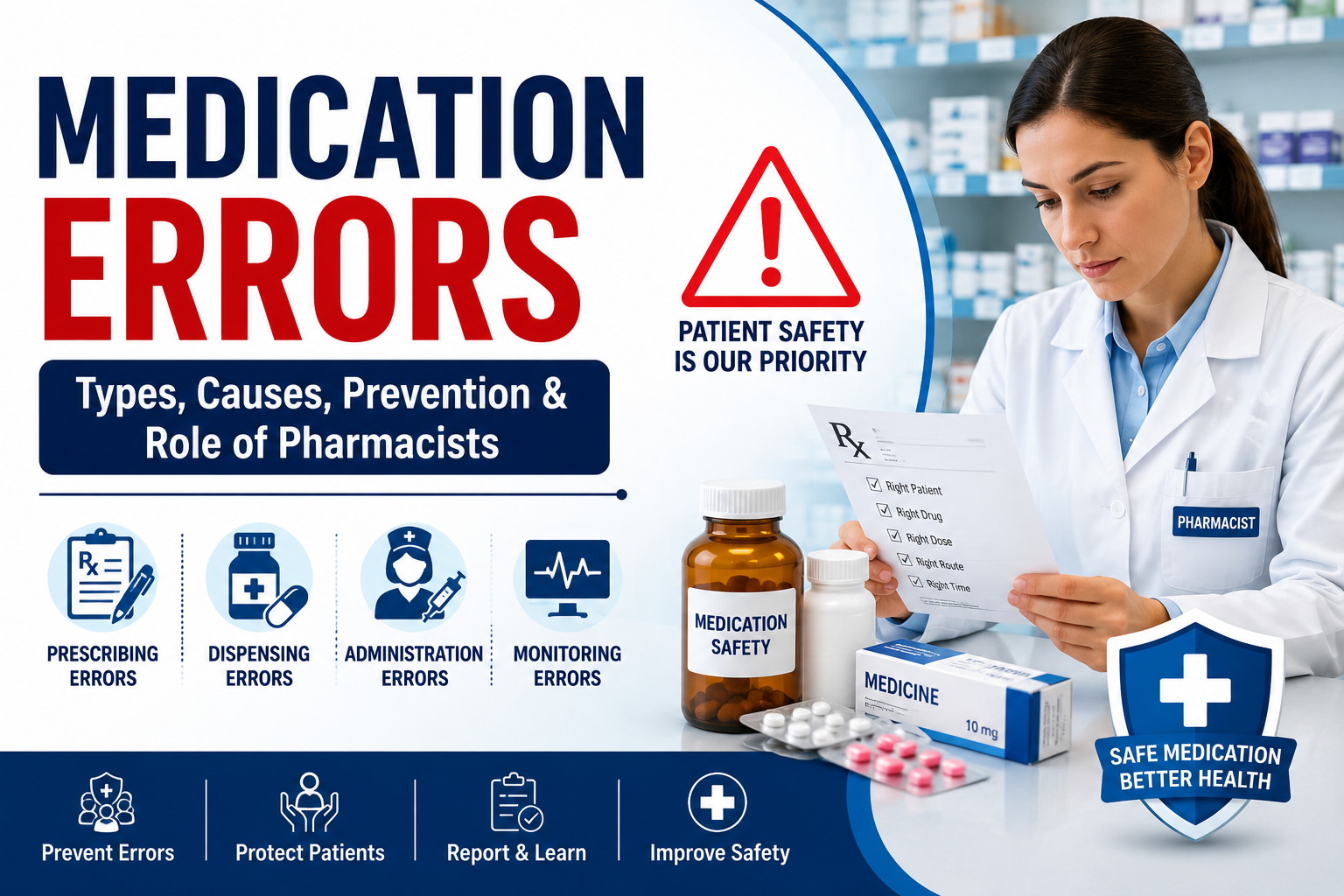
Medication Errors: Types, Causes, Prevention & Role of Pharmacists

📌Introduction Medication errors are among the most common preventable causes of patient harm in healthcare systems worldwide. These errors can occur at any stage of the medication-use process, including prescribing, dispensing, administering, and monitoring medications. Medication errors may result in adverse drug events, prolonged hospitalization, increased healthcare costs, and even death. The World Health Organization … Read more

Top 30 MCQs on Anticholinergic Drugs with Answers & Explanation

📌 Introduction Anticholinergic drugs block the action of acetylcholine at muscarinic receptors and suppress parasympathetic nervous system activity. These drugs are widely used in asthma, COPD, motion sickness, Parkinson’s disease, and organophosphate poisoning. Anticholinergic drugs are highly important for GPAT, DSSSB, PCI, and other pharmacy examinations. 📝 MCQs 1. Anticholinergic drugs are also known as: … Read more

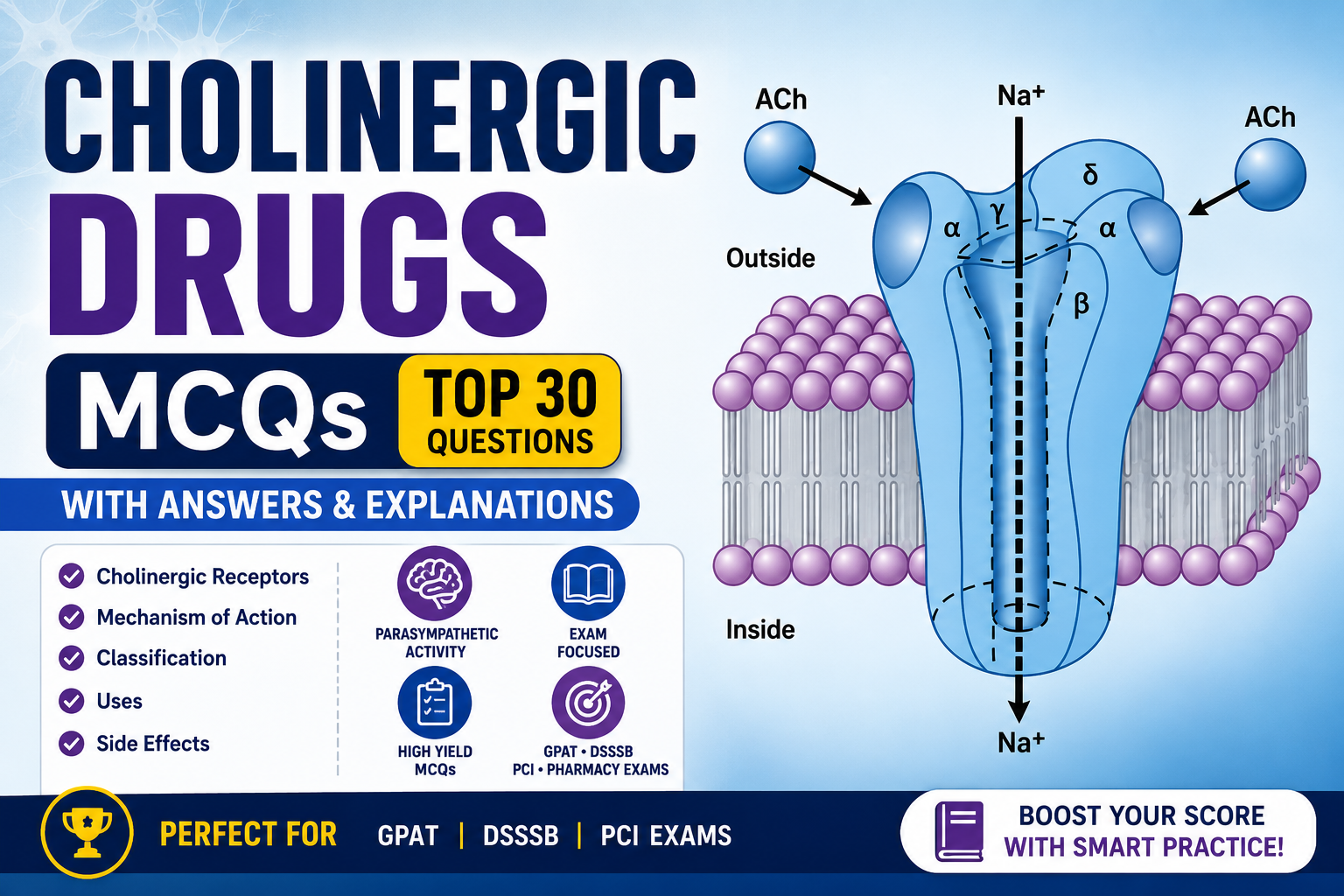
Top 30 MCQs on Cholinergic Drugs with Answers

📌 Introduction Cholinergic drugs stimulate cholinergic receptors or increase the action of acetylcholine in the body. These drugs mainly mimic parasympathetic nervous system activity and are used in glaucoma, myasthenia gravis, urinary retention, and Alzheimer’s disease. Cholinergic drugs are highly important for GPAT, DSSSB, PCI, and other pharmacy examinations. 📝 MCQs 1. Cholinergic drugs are … Read more

Top 30 MCQs on Adrenergic Drugs with Answers & Explanation

📌 Introduction Adrenergic drugs act on the sympathetic nervous system and stimulate alpha and beta adrenergic receptors. These drugs are widely used in asthma, shock, cardiac arrest, hypertension, and nasal congestion. Adrenergic drugs are an important topic for GPAT, DSSSB, PCI, and other pharmacy examinations. 📝 MCQs 1. Adrenergic drugs are also known as: A) … Read more

Top 30 MCQs on Corticosteroids with Answers & Explanation

📌 Introduction   Corticosteroids are steroid hormones widely used for their anti-inflammatory and immunosuppressive properties. They are commonly prescribed in asthma, allergies, autoimmune disorders, and inflammatory diseases. This topic is very important for GPAT, DSSSB, and other pharmacy exams. 📝 MCQs   1. Corticosteroids are produced by:   A) Thyroid gland   B) Adrenal cortex   C) Pancreas   D) Pituitary … Read more

Top 30 MCQs on Drugs Used in Bronchial Asthma with Answers

📌 Introduction Drugs used in bronchial asthma help relieve bronchospasm and control airway inflammation. This topic is frequently asked in GPAT, DSSSB, and other pharmacy exams. 📝 MCQs 1. Bronchial asthma is characterized by: A) Hypertension B) Bronchoconstriction C) Kidney failure D) Liver damage ✔ Answer: B — 2. Salbutamol belongs to: A) Beta-2 agonists … Read more

Top 30 MCQs on Antiemetic Drugs with Answers & Explanation

📌 Introduction   Antiemetic drugs are used to prevent and treat nausea and vomiting. They act on the vomiting center and chemoreceptor trigger zone (CTZ). This topic is frequently asked in GPAT, DSSSB, and other pharmacy exams. 📝 MCQs   1. Vomiting center is located in:   A) Liver   B) Brainstem   C) Kidney   D) Heart   ✔ Answer: B   … Read more