📌Introduction
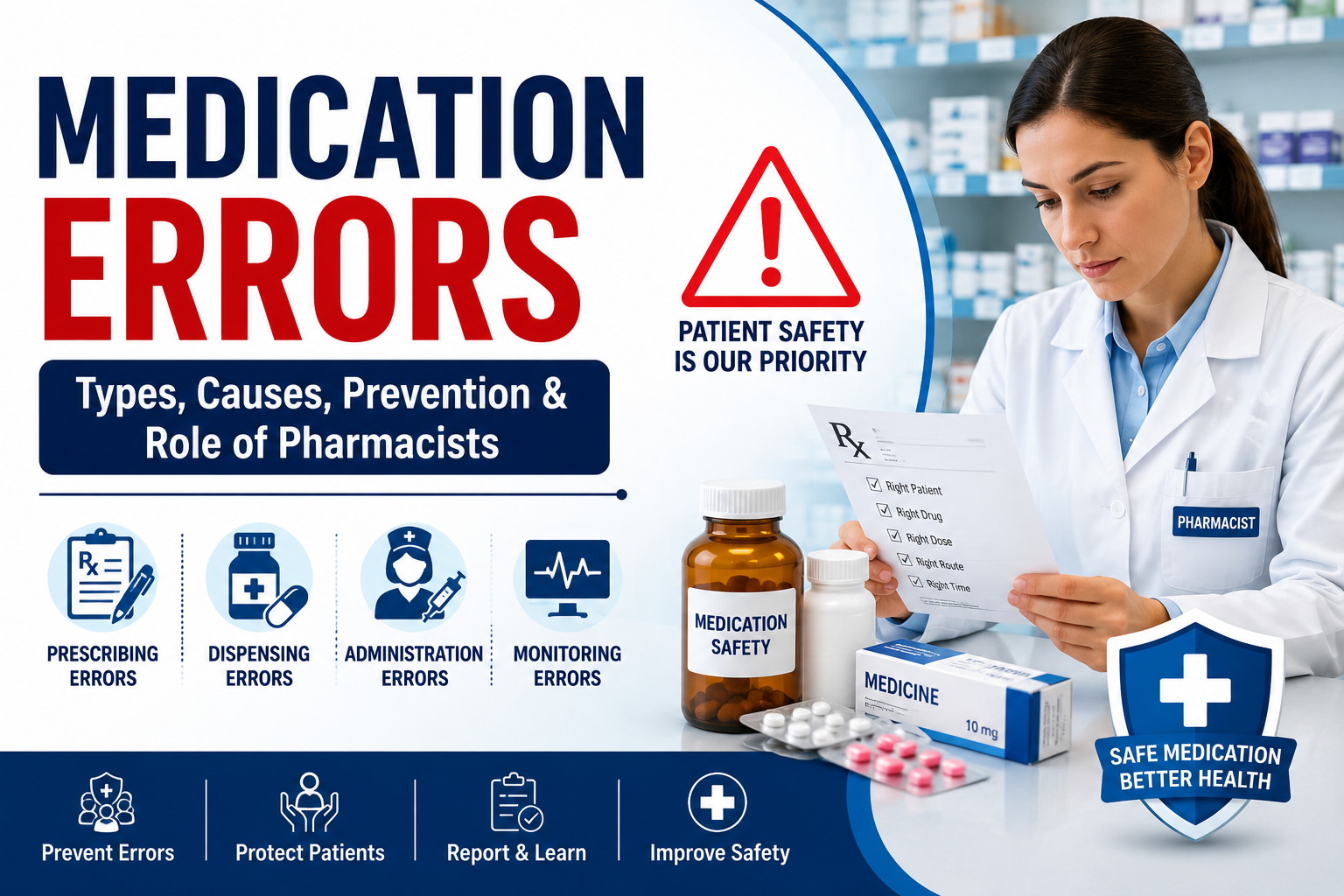
Medication errors are among the most common preventable causes of patient harm in healthcare systems worldwide. These errors can occur at any stage of the medication-use process, including prescribing, dispensing, administering, and monitoring medications. Medication errors may result in adverse drug events, prolonged hospitalization, increased healthcare costs, and even death.
The World Health Organization (WHO) recognizes medication safety as a major public health concern and encourages healthcare professionals to implement strategies that minimize medication-related harm. Pharmacists play a crucial role in identifying, preventing, and reporting medication errors to improve patient safety.
This topic is highly important for pharmacy students, healthcare professionals, GPAT, DSSSB Pharmacist, and other competitive examinations.
🔍What is a Medication Error?
A medication error is any preventable event that may lead to inappropriate medication use or patient harm while the medication is under the control of healthcare professionals, patients, or consumers.
Medication errors can occur due to mistakes in prescribing, dispensing, administration, labeling, packaging, or monitoring of medicines.
💊Importance of Medication Safety
Medication safety is essential because it:
- Protects patients from preventable harm
- Improves treatment outcomes
- Reduces hospital admissions
- Lowers healthcare costs
- Enhances patient confidence in healthcare systems
- Promotes rational use of medicines
📝Types of Medication Errors
1. Prescribing Errors
These errors occur when incorrect medication, dose, dosage form, or route of administration is prescribed.
Examples:
- Wrong drug prescribed
- Incorrect dosage
- Drug interactions overlooked
- Allergy history ignored
2. Dispensing Errors
These occur during the preparation and dispensing of medications.
Examples:
- Wrong medicine dispensed
- Incorrect strength supplied
- Wrong labeling
- Expired medication provided
3. Administration Errors
These occur when a medication is administered incorrectly.
Examples:
- Wrong patient
- Wrong dose
- Wrong route
- Wrong timing
4. Monitoring Errors
These occur when patients are not properly monitored after receiving medications.
Examples:
- Failure to monitor blood glucose after insulin administration
- Failure to monitor INR during warfarin therapy
5. Documentation Errors
Errors caused by inaccurate or incomplete documentation.
Examples:
- Missing medication records
- Incorrect patient information
- Unclear prescriptions
🛑Causes of Medication Errors
Several factors contribute to medication errors.
Human Factors
- Fatigue
- Stress
- Lack of knowledge
- Poor communication
System-Related Factors
- Inadequate staffing
- Poor workflow
- Lack of standard procedures
- Inadequate training
Medication-Related Factors
- Similar drug names
- Similar packaging
- Complex dosing schedules
Environmental Factors
- Noise and distractions
- Heavy workload
- Poor lighting
- Busy clinical settings
🟢Common Examples of Medication Errors
Some common examples include:
- Confusing look-alike and sound-alike drugs
- Administering insulin in the wrong dose
- Giving medication to the wrong patient
- Dispensing incorrect drug strength
- Missing a scheduled medication dose
These errors can significantly affect patient health and safety.
✒️Consequences of Medication Errors
Medication errors can lead to:
- Adverse drug reactions
- Treatment failure
- Increased morbidity
- Prolonged hospitalization
- Increased healthcare expenses
- Loss of patient trust
- Death in severe cases
The impact can affect both patients and healthcare organizations.
📍Prevention of Medication Errors
1. Accurate Prescription Writing
Healthcare professionals should write clear and complete prescriptions.
Important details include:
- Drug name
- Strength
- Dose
- Route
- Frequency
2. Double-Checking Medications
Healthcare workers should verify medications before dispensing and administration.
The “Five Rights” should always be followed:
- Right patient
- Right drug
- Right dose
- Right route
- Right time
3. Use of Technology
Technology can reduce medication errors through:
- Electronic prescribing
- Bar-code medication administration
- Computerized physician order entry systems
4. Proper Communication
Effective communication among healthcare professionals is essential.
This includes:
- Clear documentation
- Verbal confirmation when necessary
- Patient counseling
5. Staff Training
Regular education programs help healthcare professionals remain updated on medication safety practices.
🩺Role of Pharmacists in Preventing Medication Errors
Pharmacists are key members of the healthcare team and play an important role in ensuring medication safety.
Their responsibilities include:
- Reviewing prescriptions
- Detecting prescribing errors
- Identifying drug interactions
- Counseling patients
- Monitoring drug therapy
- Reporting medication errors
- Promoting rational drug use
Clinical pharmacists actively participate in medication safety programs and help reduce preventable harm.
🔬Reporting Medication Errors
Medication errors should be reported promptly to improve healthcare quality.
Reporting helps:
- Identify causes
- Prevent recurrence
- Improve patient safety systems
- Enhance healthcare standards
Healthcare institutions often establish medication error reporting systems to encourage learning from mistakes.
🧬Medication Error vs Adverse Drug Reaction
| Medication Error | Adverse Drug Reaction |
|---|---|
| Preventable event | Usually not preventable |
| Due to mistake in medication process | Occurs despite correct use |
| May or may not cause harm | Causes harmful reaction |
| Related to human or system error | Related to drug response |
Understanding the difference is important in clinical practice.
📑Important Exam Points
- Medication errors are preventable.
- The Five Rights help reduce administration errors.
- Pharmacists play a major role in medication safety.
- Prescribing errors are among the most common medication errors.
- Reporting systems help improve patient care.
- Medication safety is a global healthcare priority.
🔋Clinical Importance
Medication errors remain a major challenge in healthcare systems worldwide. Effective prevention strategies, proper communication, staff training, and pharmacist involvement significantly reduce the occurrence of these errors. Ensuring medication safety improves patient outcomes and strengthens the quality of healthcare services.
🎯Conclusion
Medication errors are preventable events that can occur during prescribing, dispensing, administration, or monitoring of medicines. They can result in serious patient harm, increased healthcare costs, and treatment failure. Understanding the types, causes, and prevention strategies of medication errors is essential for healthcare professionals.
Pharmacists play a critical role in identifying, preventing, and reporting medication errors. Through effective medication safety practices, healthcare providers can improve patient care and reduce medication-related risks.