Hormones: Classification, Functions, Mechanism of Action and Clinical Importance
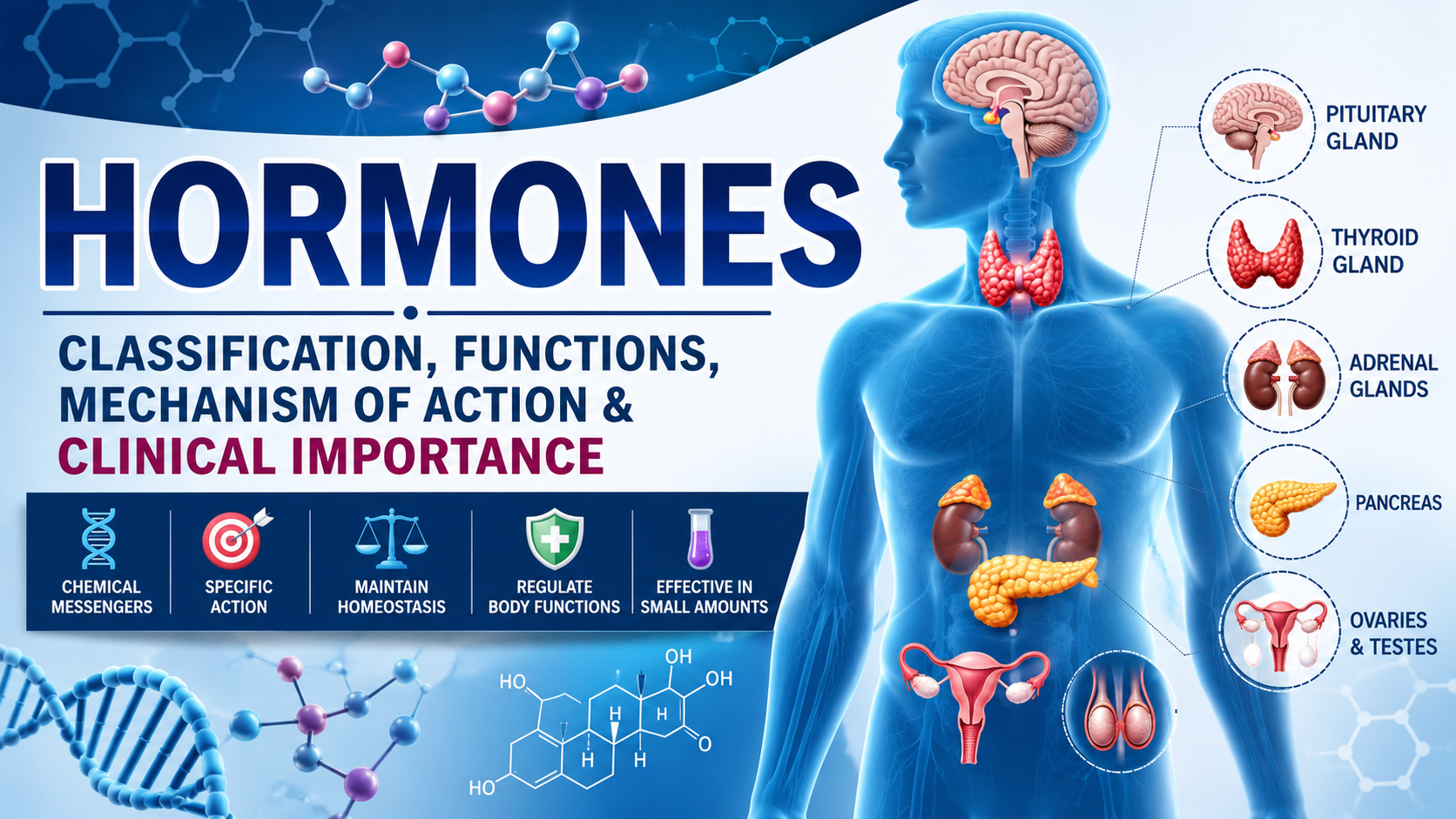
📌Introduction Hormones are chemical messengers produced by endocrine glands that regulate various physiological processes in the human body. They travel through the bloodstream to target organs and tissues, where they control growth, metabolism, reproduction, stress response, and homeostasis. Even small changes in hormone levels can significantly affect health. The endocrine system consists of glands such … Read more
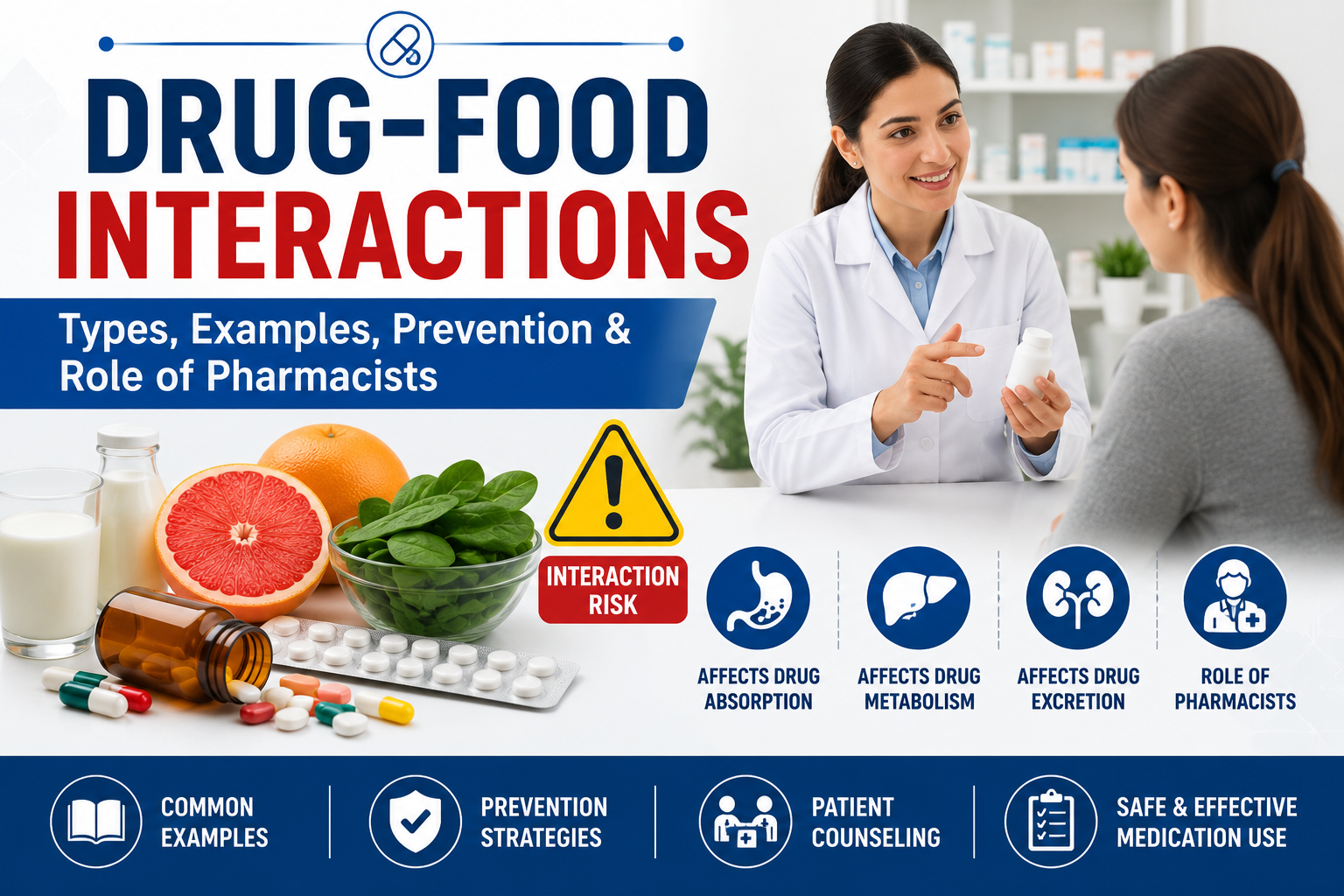
Drug-Food Interactions: Types, Examples, Prevention & Role of Pharmacists

📌Introduction Drug-food interactions occur when food, beverages, or dietary supplements affect the absorption, distribution, metabolism, or excretion of medications. These interactions may alter the effectiveness of a drug, increase adverse effects, or reduce therapeutic outcomes. Understanding drug-food interactions is important for healthcare professionals and patients to ensure safe and effective medication use. Drug-food interactions are … Read more

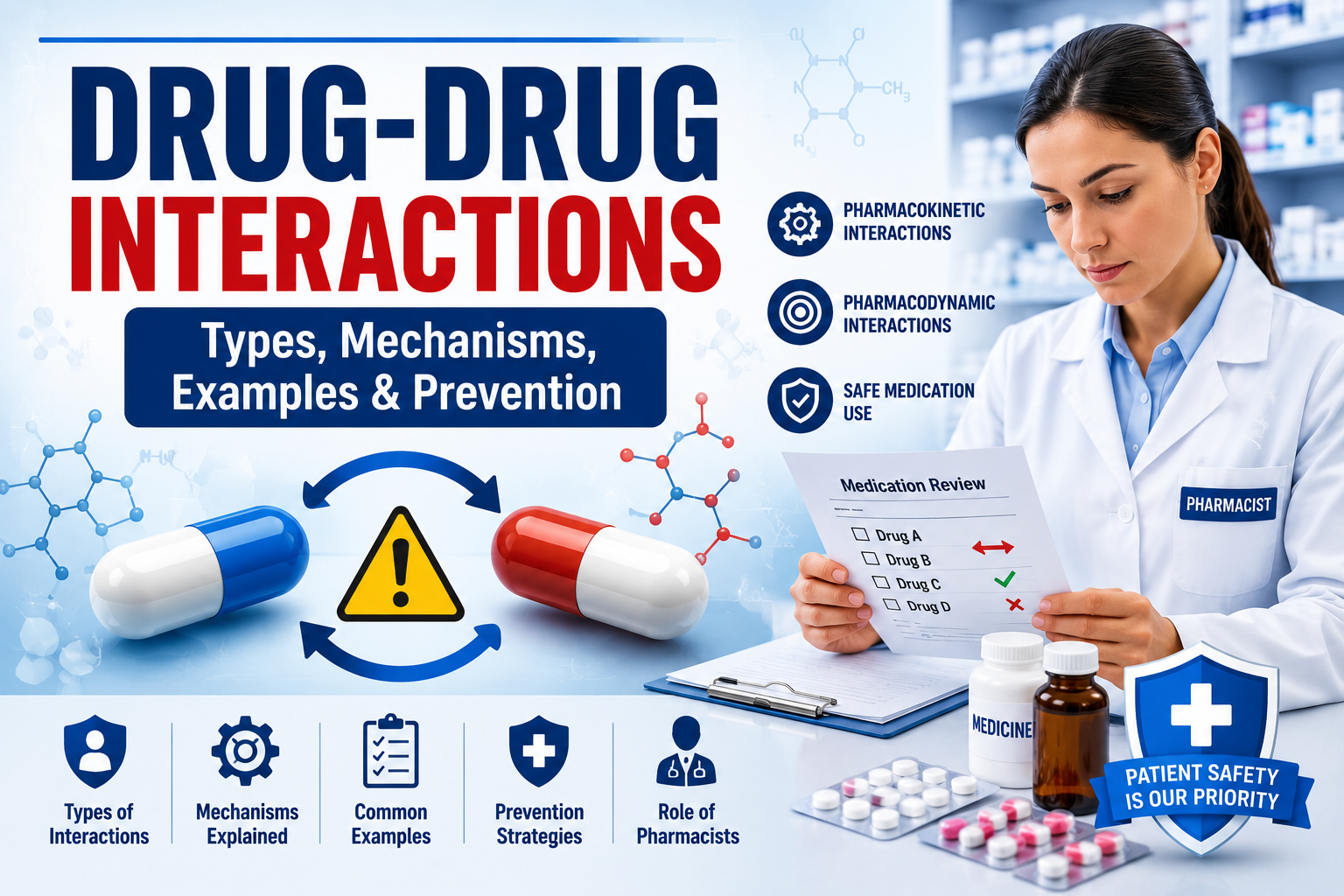
Drug-Drug Interactions: Types, Mechanisms, Examples & Prevention

📌Introduction Drug-drug interactions (DDIs) occur when the effects of one drug are altered by the presence of another drug administered simultaneously. These interactions may increase or decrease the therapeutic effect of a drug and can sometimes lead to serious adverse effects. Drug-drug interactions are a major concern in clinical practice, especially in patients receiving multiple … Read more

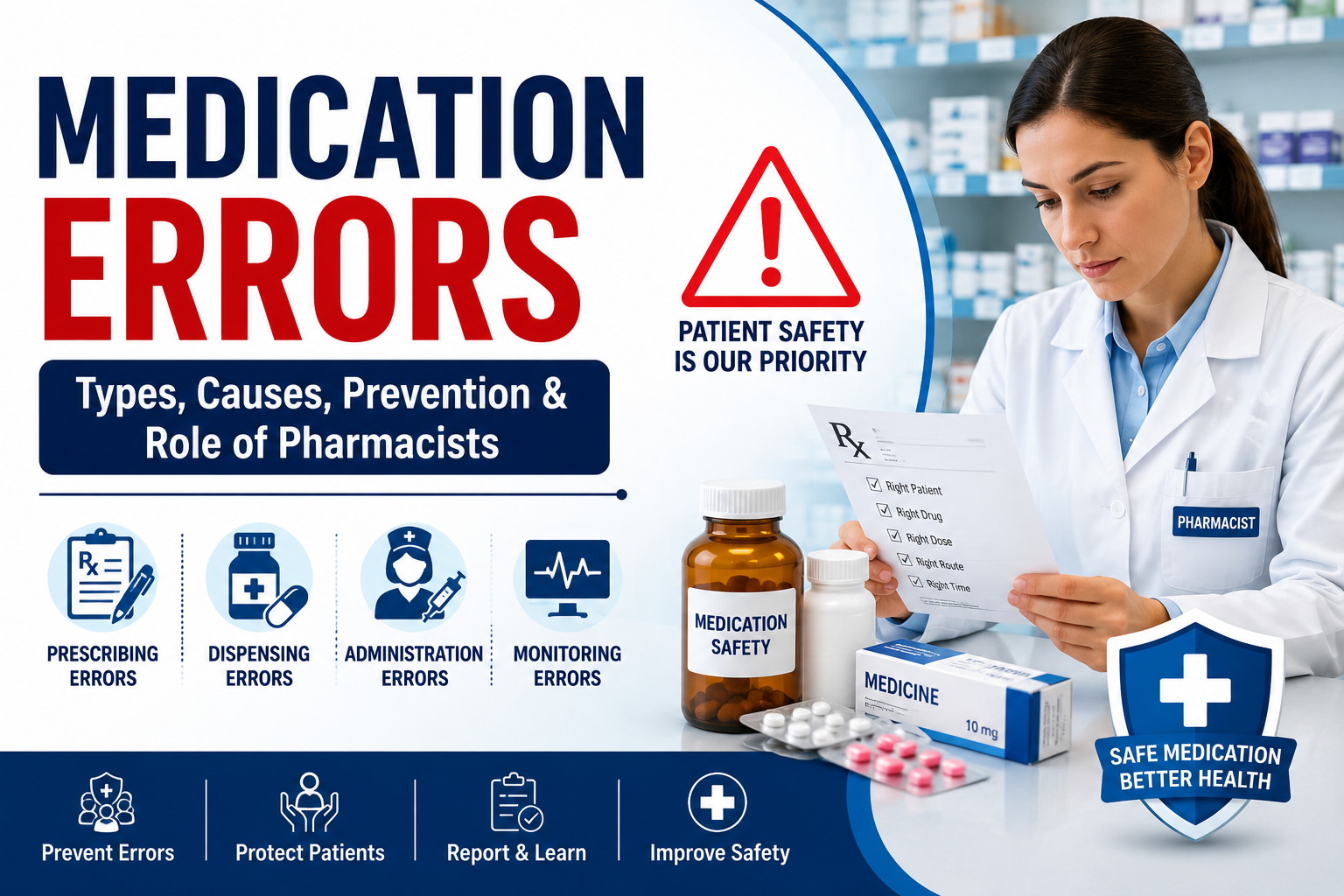
Medication Errors: Types, Causes, Prevention & Role of Pharmacists

📌Introduction Medication errors are among the most common preventable causes of patient harm in healthcare systems worldwide. These errors can occur at any stage of the medication-use process, including prescribing, dispensing, administering, and monitoring medications. Medication errors may result in adverse drug events, prolonged hospitalization, increased healthcare costs, and even death. The World Health Organization … Read more