Top 30 MCQs on Antihistamines with Answers & Explanation
📌Introduction Antihistamines are an important topic in pharmacology and are frequently studied by B.Pharm, D.Pharm, and other pharmacy students. Questions related to their classification, mechanism of action, therapeutic uses, adverse effects, and important drug examples are commonly included in pharmacy examinations and competitive exams. H1 antihistamines are mainly used to reduce symptoms associated with allergic … Read more
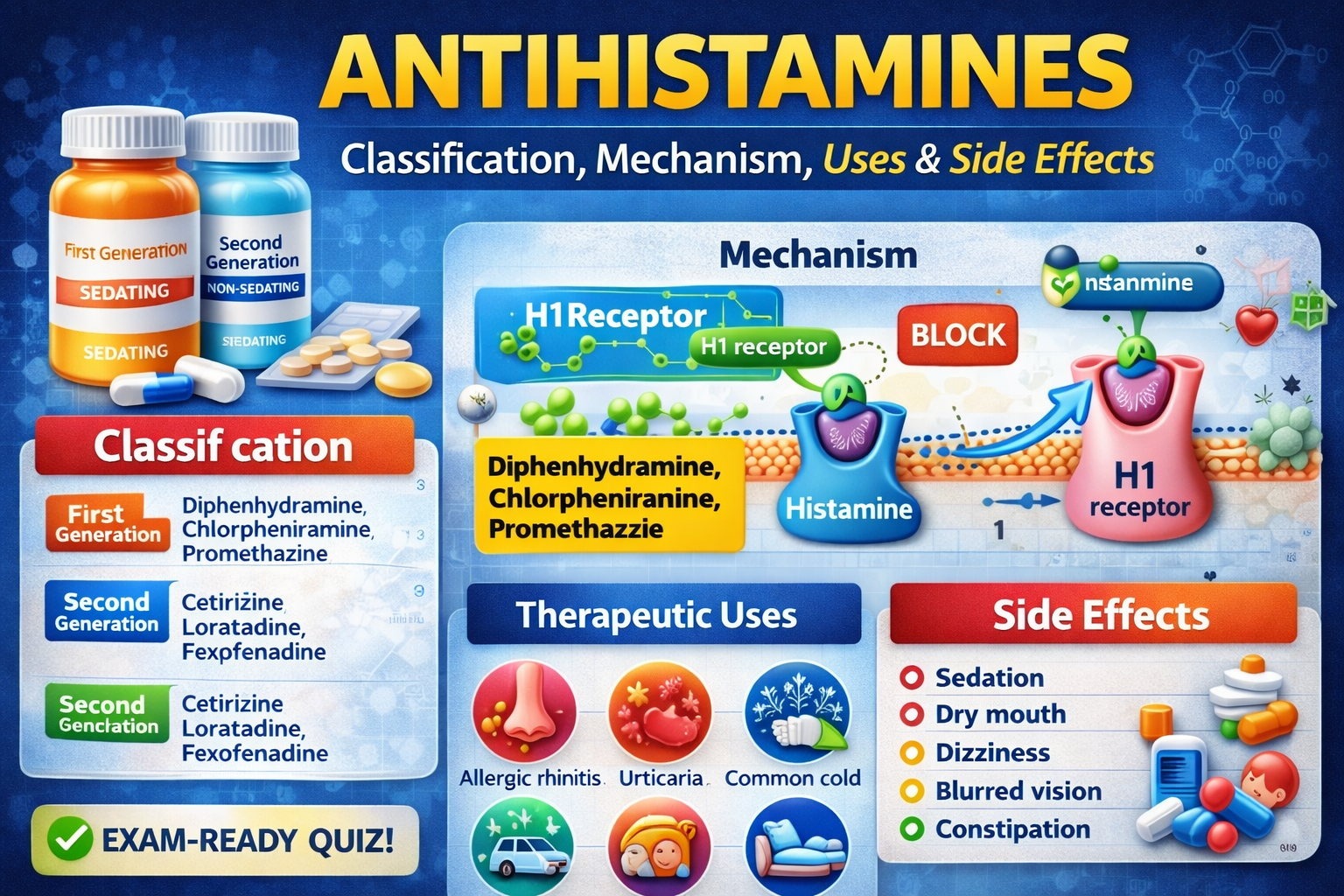
Antihistamines: Classification, Mechanism, Uses & Side Effects

📌 Introduction Antihistamines are an important group of medicines used to control symptoms associated with allergic reactions. They are an important topic in pharmacology and are frequently included in pharmacy examinations and MCQs. Histamine is a naturally occurring chemical mediator involved in allergic and inflammatory reactions. When histamine acts on its receptors, it can contribute … Read more

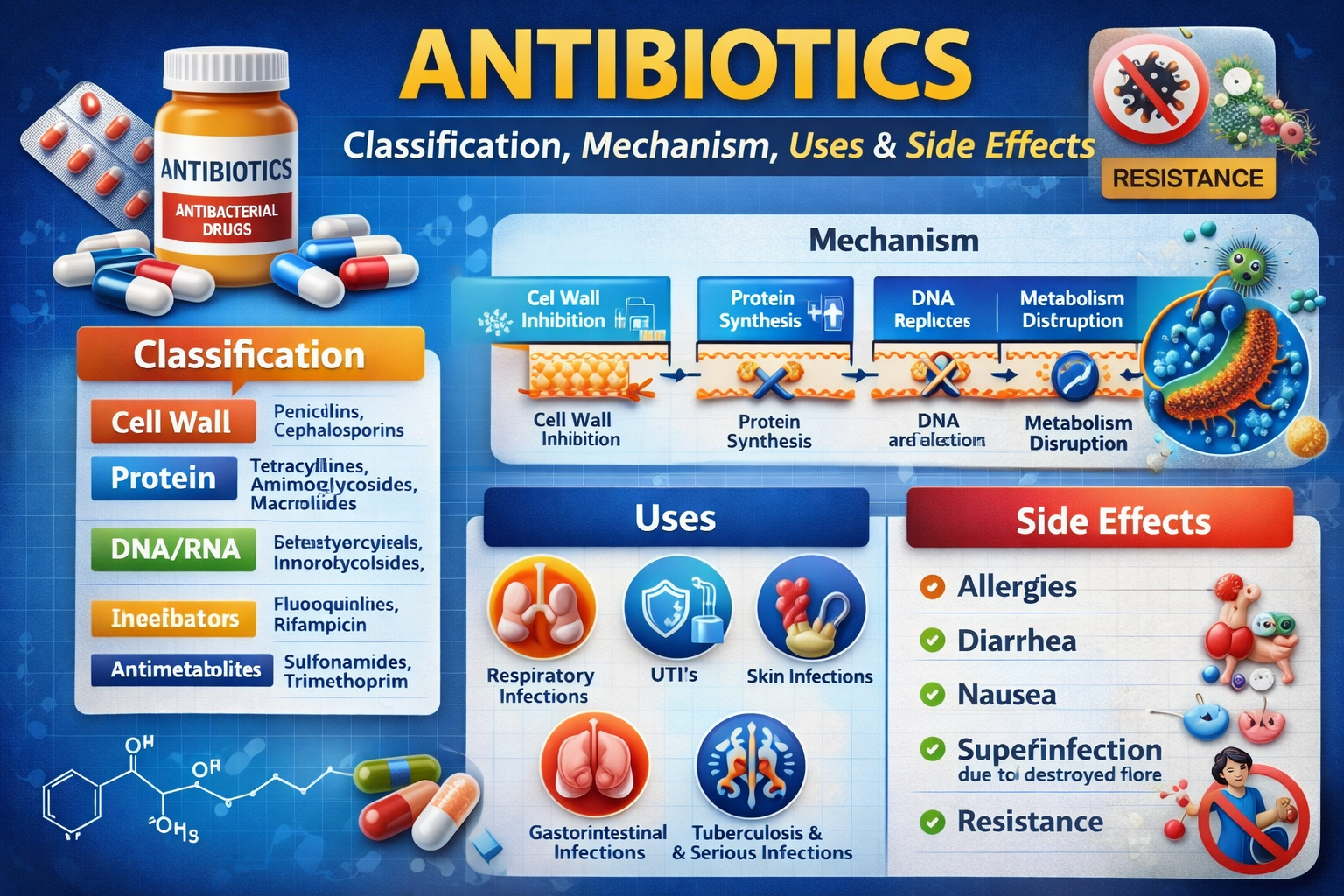
Antibiotics: Classification, Mechanism, Uses & Side Effects

📌 Introduction   Antibiotics are medicines used to treat bacterial infections. They work by killing bacteria or stopping them from growing. Antibiotics are very important medicines and are commonly studied in pharmacology. One important thing to remember is that antibiotics work against bacteria, not viruses. Therefore, antibiotics are generally not useful for viral infections such as … Read more

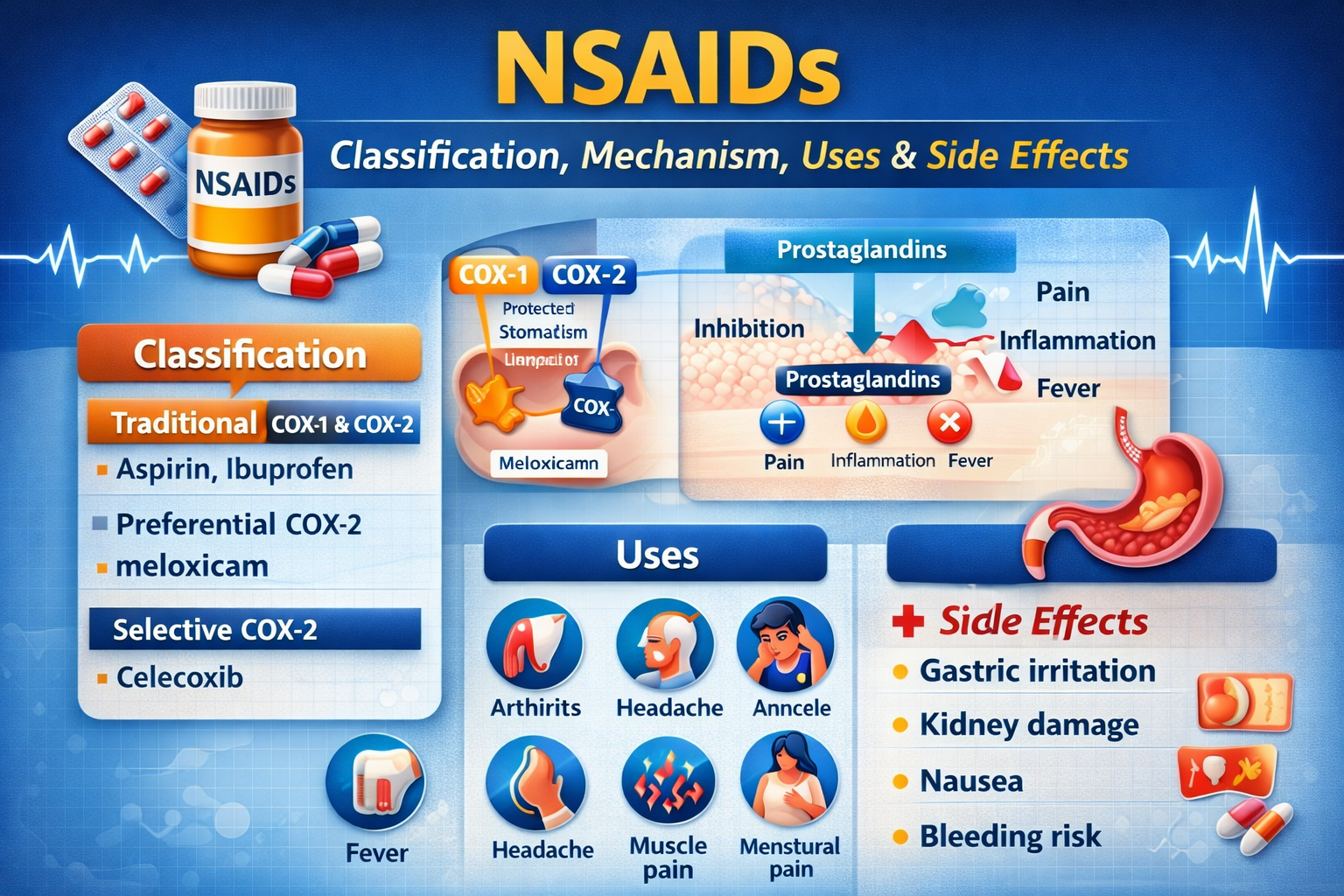
NSAIDs: Classification, Mechanism, Uses & Side Effects

📌 Introduction   Non-Steroidal Anti-Inflammatory Drugs (NSAIDs) are one of the most commonly used drug classes in pharmacology. They are widely prescribed for pain, inflammation, and fever. NSAIDs are very important for pharmacy students because they are frequently asked in competitive exams like GPAT, DSSSB, and other medical entrance tests. Understanding their classification, mechanism, uses, and … Read more

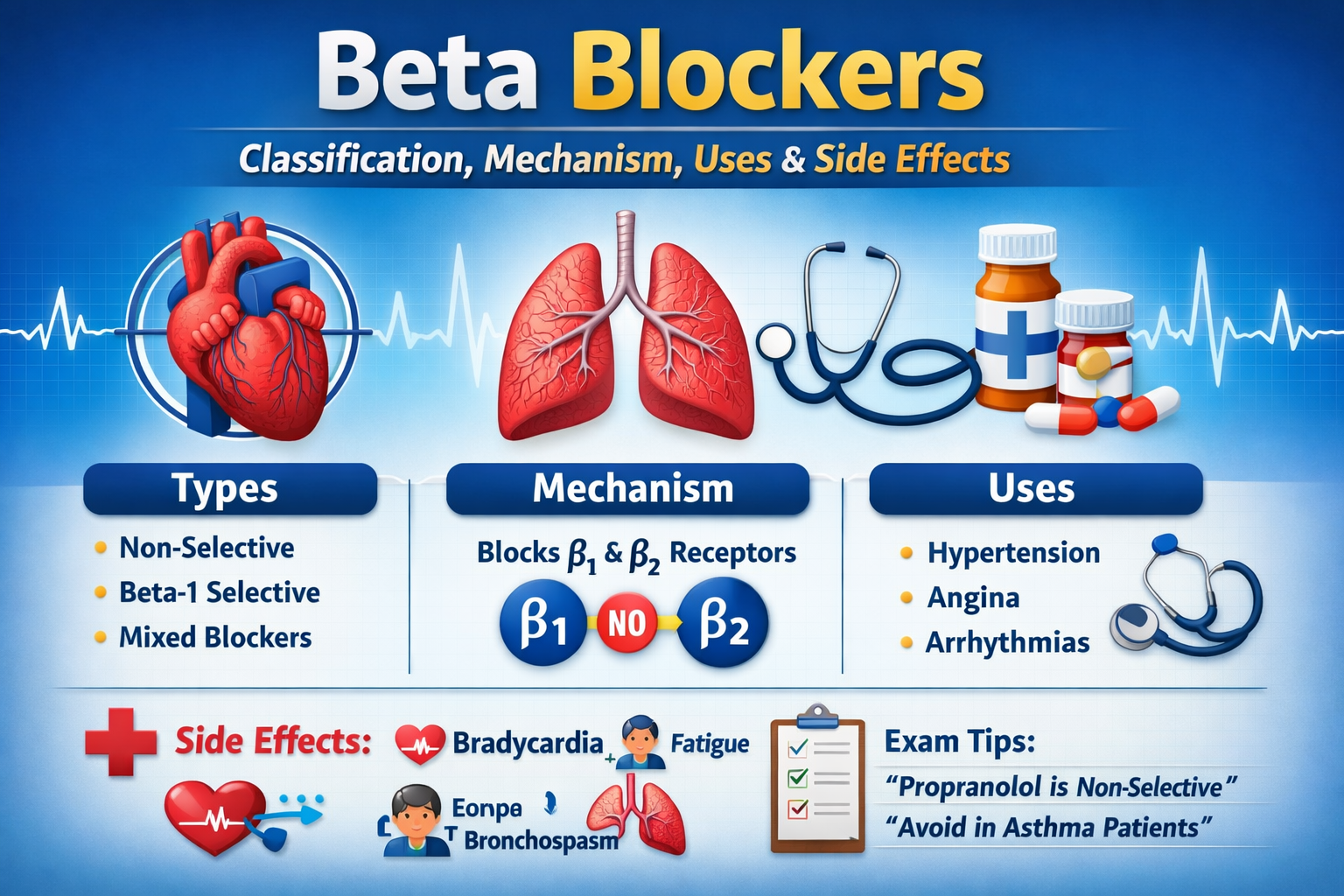
Beta Blockers: Classification, Mechanism, Uses & Side Effects

📌 Introduction  Beta blockers are one of the most important classes of drugs in pharmacology, widely used in the treatment of cardiovascular diseases. They are frequently asked in competitive exams like GPAT, DSSSB, and other pharmacy entrance tests. Because of their high clinical importance and repeated appearance in exams, understanding beta blockers clearly can significantly … Read more

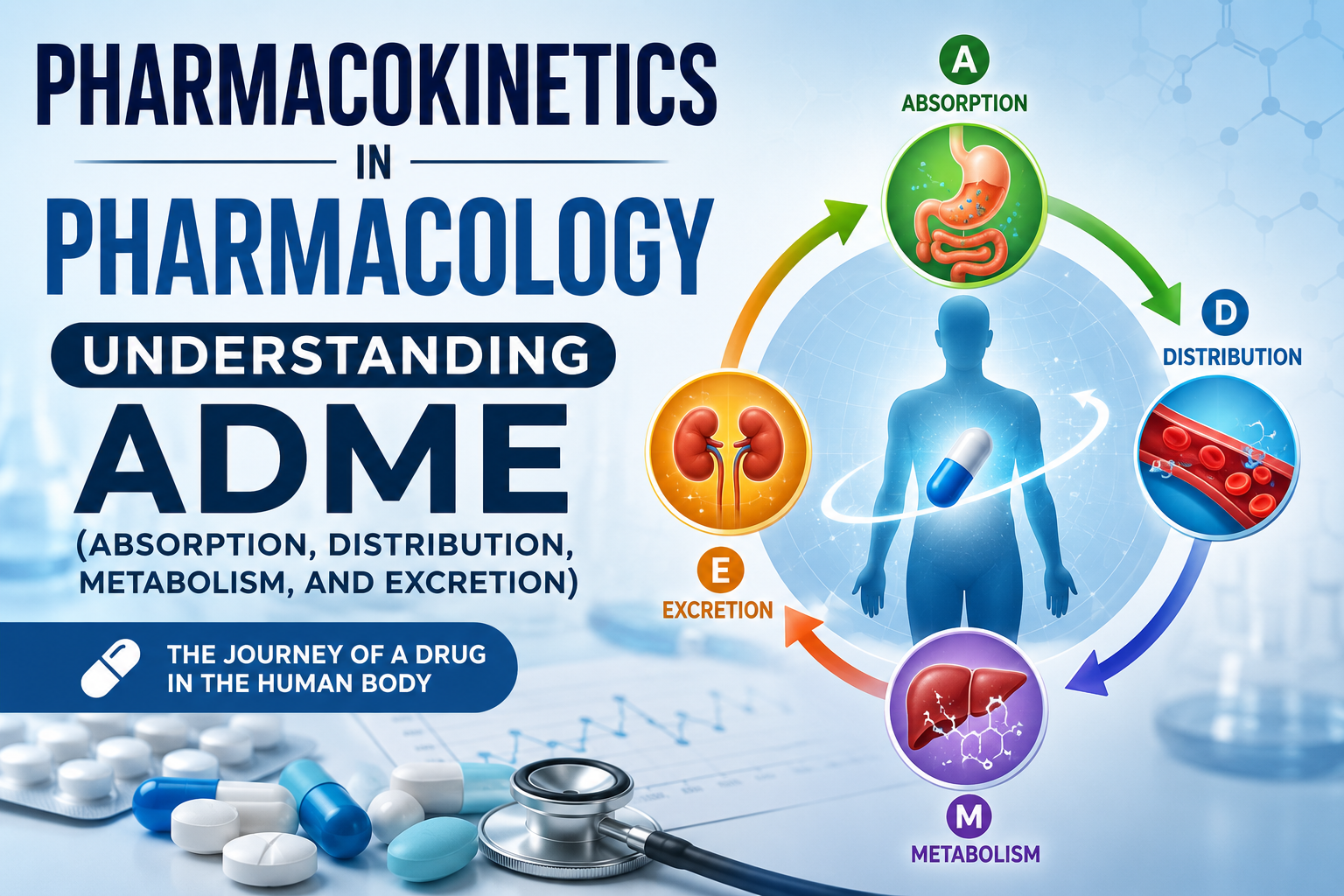
Pharmacokinetics in Pharmacology: Understanding ADME (Absorption, Distribution, Metabolism, and Excretion)

📌Introduction Pharmacokinetics in pharmacology is one of the most important concept. It describes how a drug moves through the body after administration. In simple terms, pharmacokinetics answers the question: What does the body do to the drug? The process of pharmacokinetics is commonly summarized by the acronym ADME, which stands for Absorption, Distribution, Metabolism, and … Read more