Top 30 MCQs on Antibiotics with Answers & Explanation

 📌Introduction  

Antibiotics are one of the most important topics in pharmacology and are frequently asked in exams like GPAT, DSSSB, and other pharmacy competitive exams. These MCQs will help you revise important concepts like classification, mechanism, uses, and resistance.

🧬 MCQs on Antibiotics  

1. Antibiotics are used to treat:  

A) Viral infections  

B) Bacterial infections  

C) Fungal infections  

D) Parasitic infections  

✔ Answer: B) Bacterial infections  

➜ Explanation: Antibiotics act only against bacteria.

2. Which is a bactericidal drug?  

A) Penicillin  

B) Tetracycline  

C) Erythromycin  

D) Chloramphenicol  

✔ Answer: A) Penicillin  

➜ Explanation: It kills bacteria by inhibiting cell wall synthesis.

3. Penicillin acts by inhibiting:  

A) Protein synthesis  

B) DNA synthesis  

C) Cell wall synthesis  

D) Metabolism  

✔ Answer: C) Cell wall synthesis  

4. Tetracycline inhibits:  

A) DNA synthesis  

B) Protein synthesis  

C) Cell wall synthesis  

D) RNA synthesis  

✔ Answer: B) Protein synthesis  

5. Ciprofloxacin acts on:  

A) Ribosome  

B) DNA gyrase  

C) Cell wall  

D) Enzymes  

✔ Answer: B) DNA gyrase  

6. Sulfonamides act as:  

A) Protein inhibitors  

B) Cell wall inhibitors  

C) Antimetabolites  

D) Hormones  

✔ Answer: C) Antimetabolites  

7. Which antibiotic is used in tuberculosis?  

A) Amoxicillin  

B) Rifampicin  

C) Ibuprofen  

D) Paracetamol  

✔ Answer: B) Rifampicin  

8. Macrolides act on:  

A) Cell wall  

B) Protein synthesis  

C) DNA  

D) Hormones  

✔ Answer: B) Protein synthesis  

9. Aminoglycosides are:  

A) Bacteriostatic  

B) Bactericidal  

C) Antifungal  

D) Antiviral  

✔ Answer: B) Bactericidal  

10. Chloramphenicol inhibits:  

A) 30S ribosome  

B) 50S ribosome  

C) DNA  

D) Cell wall  

✔ Answer: B) 50S ribosome  

11. Which antibiotic causes teeth discoloration?  

A) Penicillin  

B) Tetracycline  

C) Ciprofloxacin  

D) Rifampicin  

✔ Answer: B) Tetracycline  

12. Which is NOT an antibiotic?  

A) Penicillin  

B) Ciprofloxacin  

C) Paracetamol  

D) Rifampicin  

✔ Answer: C) Paracetamol  

13. Antibiotics should be avoided in:  

A) Bacterial infection  

B) Viral infection  

C) Fever  

D) Pain  

✔ Answer: B) Viral infection  

14. Resistance occurs due to:  

A) Proper use  

B) Overuse  

C) Correct dose  

D) Full course  

✔ Answer: B) Overuse  

15. Which inhibits DNA replication?  

A) Penicillin  

B) Ciprofloxacin  

C) Tetracycline  

D) Erythromycin  

✔ Answer: B) Ciprofloxacin  

16. Erythromycin belongs to:  

A) Penicillin  

B) Macrolide  

C) Aminoglycoside  

D) Tetracycline  

✔ Answer: B) Macrolide  

17. Which is bacteriostatic?  

A) Penicillin  

B) Aminoglycosides  

C) Tetracycline  

D) Cephalosporin  

✔ Answer: C) Tetracycline  

18. Cephalosporins act on:  

A) Protein  

B) Cell wall  

C) DNA  

D) RNA  

✔ Answer: B) Cell wall  

19. Superinfection is due to:  

A) Low dose  

B) Destruction of normal flora  

C) High immunity  

D) Infection  

✔ Answer: B) Destruction of normal flora  

20. Antibiotics may cause:  

A) Allergy  

B) Growth  

C) Energy  

D) Sleep  

✔ Answer: A) Allergy  

21. Which is broad-spectrum antibiotic?  

A) Penicillin G  

B) Tetracycline  

C) Rifampicin  

D) Vancomycin  

✔ Answer: B) Tetracycline  

22. Which is narrow spectrum?  

A) Penicillin G  

B) Tetracycline  

C) Chloramphenicol  

D) Ciprofloxacin  

✔ Answer: A) Penicillin G  

23. Fluoroquinolones act on:  

A) DNA  

B) Protein  

C) Cell wall  

D) Metabolism  

✔ Answer: A) DNA  

24. Which antibiotic is nephrotoxic?  

A) Aminoglycosides  

B) Penicillin  

C) Tetracycline  

D) Macrolide  

✔ Answer: A) Aminoglycosides  

25. Which is used in UTI?  

A) Ciprofloxacin  

B) Insulin  

C) Aspirin  

D) Vitamin D  

✔ Answer: A) Ciprofloxacin  

26. Which causes ototoxicity?  

A) Aminoglycosides  

B) Penicillin  

C) Macrolides  

D) Sulfonamides  

✔ Answer: A) Aminoglycosides  

27. Which is a macrolide?  

A) Erythromycin  

B) Penicillin  

C) Ciprofloxacin  

D) Tetracycline  

✔ Answer: A) Erythromycin  

28. Which antibiotic affects bone growth?  

A) Tetracycline  

B) Penicillin  

C) Rifampicin  

D) Amoxicillin  

✔ Answer: A) Tetracycline  

29. Antibiotics act on:  

A) Viruses  

B) Bacteria  

C) Fungi  

D) Parasites  

✔ Answer: B) Bacteria  

30. Best use of antibiotics:  

A) Viral fever  

B) Bacterial infection  

C) Pain  

D) Diabetes  

✔ Answer: B) Bacterial infection  

📝  Conclusion  

These 30 MCQs on antibiotics will help you strengthen your pharmacology concepts and improve your exam performance. Practice regularly for better results in GPAT and DSSSB exams.

👉 Read detailed notes here: https://pharmacymcq.in/antibiotics-classification-mechanism-uses-side-effects/

Read more

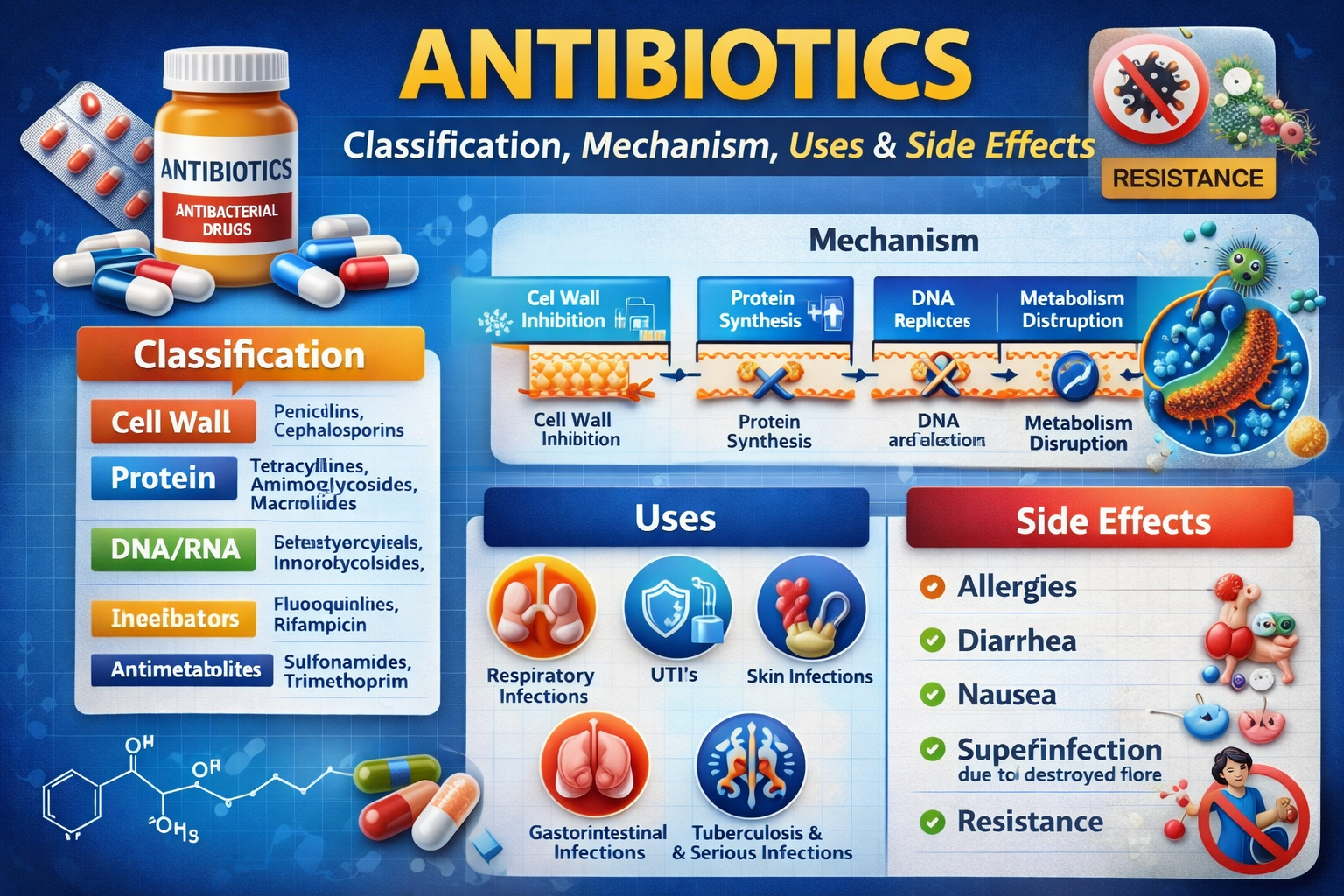
Antibiotics: Classification, Mechanism, Uses & Side Effects
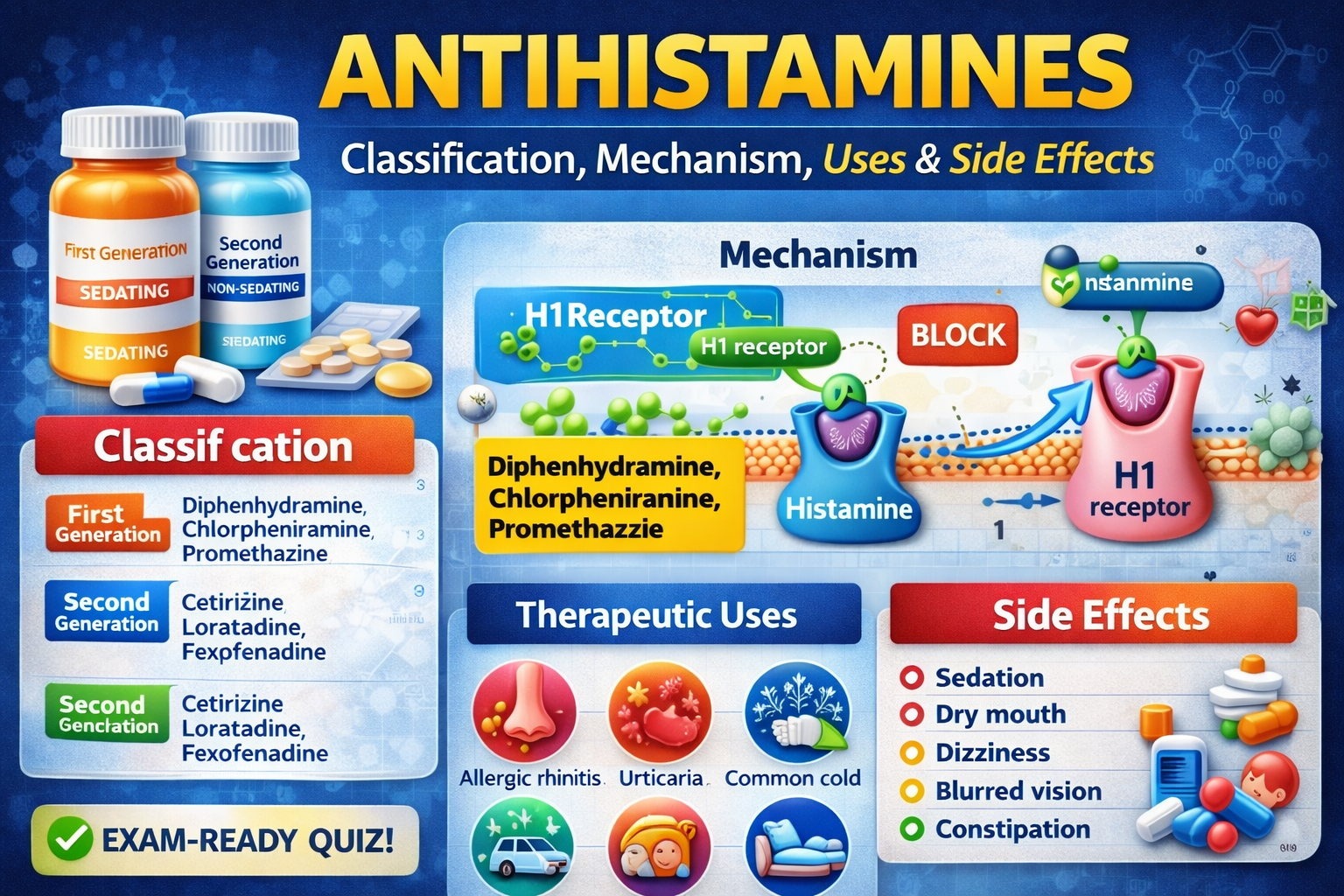
📌 Introduction   Antibiotics are one of the most important and widely used drug classes in pharmacology. They are essential for treating bacterial infections and are frequently asked in competitive exams like GPAT, DSSSB, and other pharmacy exams. A clear understanding of antibiotics helps students not only in exams but also in clinical practice. With the … Read more

Top 30 MCQs on NSAIDs with Answers & Explanation

📌 Introduction   NSAIDs (Non-Steroidal Anti-Inflammatory Drugs) are one of the most important topics in pharmacology. They are widely used for pain, inflammation, and fever and are frequently asked in exams like GPAT, DSSSB, and other pharmacy competitive exams. Practicing MCQs helps in quick revision and better understanding of concepts. 📝 MCQs on NSAIDs   1. NSAIDs … Read more

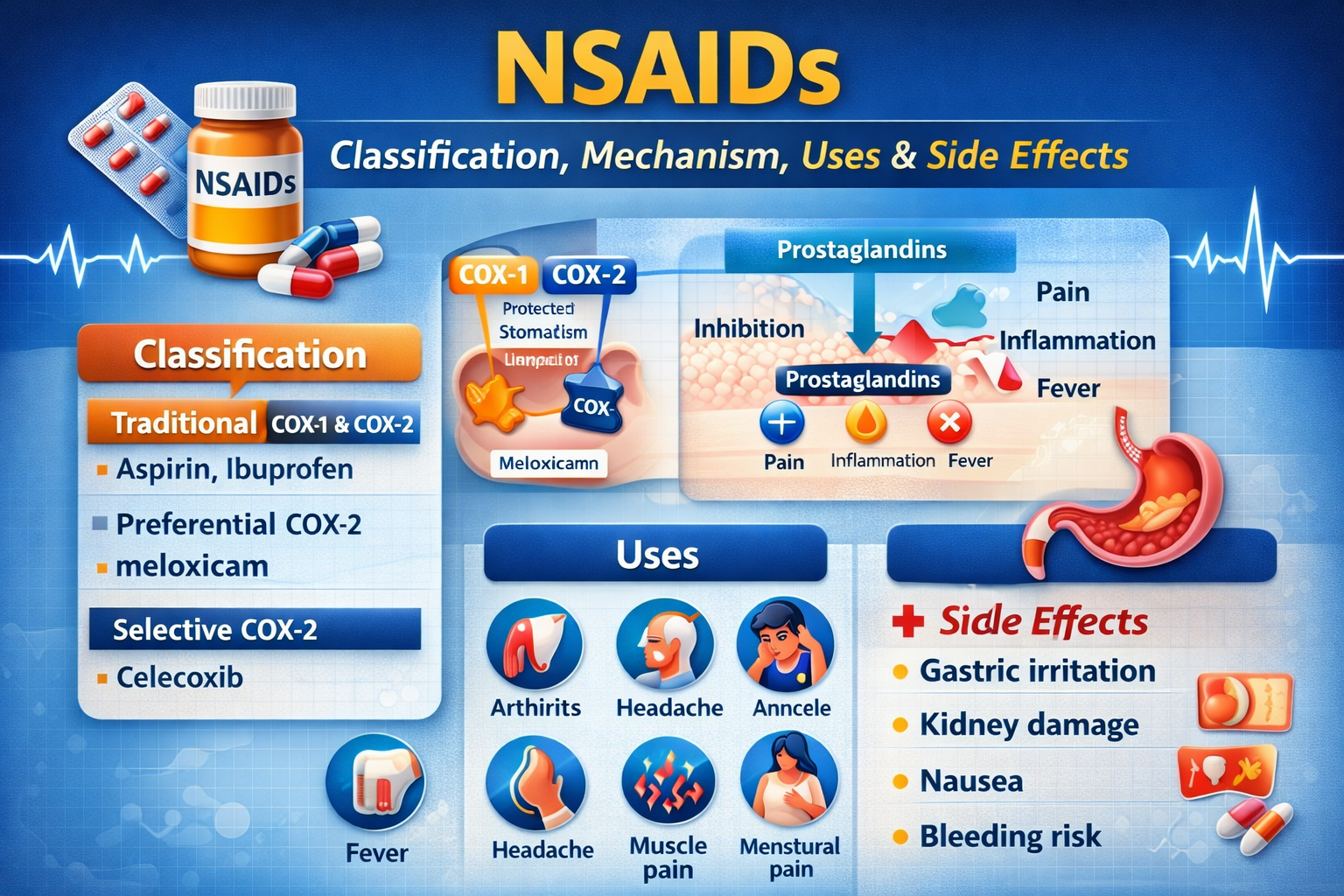
NSAIDs: Classification, Mechanism, Uses & Side Effects

📌 Introduction   Non-Steroidal Anti-Inflammatory Drugs (NSAIDs) are one of the most commonly used drug classes in pharmacology. They are widely prescribed for pain, inflammation, and fever. NSAIDs are very important for pharmacy students because they are frequently asked in competitive exams like GPAT, DSSSB, and other medical entrance tests. Understanding their classification, mechanism, uses, and … Read more

Top 30 MCQs on Beta Blockers with Answers & Explanation (Pharmacology)

📌Introduction   Beta blockers are one of the most important drug classes in pharmacology. They are widely used in cardiovascular diseases and are frequently asked in competitive exams like GPAT, DSSSB, and other pharmacy exams. Practicing MCQs helps in better understanding and quick revision of concepts. 📝 MCQs on Beta Blockers   1. Beta blockers act on … Read more

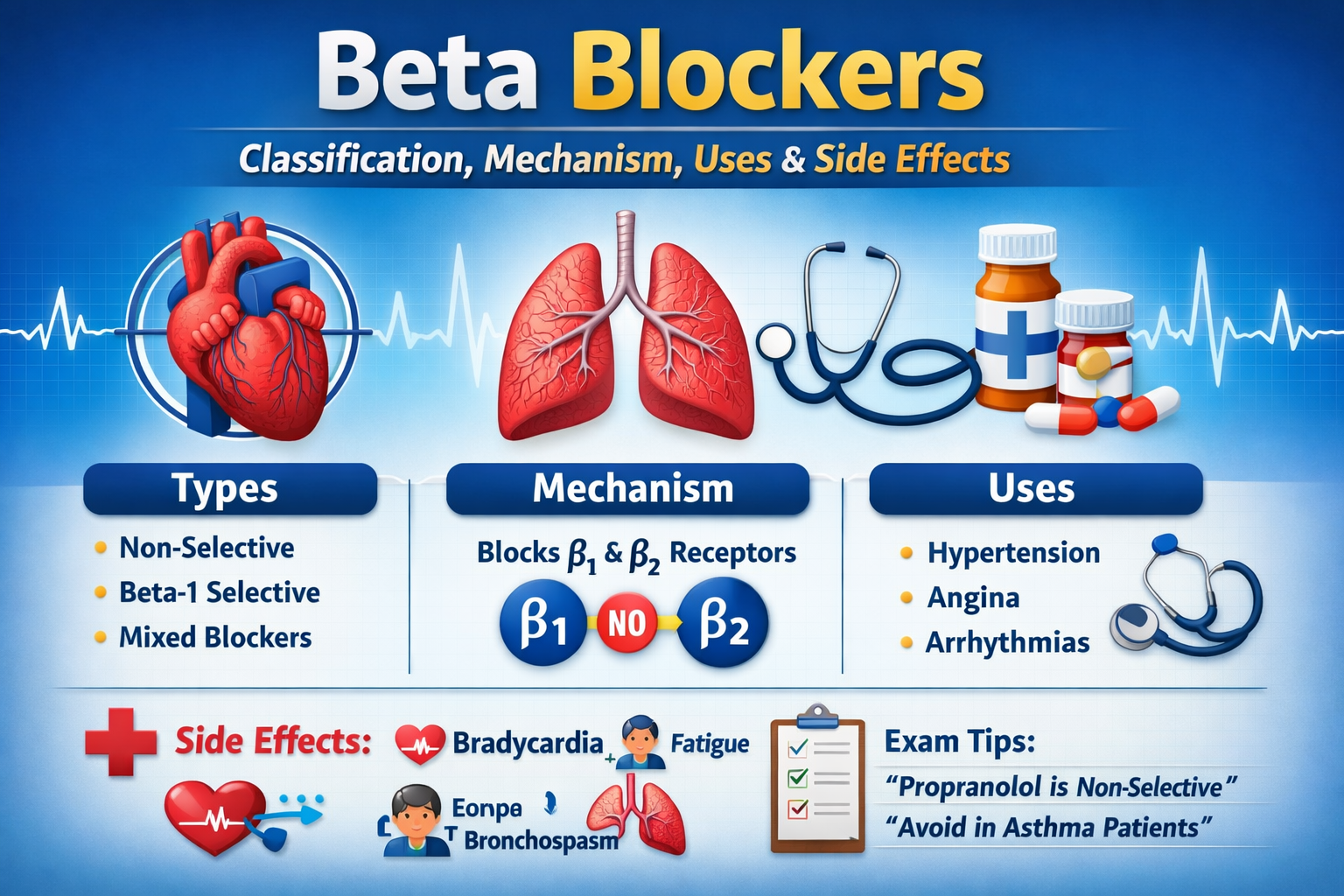
Beta Blockers: Classification, Mechanism, Uses & Side Effects

📌 Introduction  Beta blockers are one of the most important classes of drugs in pharmacology, widely used in the treatment of cardiovascular diseases. They are frequently asked in competitive exams like GPAT, DSSSB, and other pharmacy entrance tests. Because of their high clinical importance and repeated appearance in exams, understanding beta blockers clearly can significantly … Read more

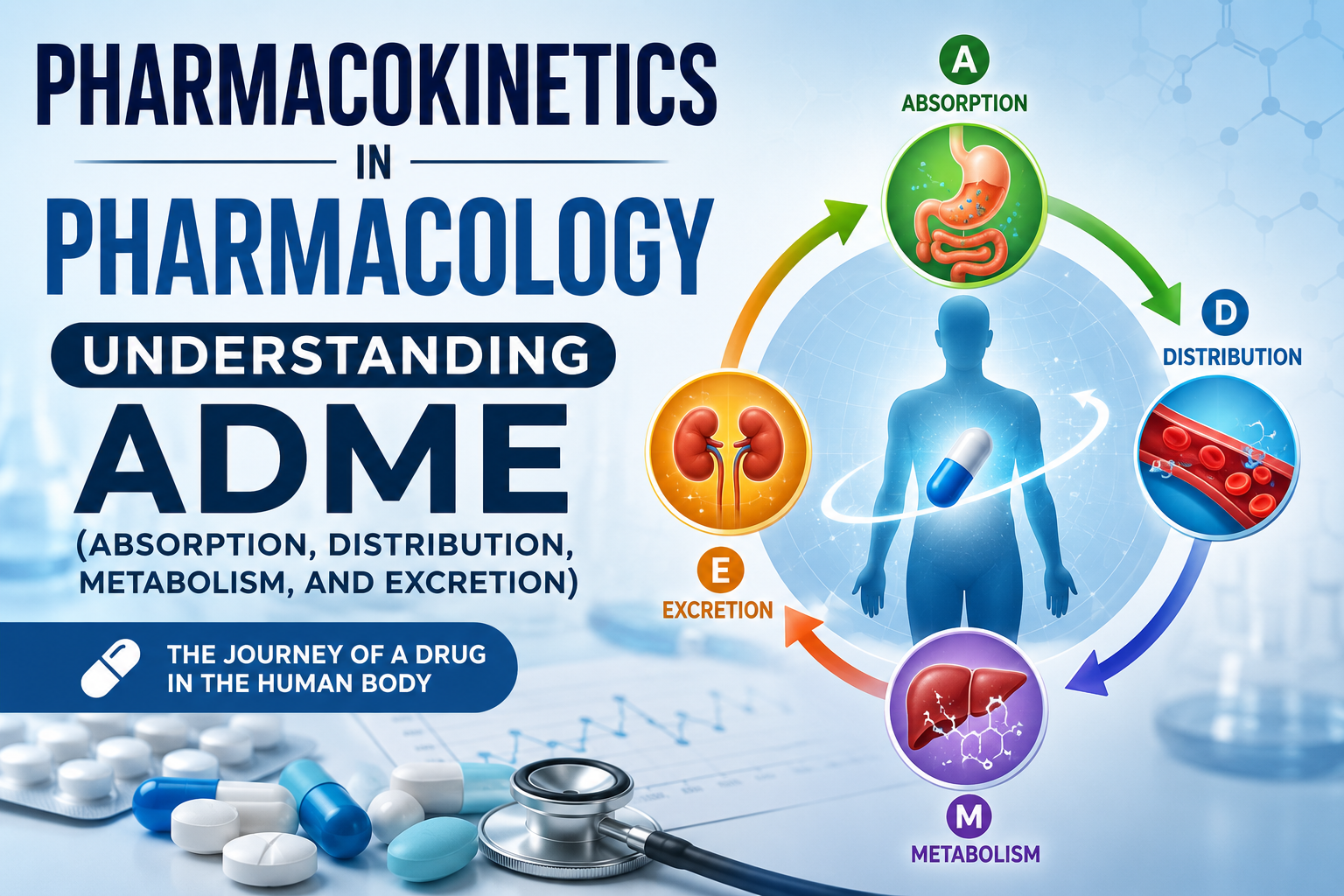
Pharmacokinetics in Pharmacology: Understanding ADME (Absorption, Distribution, Metabolism, and Excretion)

Introduction Pharmacokinetics is one of the most important concepts in pharmacology and pharmaceutical sciences. It describes how a drug moves through the body after administration. In simple terms, pharmacokinetics answers the question: What does the body do to the drug? The process of pharmacokinetics is commonly summarized by the acronym ADME, which stands for Absorption, … Read more

50 Important Pharmacy MCQs for GPAT 2026 (With Answers & Explanation)

  Preparing for the Graduate Pharmacy Aptitude Test (GPAT) requires strong conceptual understanding of all pharmacy subjects. Practicing MCQs regularly is one of the best ways to revise quickly and improve exam performance. In this post, we have compiled 50 important MCQs from major pharmacy subjects including: Pharmaceutics Pharmacology Pharmaceutical Chemistry Pharmacognosy Biochemistry These questions … Read more

GPAT 2026 Syllabus Breakdown – Subject-wise Topics and Weightage

GPAT 2026 is one of the most important national-level entrance exams for pharmacy graduates in India. Understanding the complete syllabus and subject-wise weightage is the first step toward smart preparation. In this post, we provide a detailed GPAT 2026 syllabus breakdown along with high-yield topics and expected weightage to help you plan effectively. 📌 Overview … Read more

7-Day GPAT Revision Strategy 2026 – Last Week Preparation Plan Before 7 March Exam

With GPAT 2026 scheduled on 7 March, this is the most crucial phase of your preparation. The last 7 days should not be for learning new topics, but for smart revision, practice, and strengthening high-yield areas. In this article, we provide a practical and realistic 7-day revision strategy to help pharmacy students revise effectively and … Read more