Antihypertensive Drugs: Classification, Mechanism, Uses & Side Effects
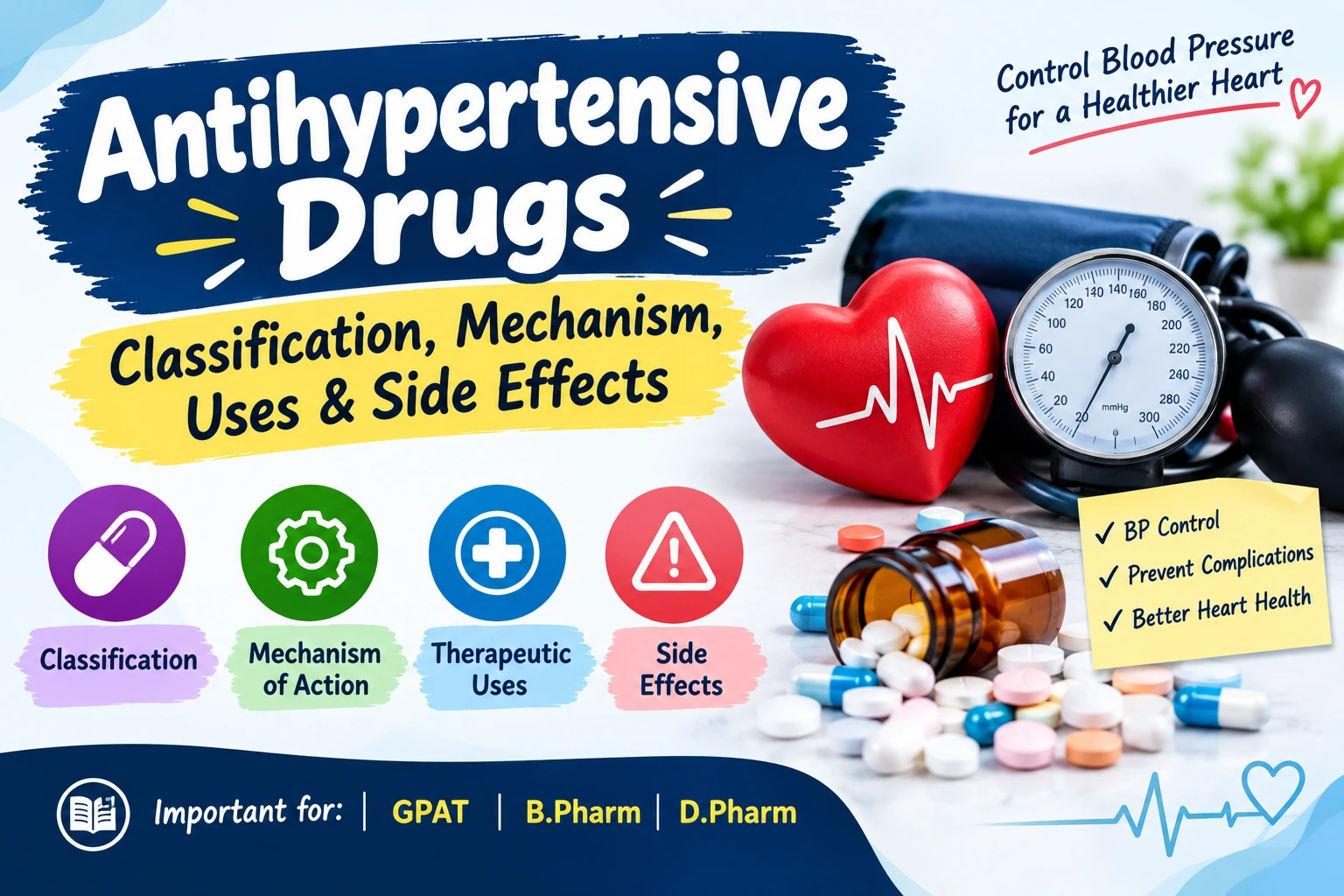
Antihypertensive drugs are medicines used to lower elevated blood pressure and reduce the risk of complications associated with hypertension. These drugs act through different mechanisms, including reducing blood volume, decreasing cardiac output, relaxing blood vessels, or inhibiting the renin–angiotensin–aldosterone system (RAAS). For pharmacy students, understanding the classification, mechanism of action, examples, therapeutic uses, and adverse … Read more
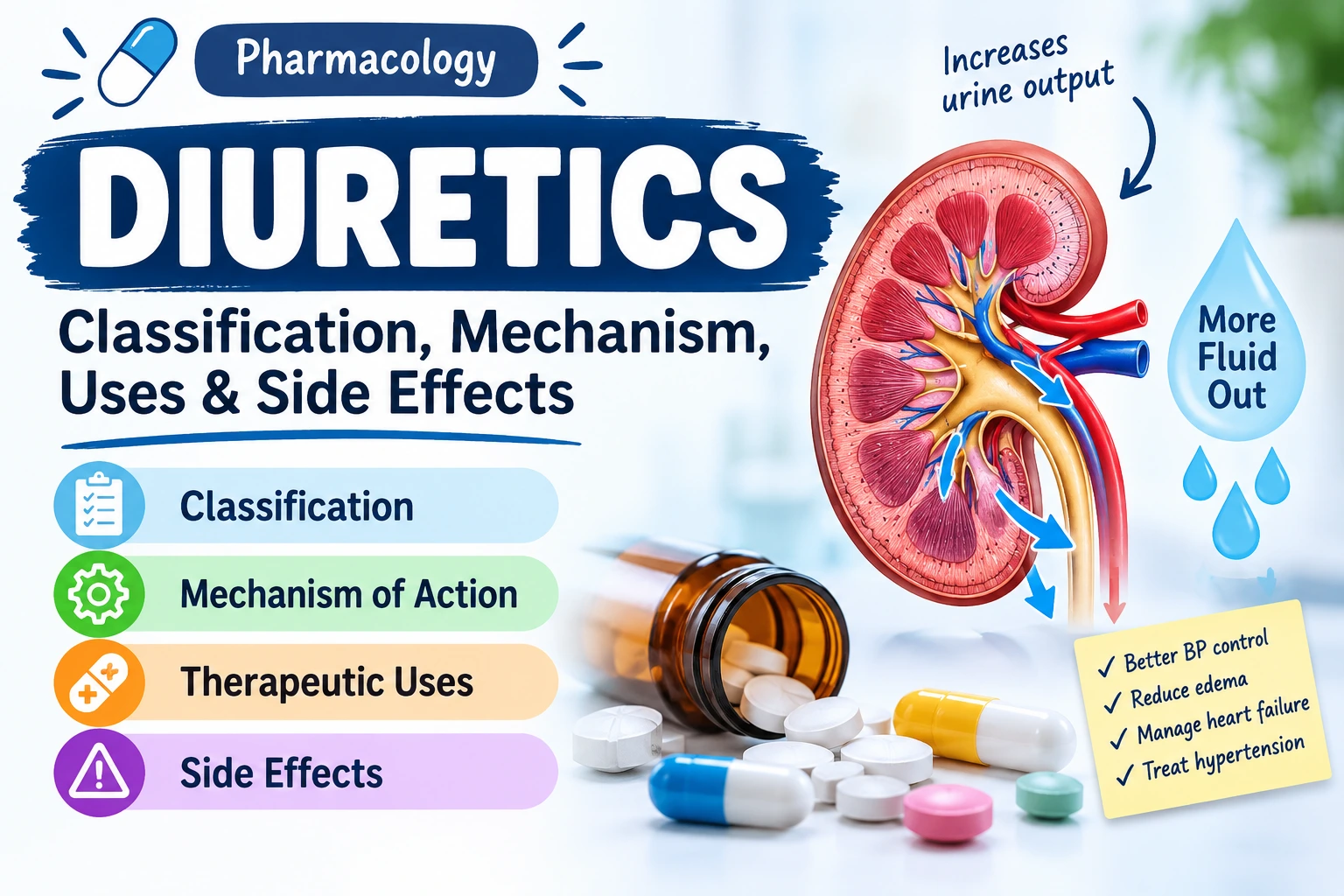
Diuretics: Classification, Mechanism, Uses & Side Effects

📌 Introduction Diuretics are an important group of drugs in pharmacology that increase the excretion of water and electrolytes through the kidneys. They are commonly used in the management of conditions such as hypertension, edema, heart failure, and certain kidney and electrolyte disorders. Because different diuretics act at different parts of the nephron, understanding their … Read more

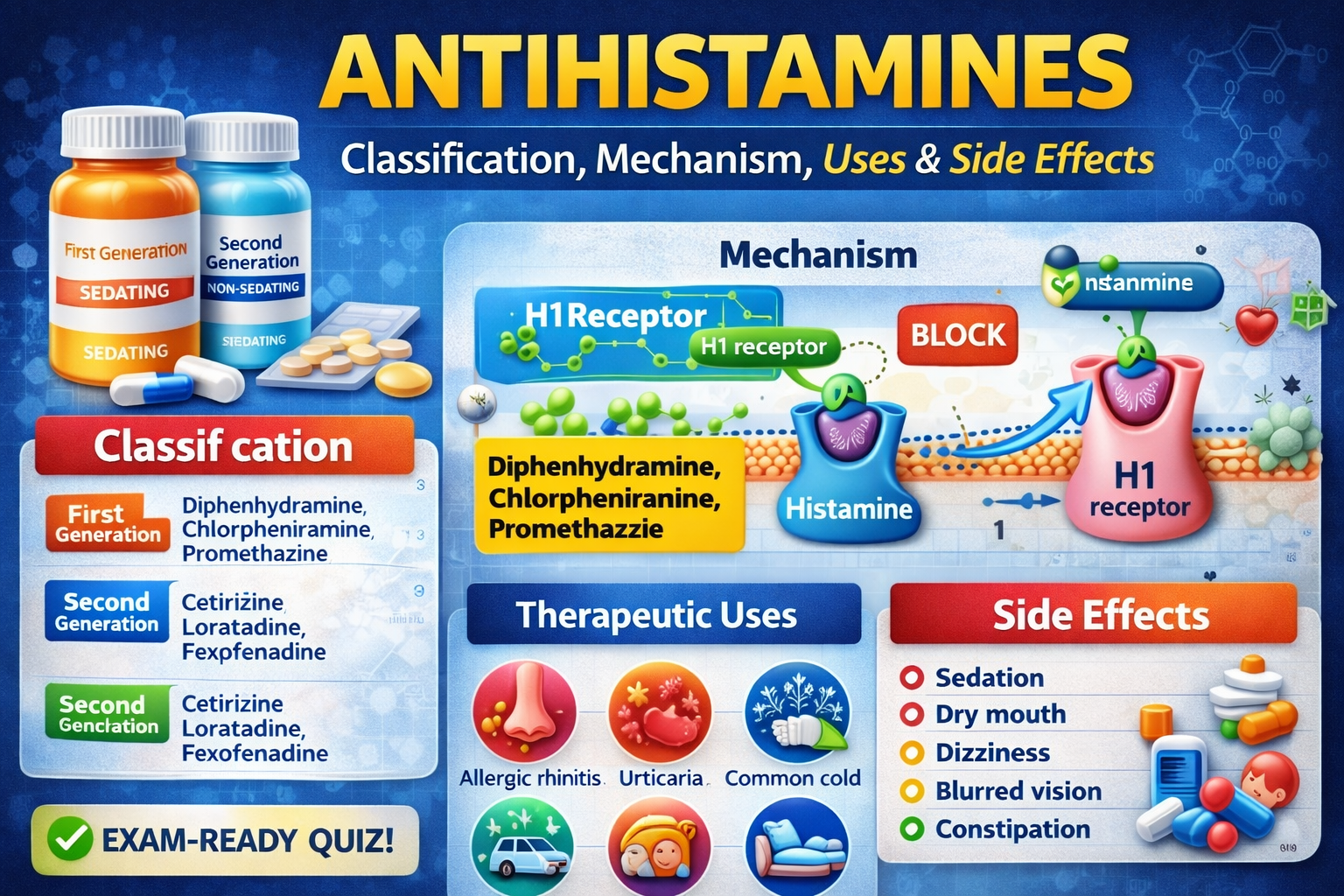
Antihistamines: Classification, Mechanism, Uses & Side Effects

Antihistamines are an important group of medicines used to control symptoms associated with allergic reactions. They are an important topic in pharmacology and are frequently included in pharmacy examinations and MCQs. Histamine is a naturally occurring chemical mediator involved in allergic and inflammatory reactions. When histamine acts on its receptors, it can contribute to symptoms … Read more

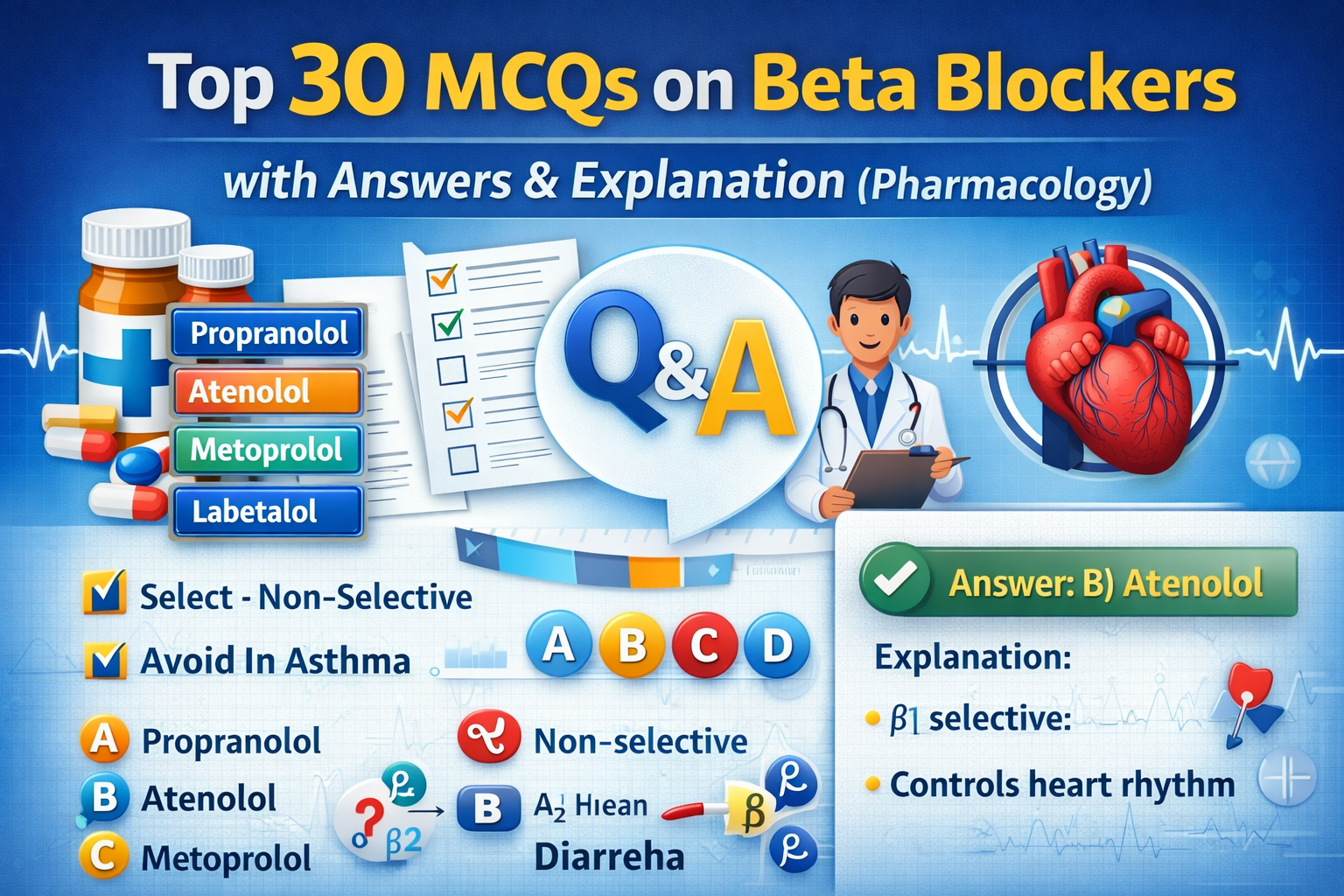
Top 30 MCQs on Beta Blockers with Answers & Explanation

Beta blockers are an important group of drugs in pharmacology and are frequently discussed in B.Pharm, D.Pharm, GPAT, pharmacist recruitment, and other pharmacy examinations. They mainly act by blocking beta-adrenergic receptors and are used in several cardiovascular and non-cardiovascular conditions. In this article, you will find 30 important Beta Blockers MCQs with answers and short … Read more

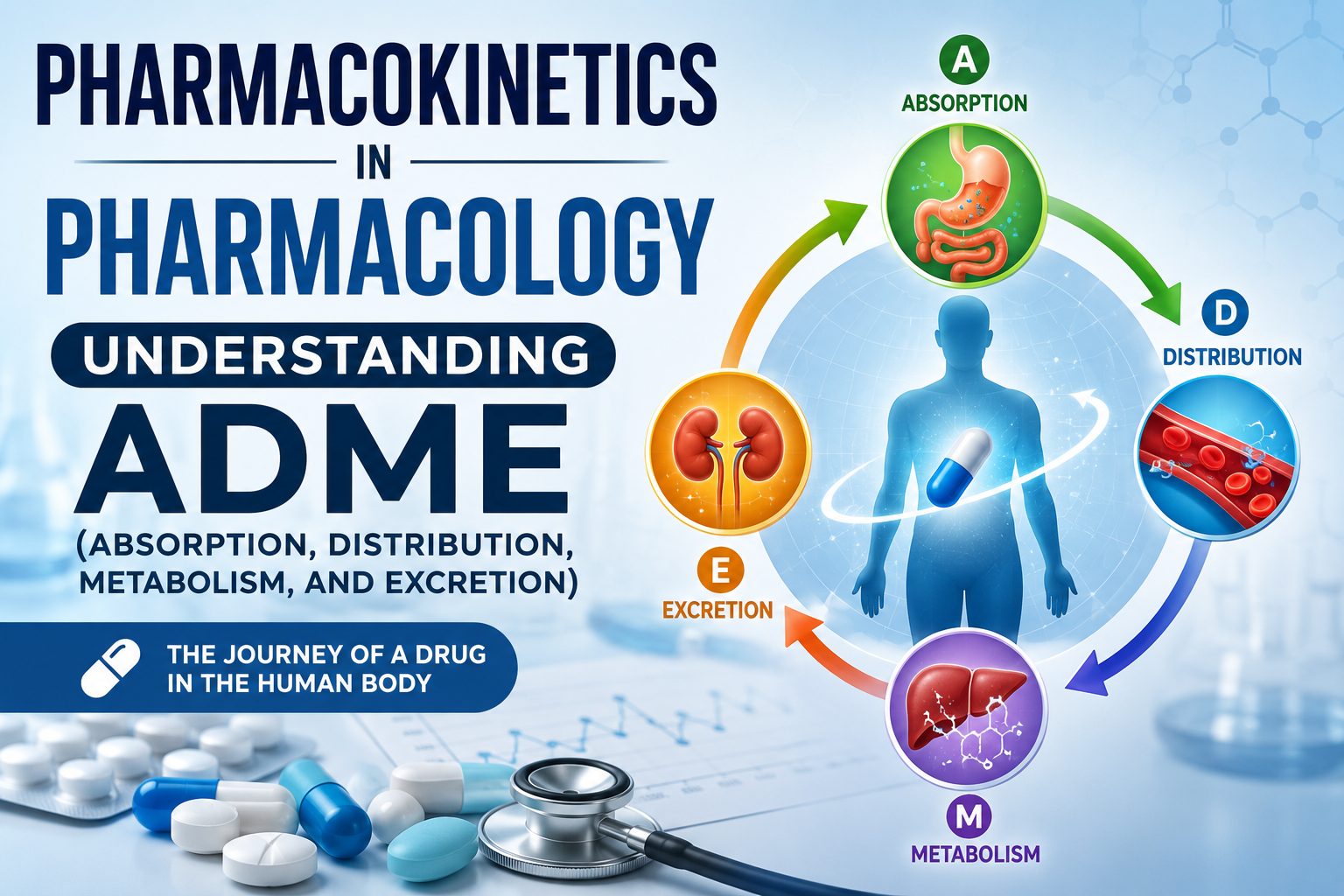
Pharmacokinetics in Pharmacology: ADME, Bioavailability, Half-Life & Drug Clearance

📌Introduction Pharmacokinetics is an important branch of pharmacology that explains what the body does to a drug after the drug is administered. It describes how a medicine enters the body, moves through different tissues, undergoes chemical changes, and is finally removed from the body. The major processes of pharmacokinetics are commonly represented by ADME: Understanding … Read more