
Introduction
Antifungal drugs are medicines used to prevent or treat infections caused by fungi. These infections can affect the skin, nails, mouth, genital area, lungs, and other organs. Some fungal infections are mild, while others can become serious, particularly in people with weakened immune systems.
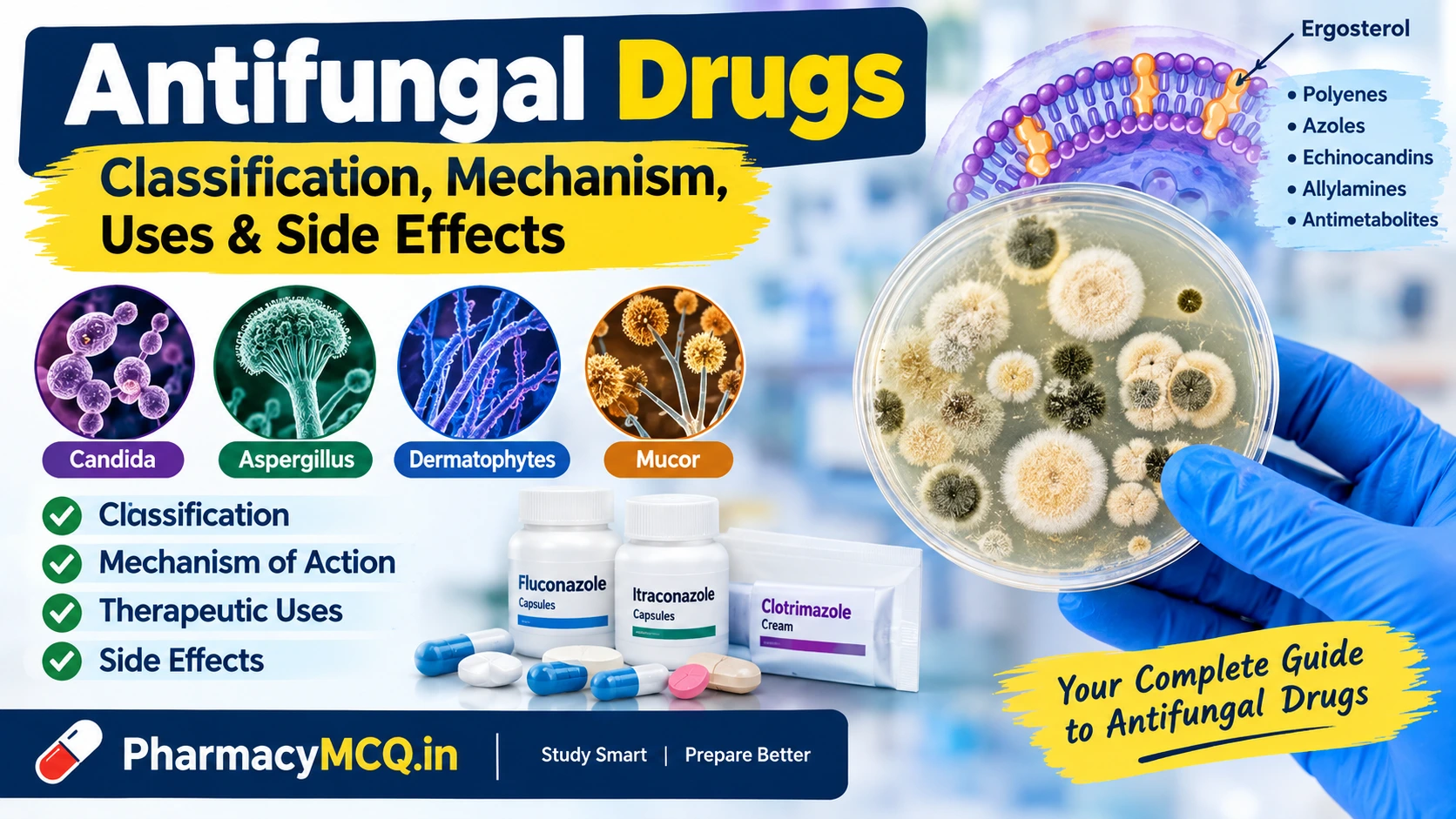
Antifungal drugs work through different mechanisms, including inhibition of fungal cell membrane synthesis, disruption of membrane integrity, and inhibition of fungal cell wall formation.
Understanding the classification, mechanism of action, therapeutic uses, and adverse effects of antifungal drugs is important for B.Pharm and D.Pharm students, GPAT aspirants, and pharmacist competitive examination candidates.
🔍What Are Antifungal Drugs?
Antifungal drugs are pharmacological agents that kill fungi or inhibit their growth.
They are used to treat fungal infections, also known as mycoses.
Examples of fungal infections include:
- Ringworm and athlete’s foot.
- Oral and vaginal candidiasis.
- Fungal nail infections.
- Aspergillosis.
- Cryptococcal infections.
- Certain systemic fungal infections.
The choice of antifungal medicine depends on the causative fungus, the site and severity of infection, the patient’s medical condition, and the susceptibility of the organism to the drug.
📝Classification of Antifungal Drugs
Antifungal drugs can be classified according to their chemical structure and mechanism of action.
A. Polyenes
Examples:
- Amphotericin B
- Nystatin
Mechanism: Polyenes bind to ergosterol in the fungal cell membrane, disrupting membrane integrity and causing leakage of cellular contents.
Uses:
- Amphotericin B is used for selected serious systemic fungal infections.
- Nystatin is used for certain Candida infections, particularly oral and cutaneous infections.
Important adverse effects:
- Amphotericin B: Infusion-related reactions, kidney toxicity, and electrolyte disturbances.
- Nystatin: Gastrointestinal discomfort with oral formulations and local irritation with some topical preparations.
B. Azoles
Azole antifungals are divided into two major groups.
Imidazoles:
- Clotrimazole
- Miconazole
- Ketoconazole
Triazoles:
- Fluconazole
- Itraconazole
- Voriconazole
- Posaconazole
- Isavuconazole
Mechanism: Azoles inhibit the fungal enzyme lanosterol 14-alpha-demethylase, reducing ergosterol synthesis and disrupting normal fungal cell membrane function.
Uses:
- Clotrimazole: Certain skin infections and mucosal candidiasis.
- Fluconazole: Selected Candida infections and cryptococcal infections.
- Itraconazole: Certain dermatophyte and systemic fungal infections.
- Voriconazole: Important treatment for invasive aspergillosis.
- Posaconazole: Prevention and treatment of selected serious fungal infections.
- Isavuconazole: Treatment of invasive aspergillosis and mucormycosis in appropriate patients.
Important adverse effects:
- Nausea and abdominal discomfort.
- Liver enzyme elevation and, rarely, serious liver injury.
- Drug interactions, which vary among individual azoles.
- QT interval prolongation with certain agents; isavuconazole is an exception because it shortens the QT interval.
Note: Oral ketoconazole has significant risks of liver injury and other serious adverse effects. Its use is restricted and it is not a routine first-line treatment for superficial fungal infections.
C. Echinocandins
Examples:
- Caspofungin
- Micafungin
- Anidulafungin
Mechanism: Echinocandins inhibit beta-(1,3)-D-glucan synthase, an enzyme required for producing an important component of the fungal cell wall.
Uses:
- Invasive candidiasis.
- Selected cases of invasive aspergillosis when other treatments are unsuitable or as part of specialist-directed therapy.
Important adverse effects:
- Fever.
- Nausea.
- Infusion-related reactions.
- Elevated liver enzymes.
D. Allylamines
Examples:
- Terbinafine
- Naftifine
Mechanism: Allylamines inhibit squalene epoxidase, reducing ergosterol synthesis and causing squalene accumulation in fungal cells.
Uses:
- Dermatophyte skin infections.
- Terbinafine is commonly used for dermatophyte nail infections when systemic treatment is appropriate.
Important adverse effects:
- Gastrointestinal discomfort.
- Skin rash.
- Taste or smell disturbances with terbinafine.
- Rare but potentially serious liver injury.
E. Antimetabolites
Example:
- Flucytosine
Mechanism: Flucytosine enters susceptible fungal cells and is converted into active metabolites that interfere with DNA and RNA synthesis.
Uses:
- Used in combination with other antifungal medicines for selected serious infections, including cryptococcal meningitis.
Important adverse effects:
- Bone marrow suppression.
- Liver toxicity.
- Gastrointestinal disturbances.
Blood counts, liver function, kidney function, and drug levels may require monitoring during treatment, depending on the clinical situation.
F. Griseofulvin
Mechanism: Griseofulvin interferes with fungal mitosis by disrupting microtubule function. It accumulates in newly forming keratin and helps protect it from dermatophyte infection.
Uses:
- Selected dermatophyte infections of the skin, hair, and nails.
Important adverse effects:
- Headache.
- Gastrointestinal discomfort.
- Photosensitivity.
- Drug interactions, including interactions related to its effect on drug-metabolizing enzymes.
Griseofulvin is not effective against all types of fungal infections.
G. Other Antifungal Agents
Ciclopirox: Interferes with several cellular processes and is used for selected superficial fungal infections.
Tolnaftate: Used topically for certain dermatophyte infections.
Amorolfine: A topical antifungal that inhibits enzymes involved in ergosterol synthesis and is used in certain nail infections.
The availability and approved indications of these medicines vary by country and formulation.
⚕️Mechanism of Action of Antifungal Drugs
Different antifungal drugs act on specific structures or processes in fungal cells.
| Drug class | Main target | Mechanism |
|---|---|---|
| Polyenes | Fungal cell membrane | Bind to ergosterol and disrupt membrane integrity |
| Azoles | Ergosterol synthesis | Inhibit lanosterol 14-alpha-demethylase |
| Echinocandins | Fungal cell wall | Inhibit beta-(1,3)-D-glucan synthesis |
| Allylamines | Ergosterol synthesis | Inhibit squalene epoxidase |
| Antimetabolites | Nucleic acid synthesis | Interfere with DNA and RNA synthesis |
| Griseofulvin | Fungal mitosis | Disrupt microtubule function |
Exam tip: Remember the major targets: polyenes act on ergosterol, azoles inhibit 14-alpha-demethylase, echinocandins inhibit glucan synthesis, and allylamines inhibit squalene epoxidase.
🩺Therapeutic Uses of Antifungal Drugs
Antifungal medicines are used for different infections depending on the causative organism and the site of infection.
1. Dermatophyte Infections
Dermatophytes cause infections of keratinized tissues, including the skin, hair, and nails.
Examples of treatment options include:
- Terbinafine.
- Clotrimazole.
- Other appropriate topical or systemic antifungals.
2. Candidiasis
Candidiasis is caused by Candida species.
Depending on the site and severity, treatment may include:
- Nystatin.
- Clotrimazole.
- Fluconazole.
- Echinocandins for selected invasive infections.
3. Aspergillosis
Aspergillosis is caused by Aspergillus species.
Voriconazole and isavuconazole are important treatment options for invasive disease. Other agents may be selected according to the type of infection, susceptibility results, and clinical circumstances.
4. Cryptococcal Infections
Serious cryptococcal infections, including cryptococcal meningitis, often require combination treatment with amphotericin B and flucytosine during the initial treatment phase, followed by an appropriate step-down regimen.
5. Nail Fungal Infections
Certain fungal nail infections may be treated with terbinafine or other suitable agents. Treatment depends on the organism, the affected nail, and the severity of infection.
A correct diagnosis is important because not every nail discoloration or thickening is caused by fungi.
6. Serious Systemic Fungal Infections
Amphotericin B, selected triazoles, and echinocandins are used for particular serious systemic infections. The appropriate drug depends on the fungal species, infection site, severity, and patient-specific factors.
📕Side Effects of Antifungal Drugs
Antifungal medicines can cause adverse effects, which vary by drug class and formulation.
| Drug | Important adverse effects |
|---|---|
| Amphotericin B | Kidney toxicity, infusion reactions, electrolyte disturbances |
| Fluconazole | Nausea, liver enzyme elevation, possible QT prolongation |
| Itraconazole | Gastrointestinal effects, liver injury, risk of worsening heart failure |
| Voriconazole | Visual disturbances, photosensitivity, liver toxicity |
| Terbinafine | Gastrointestinal effects, taste disturbances, rare liver injury |
| Flucytosine | Bone marrow suppression, liver toxicity |
| Griseofulvin | Headache, gastrointestinal effects, photosensitivity |
| Echinocandins | Infusion reactions, fever, elevated liver enzymes |
Not every patient experiences these effects. Serious or persistent symptoms require medical assessment.
📍Important Precautions
Before using an antifungal medicine, healthcare professionals consider:
- Liver and kidney function.
- Pregnancy and breastfeeding.
- Possible drug interactions.
- The type and severity of infection.
- Previous allergic reactions.
- Whether laboratory confirmation is needed.
Oral and intravenous antifungals can have significant adverse effects and interactions. They should be used under appropriate medical supervision.
Topical antifungals may be sufficient for many superficial infections, but persistent, recurrent, extensive, or severe infections need medical evaluation.
Antifungal medicines should not be used indiscriminately because incorrect treatment may delay diagnosis and appropriate care.
📑Important Exam Points
These facts are useful for B.Pharm, D.Pharm, GPAT, and pharmacist competitive examinations.
- Amphotericin B binds to ergosterol in the fungal cell membrane.
- Nystatin is a polyene antifungal.
- Fluconazole belongs to the triazole group.
- Azoles inhibit lanosterol 14-alpha-demethylase.
- Echinocandins inhibit beta-(1,3)-D-glucan synthesis.
- Terbinafine inhibits squalene epoxidase.
- Flucytosine interferes with fungal DNA and RNA synthesis.
- Griseofulvin disrupts fungal mitosis.
- Amphotericin B is associated with significant kidney toxicity.
- Terbinafine is commonly used for dermatophyte nail infections.
- Voriconazole is an important drug for invasive aspergillosis.
- Flucytosine is used in combination regimens for selected serious fungal infections.
📋Frequently Asked Questions (FAQs)
1. What are antifungal drugs?
Antifungal drugs are medicines used to kill fungi or inhibit their growth. They treat infections affecting the skin, nails, mouth, genital area, and internal organs.
2. What are the main classes of antifungal drugs?
The major classes include polyenes, azoles, echinocandins, allylamines, and antimetabolites. Other important agents include griseofulvin and selected topical antifungals.
3. What is the mechanism of action of azole antifungals?
Azoles inhibit lanosterol 14-alpha-demethylase, reducing ergosterol synthesis and disrupting the fungal cell membrane.
4. Which antifungal drug is associated with kidney toxicity?
Amphotericin B is well known for its potential to cause kidney toxicity and electrolyte disturbances.
5. What is the mechanism of action of terbinafine?
Terbinafine inhibits squalene epoxidase, reducing ergosterol synthesis and causing squalene accumulation in fungal cells.
6. What is the difference between antifungal and antibacterial drugs?
Antifungal drugs target fungal structures and processes, while antibacterial drugs act against bacteria. The two groups are not interchangeable because fungi and bacteria differ biologically.
🎯 Conclusion
Antifungal drugs are essential medicines used to manage a wide range of fungal infections. Their major classes include polyenes, azoles, echinocandins, allylamines, and antimetabolites, each acting through different mechanisms.
For pharmacy students, understanding their classification, mechanisms, therapeutic uses, and adverse effects is important for examinations and pharmaceutical practice. Correct drug selection also requires consideration of the causative organism, infection severity, drug interactions, and patient-specific factors.
1 thought on “Antifungal Drugs: Classification, Mechanism, Uses & Side Effects”