
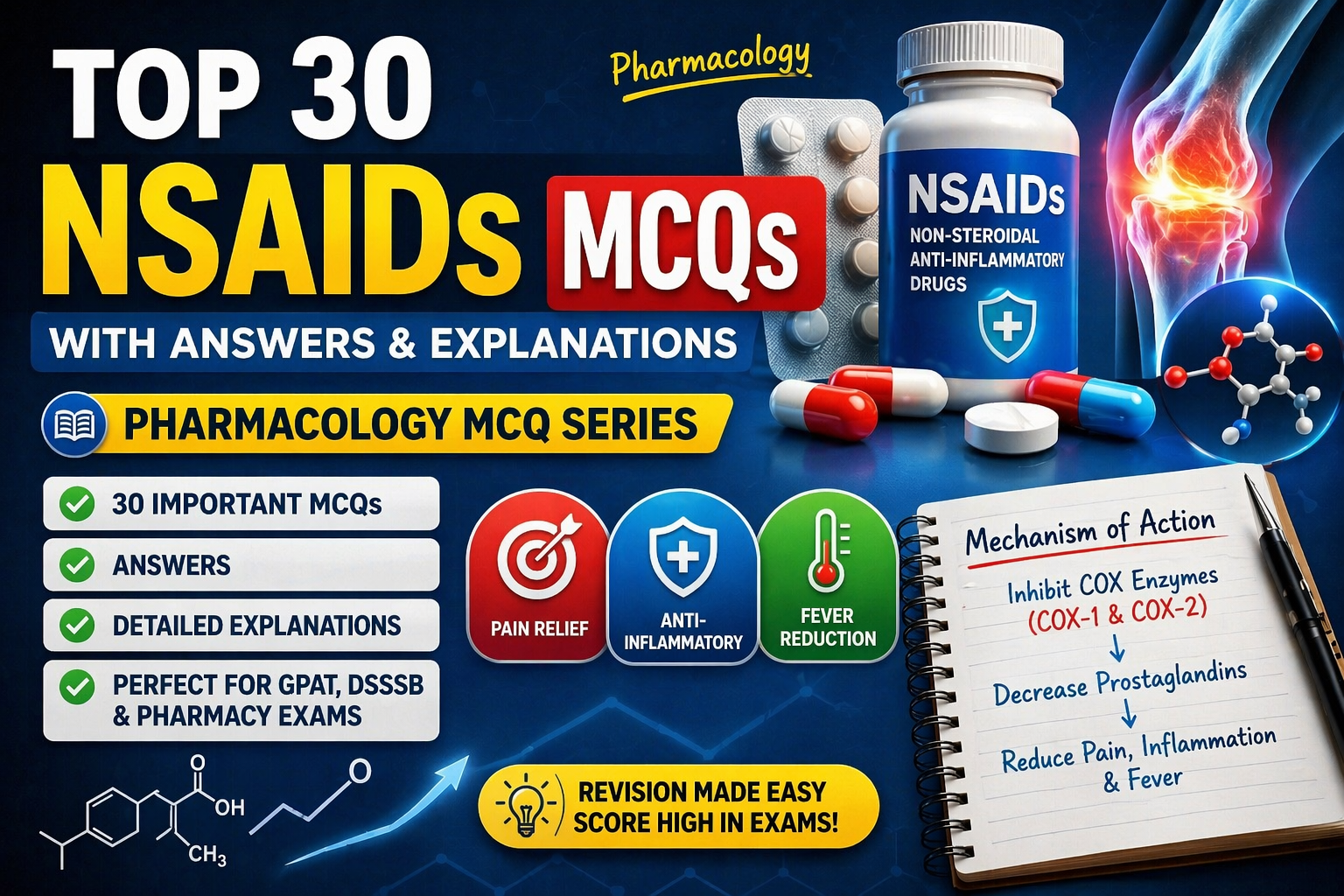
Nonsteroidal anti-inflammatory drugs (NSAIDs) are an important topic in pharmacology and are frequently asked in B.Pharm, D.Pharm, GPAT, pharmacist recruitment examinations, and other pharmacy competitive exams.
NSAIDs mainly produce analgesic, antipyretic, and anti-inflammatory effects by reducing prostaglandin synthesis through inhibition of cyclooxygenase (COX) enzymes. However, individual NSAIDs differ in their COX selectivity, clinical uses, adverse effects, and pharmacological properties.
Below are 30 important NSAIDs MCQs with answers and explanations designed for quick exam preparation and revision.
1. What is the primary pharmacological action of most NSAIDs?
A. Increase prostaglandin synthesis
B. Inhibit cyclooxygenase enzymes
C. Stimulate opioid receptors
D. Block histamine H1 receptors
Answer: B. Inhibit cyclooxygenase enzymes
Explanation: Most NSAIDs reduce the formation of prostaglandins by inhibiting cyclooxygenase enzymes. This contributes to their analgesic, antipyretic, and anti-inflammatory effects.
2. Which enzymes are primarily inhibited by NSAIDs?
A. MAO-A and MAO-B
B. COX-1 and COX-2
C. ACE and renin
D. HMG-CoA reductase and lipase
Answer: B. COX-1 and COX-2
Explanation: Cyclooxygenase enzymes convert arachidonic acid into prostaglandin-related products. NSAIDs differ in how strongly and selectively they inhibit COX-1 and COX-2.
3. Which NSAID irreversibly inhibits cyclooxygenase by acetylation?
A. Ibuprofen
B. Naproxen
C. Aspirin
D. Diclofenac
Answer: C. Aspirin
Explanation: Aspirin acetylates a serine residue in the COX enzyme, producing irreversible inhibition. This is particularly important for its effect on platelet COX-1.
4. Which COX isoform is constitutively expressed in many tissues and contributes to normal physiological functions?
A. COX-1
B. COX-2 only
C. COX-3 only
D. Lipoxygenase
Answer: A. COX-1
Explanation: COX-1 is constitutively expressed in many tissues and contributes to physiological prostaglandin production, including functions involving the gastrointestinal tract, kidneys, and platelets.
5. COX-2 is particularly associated with:
A. Inflammatory prostaglandin production
B. Formation of hemoglobin
C. Acetylcholine synthesis
D. Bile acid production
Answer: A. Inflammatory prostaglandin production
Explanation: COX-2 expression can increase during inflammation, leading to increased production of prostaglandins involved in pain and inflammation.
6. Which of the following is a non-selective NSAID?
A. Celecoxib
B. Ibuprofen
C. Etoricoxib
D. None of the above
Answer: B. Ibuprofen
Explanation: Ibuprofen inhibits both COX-1 and COX-2. Celecoxib and etoricoxib are examples of selective COX-2 inhibitors.
7. Which drug is a selective COX-2 inhibitor?
A. Celecoxib
B. Aspirin
C. Ibuprofen
D. Naproxen
Answer: A. Celecoxib
Explanation: Celecoxib primarily inhibits COX-2 and produces analgesic and anti-inflammatory effects. Unlike aspirin, it does not provide aspirin-like inhibition of platelet aggregation.
8. Which NSAID is commonly used as an analgesic and antipyretic and also has anti-inflammatory activity?
A. Ibuprofen
B. Atropine
C. Diazepam
D. Chlorpheniramine
Answer: A. Ibuprofen
Explanation: Ibuprofen is an NSAID with analgesic, antipyretic, and anti-inflammatory properties and is widely used for several types of pain and inflammatory conditions.
9. Which NSAID is commonly associated with the treatment of acute gout because of its anti-inflammatory action?
A. Indomethacin
B. Paracetamol
C. Loratadine
D. Omeprazole
Answer: A. Indomethacin
Explanation: Indomethacin is a potent NSAID that has historically been used in acute gout attacks to reduce inflammation and pain.
10. Which NSAID is particularly important for its irreversible antiplatelet effect at low doses?
A. Aspirin
B. Ibuprofen
C. Diclofenac
D. Celecoxib
Answer: A. Aspirin
Explanation: Low-dose aspirin irreversibly inhibits platelet COX-1 and decreases thromboxane A2 production, thereby reducing platelet aggregation. Platelets cannot synthesize new COX efficiently because they lack a nucleus.
11. Which mediator is reduced when platelet COX-1 is inhibited by aspirin?
A. Thromboxane A2
B. Histamine
C. Dopamine
D. Leukotriene B4
Answer: A. Thromboxane A2
Explanation: Platelet COX-1 contributes to thromboxane A2 synthesis. Aspirin reduces thromboxane A2 formation, resulting in decreased platelet aggregation.
12. A major gastrointestinal adverse effect associated with traditional NSAIDs is:
A. Peptic ulceration and gastrointestinal bleeding
B. Increased mucus production
C. Complete protection of the gastric mucosa
D. Increased gastric mucosal resistance
Answer: A. Peptic ulceration and gastrointestinal bleeding
Explanation: Inhibition of prostaglandin synthesis can reduce protective mechanisms in the gastrointestinal tract. NSAIDs can therefore increase the risk of gastric irritation, ulcers, and gastrointestinal bleeding.
13. NSAID-induced renal effects are partly related to inhibition of renal:
A. Prostaglandin synthesis
B. Hemoglobin synthesis
C. Thyroxine synthesis
D. Insulin synthesis
Answer: A. Prostaglandin synthesis
Explanation: Renal prostaglandins contribute to regulation of renal blood flow and sodium and water handling. NSAID-induced reduction in prostaglandin synthesis can therefore contribute to renal adverse effects and fluid retention in susceptible patients.
14. Which NSAID is a commonly recognized option for dysmenorrhea?
A. Ibuprofen
B. Digoxin
C. Propranolol
D. Salbutamol
Answer: A. Ibuprofen
Explanation: NSAIDs such as ibuprofen can reduce prostaglandin-mediated uterine pain and are commonly used for primary dysmenorrhea.
15. Which drug is primarily a COX-2 selective NSAID?
A. Etoricoxib
B. Aspirin
C. Ketorolac
D. Ibuprofen
Answer: A. Etoricoxib
Explanation: Etoricoxib is a selective COX-2 inhibitor. Selective COX-2 inhibition was developed to provide anti-inflammatory and analgesic effects while reducing some COX-1-related gastrointestinal effects, although COX-2-selective drugs still have important risks.
16. Which of the following is NOT a typical therapeutic property of NSAIDs?
A. Analgesic action
B. Antipyretic action
C. Anti-inflammatory action
D. Antibacterial action
Answer: D. Antibacterial action
Explanation: NSAIDs do not kill bacteria. Their principal therapeutic effects include reduction of pain, fever, and inflammation.
17. Which adverse effect is particularly important with NSAID use in susceptible patients?
A. Renal impairment
B. Increased kidney protection
C. Permanent increase in insulin secretion
D. Increased platelet aggregation in every patient
Answer: A. Renal impairment
Explanation: NSAIDs can interfere with prostaglandin-mediated renal function and may contribute to acute kidney injury or other renal complications in susceptible individuals.
18. Why can aspirin increase the risk of bleeding?
A. It increases platelet aggregation
B. It inhibits platelet thromboxane formation
C. It stimulates vitamin K production
D. It increases fibrin formation directly
Answer: B. It inhibits platelet thromboxane formation
Explanation: Aspirin irreversibly inhibits platelet COX-1, reducing thromboxane A2 production. This decreases platelet aggregation and can increase bleeding tendency.
19. Which NSAID is commonly associated with significant analgesic use but is generally intended for short-term use because of safety concerns?
A. Ketorolac
B. Celecoxib
C. Naproxen
D. Aspirin
Answer: A. Ketorolac
Explanation: Ketorolac is a potent NSAID used for short-term management of moderate to severe acute pain. Its gastrointestinal and renal risks limit prolonged use.
20. Which statement about celecoxib is correct?
A. It primarily inhibits COX-2
B. It irreversibly inhibits platelet COX-1 like aspirin
C. It is an opioid analgesic
D. It stimulates prostaglandin synthesis
Answer: A. It primarily inhibits COX-2
Explanation: Celecoxib inhibits prostaglandin synthesis primarily through COX-2 inhibition. It does not substitute for aspirin’s antiplatelet effect.
21. Which NSAID is commonly used for musculoskeletal pain and inflammatory conditions?
A. Naproxen
B. Atropine
C. Amoxicillin
D. Furosemide
Answer: A. Naproxen
Explanation: Naproxen is an NSAID used for pain and inflammatory conditions such as arthritis and musculoskeletal disorders.
22. Which condition is particularly associated with aspirin use in children or adolescents recovering from certain viral infections?
A. Reye syndrome
B. Parkinson disease
C. Peptic ulcer only
D. Glaucoma
Answer: A. Reye syndrome
Explanation: Aspirin use in children and adolescents with certain viral illnesses has been associated with Reye syndrome. Therefore, aspirin is generally avoided in these situations unless specifically directed by a healthcare professional.
23. Which NSAID is known for relatively prolonged action compared with ibuprofen?
A. Naproxen
B. Ketorolac
C. Aspirin only
D. Paracetamol
Answer: A. Naproxen
Explanation: Naproxen has a relatively long elimination half-life compared with ibuprofen, allowing less frequent dosing in many therapeutic situations.
24. NSAIDs reduce fever primarily by decreasing prostaglandin production in the:
A. Hypothalamus
B. Pancreas
C. Thyroid gland
D. Bone marrow
Answer: A. Hypothalamus
Explanation: During fever, prostaglandin E2 contributes to an elevated hypothalamic temperature set point. NSAIDs reduce prostaglandin synthesis and help return the set point toward normal.
25. Which statement best describes the difference between COX-1 and COX-2?
A. COX-1 and COX-2 have exactly the same physiological roles
B. COX-1 is involved in many normal physiological functions, while COX-2 is strongly induced during inflammation
C. COX-1 is found only in the brain
D. COX-2 is found only in platelets
Answer: B. COX-1 is involved in many normal physiological functions, while COX-2 is strongly induced during inflammation
Explanation: COX-1 has important constitutive physiological roles, while COX-2 expression can increase substantially during inflammatory processes. However, both enzymes can be present in multiple tissues and the distinction is not absolute.
26. Which NSAID has a well-known association with inhibition of platelet aggregation through irreversible COX inhibition?
A. Aspirin
B. Celecoxib
C. Etoricoxib
D. Meloxicam
Answer: A. Aspirin
Explanation: Aspirin’s irreversible COX inhibition in platelets decreases thromboxane A2 formation. This produces a longer-lasting antiplatelet effect than the reversible platelet effects of most traditional NSAIDs.
27. Which of the following can occur because NSAIDs reduce renal prostaglandin synthesis?
A. Sodium and water retention
B. Guaranteed increased urine production
C. Permanent increase in renal blood flow
D. Complete prevention of kidney injury
Answer: A. Sodium and water retention
Explanation: Prostaglandins influence renal sodium and water handling. Their inhibition by NSAIDs can contribute to fluid retention in susceptible patients.
28. Which NSAID is often associated with gastrointestinal and renal toxicity and therefore requires appropriate clinical caution?
A. Diclofenac
B. Vitamin C
C. Amoxicillin
D. Cetirizine
Answer: A. Diclofenac
Explanation: Diclofenac is an effective NSAID but, like other systemic NSAIDs, can cause gastrointestinal, renal, and cardiovascular adverse effects. Its use should be appropriate to the patient’s risk profile.
29. Why can selective COX-2 inhibitors have less effect on platelet aggregation than aspirin?
A. They primarily inhibit COX-2 rather than platelet COX-1
B. They increase thromboxane A2
C. They directly activate platelets
D. They inhibit vitamin K
Answer: A. They primarily inhibit COX-2 rather than platelet COX-1
Explanation: Platelet thromboxane A2 production depends mainly on COX-1. Selective COX-2 inhibition therefore does not reproduce aspirin’s irreversible platelet COX-1 inhibition. FDA labeling for celecoxib notes that it does not substitute for aspirin’s cardiovascular antiplatelet effect.
30. Which statement about NSAIDs is most accurate?
A. All NSAIDs have identical safety profiles
B. NSAIDs can provide analgesic, antipyretic, and anti-inflammatory effects but differ in selectivity and adverse-effect profiles
C. NSAIDs are antibiotics
D. NSAIDs permanently inhibit COX in every tissue
Answer: B. NSAIDs can provide analgesic, antipyretic, and anti-inflammatory effects but differ in selectivity and adverse-effect profiles
Explanation: NSAIDs are a diverse group. Their COX selectivity, duration of action, clinical uses, and risks vary among individual drugs, so they should not be treated as pharmacologically identical.
📑Quick Revision: Important NSAIDs
| Drug | Important Point |
|---|---|
| Aspirin | Irreversible COX inhibition; important antiplatelet effect |
| Ibuprofen | Common analgesic, antipyretic, and anti-inflammatory NSAID |
| Naproxen | Relatively long-acting NSAID |
| Indomethacin | Important drug in acute gout and inflammatory conditions |
| Diclofenac | Widely used NSAID; important GI, renal and cardiovascular considerations |
| Ketorolac | Potent analgesic NSAID; generally used short-term |
| Celecoxib | Selective COX-2 inhibitor |
| Etoricoxib | Selective COX-2 inhibitor |
🎯 Conclusion
NSAIDs are among the most important drug classes in pharmacology. For examinations, focus particularly on COX-1 and COX-2, aspirin’s irreversible inhibition, platelet effects, gastrointestinal and renal adverse effects, COX-2-selective drugs, and the characteristic uses of individual NSAIDs.
These 30 MCQs are designed for quick revision, but understanding the underlying pharmacology is more useful than memorizing answers alone.
Educational note: This article is intended for pharmacy education and examination preparation. Drug selection, dosing, and treatment decisions should be made by an appropriately qualified healthcare professional.
1 thought on “Top 30 MCQs on NSAIDs with Answers & Explanation”