📌 Introduction
Antihypertensive drugs are one of the most important classes in pharmacology used to treat high blood pressure (hypertension). Hypertension is a common condition that can lead to serious complications like heart attack, stroke, and kidney damage if not treated properly.
This topic is highly important for GPAT, DSSSB, and other pharmacy exams, with frequent questions asked every year.
🔍 What is Hypertension?
Hypertension is a condition where blood pressure is persistently elevated above normal levels. It increases the workload on the heart and blood vessels.
Normal BP: 120/80 mmHg
Hypertension: ≥140/90 mmHg
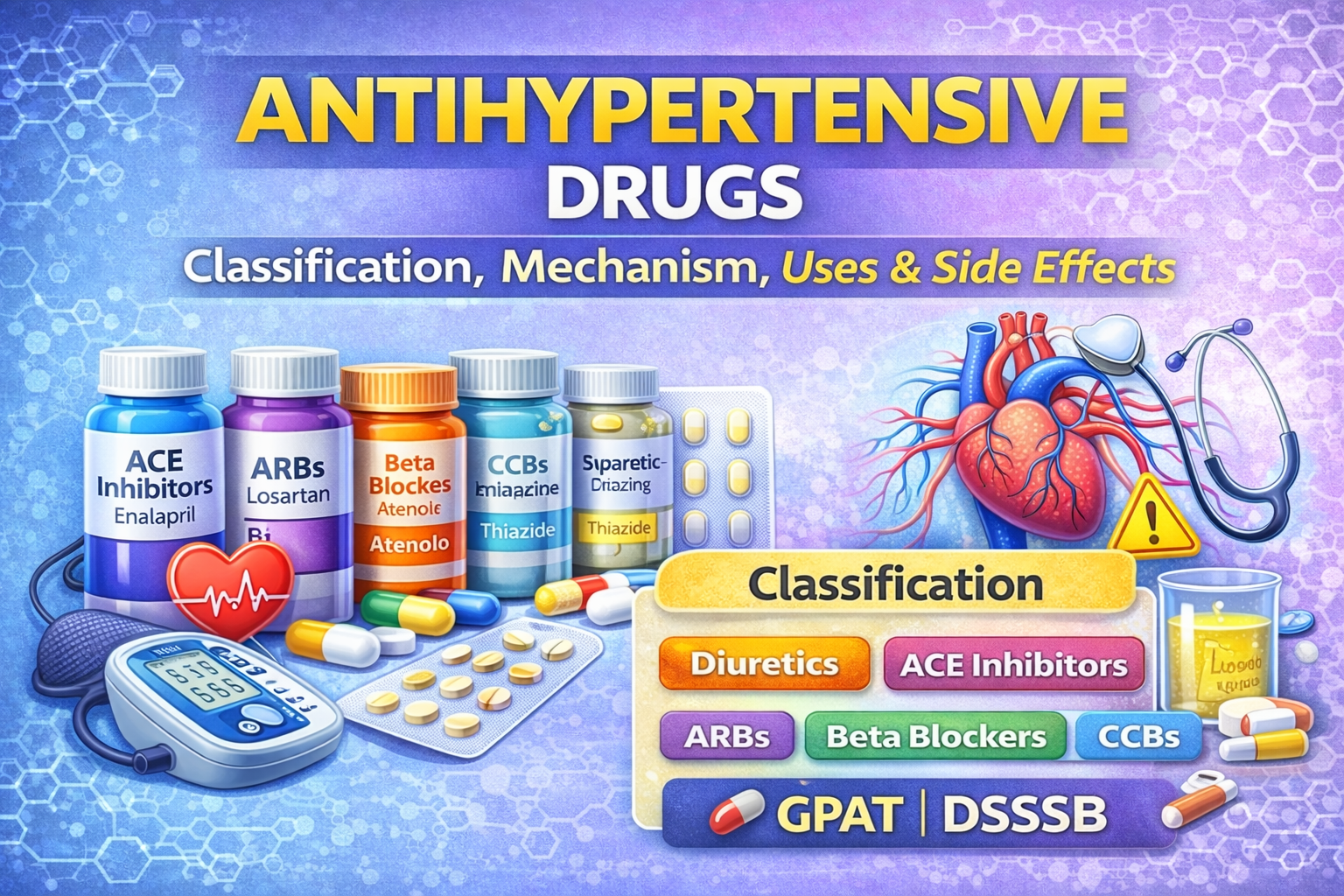
📝 Classification of Antihypertensive Drugs
Antihypertensives are classified as:
• Diuretics
Examples: Hydrochlorothiazide, Furosemide
• ACE Inhibitors
Examples: Enalapril, Lisinopril
• Angiotensin Receptor Blockers (ARBs)
Examples: Losartan
• Beta Blockers
Examples: Atenolol, Propranolol
• Calcium Channel Blockers (CCBs)
Examples: Amlodipine, Verapamil
• Vasodilators
Examples: Hydralazine
🧬 Mechanism of Action
Each class lowers BP differently:
• Diuretics → reduce blood volume
• ACE inhibitors → block angiotensin II formation
• ARBs → block angiotensin receptors
• Beta blockers → reduce heart rate and cardiac output
• CCBs → relax blood vessels
• Vasodilators → directly dilate vessels
🩺 Pharmacological Effects
• Lower blood pressure
• Reduce cardiac workload
• Improve blood flow
• Prevent complications
💊 Therapeutic Uses
Antihypertensives are used in:
• Hypertension
• Heart failure
• Angina
• Kidney disease
🚨 Side Effects
• Dizziness
• Hypotension
• Cough (ACE inhibitors)
• Bradycardia (beta blockers)
• Edema (CCBs)
📑 Important Exam Points
• ACE inhibitors → cause dry cough
• ARBs → no cough
• Beta blockers → reduce heart rate
• CCBs → cause edema
🎯 Conclusion
Antihypertensive drugs are essential for managing high blood pressure and preventing complications. Understanding classification, mechanism, uses, and side effects is important for exams and clinical practice.
👉 Practice MCQs in evening post
3 thoughts on “Antihypertensive Drugs: Classification, Mechanism, Uses & Side Effects”