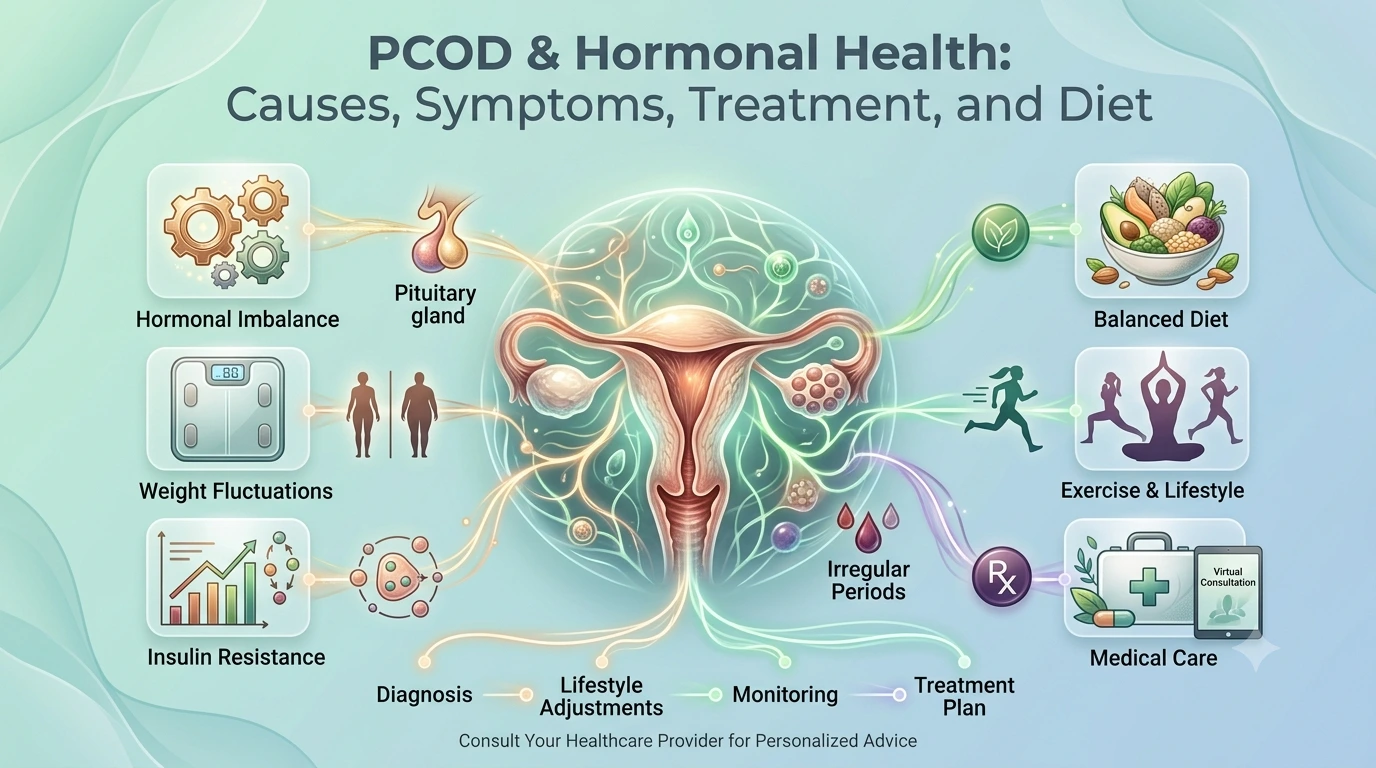
PCOD (Polycystic Ovarian Disease) is a commonly used term for a hormonal and metabolic condition that affects the ovaries and menstrual cycle. It is often discussed alongside PCOS (Polycystic Ovary Syndrome). People with PCOD may experience irregular periods, acne, weight changes, excessive facial hair, and difficulties getting pregnant.
PCOD is a common concern among women of reproductive age. With appropriate medical care, healthy lifestyle habits, and treatment when needed, many women can manage their symptoms and maintain good health.
In this article, we will explain the causes, symptoms, diagnosis, treatment options, and diet recommendations for PCOD.
🔍What Is PCOD?
PCOD stands for Polycystic Ovarian Disease. The term is commonly used to describe a condition involving hormonal imbalance and changes in ovarian function.
In affected women, the ovaries may contain multiple small follicles, and ovulation may not occur regularly. This can lead to irregular menstrual cycles and difficulties with conception.
PCOD is frequently used interchangeably with PCOS. However, PCOS is the more widely recognised medical term in current clinical guidelines. These conditions are often discussed as similar, but terminology and diagnostic criteria can vary.
Important: The presence of small follicles in the ovaries does not automatically mean a woman has PCOS. Diagnosis requires an appropriate medical assessment.
📝Causes of PCOD
The exact cause of PCOD is not fully understood. Several factors may contribute to hormonal changes and irregular ovulation.
1. Hormonal Imbalance
Hormones regulate menstruation, ovulation, and reproductive health. Changes in hormone levels, particularly elevated androgen levels, may contribute to acne, excessive facial hair, and irregular periods.
2. Insulin Resistance
Insulin helps the body control blood glucose levels. In some women, body cells respond less effectively to insulin, a condition known as insulin resistance.
The body may produce more insulin to compensate. Higher insulin levels can contribute to increased androgen production and interfere with normal ovulation.
3. Genetic Factors
PCOS often runs in families. Having a mother or sister with the condition may increase the likelihood of developing it, although family history does not guarantee that someone will develop it.
4. Weight and Metabolic Factors
Excess body weight can worsen insulin resistance and some hormonal symptoms in women who are susceptible to PCOS.
However, PCOS can also occur in women who are underweight or have a healthy body weight. Weight alone does not determine whether someone has the condition.
5. Lifestyle and Environmental Factors
Physical inactivity and an unbalanced diet may contribute to metabolic health problems. These factors can influence symptom management, but PCOS is not simply caused by an unhealthy lifestyle.
🩺Symptoms of PCOD
Symptoms differ from person to person. Some women experience several symptoms, while others have only a few.
Common symptoms include:
- Irregular periods: Menstrual cycles may be infrequent, unpredictable, or absent.
- Excessive facial or body hair: Increased hair growth may occur on the chin, upper lip, chest, or abdomen.
- Acne: Hormonal changes can contribute to persistent acne, particularly on the face, chest, and back.
- Weight gain: Some women experience weight gain or difficulty managing their weight.
- Hair thinning: Hair may become thinner, particularly around the scalp’s central parting.
- Difficulty getting pregnant: Irregular ovulation may make conception more difficult.
- Darkened skin: Dark, velvety patches may develop around the neck, armpits, or groin, sometimes associated with insulin resistance.
Not every woman with PCOS experiences all these symptoms. Some women may have the condition without noticeable physical changes.
⚕️How Is PCOD Diagnosed?
There is no single test that confirms PCOS in every woman. A healthcare professional considers the person’s symptoms, medical history, examination findings, and appropriate test results.
Diagnosis in adults generally involves assessing three features:
- Evidence of excess androgen activity, such as increased facial hair or elevated androgen levels.
- Irregular or absent ovulation, often reflected in irregular menstrual cycles.
- Polycystic ovarian morphology on ultrasound or, in appropriate adults, an elevated anti-Müllerian hormone (AMH) level used as an alternative to ultrasound for this diagnostic feature.
After other possible causes are excluded, adults generally need at least two of these three features to meet the diagnostic criteria.
An ultrasound is not always necessary. In adolescents, diagnosis requires greater caution, and ultrasound or AMH should not be used alone to diagnose PCOS.
📍Common Tests
Depending on the symptoms, a healthcare professional may recommend:
- Blood tests for androgen levels.
- Thyroid function tests.
- Tests for prolactin or other hormones when indicated.
- Blood glucose or HbA1c testing to assess glucose regulation.
- A lipid profile to assess cholesterol and triglyceride levels.
- Pelvic ultrasound when appropriate.
These investigations help evaluate symptoms and identify other conditions that may cause similar problems.
💊Treatment of PCOD
There is no single treatment that works for everyone. Treatment depends on symptoms, metabolic health, menstrual regularity, and whether the woman is planning pregnancy.
1. Lifestyle Management
Healthy lifestyle habits are an important part of PCOS care.
Helpful measures include:
- Eating balanced, nutritious meals.
- Engaging in regular physical activity.
- Getting adequate sleep.
- Maintaining a sustainable routine.
- Seeking support for stress and emotional well-being.
Lifestyle changes can improve metabolic health and may help regulate menstrual cycles. Benefits are possible even without weight loss.
2. Medicines for Irregular Periods
A healthcare professional may prescribe combined oral contraceptive pills or progestogen therapy to regulate bleeding and protect the uterine lining in women who experience prolonged gaps between periods.
The choice depends on individual medical history, contraindications, and treatment goals.
These medicines should be taken only after appropriate medical advice.
3. Metformin
Metformin is a medicine that improves the body’s response to insulin and helps regulate glucose metabolism.
It may be recommended for selected women with PCOS, particularly those with metabolic concerns. It can also help some women improve menstrual regularity.
Metformin is not suitable for everyone and may cause gastrointestinal side effects. A healthcare professional should determine whether it is appropriate.
4. Treatment for Acne and Excess Hair Growth
Depending on the symptoms, treatment may include hormonal medicines, dermatological treatments, or hair-removal methods.
Some women may be prescribed anti-androgen medicines. These require medical supervision because they can have important side effects and may harm a developing fetus.
5. Treatment for Fertility Problems
Women who have difficulty conceiving because of irregular ovulation may benefit from fertility treatment.
Letrozole is commonly recommended as a first-line ovulation-induction medicine for many women with PCOS-related anovulatory infertility when no other infertility factors are present.
Treatment requires medical assessment and monitoring.
Never start hormonal medicines, metformin, or fertility medicines without consulting a qualified healthcare professional.
🌿Best Diet for PCOD
Diet can support metabolic health and symptom management. There is no single PCOS diet that works best for every woman, and no particular food can cure the condition.
A balanced eating pattern that includes fibre-rich foods, protein, healthy fats, and minimally processed carbohydrates is a practical approach.
1. Vegetables
Include a variety of vegetables in daily meals.
Examples:
- Spinach
- Broccoli
- Carrots
- Cauliflower
- Beans
- Bottle gourd
Vegetables provide fibre, vitamins, minerals, and other beneficial nutrients.
2. Whole Grains
Choose whole grains and other fibre-rich carbohydrates more often than highly refined alternatives.
Examples:
- Oats
- Whole-wheat roti
- Brown rice
- Millets
- Dalia
Portion sizes can be adjusted according to individual energy needs and blood glucose levels.
3. Protein-Rich Foods
Protein supports normal body functions and can help meals feel satisfying.
Examples:
- Dal
- Chickpeas
- Rajma
- Eggs
- Milk and plain curd
- Tofu
- Fish or lean chicken
Choose options that suit your dietary preferences and health needs.
4. Fruits
Whole fruits provide fibre, vitamins, and minerals.
Examples:
- Apples
- Guava
- Oranges
- Papaya
- Berries
- Pears
Whole fruit is generally preferable to fruit juice because it retains more fibre.
5. Healthy Fats
Include moderate amounts of unsaturated fats.
Examples:
- Almonds
- Walnuts
- Seeds
- Peanuts
- Olive or mustard oil
Nuts and seeds are nutritious but energy-dense, so reasonable portions are helpful.
Foods to Limit With PCOD
No food needs to be completely forbidden solely because someone has PCOS. However, limiting the following can support overall health:
- Sugary drinks and excess added sugar.
- Frequent consumption of sweets and desserts.
- Large amounts of highly refined carbohydrates.
- Frequent deep-fried and heavily processed foods.
- Excessive intake of packaged snacks high in salt, sugar, or unhealthy fats.
A sustainable eating pattern is more useful than a highly restrictive diet. There is also no strong evidence that every woman with PCOS must avoid gluten or dairy.
Sample One-Day Indian Diet Plan for PCOD
Here is an example of a balanced daily meal plan. Portions should be adjusted to individual needs, preferences, activity levels, and any medical conditions.
Early morning
- Water.
- A small portion of nuts, if desired.
Breakfast
- Vegetable oats or vegetable poha.
- Eggs, plain curd, or another suitable protein source.
Mid-morning
- One serving of whole fruit, such as an apple or guava.
Lunch
- Whole-wheat roti or a moderate portion of rice.
- Dal, rajma, or another protein source.
- Cooked vegetables and salad.
- Plain curd, if tolerated.
Evening snack
- Roasted chana or a small handful of nuts.
- Unsweetened tea, if desired.
Dinner
- Roti or another suitable whole-grain food.
- Dal, tofu, fish, or lean chicken.
- Cooked vegetables.
Important: This is a general example, not an individualised diet prescription. Women with diabetes, food allergies, pregnancy, or other medical conditions may need a tailored plan.
Can PCOD Be Cured Permanently?
PCOS is generally considered a long-term condition, although symptoms can change over time.
There is currently no established permanent cure. However, symptoms can often be managed effectively with appropriate treatment and lifestyle support.
Some women experience more regular menstrual cycles and improved metabolic health after making sustainable lifestyle changes. Others need medicines to control symptoms or support fertility.
Even when symptoms improve, follow-up may remain important because PCOS is associated with increased risks of certain metabolic problems.
Possible Complications of PCOD
When PCOS is not adequately managed, some women have a higher risk of developing:
- Type 2 diabetes.
- High cholesterol and other cardiovascular risk factors.
- Difficulty conceiving because of irregular ovulation.
- Endometrial hyperplasia due to prolonged absence of periods.
- Anxiety, depression, or concerns about body image.
These complications do not occur in every woman. Regular medical follow-up can help identify individual risk factors and guide appropriate care.
Women who go for several months without a period should consult a healthcare professional. Prolonged gaps between periods can increase the risk of problems with the uterine lining.
When Should You See a Doctor?
Seek medical advice if you experience:
- Persistently irregular or absent periods.
- Excessive facial hair or worsening acne.
- Difficulty getting pregnant.
- Unexpected changes in weight accompanied by other symptoms.
- Darkened, velvety skin patches.
- No period for around three months, particularly if this is unusual for you.
Seek urgent medical care for severe pelvic pain, fainting, or unusually heavy bleeding accompanied by dizziness or weakness. These symptoms should not automatically be attributed to PCOS.
📋Frequently Asked Questions (FAQs)
1. Is PCOD the same as PCOS?
The terms are often used interchangeably, but PCOS is the more widely recognised medical term. Diagnosis depends on specific clinical criteria rather than the name alone.
2. Can PCOD cause infertility?
PCOS can make pregnancy more difficult because ovulation may be irregular. However, many women with PCOS conceive naturally or with appropriate fertility treatment.
3. Can women with PCOD lose weight?
Yes. Women with PCOS can manage their weight through sustainable dietary habits, physical activity, adequate sleep, and appropriate medical support. Not every woman with PCOS needs to lose weight.
4. Which foods are best for PCOD?
Vegetables, whole grains, pulses, nuts, seeds, whole fruits, and suitable protein sources can form part of a balanced diet. No specific food cures PCOS.
5. Can PCOD cause irregular periods?
Yes. Hormonal changes and irregular ovulation can cause periods to occur infrequently or unpredictably.
6. Is PCOD dangerous?
PCOS is manageable, but it may increase the risk of diabetes, abnormal cholesterol levels, fertility difficulties, and endometrial problems in some women. Appropriate care and follow-up are important.
7. Can PCOD occur in thin women?
Yes. PCOS can affect women of all body sizes. Being thin does not rule out the condition.
🎯 Conclusion
PCOD, commonly discussed alongside PCOS, is a hormonal and metabolic condition that can affect menstruation, skin health, ovulation, and fertility. Although there is no established permanent cure, appropriate treatment, a balanced diet, regular physical activity, and medical follow-up can help manage symptoms.
If you experience irregular periods, excessive hair growth, persistent acne, or difficulty conceiving, consult a qualified healthcare professional for an accurate diagnosis and personalised treatment plan.
Disclaimer: This article is intended for educational purposes only. It does not replace professional medical advice, diagnosis, or treatment. Always consult a qualified healthcare professional before starting or stopping any medicine.