
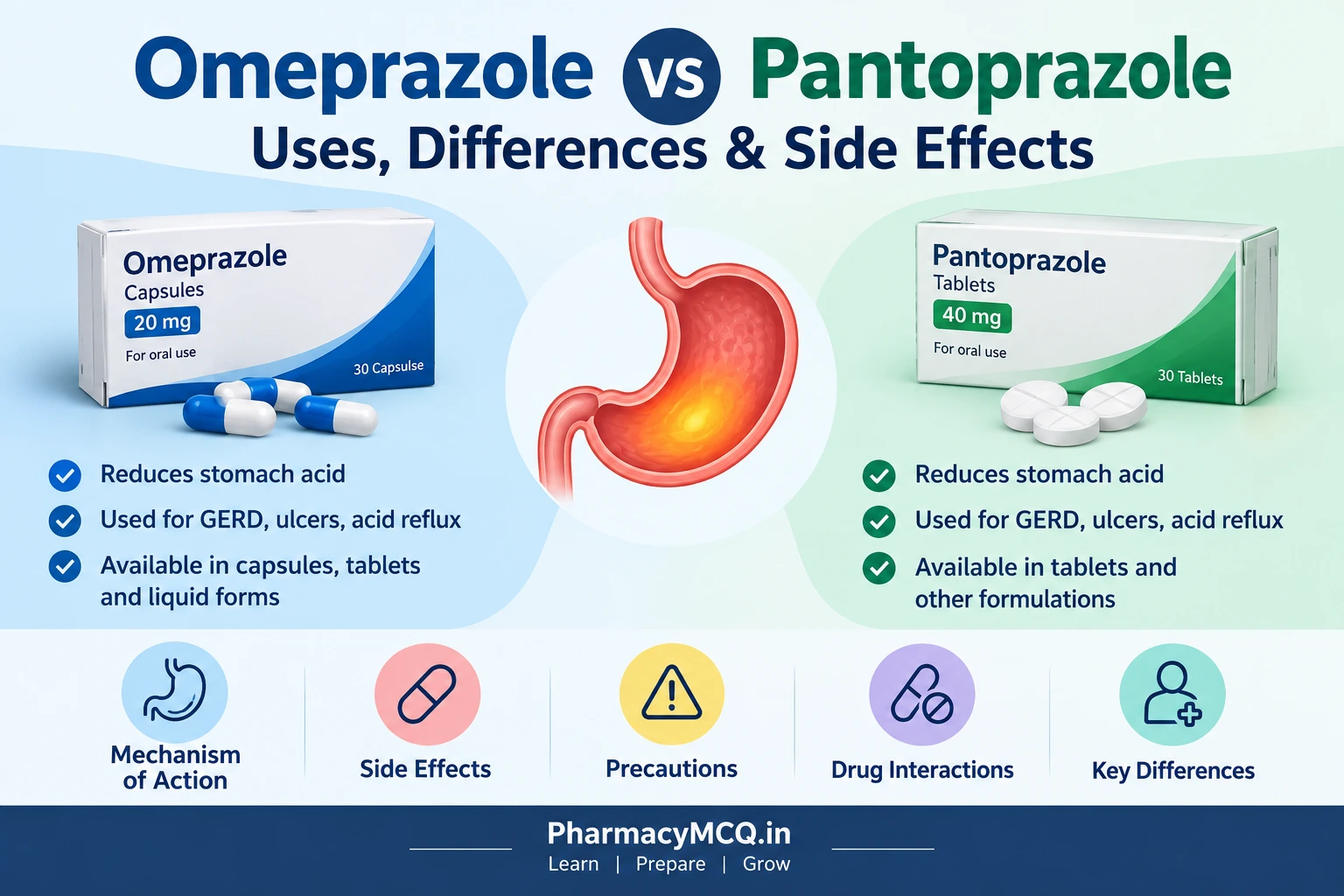
Omeprazole and pantoprazole are commonly used medicines that reduce stomach acid. Doctors prescribe them for conditions such as acid reflux, gastroesophageal reflux disease (GERD), and certain stomach ulcers. Although both medicines work in a similar way, they have some differences in their drug interactions, formulations, and individual suitability.
Many people ask: Is omeprazole better than pantoprazole? What is the difference between them? Can they be taken together?
In this article, we explain the uses, mechanism of action, side effects, differences, and precautions associated with both medicines in simple language.
What Is Omeprazole?
Omeprazole is a medicine belonging to the proton pump inhibitor (PPI) class. It reduces the amount of acid produced by the stomach.
It is used to manage conditions associated with excessive stomach acid and acid-related irritation.
Uses of Omeprazole
Omeprazole may be prescribed for:
- Gastroesophageal reflux disease (GERD).
- Frequent heartburn caused by acid reflux.
- Certain stomach and duodenal ulcers.
- Healing acid-related damage to the oesophagus.
- Treatment of Helicobacter pylori infection in combination with appropriate antibiotics.
- Conditions in which the stomach produces excessive acid, such as Zollinger–Ellison syndrome.
The exact indication depends on the patient’s condition and the prescribed treatment plan.
What Is Pantoprazole?
Pantoprazole is another proton pump inhibitor that reduces stomach acid production. It is used to treat acid reflux, GERD, and certain stomach ulcers.
Like omeprazole, pantoprazole helps reduce irritation caused by stomach acid and allows damaged tissues in the oesophagus to heal.
Uses of Pantoprazole
Pantoprazole may be prescribed for:
- Gastroesophageal reflux disease (GERD).
- Acid reflux and heartburn.
- Certain stomach and duodenal ulcers.
- Healing acid-related inflammation of the oesophagus.
- Conditions involving excessive stomach acid production, including Zollinger–Ellison syndrome.
The medicine may be used for other indications depending on the formulation and clinical situation.
Omeprazole vs Pantoprazole: Key Differences
Omeprazole and pantoprazole belong to the same drug class and have similar therapeutic effects. Neither medicine is universally better for every patient.
| Feature | Omeprazole | Pantoprazole |
|---|---|---|
| Drug class | Proton pump inhibitor (PPI) | Proton pump inhibitor (PPI) |
| Main action | Reduces stomach acid | Reduces stomach acid |
| Common uses | GERD, acid reflux, ulcers | GERD, acid reflux, ulcers |
| Available formulations | Capsules, tablets and certain liquid preparations | Tablets and other formulations, depending on the product |
| Common side effects | Headache, nausea, abdominal discomfort, diarrhoea or constipation | Headache, nausea, abdominal discomfort, diarrhoea or constipation |
| Drug interactions | Can interact with several medicines, including clopidogrel | Also has drug interactions; the individual medicine list must be reviewed |
| Treatment choice | Depends on the condition, interactions and patient factors | Depends on the condition, interactions and patient factors |
Important: Both medicines can be effective for acid-related conditions. Their doses are not automatically interchangeable milligram for milligram.
Mechanism of Action of Omeprazole and Pantoprazole
Both medicines work through the same basic mechanism.
They inhibit the gastric hydrogen-potassium ATPase enzyme, commonly called the proton pump, in the acid-producing cells of the stomach.
This enzyme plays a major role in the final step of stomach acid secretion.
Mechanism of Action: Step by Step
- The stomach contains parietal cells that produce hydrochloric acid.
- Proton pumps in these cells help release acid into the stomach.
- Omeprazole and pantoprazole inhibit these proton pumps.
- Stomach acid production decreases.
- Reduced acidity helps relieve acid-related symptoms and allows damaged tissues to heal.
Important Point for Pharmacy Students
Omeprazole and pantoprazole are proton pump inhibitors, not antacids.
Antacids neutralise acid that is already present in the stomach, whereas PPIs reduce the production of new stomach acid.
Is Omeprazole Better Than Pantoprazole?
There is no single answer that applies to everyone.
Both medicines are effective treatments for many acid-related conditions. The choice depends on the diagnosis, prescribed dose, other medicines being taken, medical history, and response to treatment.
A doctor may choose one medicine over the other for several reasons.
1. Drug Interactions
Omeprazole can inhibit the CYP2C19 enzyme and may reduce the activation of clopidogrel, a medicine used to prevent blood clots.
Pantoprazole generally has less effect on this interaction, but it is not free from drug interactions.
People taking clopidogrel should consult their doctor before starting or changing a PPI.
2. Response to Treatment
Some patients respond better to one PPI than another. If symptoms persist despite correct use, a healthcare professional may reassess the diagnosis, timing of administration, dose, or choice of medicine.
3. Medical History
Other health conditions, pregnancy, age, and medicines taken regularly can influence which treatment is appropriate.
Do not switch from omeprazole to pantoprazole, or vice versa, without appropriate medical advice.
Side Effects of Omeprazole
Omeprazole is generally well tolerated when used appropriately, but side effects can occur.
Common Side Effects
- Headache.
- Nausea or vomiting.
- Abdominal pain.
- Diarrhoea.
- Constipation.
- Increased gas.
These effects are often mild, but persistent or troublesome symptoms should be discussed with a healthcare professional.
Possible Problems With Long-Term Use
Long-term PPI treatment may be associated with certain risks, including vitamin B12 deficiency, low magnesium levels, intestinal infections, and fractures in some circumstances.
The risks vary according to the patient and treatment duration. People who need long-term therapy should have their treatment reviewed periodically.
Side Effects of Pantoprazole
Pantoprazole can also cause side effects, although many people tolerate it well.
Common Side Effects
- Headache.
- Diarrhoea.
- Nausea.
- Abdominal discomfort.
- Constipation.
- Gas.
Possible Problems With Long-Term Use
As with other PPIs, prolonged use may be associated with low magnesium levels, vitamin B12 deficiency, certain intestinal infections, and an increased risk of fractures in some patients.
The presence of these potential risks does not mean that everyone taking pantoprazole will experience them. The benefits and risks of continued treatment should be assessed by a healthcare professional.
Precautions Before Taking Omeprazole or Pantoprazole
Although both medicines are commonly used, they are not suitable for everyone.
Consider the following precautions:
1. Tell Your Doctor About Other Medicines
Both medicines can interact with other drugs.
Inform your doctor or pharmacist about all medicines and supplements you take, particularly clopidogrel, warfarin, methotrexate, certain HIV medicines, and other medicines that may interact with PPIs.
2. Avoid Unnecessary Long-Term Use
Do not continue taking a PPI indefinitely without reviewing whether it is still needed.
However, do not stop prescribed long-term treatment without consulting your healthcare professional.
3. Pregnancy and Breastfeeding
If you are pregnant, planning pregnancy, or breastfeeding, ask a healthcare professional which treatment is appropriate for your circumstances.
4. Follow the Prescribed Instructions
The correct dose and duration depend on the condition being treated and the formulation supplied.
Do not increase the dose, take extra doses, or combine omeprazole and pantoprazole to obtain faster relief.
5. Seek Medical Attention for Warning Signs
Do not assume that every episode of heartburn is caused by excess stomach acid.
Seek prompt medical evaluation for difficulty swallowing, persistent vomiting, unexplained weight loss, or symptoms that continue despite treatment.
Vomiting blood, passing black tarry stools, or experiencing severe chest pain requires urgent medical assessment.
Can Omeprazole and Pantoprazole Be Taken Together?
Generally, they should not be taken together unless a specialist has given a specific reason and instructions.
Both medicines belong to the same drug class and reduce stomach acid through the same mechanism. Taking them together is usually unnecessary and may increase exposure to medication-related adverse effects without providing additional benefit.
If both medicines appear on your prescription or medication list, confirm the intended treatment with your doctor or pharmacist before taking them together.
How Should These Medicines Be Taken?
Follow the instructions on your prescription and the patient information leaflet supplied with your medicine.
Many oral PPI formulations are taken before a meal, commonly before breakfast when prescribed once daily. However, administration instructions can vary by formulation and indication.
Swallow delayed-release or gastro-resistant products as directed. Do not crush or chew them unless the specific product instructions allow it.
If you miss a dose, follow the product instructions or ask your pharmacist. Do not take a double dose to compensate for a missed dose.
📋Frequently Asked Questions (FAQs)
1. Which is better: omeprazole or pantoprazole?
Both medicines are effective for many acid-related conditions. The appropriate choice depends on the diagnosis, other medicines, medical history, and response to treatment.
2. Are omeprazole and pantoprazole the same?
No. They are different medicines, but both belong to the proton pump inhibitor class and reduce stomach acid through a similar mechanism.
3. Can I switch from omeprazole to pantoprazole?
A healthcare professional may recommend switching when appropriate. The dose and instructions should be confirmed rather than assuming that the medicines are interchangeable milligram for milligram.
4. Can these medicines cure acid reflux permanently?
They can control symptoms and help heal acid-related damage, but they do not necessarily eliminate the underlying cause of reflux. Symptoms may return after treatment ends.
5. Can omeprazole or pantoprazole cause kidney problems?
Kidney problems have been reported rarely with PPIs, including acute interstitial nephritis. Seek medical advice if you develop unusual symptoms such as reduced urination, blood in the urine, or unexplained swelling.
6. How long can these medicines be taken?
The duration depends on the condition and treatment plan. Some conditions require a short course, while others may require longer treatment under medical supervision.
7. Do these medicines provide immediate relief?
They reduce stomach acid, but they are not the same as fast-acting antacids. The time required for symptom relief varies, and the full benefit may take several days or longer depending on the condition.
🎯 Conclusion
Omeprazole and pantoprazole are two commonly prescribed proton pump inhibitors used to manage acid reflux, GERD, and certain ulcers. Both work by reducing stomach acid production, and neither is universally better than the other.
The main differences relate to individual drug interactions, formulations, and patient-specific treatment needs.
Use these medicines according to professional advice, avoid unnecessary long-term treatment, and seek medical evaluation if symptoms persist or warning signs develop.
Disclaimer: This article is intended for educational purposes only and is not a substitute for professional medical advice, diagnosis, or treatment. Consult a qualified healthcare professional before starting, stopping, or changing medication.