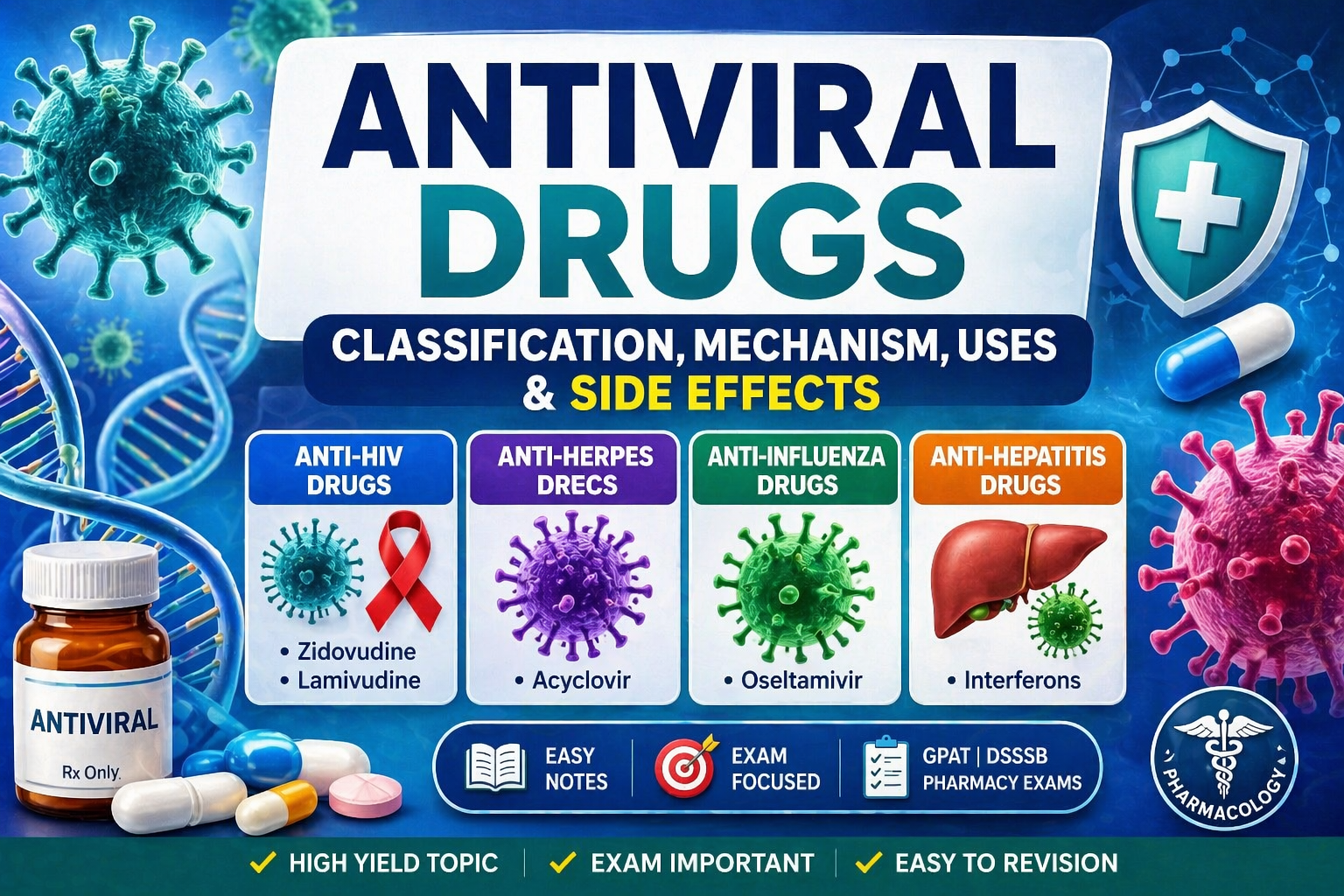
📌 Introduction
Antiviral drugs are used to treat viral infections by inhibiting the growth and replication of viruses. Unlike bacteria, viruses depend on host cells for survival, making them more difficult to treat.
This topic is highly important for GPAT, DSSSB, and other pharmacy exams.
🔍 What are Viral Infections?
Viral infections are caused by viruses such as influenza virus, HIV, hepatitis virus, and coronavirus.
Common viral diseases:
• Influenza
• HIV/AIDS
• Hepatitis
• COVID-19
📝 Classification of Antiviral Drugs
Antiviral drugs are classified based on their mechanism:
• Anti-HIV Drugs
Examples: Zidovudine, Lamivudine
• Anti-Herpes Drugs
Examples: Acyclovir
• Anti-Influenza Drugs
Examples: Oseltamivir
• Anti-Hepatitis Drugs
Examples: Interferons
🧬 Mechanism of Action
Antiviral drugs work by inhibiting viral replication:
• Inhibit viral DNA/RNA synthesis
• Block viral entry into cells
• Prevent viral release
🩺 Pharmacological Effects
• Reduce viral load
• Control infection
• Prevent disease progression
💊 Therapeutic Uses
Antiviral drugs are used in:
• HIV/AIDS
• Influenza
• Herpes infections
• Hepatitis
🚨 Side Effects
• Nausea, vomiting
• Headache
• Fatigue
• Liver toxicity
📑 Important Exam Points
• Acyclovir → herpes treatment
• Oseltamivir → influenza
• Zidovudine → HIV
• Antivirals inhibit viral replication
🎯 Conclusion
Antiviral drugs are essential for managing viral infections. Understanding classification, mechanism, uses, and side effects is crucial for exams and clinical practice.
👉 Practice MCQs in evening post
1 thought on “Antiviral Drugs: Classification, Mechanism, Uses & Side Effects (Easy Notes)”