📌Introduction
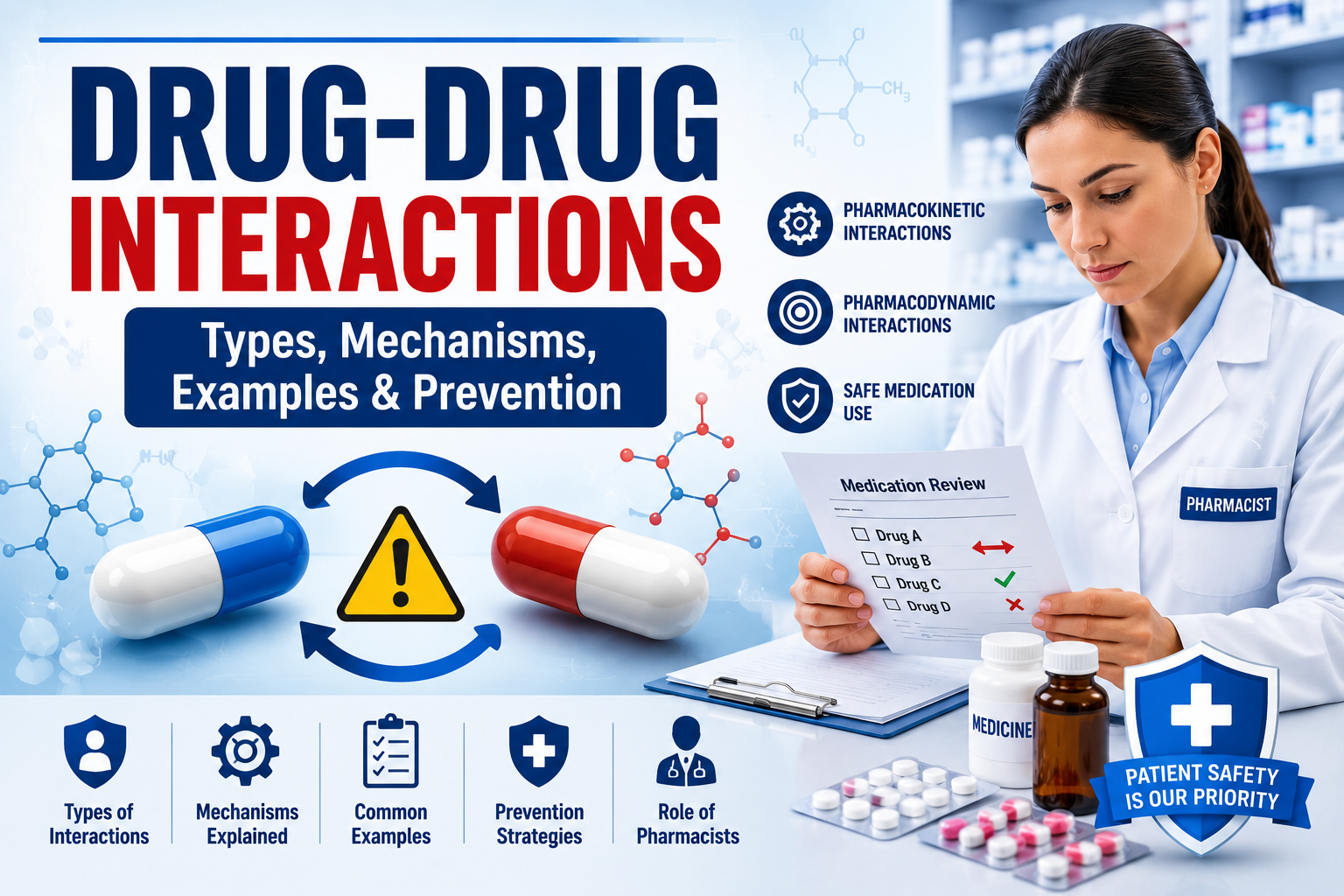
Drug-drug interactions (DDIs) occur when the effects of one drug are altered by the presence of another drug administered simultaneously. These interactions may increase or decrease the therapeutic effect of a drug and can sometimes lead to serious adverse effects. Drug-drug interactions are a major concern in clinical practice, especially in patients receiving multiple medications.
With the increasing prevalence of chronic diseases such as hypertension, diabetes, cardiovascular disorders, and cancer, polypharmacy has become common. As a result, understanding drug-drug interactions is essential for pharmacists, physicians, nurses, and other healthcare professionals to ensure patient safety and effective treatment.
Drug-drug interactions are highly important for GPAT, DSSSB Pharmacist, PCI, and other pharmacy examinations.
🔍What are Drug-Drug Interactions?
A drug-drug interaction occurs when one drug affects the pharmacological activity, absorption, distribution, metabolism, or excretion of another drug.
The interaction may result in:
- Increased drug effects
- Decreased drug effects
- Increased toxicity
- Reduced therapeutic efficacy
- Unexpected adverse reactions
🟢Importance of Drug-Drug Interactions
Understanding drug interactions helps in:
- Preventing adverse drug reactions
- Improving patient safety
- Optimizing therapeutic outcomes
- Reducing hospitalization rates
- Avoiding treatment failure
- Promoting rational drug use
📝Classification of Drug-Drug Interactions
Drug-drug interactions are broadly classified into:
1. Pharmacokinetic Interactions
These interactions affect the movement of drugs through the body.
They may alter:
- Absorption
- Distribution
- Metabolism
- Excretion
2. Pharmacodynamic Interactions
These interactions occur when two drugs influence the same physiological system or receptor, resulting in additive, synergistic, or antagonistic effects.
📍Pharmacokinetic Drug Interactions
A. Interactions Affecting Absorption
One drug may alter the absorption of another drug from the gastrointestinal tract.
Examples:
- Antacids reduce the absorption of tetracycline antibiotics.
- Iron supplements decrease the absorption of fluoroquinolones.
Mechanisms:
- Changes in gastric pH
- Chelation
- Altered gastrointestinal motility
B. Interactions Affecting Distribution
Some drugs compete for plasma protein binding sites.
Example:
Warfarin may be displaced from plasma proteins by aspirin, increasing the risk of bleeding.
C. Interactions Affecting Metabolism
Drug metabolism mainly occurs in the liver through cytochrome P450 enzymes.
Enzyme Induction
Certain drugs increase enzyme activity and accelerate drug metabolism.
Examples:
- Rifampicin
- Carbamazepine
- Phenytoin
Result:
- Reduced effectiveness of oral contraceptives
- Reduced plasma concentration of many drugs
Enzyme Inhibition
Certain drugs decrease enzyme activity and increase drug levels.
Examples:
- Erythromycin
- Ketoconazole
- Cimetidine
Result:
- Increased risk of toxicity
D. Interactions Affecting Excretion
One drug may alter the elimination of another drug.
Example:
Probenecid reduces the renal excretion of penicillin, increasing its plasma concentration.
✒️Pharmacodynamic Drug Interactions
1. Additive Effects
When two drugs with similar actions are used together, their effects add up.
Example:
Alcohol + benzodiazepines
Result:
- Excessive CNS depression
2. Synergistic Effects
Combined effect is greater than the sum of individual effects.
Example:
Trimethoprim + sulfamethoxazole
Result:
- Enhanced antibacterial activity
3. Antagonistic Effects
One drug reduces or blocks the effect of another drug.
Example:
Salbutamol and propranolol
Result:
- Reduced bronchodilator response
⚡Common Examples of Drug-Drug Interactions
Warfarin + Aspirin
Effect:
- Increased bleeding risk
Nitrates + Sildenafil
Effect:
- Severe hypotension
Digoxin + Verapamil
Effect:
- Increased digoxin toxicity
Insulin + Beta Blockers
Effect:
- Masking symptoms of hypoglycemia
ACE Inhibitors + Potassium-Sparing Diuretics
Effect:
- Hyperkalemia
🪫Factors Increasing the Risk of Drug Interactions
Several factors increase susceptibility to drug interactions:
Polypharmacy
Patients taking multiple medications are at higher risk.
Elderly Patients
Age-related changes in organ function increase interaction risk.
Liver Disease
Impaired metabolism may alter drug concentrations.
Kidney Disease
Reduced excretion can increase toxicity.
Self-Medication
Use of over-the-counter medicines without professional advice may lead to interactions.
🚨Signs and Symptoms of Drug Interactions
Possible manifestations include:
- Dizziness
- Bleeding
- Excessive sedation
- Hypotension
- Arrhythmias
- Hypoglycemia
- Gastrointestinal disturbances
Early recognition is important to prevent complications.
🛑Prevention of Drug-Drug Interactions
1. Complete Medication History
Healthcare professionals should review all medications, including:
- Prescription drugs
- OTC medicines
- Herbal products
- Dietary supplements
2. Rational Prescribing
Avoid unnecessary medications and duplicate therapies.
3. Use Drug Interaction Screening Tools
Electronic prescribing systems can identify potential interactions before medications are dispensed.
4. Patient Counseling
Patients should be educated regarding:
- Proper medication use
- Potential interactions
- Warning signs requiring medical attention
5. Regular Monitoring
Laboratory tests and clinical monitoring help detect interactions early.
💊Role of Pharmacists in Preventing Drug Interactions
Pharmacists play a critical role in medication safety.
Their responsibilities include:
- Reviewing prescriptions
- Identifying interaction risks
- Counseling patients
- Monitoring therapy outcomes
- Communicating with physicians
- Reporting adverse drug events
Clinical pharmacists help optimize drug therapy and minimize medication-related harm.
🔬Clinical Importance of Drug-Drug Interactions
Drug-drug interactions are among the leading causes of adverse drug reactions and hospital admissions. Proper understanding of interaction mechanisms allows healthcare professionals to make informed decisions and provide safer treatment.
The increasing use of multiple medications makes knowledge of drug interactions essential in modern healthcare practice.
📑Important Exam Points
- Drug-drug interactions may be pharmacokinetic or pharmacodynamic.
- Rifampicin is a potent enzyme inducer.
- Erythromycin is an enzyme inhibitor.
- Warfarin and aspirin increase bleeding risk.
- Nitrates and sildenafil may cause severe hypotension.
- Polypharmacy is a major risk factor for drug interactions.
- Pharmacists play a key role in preventing interactions.
🎯Conclusion
Drug-drug interactions occur when one medication affects the action of another medication. These interactions may alter therapeutic outcomes and increase the risk of adverse effects. Understanding pharmacokinetic and pharmacodynamic interactions is essential for safe and effective medication use.
Healthcare professionals, particularly pharmacists, play a crucial role in identifying, preventing, and managing drug interactions. Through proper prescribing, patient counseling, monitoring, and use of interaction screening tools, medication safety can be significantly improved.
Drug-drug interactions remain a vital topic in clinical pharmacy and pharmacology and are highly important for pharmacy students and competitive examinations.