📌 Introduction
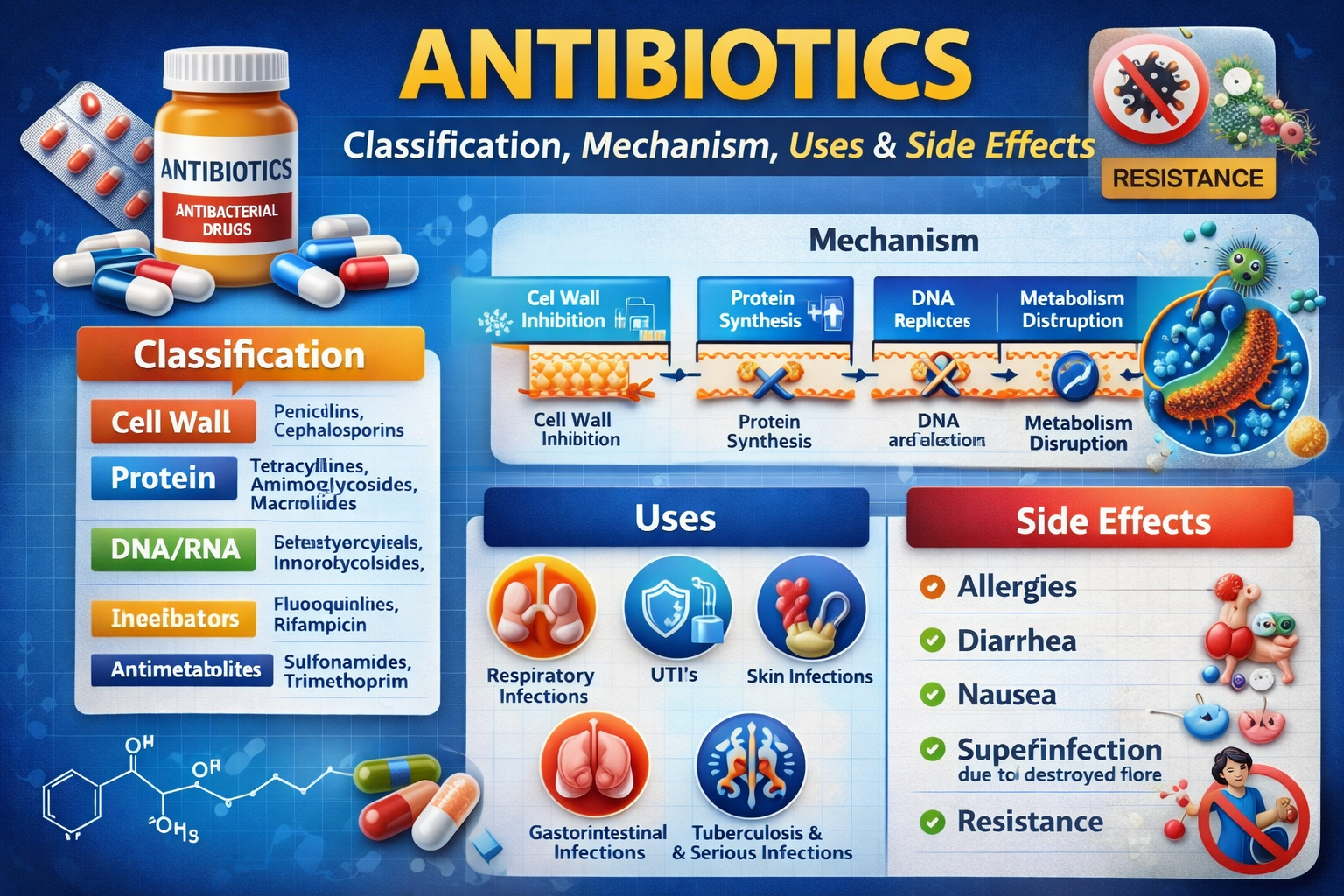
Antibiotics are medicines used to treat bacterial infections. They work by killing bacteria or stopping them from growing. Antibiotics are very important medicines and are commonly studied in pharmacology.
One important thing to remember is that antibiotics work against bacteria, not viruses. Therefore, antibiotics are generally not useful for viral infections such as the common cold or flu.
For pharmacy students, antibiotics can be easier to remember when we divide them according to their classification and mechanism of action.
🔍What Are Antibiotics?
Antibiotics are drugs that act against bacteria. Depending on the drug, they may:
- Kill bacteria directly
- Stop bacteria from multiplying
- Stop the bacteria from making important substances needed for survival
Different antibiotics work on different parts or processes of bacterial cells.
📝Classification of Antibiotics
Some important classes of antibiotics are:
Penicillins
- Penicillin
- Amoxicillin
- Ampicillin
Cephalosporins
- Cefalexin
- Cefixime
- Ceftriaxone
Aminoglycosides
- Gentamicin
- Amikacin
- Tobramycin
Tetracyclines
- Tetracycline
- Doxycycline
- Minocycline
Macrolides
- Erythromycin
- Azithromycin
- Clarithromycin
Fluoroquinolones
- Ciprofloxacin
- Levofloxacin
- Moxifloxacin
Glycopeptides
- Vancomycin
- Teicoplanin
Sulfonamides
- Sulfamethoxazole
Lincosamides
- Clindamycin
Oxazolidinones
- Linezolid
- Rifamycins
- Rifampicin
- Other antibiotics
- Metronidazole
- Nitrofurantoin
- Fosfomycin
🧬Mechanism of Action of Antibiotics
The mechanism of action means how a drug produces its effect.
Different antibiotics attack bacteria in different ways.
1. Inhibition of Cell-Wall Synthesis
Some antibiotics stop bacteria from making their cell wall.
The bacterial cell wall gives the bacteria strength and helps it maintain its shape. When cell-wall formation is stopped, the bacterial cell can become weak and die.
Examples:
- Penicillin
- Amoxicillin
- Ampicillin
- Cephalosporins
- Carbapenems
- Vancomycin
Easy to remember:
Beta-lactams → Cell-wall synthesis
2. Inhibition of Protein Synthesis
Bacteria need proteins for growth and survival.
Some antibiotics act on bacterial ribosomes and stop protein formation.
Bacterial ribosomes contain 30S and 50S subunits.
Drugs acting on 30S:
Aminoglycosides
Examples:
- Gentamicin
- Amikacin
Tetracyclines
Examples:
- Tetracycline
- Doxycycline
Drugs acting on 50S:
Macrolides
Examples:
- Erythromycin
- Azithromycin
- Clarithromycin
Lincosamides
Example:
- Clindamycin
Oxazolidinones
Example:
- Linezolid
Easy way to remember:
30S → Aminoglycosides + Tetracyclines
50S → Macrolides + Clindamycin + Linezolid
3. Inhibition of DNA Synthesis
Bacteria need DNA to grow and reproduce.
Some antibiotics interfere with the enzymes required for bacterial DNA replication.
Fluoroquinolones
Examples:
- Ciprofloxacin
- Levofloxacin
- Moxifloxacin
These drugs interfere with bacterial enzymes such as DNA gyrase and topoisomerase IV.
Easy to remember:
Fluoroquinolones → DNA synthesis
4. Inhibition of RNA Synthesis
RNA is important for making proteins inside bacterial cells.
Rifampicin
Rifampicin interferes with bacterial RNA production by inhibiting bacterial RNA polymerase.
Remember:
Rifampicin → RNA synthesis
5. Inhibition of Folic Acid Synthesis
Bacteria need folate to make important substances required for growth.
Sulfonamides
Sulfonamides interfere with bacterial folate synthesis.
Trimethoprim
Trimethoprim blocks another step in the same pathway.
A common combination is:
Sulfamethoxazole + Trimethoprim
This combination blocks two different steps in folate metabolism.
Remember:
Sulfonamides + Trimethoprim → Folate pathway
6. Damage to Bacterial Cell Membrane
Some antibiotics damage the bacterial cell membrane.
Examples include:
- Polymyxins
- Daptomycin
Damage to the membrane can cause leakage of important substances from the bacterial cell and may result in bacterial death.
✒️Uses of Antibiotics
Antibiotics are used to treat different types of bacterial infections.
Some common examples include:
- Urinary tract infections
- Certain respiratory bacterial infections
- Skin and soft-tissue infections
- Some gastrointestinal infections
- Bacterial meningitis
- Bone and joint infections
- Certain sexually transmitted bacterial infections
- Dental infections
- Some abdominal infections
- Certain heart infections
Antibiotics can also sometimes be given before certain medical or surgical procedures to help prevent infection.
However, the choice of antibiotic depends on the type of bacteria, location of infection, severity of infection and the patient’s condition.
🛑Common Side Effects of Antibiotics
Like all medicines, antibiotics can also cause side effects.
The side effects are different for different antibiotics.
1. Nausea and Vomiting
Some antibiotics may cause:
- Nausea
- Vomiting
- Stomach discomfort
Taking medicines as directed by a healthcare professional can help reduce some unwanted effects.
2. Diarrhea
Diarrhea is a common side effect of some antibiotics.
This can happen because antibiotics may also affect some of the normal bacteria present in the intestine.
3. Allergic Reactions
Some people may be allergic to certain antibiotics.
Possible symptoms include:
- Skin rash
- Itching
- Swelling
- Difficulty breathing
A severe allergic reaction requires immediate medical attention.
4. Superinfection
Antibiotics can sometimes disturb the normal microorganisms present in the body.
This may allow other organisms, such as certain fungi, to grow more easily.
5. Organ Toxicity
Some antibiotics can affect particular organs when used in certain situations.
For example, depending on the drug, adverse effects may involve:
- Kidney
- Liver
- Ear
- Bone marrow
- Nervous system
This is one reason antibiotics should be used appropriately and under proper medical guidance.
📍What Is Antibiotic Resistance?
Antibiotic resistance occurs when bacteria become able to survive antibiotics that were previously effective against them.
In simple words:
Antibiotic → normally kills or stops bacteria
But after resistance develops:
Resistant bacteria → antibiotic may no longer work properly
Bacteria can develop resistance in different ways.
Some important mechanisms are:
- Destroying or changing the antibiotic
- Changing the target on which the antibiotic acts
- Preventing the drug from entering the bacterial cell
- Removing the drug from the bacterial cell
- Using another pathway to perform the blocked function
Antibiotic resistance is an important global health problem.
🧪How Can Antibiotic Resistance Be Prevented?
We can help reduce antibiotic resistance by using antibiotics properly.
Important points include:
- Do not take antibiotics without appropriate medical advice.
- Do not use antibiotics for viral infections.
- Do not share antibiotics with other people.
- Do not use leftover antibiotics from an earlier illness.
- Take antibiotics exactly as prescribed.
- Do not stop or change treatment without discussing it with a healthcare professional.
- Avoid unnecessary use of antibiotics.
Proper antibiotic use helps keep these medicines effective for future patients.
💊Bactericidal vs Bacteriostatic Antibiotics
Antibiotics can also be broadly divided into bactericidal and bacteriostatic drugs.
Bactericidal
These drugs kill bacteria.
Examples include:
- Penicillins
- Cephalosporins
- Aminoglycosides
- Fluoroquinolones
- Vancomycin
Bacteriostatic
These drugs mainly stop bacterial growth and multiplication.
Examples include:
- Tetracyclines
- Macrolides
- Clindamycin
This classification is useful for understanding pharmacology, although the actual effect of an antibiotic can depend on the drug, concentration, bacteria and clinical situation.
📋Quick Revision Table
| Antibiotic Class | Main Action | Examples |
|---|---|---|
| Penicillins | Inhibit cell-wall synthesis | Penicillin, Amoxicillin |
| Cephalosporins | Inhibit cell-wall synthesis | Cefalexin, Ceftriaxone |
| Glycopeptides | Inhibit cell-wall synthesis | Vancomycin |
| Aminoglycosides | Act on 30S ribosome | Gentamicin, Amikacin |
| Tetracyclines | Act on 30S ribosome | Tetracycline, Doxycycline |
| Macrolides | Act on 50S ribosome | Erythromycin, Azithromycin |
| Clindamycin | Acts on 50S ribosome | Clindamycin |
| Linezolid | Inhibits protein synthesis | Linezolid |
| Fluoroquinolones | Interfere with DNA replication | Ciprofloxacin |
| Rifamycins | Inhibit RNA synthesis | Rifampicin |
| Sulfonamides | Inhibit folate pathway | Sulfamethoxazole |
| Polymyxins | Damage cell membrane | Colistin |
📑Important Points for Exams
📌 Penicillins → Cell-wall synthesis
📌 Cephalosporins → Cell-wall synthesis
📌 Vancomycin → Cell-wall synthesis
📌 Aminoglycosides → 30S
📌 Tetracyclines → 30S
📌 Macrolides → 50S
📌 Clindamycin → 50S
📌 Linezolid → Protein synthesis
📌 Fluoroquinolones → DNA synthesis
📌 Rifampicin → RNA synthesis
📌 Sulfonamides → Folate synthesis
📌 Polymyxins → Cell membrane
📌 Antibiotics are used against bacteria, not viruses.
📌 Improper antibiotic use can contribute to antibiotic resistance.
🎯Conclusion
Antibiotics are important medicines used for treating bacterial infections. They work by attacking different processes that bacteria need to survive and multiply.
For easy revision, remember the major targets:
Cell wall → Penicillins, Cephalosporins, Vancomycin
30S → Aminoglycosides, Tetracyclines
50S → Macrolides, Clindamycin, Linezolid
DNA → Fluoroquinolones
RNA → Rifampicin
Folate → Sulfonamides + Trimethoprim
Cell membrane → Polymyxins
Understanding these mechanisms makes it much easier to remember antibiotic classification, uses and important pharmacology points for pharmacy examinations.
3 thoughts on “Antibiotics: Classification, Mechanism, Uses & Side Effects”