Local Anesthetics: Classification, Mechanism, Uses & Side Effects

📌 Introduction Local anesthetics are drugs that produce reversible loss of sensation in a specific area of the body without causing loss of consciousness. They are widely used in minor surgical procedures, dental treatments, and diagnostic procedures. This topic is very important for GPAT, DSSSB, and other pharmacy exams. 🔍 What are Local Anesthetics? Local … Read more

Top 30 MCQs on General Anesthetics with Answers & Explanation

📌 Introduction General anesthetics are drugs used to induce reversible loss of consciousness during surgical procedures. This is a very important topic for GPAT, DSSSB, and other pharmacy exams.   📝 MCQs on General Anesthetics 1. General anesthetics produce: A) Consciousness B) Unconsciousness C) Infection D) Pain ✔ Answer: B) Unconsciousness   2. Which route … Read more

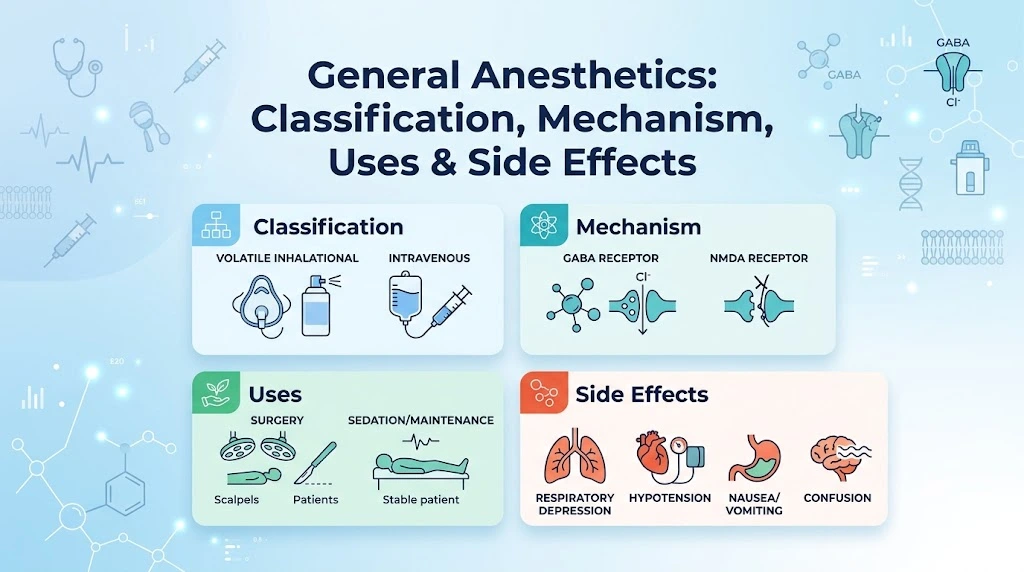
General Anesthetics: Classification, Mechanism, Uses & Side Effects

General anesthetics are drugs that produce a reversible loss of consciousness and reduce awareness of the surgical environment. They are used during surgical procedures and selected medical interventions under appropriate monitoring. For pharmacy students, general anesthetics are an important topic in pharmacology. Understanding their classification, mechanisms of action, pharmacological effects, and adverse effects is useful … Read more

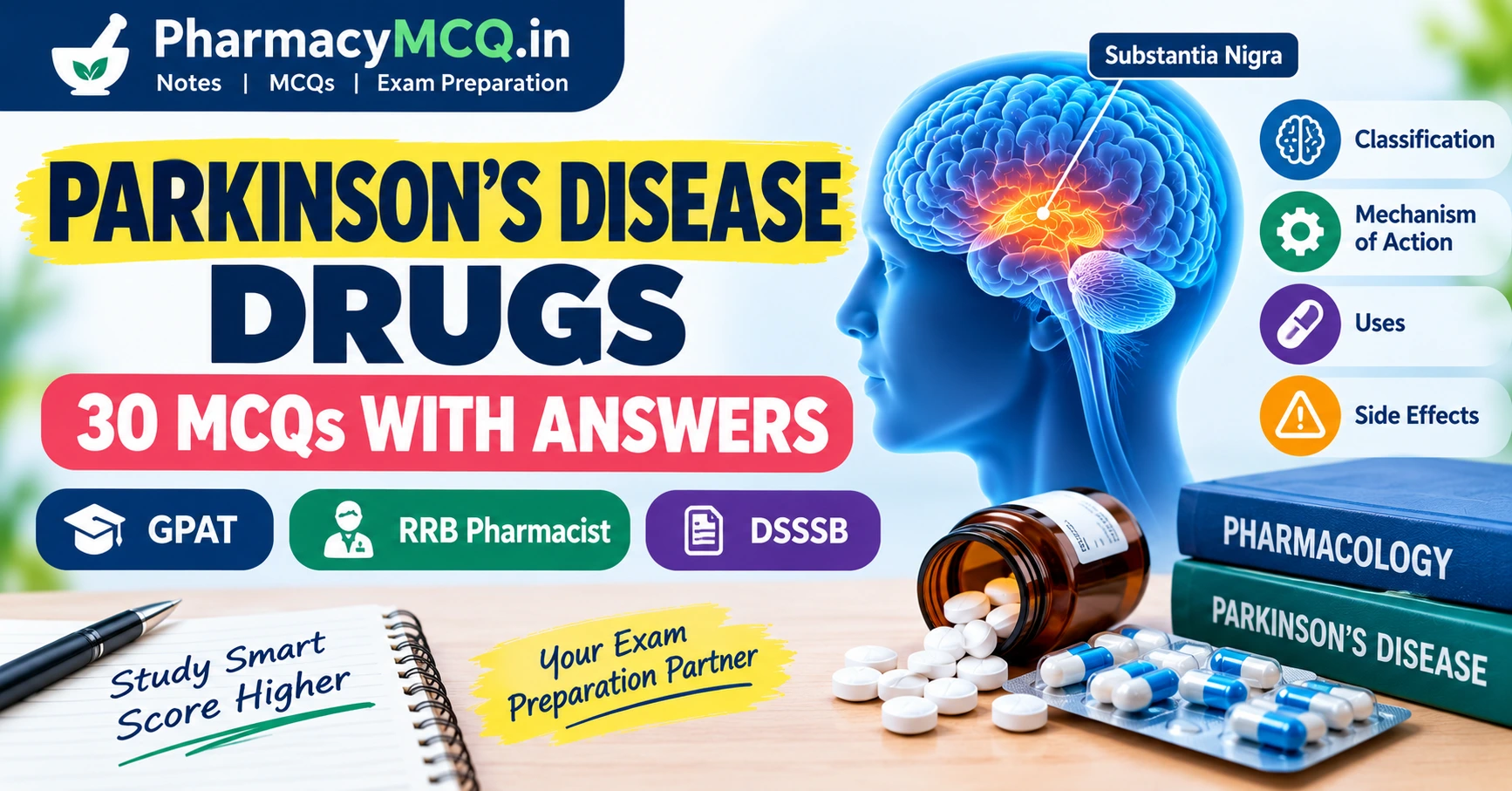
Top 30 MCQs on Parkinson’s Disease Drugs with Answers & Explanation

Parkinson’s disease is a progressive neurological disorder associated with the loss of dopamine-producing neurons in the substantia nigra. Drugs used in its management aim to improve motor symptoms such as tremor, rigidity, and bradykinesia. In this article, practise 30 important multiple-choice questions (MCQs) on antiparkinsonian drugs, including levodopa, carbidopa, dopamine agonists, MAO-B inhibitors, COMT inhibitors, … Read more

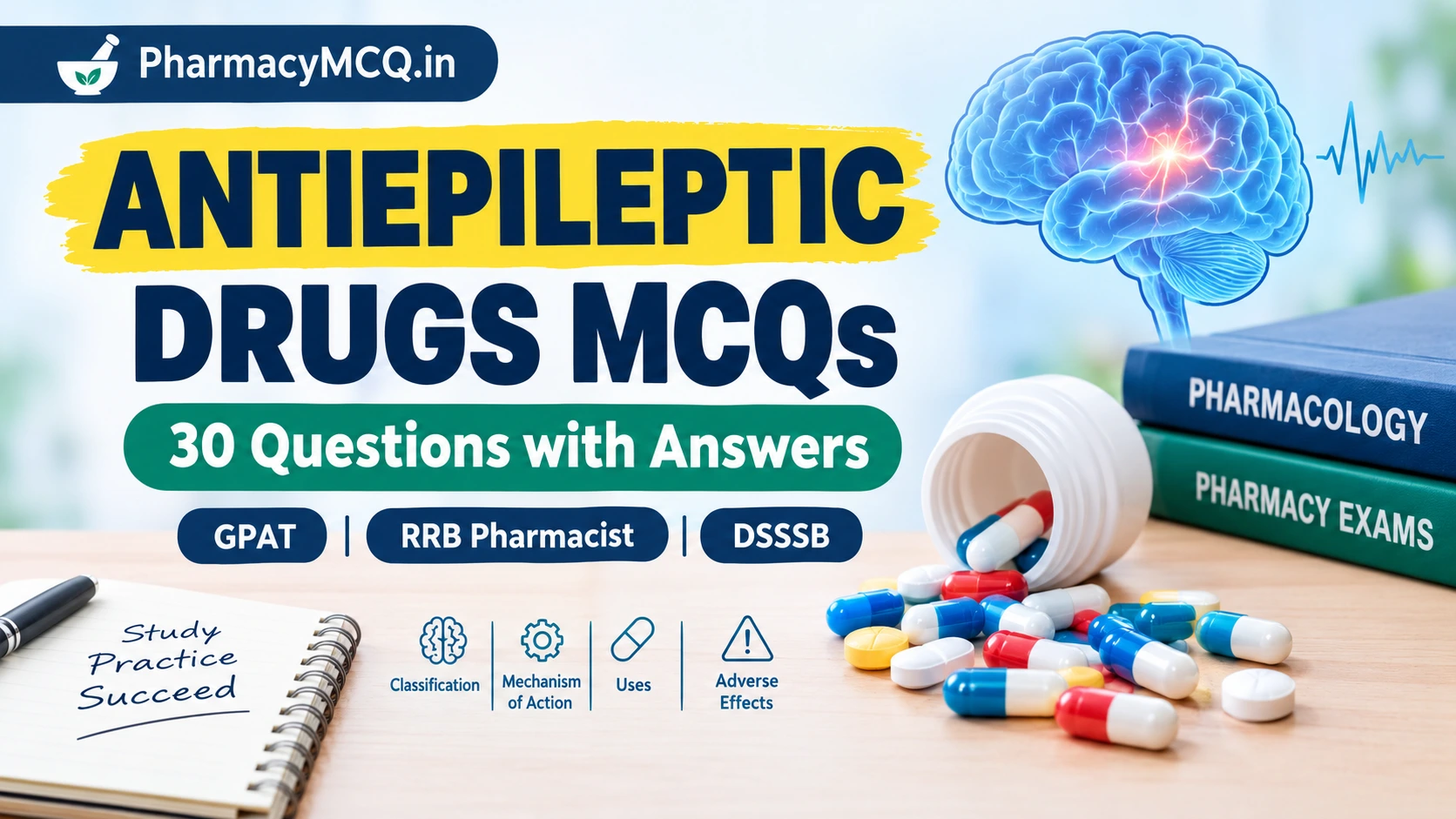
Top 30 MCQs on Antiepileptic Drugs with Answers & Explanation

Antiepileptic drugs, also known as antiseizure medications or anticonvulsants, are used to prevent or control seizures. Understanding their classification, mechanisms of action, therapeutic uses and adverse effects is essential for pharmacy students. These antiepileptic drugs MCQs are designed for students preparing for GPAT, RRB Pharmacist, DSSSB Pharmacist and other pharmacy competitive examinations. They are also … Read more

Antiepileptic Drugs: Classification, Mechanism, Uses & Side Effects

Antiepileptic drugs (AEDs), also called antiseizure medications (ASMs), are medicines used to prevent or reduce seizures in people with epilepsy and certain other conditions. They work through different mechanisms, including blocking voltage-gated sodium channels, modifying calcium channels, enhancing GABA-mediated inhibition, and reducing excitatory neurotransmission. This topic is important for B.Pharm, D.Pharm, GPAT, and pharmacist recruitment … Read more

Top 30 MCQs on Antipsychotic Drugs with Answers & Explanation

Antipsychotic drugs are important in pharmacology and are frequently studied for B.Pharm, D.Pharm, GPAT, and pharmacist recruitment examinations. Questions commonly cover the classification, mechanism of action, therapeutic uses, adverse effects, and examples of typical and atypical antipsychotics. In this article, practise 30 important Antipsychotic Drugs MCQs with answers and explanations to strengthen your pharmacology knowledge … Read more

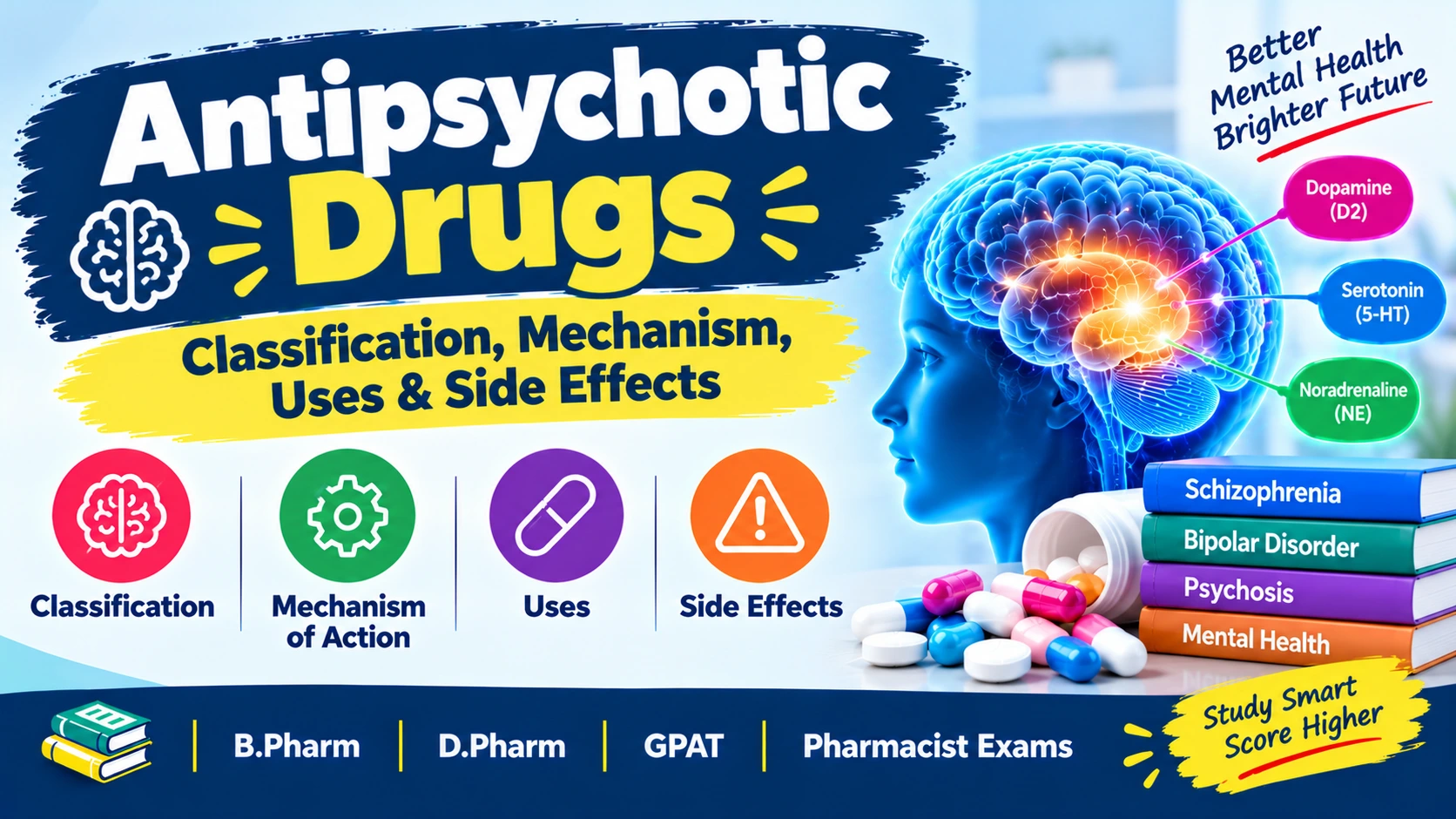
Antipsychotic Drugs: Classification, Mechanism, Uses & Side Effects

Antipsychotic drugs are medicines primarily used to manage psychosis, including symptoms such as hallucinations, delusions, and disorganised thinking. They are also used in selected patients with schizophrenia, bipolar disorder, and other conditions, depending on the medicine and clinical indication. For B.Pharm, D.Pharm, GPAT, and pharmacist recruitment examinations, antipsychotic drugs are an important topic in pharmacology. … Read more

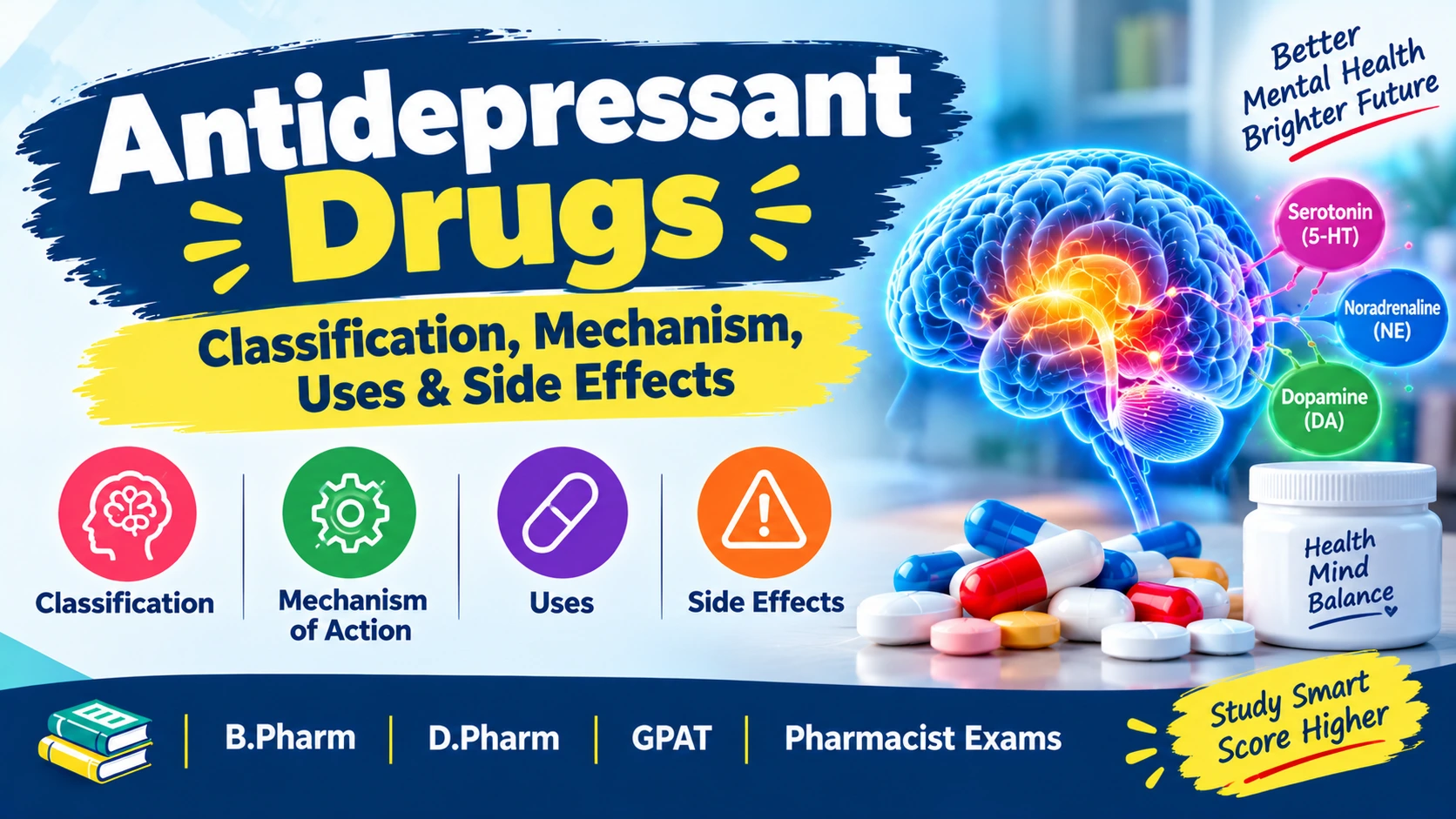
Antidepressant Drugs: Classification, Mechanism, Uses & Side Effects

Antidepressant drugs are medicines primarily used to treat depression and several other mental health conditions. They act on neurotransmitter systems in the brain, particularly serotonin and noradrenaline, to help relieve symptoms and improve daily functioning. Certain antidepressants are also used for anxiety disorders, obsessive-compulsive disorder (OCD), and some types of chronic or neuropathic pain. For … Read more

Top 30 MCQs on Sedatives & Hypnotics with Answers & Explanation

Prepare for B.Pharm, D.Pharm, GPAT, and pharmacist recruitment examinations with these 30 important MCQs on Sedatives and Hypnotics. This pharmacology practice set covers drug classification, mechanisms of action, benzodiazepines, barbiturates, Z-drugs, therapeutic uses, adverse effects, and important exam facts. Each question includes four options, the correct answer, and a short explanation to help you revise … Read more