📌Introduction
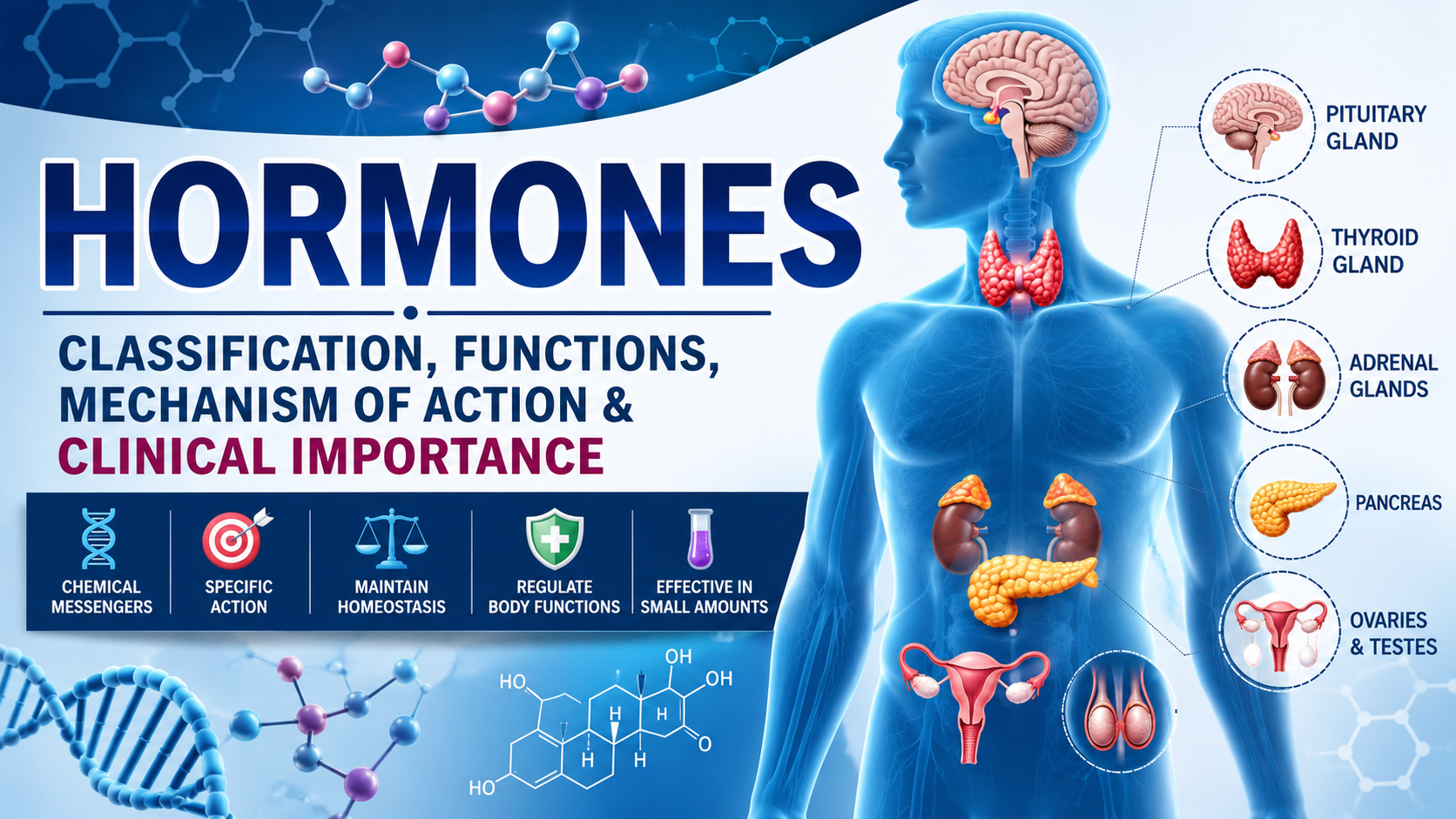
Hormones are chemical messengers produced by endocrine glands that regulate various physiological processes in the human body. They travel through the bloodstream to target organs and tissues, where they control growth, metabolism, reproduction, stress response, and homeostasis. Even small changes in hormone levels can significantly affect health.
The endocrine system consists of glands such as the pituitary gland, thyroid gland, parathyroid glands, adrenal glands, pancreas, ovaries, and testes. These glands release hormones directly into the bloodstream without using ducts. Hormones are essential for maintaining normal body functions and are widely used in medical treatment. Understanding hormones is important for pharmacy students, healthcare professionals, and candidates preparing for GPAT, NIPER, AIIMS, DSSSB Pharmacist, ESIC, and other competitive examinations.
🔍What are Hormones?
Hormones are biologically active chemical substances secreted by endocrine glands. They regulate the activities of specific target organs by binding to hormone receptors and initiating physiological responses.
🟢Characteristics of Hormones
Hormones possess the following characteristics:
- Secreted by endocrine glands.
- Released directly into the bloodstream.
- Act on specific target organs.
- Effective in very small quantities.
- Help maintain homeostasis.
- Regulate growth, metabolism, and reproduction.
📝Classification of Hormones
Hormones are classified based on their chemical nature.
1. Peptide and Protein Hormones
These hormones consist of amino acids and are water-soluble.
Examples:
- Insulin
- Glucagon
- Growth Hormone
- Oxytocin
- Vasopressin
2. Steroid Hormones
These hormones are synthesized from cholesterol and are lipid-soluble.
Examples:
- Cortisol
- Aldosterone
- Testosterone
- Estrogen
- Progesterone
3. Amino Acid Derivative Hormones
These hormones are derived from amino acids such as tyrosine.
Examples:
- Thyroxine (T4)
- Triiodothyronine (T3)
- Adrenaline
- Noradrenaline
- Dopamine
📍Major Endocrine Glands and Their Hormones
Pituitary Gland
Known as the “Master Gland,” it regulates many other endocrine glands.
Hormones secreted include:
- Growth Hormone (GH)
- Thyroid Stimulating Hormone (TSH)
- Adrenocorticotropic Hormone (ACTH)
- Follicle Stimulating Hormone (FSH)
- Luteinizing Hormone (LH)
- Prolactin
Thyroid Gland
Produces:
- Thyroxine (T4)
- Triiodothyronine (T3)
- Calcitonin
Functions:
- Regulates metabolism
- Controls body temperature
- Promotes growth and development
Parathyroid Glands
Produce Parathyroid Hormone (PTH), which regulates calcium and phosphate metabolism.
Adrenal Glands
Adrenal Cortex secretes:
- Cortisol
- Aldosterone
- Androgens
Adrenal Medulla secretes:
- Adrenaline
- Noradrenaline
Pancreas
Produces:
- Insulin
- Glucagon
Functions:
- Regulates blood glucose levels.
Ovaries
Produce:
- Estrogen
- Progesterone
Functions:
- Female reproductive health
- Menstrual cycle
- Pregnancy maintenance
Testes
Produce Testosterone.
Functions:
- Male reproductive development
- Sperm production
- Secondary sexual characteristics
🧬Mechanism of Hormone Action
Hormones act through specific receptors.
Cell Surface Receptors
Water-soluble hormones bind to receptors on the cell membrane and activate second messenger systems.
Examples:
- Insulin
- Glucagon
- Adrenaline
Intracellular Receptors
Lipid-soluble hormones enter the cell and bind to receptors inside the cytoplasm or nucleus, regulating gene expression.
Examples:
- Cortisol
- Estrogen
- Testosterone
- Thyroxine
💊Functions of Hormones
Hormones regulate numerous body functions, including:
- Growth and development
- Metabolism
- Blood glucose regulation
- Water and electrolyte balance
- Blood pressure
- Reproduction
- Stress response
- Calcium metabolism
- Sleep and circadian rhythm
🛑Disorders Due to Hormonal Imbalance
Diabetes Mellitus
Caused by insufficient insulin production or insulin resistance.
Hypothyroidism
Occurs due to reduced thyroid hormone production.
Symptoms include:
- Weight gain
- Fatigue
- Cold intolerance
Hyperthyroidism
Occurs due to excessive thyroid hormone production.
Symptoms include:
- Weight loss
- Increased heart rate
- Nervousness
Cushing’s Syndrome
Caused by excessive cortisol secretion.
Addison’s Disease
Caused by adrenal insufficiency resulting in reduced cortisol and aldosterone levels.
🔬Clinical Importance of Hormones
Hormones are widely used in medicine for diagnosis and treatment.
Examples include:
- Insulin for diabetes mellitus
- Levothyroxine for hypothyroidism
- Corticosteroids for inflammatory disorders
- Oral contraceptive hormones
- Growth hormone therapy
- Hormone replacement therapy
🩺Role of Pharmacists
Pharmacists play an important role by:
- Educating patients about hormone therapy.
- Monitoring adverse drug reactions.
- Counseling patients regarding proper medication use.
- Ensuring medication adherence.
- Preventing drug interactions.
📑Important Exam Points
- Hormones are chemical messengers secreted by endocrine glands.
- The pituitary gland is known as the Master Gland.
- Insulin lowers blood glucose, while glucagon increases blood glucose.
- Steroid hormones are lipid-soluble.
- Peptide hormones are water-soluble.
- Adrenaline is secreted by the adrenal medulla.
- Thyroxine regulates metabolism.
- Parathyroid hormone regulates calcium balance.
🎯Conclusion
Hormones are essential chemical messengers that regulate nearly every physiological function of the human body. They coordinate metabolism, growth, reproduction, electrolyte balance, and stress responses. Proper hormonal balance is necessary for maintaining health, while hormonal disorders can lead to serious diseases such as diabetes, thyroid disorders, and adrenal insufficiency. A clear understanding of hormones, their classification, mechanism of action, and clinical importance is fundamental for pharmacy students and healthcare professionals and is frequently tested in competitive pharmacy examinations.