📌Introduction
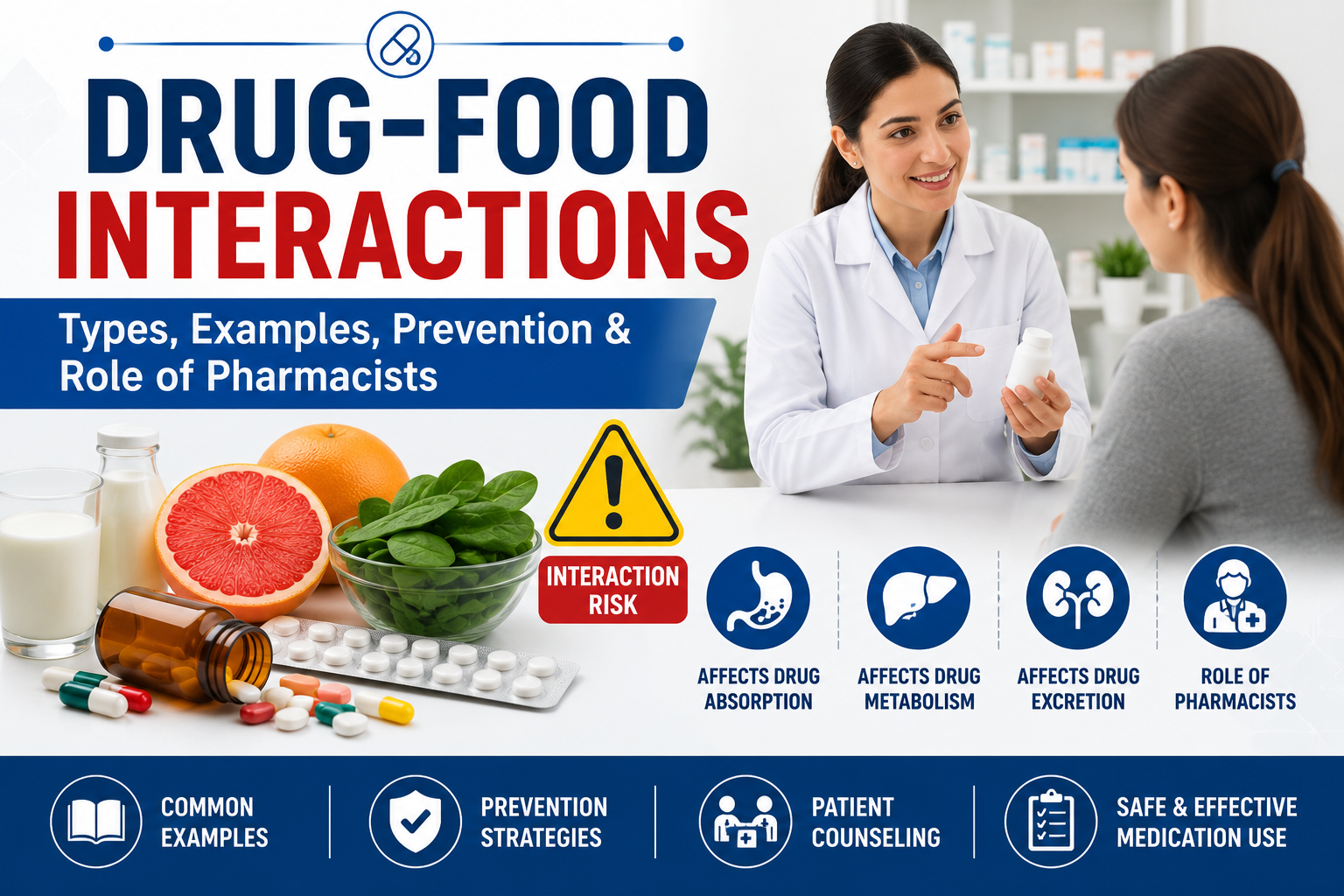
Drug-food interactions occur when food, beverages, or dietary supplements affect the absorption, distribution, metabolism, or excretion of medications. These interactions may alter the effectiveness of a drug, increase adverse effects, or reduce therapeutic outcomes. Understanding drug-food interactions is important for healthcare professionals and patients to ensure safe and effective medication use.
Drug-food interactions are a significant concern in clinical practice because many patients take medications without knowing that certain foods can interfere with their treatment. Pharmacists play a vital role in educating patients about these interactions and promoting medication safety.
This topic is highly important for pharmacy students, healthcare professionals, GPAT, DSSSB Pharmacist, and other competitive examinations.
🔍What are Drug-Food Interactions?
A drug-food interaction occurs when food or beverages influence the action of a medication.
The interaction may result in:
- Increased drug absorption
- Decreased drug absorption
- Increased drug toxicity
- Reduced therapeutic effect
- Delayed onset of action
🟢Importance of Drug-Food Interactions
Understanding drug-food interactions helps in:
- Improving treatment outcomes
- Preventing adverse drug reactions
- Enhancing medication safety
- Reducing treatment failure
- Promoting rational drug use
📝Types of Drug-Food Interactions
1. Interactions Affecting Drug Absorption
Food may delay, increase, or decrease drug absorption.
Examples:
- Tetracycline with milk reduces absorption due to calcium binding.
- Iron supplements with tea decrease iron absorption.
2. Interactions Affecting Drug Metabolism
Certain foods can affect liver enzymes responsible for drug metabolism.
Example:
- Grapefruit juice inhibits CYP3A4 enzymes and increases the concentration of drugs such as statins and calcium channel blockers.
3. Interactions Affecting Drug Excretion
Food may alter urine pH and influence drug elimination.
Example:
- High-protein diets may affect the excretion of certain medications.
📍Common Drug-Food Interactions
Warfarin and Vitamin K-Rich Foods
Foods such as spinach, kale, and broccoli contain vitamin K, which may reduce the anticoagulant effect of warfarin.
MAO Inhibitors and Tyramine-Rich Foods
Patients taking MAO inhibitors should avoid:
- Aged cheese
- Fermented foods
- Processed meats
These foods may cause severe hypertension.
Tetracycline and Dairy Products
Milk and dairy products reduce tetracycline absorption by forming insoluble complexes.
Grapefruit Juice and Statins
Grapefruit juice increases statin levels and may increase the risk of adverse effects.
Levothyroxine and Food
Levothyroxine should be taken on an empty stomach because food can reduce its absorption.
🧬Factors Influencing Drug-Food Interactions
Several factors increase the risk of interactions:
- Age
- Polypharmacy
- Chronic diseases
- Nutritional status
- Liver disease
- Kidney disease
🛑Prevention of Drug-Food Interactions
1. Patient Education
Patients should be informed about foods that may interfere with their medications.
2. Reading Medication Instructions
Follow instructions regarding whether a medicine should be taken before, after, or with food.
3. Avoid Self-Medication
Consult healthcare professionals before taking supplements or herbal products.
4. Regular Monitoring
Monitor patients receiving high-risk medications such as warfarin and antiepileptic drugs.
🩺Role of Pharmacists
Pharmacists play a crucial role in preventing drug-food interactions by:
- Counseling patients
- Reviewing medication histories
- Identifying potential interactions
- Educating patients about dietary restrictions
- Promoting medication safety
💊Clinical Importance
Drug-food interactions can significantly influence treatment outcomes. Proper awareness and patient counseling help prevent complications and improve therapeutic effectiveness. Healthcare professionals should actively identify and manage these interactions to ensure patient safety.
📑Important Exam Points
- Grapefruit juice inhibits CYP3A4 enzymes.
- Warfarin interacts with vitamin K-rich foods.
- Tetracycline should not be taken with milk.
- MAO inhibitors interact with tyramine-containing foods.
- Levothyroxine should be taken on an empty stomach.
- Pharmacists play a key role in preventing drug-food interactions.
🎯Conclusion
Drug-food interactions are important considerations in medication therapy. Certain foods and beverages can alter drug absorption, metabolism, and therapeutic effectiveness. Proper patient counseling, medication review, and awareness of common interactions can help prevent adverse outcomes.
Understanding drug-food interactions is essential for pharmacy students, healthcare professionals, and competitive examination preparation. It contributes significantly to medication safety and optimal patient care.