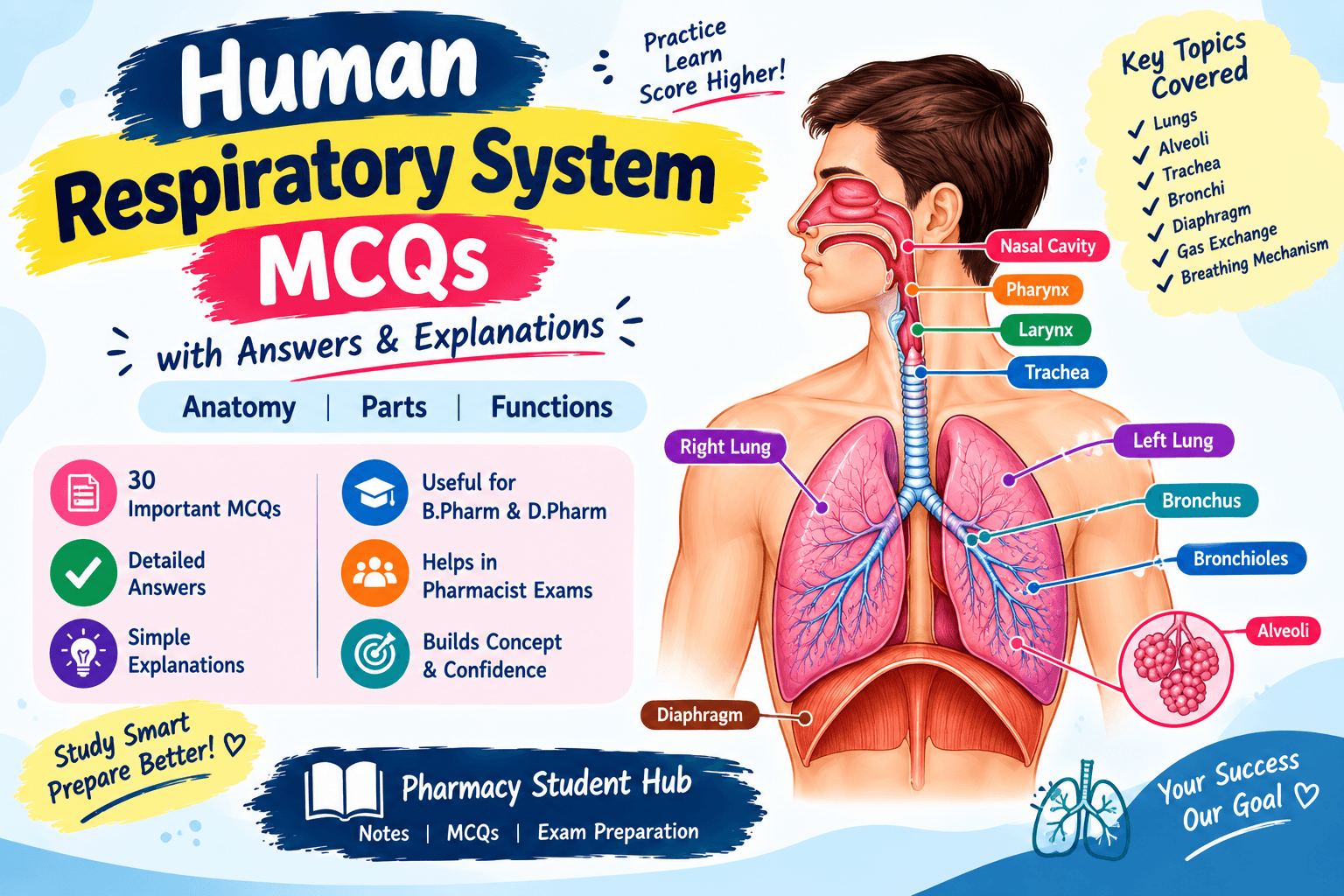
The human respiratory system is responsible for breathing and the exchange of oxygen and carbon dioxide between the body and the environment. It includes organs such as the nose, pharynx, larynx, trachea, bronchi, lungs and alveoli.
These 30 Human Respiratory System MCQs are useful for B.Pharm, D.Pharm, Anatomy & Physiology, Pharmacist exams and other pharmacy competitive examinations.
Try to answer each question before checking the answer and explanation.
1. What is the main function of the respiratory system?
A. Digestion of food
B. Exchange of gases
C. Production of hormones
D. Filtration of blood
Correct Answer: B. Exchange of gases
Explanation: The major function of the respiratory system is to supply oxygen to the body and remove carbon dioxide.
2. Which organ is primarily responsible for breathing?
A. Heart
B. Kidney
C. Lungs
D. Liver
Correct Answer: C. Lungs
Explanation: The lungs are the major organs of the respiratory system where gas exchange takes place.
3. Which structure is commonly known as the voice box?
A. Pharynx
B. Larynx
C. Trachea
D. Bronchus
Correct Answer: B. Larynx
Explanation: The larynx is called the voice box because it contains the vocal cords.
4. Which structure is commonly called the windpipe?
A. Bronchus
B. Pharynx
C. Trachea
D. Larynx
Correct Answer: C. Trachea
Explanation: The trachea is a tube that carries air from the larynx toward the bronchi.
5. What is the primary site of gas exchange in the lungs?
A. Trachea
B. Bronchi
C. Alveoli
D. Larynx
Correct Answer: C. Alveoli
Explanation: Alveoli are tiny air sacs surrounded by capillaries. Oxygen and carbon dioxide are exchanged across the alveolar-capillary membrane.
6. Which muscle is the main muscle of respiration?
A. Biceps
B. Diaphragm
C. Triceps
D. Deltoid
Correct Answer: B. Diaphragm
Explanation: The diaphragm contracts and moves downward during inspiration, increasing the volume of the thoracic cavity.
7. What happens to the diaphragm during normal inspiration?
A. It relaxes and moves upward
B. It contracts and moves downward
C. It contracts and moves upward
D. It does not move
Correct Answer: B. It contracts and moves downward
Explanation: During inspiration, diaphragm contraction increases thoracic volume and helps draw air into the lungs.
8. Which structure prevents food from entering the trachea during swallowing?
A. Uvula
B. Epiglottis
C. Bronchus
D. Alveolus
Correct Answer: B. Epiglottis
Explanation: The epiglottis is a flap of tissue that helps cover the entrance of the larynx during swallowing.
9. The trachea divides into:
A. Two primary bronchi
B. Two alveoli
C. Two pharynxes
D. Two larynges
Correct Answer: A. Two primary bronchi
Explanation: The lower end of the trachea divides into right and left primary bronchi, which enter the lungs.
10. Which lung has three lobes?
A. Right lung
B. Left lung
C. Both lungs
D. Neither lung
Correct Answer: A. Right lung
Explanation: The right lung has three lobes: superior, middle and inferior. The left lung has two lobes.
11. Which lung has two lobes?
A. Right lung
B. Left lung
C. Both lungs
D. Neither lung
Correct Answer: B. Left lung
Explanation: The left lung has two lobes and has a cardiac notch to accommodate the heart.
12. What is the function of pulmonary surfactant?
A. Increases blood pressure
B. Prevents alveolar collapse
C. Produces red blood cells
D. Digests proteins
Correct Answer: B. Prevents alveolar collapse
Explanation: Pulmonary surfactant reduces surface tension within the alveoli and helps prevent their collapse, especially during expiration.
13. Which cells produce pulmonary surfactant?
A. Type I pneumocytes
B. Type II pneumocytes
C. Red blood cells
D. Goblet cells
Correct Answer: B. Type II pneumocytes
Explanation: Type II alveolar cells produce surfactant, while Type I cells are mainly involved in gas exchange.
14. Which gas is taken into the body during normal breathing?
A. Carbon dioxide
B. Oxygen
C. Nitrogen only
D. Hydrogen
Correct Answer: B. Oxygen
Explanation: Oxygen enters the lungs during inspiration and diffuses from the alveoli into the blood.
15. Which gas is mainly removed from the body during expiration?
A. Oxygen
B. Carbon dioxide
C. Hydrogen
D. Helium
Correct Answer: B. Carbon dioxide
Explanation: Carbon dioxide produced by cellular metabolism is transported to the lungs and removed during expiration.
16. Oxygen is mainly transported in blood by:
A. Platelets
B. Hemoglobin
C. Plasma proteins only
D. White blood cells
Correct Answer: B. Hemoglobin
Explanation: Most oxygen is transported in the blood bound to hemoglobin present inside red blood cells.
17. Carbon dioxide is transported in the blood mainly in the form of:
A. Bicarbonate ions
B. Oxygen
C. Hemoglobin only
D. Nitrogen
Correct Answer: A. Bicarbonate ions
Explanation: Most carbon dioxide is transported in blood after conversion to bicarbonate ions.
18. The exchange of gases between alveoli and pulmonary capillary blood occurs by:
A. Active transport
B. Diffusion
C. Filtration
D. Osmosis only
Correct Answer: B. Diffusion
Explanation: Oxygen and carbon dioxide move across the respiratory membrane mainly by diffusion due to differences in their partial pressures.
19. Which structure carries air from the pharynx toward the larynx?
A. Esophagus
B. Pharynx
C. Bronchiole
D. Alveolus
Correct Answer: B. Pharynx
Explanation: The pharynx is a passage shared by the respiratory and digestive systems and conducts air toward the larynx.
20. Which of the following is NOT a part of the respiratory tract?
A. Trachea
B. Bronchi
C. Alveoli
D. Kidney
Correct Answer: D. Kidney
Explanation: The kidney belongs to the urinary system, not the respiratory system.
21. The tiny branches of the bronchi are called:
A. Bronchioles
B. Alveoli
C. Pleura
D. Pharynxes
Correct Answer: A. Bronchioles
Explanation: Bronchi divide into smaller branches called bronchioles, which eventually lead toward the respiratory portions containing alveoli.
22. What is the main function of the pleura?
A. Produce digestive enzymes
B. Protect and help the lungs move smoothly
C. Produce red blood cells
D. Filter urine
Correct Answer: B. Protect and help the lungs move smoothly
Explanation: The pleura is a double-layered membrane surrounding the lungs. Pleural fluid between its layers reduces friction during breathing.
23. Which part of the brain primarily controls the basic rhythm of breathing?
A. Medulla oblongata
B. Cerebellum
C. Cerebrum
D. Spinal cord only
Correct Answer: A. Medulla oblongata
Explanation: Respiratory centers in the brainstem, particularly the medulla and pons, help regulate breathing.
24. What is tidal volume?
A. Maximum air that can be forcibly exhaled
B. Air remaining after maximum expiration
C. Air moved during a normal quiet breath
D. Total lung capacity
Correct Answer: C. Air moved during a normal quiet breath
Explanation: Tidal volume is the amount of air inspired or expired during a normal, quiet breath.
25. What is vital capacity?
A. Air remaining in the lungs after normal expiration
B. Maximum amount of air expelled after maximum inspiration
C. Air exchanged during one quiet breath
D. Air present only in the trachea
Correct Answer: B. Maximum amount of air expelled after maximum inspiration
Explanation: Vital capacity is the maximum volume of air that can be exhaled after taking a maximum inspiration.
26. Which respiratory condition is characterized by narrowing of the airways and difficulty in breathing?
A. Asthma
B. Diabetes mellitus
C. Hypertension
D. Gastritis
Correct Answer: A. Asthma
Explanation: Asthma involves variable airway narrowing and inflammation, which can cause wheezing, coughing and difficulty breathing.
27. Which disease is commonly associated with destruction of alveolar walls?
A. Emphysema
B. Gastritis
C. Arthritis
D. Anemia
Correct Answer: A. Emphysema
Explanation: Emphysema is a form of chronic obstructive pulmonary disease in which alveolar walls are damaged, reducing the surface area available for gas exchange.
28. Which respiratory infection primarily affects the lungs and may cause cough and fever?
A. Pneumonia
B. Diabetes
C. Osteoporosis
D. Hepatitis
Correct Answer: A. Pneumonia
Explanation: Pneumonia is an infection of the lung tissue that can cause symptoms such as cough, fever and difficulty breathing.
29. What is the normal direction of oxygen movement during external respiration?
A. Blood to alveoli
B. Alveoli to blood
C. Tissues to alveoli directly
D. Blood to trachea only
Correct Answer: B. Alveoli to blood
Explanation: During external respiration, oxygen diffuses from the alveolar air into the pulmonary capillary blood.
30. What is the main purpose of the respiratory system in maintaining homeostasis?
A. To digest carbohydrates
B. To regulate gas exchange and help maintain blood pH
C. To produce bile
D. To form bones
Correct Answer: B. To regulate gas exchange and help maintain blood pH
Explanation: The respiratory system removes carbon dioxide and supplies oxygen. Regulation of carbon dioxide levels also contributes to maintaining the acid-base balance of the blood.
📑Quick Revision: Human Respiratory System
Remember these important points before your exam:
- Nose: Filters, warms and moistens incoming air.
- Pharynx: Passage for air and food.
- Larynx: Voice box.
- Trachea: Windpipe.
- Bronchi: Carry air into the lungs.
- Bronchioles: Smaller branches of the bronchi.
- Alveoli: Main site of gas exchange.
- Diaphragm: Main muscle of breathing.
- Right lung: 3 lobes.
- Left lung: 2 lobes.
- Type II pneumocytes: Produce surfactant.
- Hemoglobin: Mainly transports oxygen.
- Bicarbonate: Main form of carbon dioxide transport in blood.
- Medulla and pons: Help regulate breathing.
- Pleura: Covers the lungs and reduces friction during movement.
📋Frequently Asked Questions
1. What is the main function of the respiratory system?
The main function is gas exchange—bringing oxygen into the body and removing carbon dioxide.
2. Where does gas exchange occur?
Gas exchange occurs mainly in the alveoli of the lungs.
3. Which is the main muscle of respiration?
The diaphragm is the main muscle involved in normal breathing.
4. Which lung is larger?
The right lung is generally larger and has three lobes, while the left lung has two lobes.
5. Why is surfactant important?
Surfactant reduces surface tension and helps prevent the alveoli from collapsing.
🎯Conclusion
The human respiratory system plays an essential role in oxygen supply, carbon dioxide removal and maintenance of acid-base balance. Understanding the respiratory tract, lungs, alveoli, diaphragm, gas exchange and common respiratory disorders is important for B.Pharm, D.Pharm, Anatomy & Physiology and pharmacist examinations.
Practice these MCQs regularly and revise the important points before your exam.