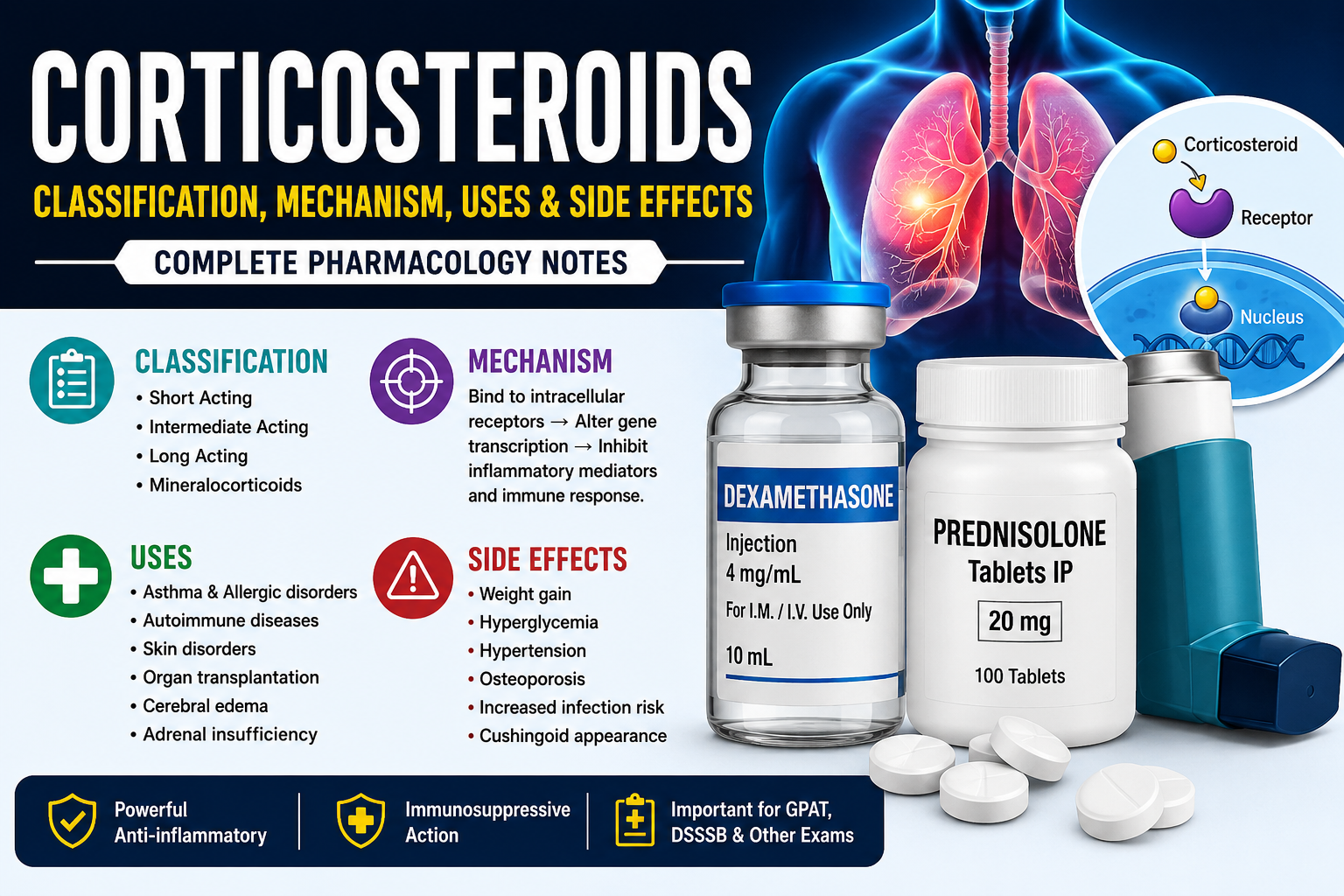
📌 Introduction
Corticosteroids are steroid hormones produced by the adrenal cortex and are widely used in medicine because of their strong anti-inflammatory and immunosuppressive properties. These drugs play an important role in treating allergic conditions, asthma, autoimmune diseases, skin disorders, and inflammatory conditions.
Corticosteroids are among the most commonly prescribed drugs in clinical practice. Understanding their pharmacology is very important for GPAT, DSSSB, PCI, and other pharmacy examinations.
🔍What are Corticosteroids?
Corticosteroids are synthetic or natural steroid hormones that mimic the action of cortisol produced by the adrenal cortex. They help regulate inflammation, immune response, metabolism, and stress reactions.
These drugs are mainly classified into:
• Glucocorticoids
• Mineralocorticoids
Glucocorticoids are primarily used for anti-inflammatory and immunosuppressive effects, while mineralocorticoids help regulate sodium and water balance.
📝 Classification of Corticosteroids
1. Short-Acting Corticosteroids
• Hydrocortisone
• Cortisone
2. Intermediate-Acting Corticosteroids
• Prednisolone
• Methylprednisolone
• Triamcinolone
3. Long-Acting Corticosteroids
• Dexamethasone
• Betamethasone
4. Mineralocorticoids
• Fludrocortisone
🧬 Mechanism of Action
Corticosteroids enter the cell and bind to intracellular steroid receptors. The drug-receptor complex then enters the nucleus and alters gene transcription.
Main actions include:
• Inhibition of inflammatory mediators
• Reduction of prostaglandin synthesis
• Suppression of immune response
• Stabilization of lysosomal membranes
• Reduction in capillary permeability
👉 Result: Decreased inflammation and immune activity
🩺 Pharmacological Effects
• Anti-inflammatory Effect
Corticosteroids reduce redness, swelling, pain, and inflammation.
• Immunosuppressive Effect
They suppress immune cell activity and are useful in autoimmune diseases.
• Anti-allergic Effect
These drugs reduce allergic reactions and hypersensitivity.
• Metabolic Effects
They influence carbohydrate, protein, and fat metabolism.
• Fluid & Electrolyte Effects
Mineralocorticoids increase sodium and water retention.
💊 Therapeutic Uses of Corticosteroids
1. Bronchial Asthma
Inhaled corticosteroids such as beclomethasone reduce airway inflammation and prevent asthma attacks.
2. Allergic Disorders
Used in allergic rhinitis, urticaria, and severe allergic reactions.
3. Autoimmune Diseases
Used in rheumatoid arthritis, lupus, and inflammatory bowel disease.
4. Skin Disorders
Helpful in eczema, dermatitis, and psoriasis.
5. Organ Transplantation
Prevent graft rejection because of immunosuppressive action.
6. Cerebral Edema
Dexamethasone is used to reduce brain swelling.
7. Adrenal Insufficiency
Hydrocortisone is used as replacement therapy.
📍 Adverse Effects of Corticosteroids
Long-term corticosteroid use can produce serious side effects.
Common Side Effects
• Weight gain
• Hyperglycemia
• Hypertension
• Gastric irritation
• Mood changes
• Increased appetite
Musculoskeletal Effects
• Osteoporosis
• Muscle wasting
Endocrine Effects
• Cushingoid appearance
• Adrenal suppression
Immune Effects
• Increased susceptibility to infections
Skin Effects
• Thinning of skin
• Delayed wound healing
📑 Important Exam Points
• Prednisolone → intermediate-acting corticosteroid
• Dexamethasone → long-acting corticosteroid
• Beclomethasone → inhaled steroid used in asthma
• Corticosteroids suppress inflammation and immunity
• Long-term use may cause adrenal suppression
🔋 Advantages of Corticosteroids
• Powerful anti-inflammatory action
• Effective in severe allergic conditions
• Useful in autoimmune diseases
• Life-saving in adrenal insufficiency
🛑 Precautions
• Avoid sudden withdrawal after long-term use
• Monitor blood sugar and blood pressure
• Use lowest effective dose
• Take with food to reduce gastric irritation
• Monitor for infections during therapy
🟢 Contraindications
Use cautiously in:
• Peptic ulcer disease
• Diabetes mellitus
• Hypertension
• Severe infections
🎯 Conclusion
Corticosteroids are highly effective drugs with important anti-inflammatory and immunosuppressive actions. They are widely used in asthma, allergies, autoimmune disorders, and inflammatory diseases. However, prolonged use may lead to serious adverse effects, so careful monitoring and rational use are essential.
A proper understanding of corticosteroids is very important for pharmacology exams and clinical practice.
👉 Practice MCQs in evening post
1 thought on “Corticosteroids: Classification, Mechanism, Uses & Side Effects”