📌Introduction
The cardiovascular system is one of the most important topics in Human Anatomy and Physiology. It consists mainly of the heart, blood, and blood vessels and is responsible for circulating blood throughout the body.
For pharmacy students, understanding the cardiovascular system is essential because many important drugs act on the heart, blood vessels, blood pressure, and cardiac conduction system.
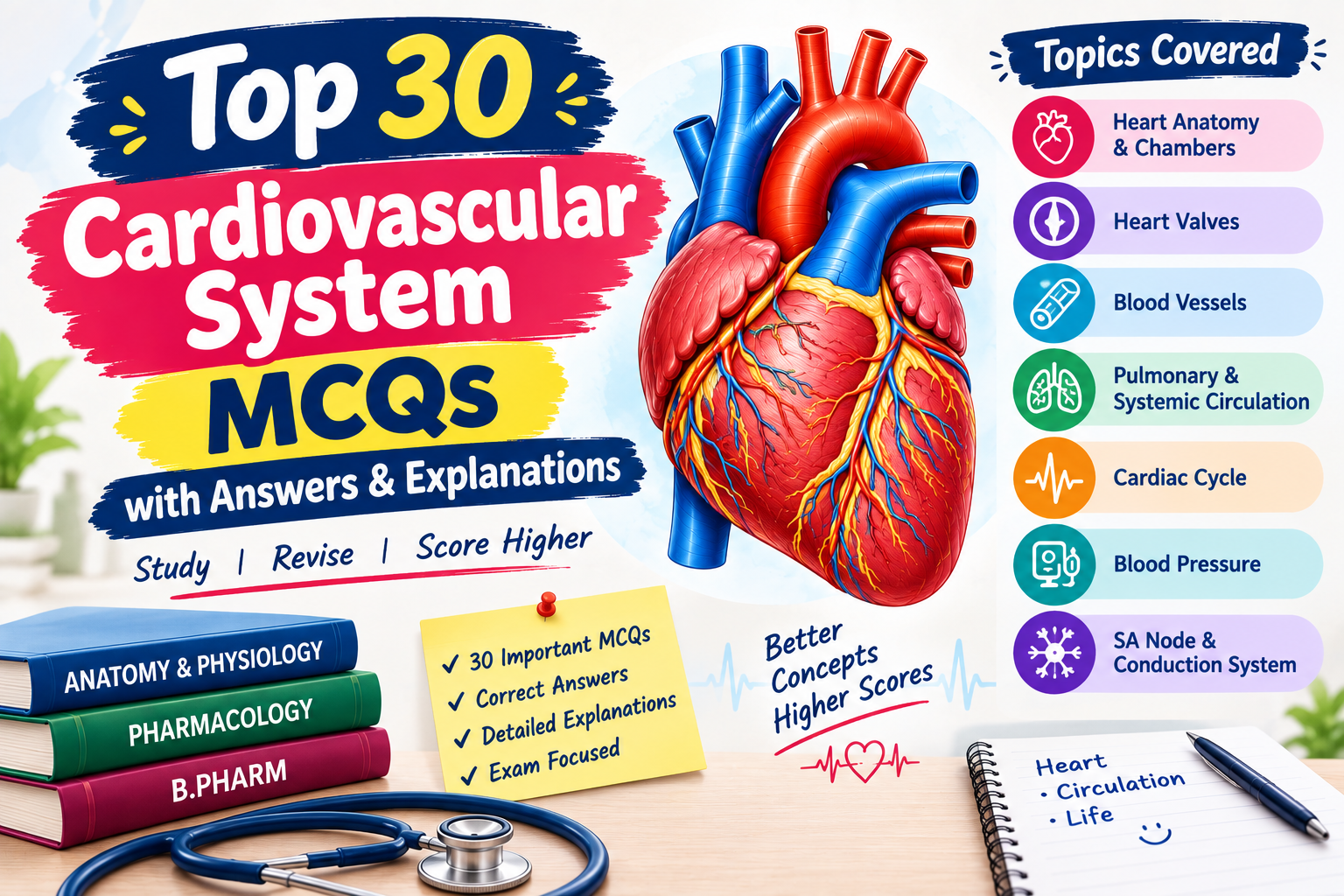
This post contains 30 important Human Cardiovascular System MCQs with answers and explanations covering heart anatomy, chambers, valves, blood vessels, pulmonary and systemic circulation, cardiac cycle, blood pressure, coronary circulation, and the electrical conduction system of the heart.
1. Which of the following is the main pumping organ of the cardiovascular system?
A. Lungs
B. Heart
C. Kidney
D. Liver
Correct Answer: B. Heart
Explanation: The heart is a muscular organ that pumps blood throughout the body.
2. How many chambers are present in the human heart?
A. Two
B. Three
C. Four
D. Five
Correct Answer: C. Four
Explanation: The human heart has four chambers: right atrium, right ventricle, left atrium, and left ventricle.
3. Which chamber receives deoxygenated blood from the body?
A. Left atrium
B. Left ventricle
C. Right atrium
D. Right ventricle
Correct Answer: C. Right atrium
Explanation: The right atrium receives deoxygenated blood returning from the body through the superior and inferior vena cava.
4. Which chamber pumps deoxygenated blood to the lungs?
A. Right ventricle
B. Right atrium
C. Left atrium
D. Left ventricle
Correct Answer: A. Right ventricle
Explanation: The right ventricle pumps deoxygenated blood into the pulmonary artery, which carries it to the lungs.
5. Which chamber receives oxygenated blood from the lungs?
A. Right atrium
B. Right ventricle
C. Left atrium
D. Left ventricle
Correct Answer: C. Left atrium
Explanation: The left atrium receives oxygenated blood from the lungs through the pulmonary veins.
6. Which chamber pumps oxygenated blood to the systemic circulation?
A. Right atrium
B. Right ventricle
C. Left atrium
D. Left ventricle
Correct Answer: D. Left ventricle
Explanation: The left ventricle pumps oxygenated blood into the aorta, which distributes it throughout the body.
7. Which valve is located between the right atrium and right ventricle?
A. Mitral valve
B. Aortic valve
C. Tricuspid valve
D. Pulmonary valve
Correct Answer: C. Tricuspid valve
Explanation: The tricuspid valve is located between the right atrium and right ventricle and helps prevent backflow of blood.
8. Which valve is located between the left atrium and left ventricle?
A. Tricuspid valve
B. Mitral valve
C. Pulmonary valve
D. Aortic valve
Correct Answer: B. Mitral valve
Explanation: The mitral valve, also called the bicuspid valve, is located between the left atrium and left ventricle.
9. Which valve is present between the right ventricle and pulmonary artery?
A. Mitral valve
B. Tricuspid valve
C. Pulmonary valve
D. Aortic valve
Correct Answer: C. Pulmonary valve
Explanation: The pulmonary valve is a semilunar valve located at the opening of the pulmonary artery from the right ventricle.
10. Which valve is located between the left ventricle and the aorta?
A. Aortic valve
B. Pulmonary valve
C. Tricuspid valve
D. Mitral valve
Correct Answer: A. Aortic valve
Explanation: The aortic valve prevents significant backflow of blood from the aorta into the left ventricle.
11. Which is the largest artery in the human body?
A. Pulmonary artery
B. Aorta
C. Carotid artery
D. Coronary artery
Correct Answer: B. Aorta
Explanation: The aorta is the largest artery and carries oxygenated blood from the left ventricle to the systemic circulation.
12. Which blood vessel carries deoxygenated blood from the heart to the lungs?
A. Pulmonary vein
B. Aorta
C. Pulmonary artery
D. Coronary artery
Correct Answer: C. Pulmonary artery
Explanation: The pulmonary artery carries deoxygenated blood from the right ventricle to the lungs.
13. Which blood vessels carry oxygenated blood from the lungs to the heart?
A. Pulmonary arteries
B. Pulmonary veins
C. Venae cavae
D. Coronary arteries
Correct Answer: B. Pulmonary veins
Explanation: Pulmonary veins carry oxygenated blood from the lungs to the left atrium.
14. Which vessels generally carry blood toward the heart?
A. Arteries
B. Veins
C. Capillaries
D. Arterioles
Correct Answer: B. Veins
Explanation: Veins generally carry blood toward the heart. The pulmonary veins are an important exception to the usual oxygenation pattern because they carry oxygenated blood.
15. Which blood vessels are the main sites of exchange between blood and tissues?
A. Arteries
B. Veins
C. Capillaries
D. Aorta
Correct Answer: C. Capillaries
Explanation: Capillaries have very thin walls that allow exchange of oxygen, carbon dioxide, nutrients, water, and waste products between blood and tissues.
16. What is pulmonary circulation?
A. Circulation between the heart and brain
B. Circulation between the heart and lungs
C. Circulation between the heart and kidneys
D. Circulation between the heart and liver
Correct Answer: B. Circulation between the heart and lungs
Explanation: Pulmonary circulation carries blood between the heart and lungs for gas exchange.
17. Which sequence correctly represents pulmonary circulation?
A. Left ventricle → Aorta → Body → Right atrium
B. Right ventricle → Pulmonary artery → Lungs → Pulmonary veins → Left atrium
C. Left atrium → Pulmonary artery → Lungs → Right atrium
D. Right atrium → Aorta → Lungs → Left ventricle
Correct Answer: B. Right ventricle → Pulmonary artery → Lungs → Pulmonary veins → Left atrium
Explanation: Deoxygenated blood leaves the right ventricle through the pulmonary artery, reaches the lungs, and returns oxygenated through the pulmonary veins to the left atrium.
18. Which chamber receives blood from the superior and inferior vena cava?
A. Left atrium
B. Left ventricle
C. Right atrium
D. Right ventricle
Correct Answer: C. Right atrium
Explanation: The superior and inferior vena cava return deoxygenated blood from the body to the right atrium.
19. Which artery supplies oxygenated blood to most of the body?
A. Pulmonary artery
B. Aorta
C. Pulmonary vein
D. Vena cava
Correct Answer: B. Aorta
Explanation: The aorta receives oxygenated blood from the left ventricle and distributes it through systemic circulation.
20. Which circulation supplies blood to the heart muscle itself?
A. Pulmonary circulation
B. Coronary circulation
C. Portal circulation
D. Cerebral circulation
Correct Answer: B. Coronary circulation
Explanation: Coronary circulation supplies oxygen and nutrients to the cardiac muscle through the coronary arteries.
21. Which structure normally acts as the natural pacemaker of the heart?
A. AV node
B. SA node
C. Bundle of His
D. Purkinje fibers
Correct Answer: B. SA node
Explanation: The sinoatrial (SA) node is located in the right atrium and normally initiates the electrical impulses that start each heartbeat.
22. Where is the sinoatrial (SA) node located?
A. Left ventricle
B. Right atrium
C. Left atrium
D. Right ventricle
Correct Answer: B. Right atrium
Explanation: The SA node is located in the right atrium near the entrance of the superior vena cava.
23. What is the main role of the AV node?
A. Producing red blood cells
B. Receiving and regulating transmission of electrical impulses toward the ventricles
C. Pumping blood into the aorta
D. Oxygenating blood
Correct Answer: B. Receiving and regulating transmission of electrical impulses toward the ventricles
Explanation: The atrioventricular (AV) node receives the electrical signal from the atria and helps regulate its transmission to the ventricular conduction system.
24. What is ventricular systole?
A. Relaxation of the ventricles
B. Contraction of the ventricles
C. Relaxation of the atria
D. Filling of the lungs
Correct Answer: B. Contraction of the ventricles
Explanation: During ventricular systole, the ventricles contract and eject blood into the pulmonary artery and aorta.
25. What is diastole?
A. Contraction of the heart chambers
B. Relaxation and filling phase of the heart
C. Contraction of only the ventricles
D. Pumping of blood into the lungs
Correct Answer: B. Relaxation and filling phase of the heart
Explanation: During diastole, the heart chambers relax and fill with blood.
26. Which chamber has the thickest muscular wall?
A. Right atrium
B. Left atrium
C. Right ventricle
D. Left ventricle
Correct Answer: D. Left ventricle
Explanation: The left ventricle has the thickest wall because it must generate enough pressure to pump blood throughout the systemic circulation.
27. What does systolic blood pressure represent?
A. Pressure during ventricular contraction
B. Pressure during ventricular relaxation
C. Pressure in the veins only
D. Pressure in the lungs only
Correct Answer: A. Pressure during ventricular contraction
Explanation: Systolic blood pressure represents the arterial pressure produced during ventricular contraction.
28. What does diastolic blood pressure represent?
A. Pressure during ventricular contraction
B. Pressure during ventricular relaxation
C. Pressure during atrial contraction only
D. Pressure inside the pulmonary veins only
Correct Answer: B. Pressure during ventricular relaxation
Explanation: Diastolic blood pressure represents arterial pressure during ventricular relaxation.
29. Which structure carries electrical impulses from the bundle of His toward the ventricular myocardium?
A. Purkinje fibers
B. Vena cava
C. Coronary sinus
D. Pulmonary vein
Correct Answer: A. Purkinje fibers
Explanation: Purkinje fibers distribute electrical impulses through the ventricular myocardium and help coordinate ventricular contraction.
30. Which statement about arteries is generally correct?
A. They always carry deoxygenated blood
B. They generally carry blood away from the heart
C. They always contain valves
D. They are the main site of gas exchange
Correct Answer: B. They generally carry blood away from the heart
Explanation: Arteries are defined by the direction of blood flow away from the heart. Most carry oxygenated blood, but the pulmonary arteries carry deoxygenated blood.
📋Quick Revision Points
📌 Heart has 4 chambers: 2 atria and 2 ventricles.
📌 Right atrium receives deoxygenated blood from the body.
📌 Right ventricle pumps blood to the lungs.
📌 Left atrium receives oxygenated blood from the lungs.
📌 Left ventricle pumps oxygenated blood to the body.
📌 Tricuspid valve = Right atrium → Right ventricle.
📌 Mitral valve = Left atrium → Left ventricle.
📌 Pulmonary artery = Carries deoxygenated blood to the lungs.
📌 Pulmonary veins = Carry oxygenated blood to the left atrium.
📌 Aorta = Main artery of systemic circulation.
📌 Capillaries = Major site of exchange between blood and tissues.
📌 SA node = Natural pacemaker of the heart.
📌 Systole = Contraction.
📌 Diastole = Relaxation.
📌 Left ventricle = Thickest muscular wall.
📌 Pulmonary circulation = Heart ↔ Lungs.
📌 Systemic circulation = Heart ↔ Body.
📌 Coronary circulation = Blood supply to the heart muscle.
🎯Conclusion
The cardiovascular system is an essential topic in Human Anatomy and Physiology and is particularly important for B.Pharm students. Understanding the heart chambers, valves, blood vessels, circulation, cardiac cycle, blood pressure, and electrical conduction system provides a strong foundation for studying cardiovascular pharmacology.
Regularly practicing MCQs can help pharmacy students strengthen their concepts and revise important points for B.Pharm, GPAT, pharmacist recruitment examinations, and other pharmacy competitive exams.
Keep practicing and strengthen your Anatomy & Physiology fundamentals!