📌 Introduction
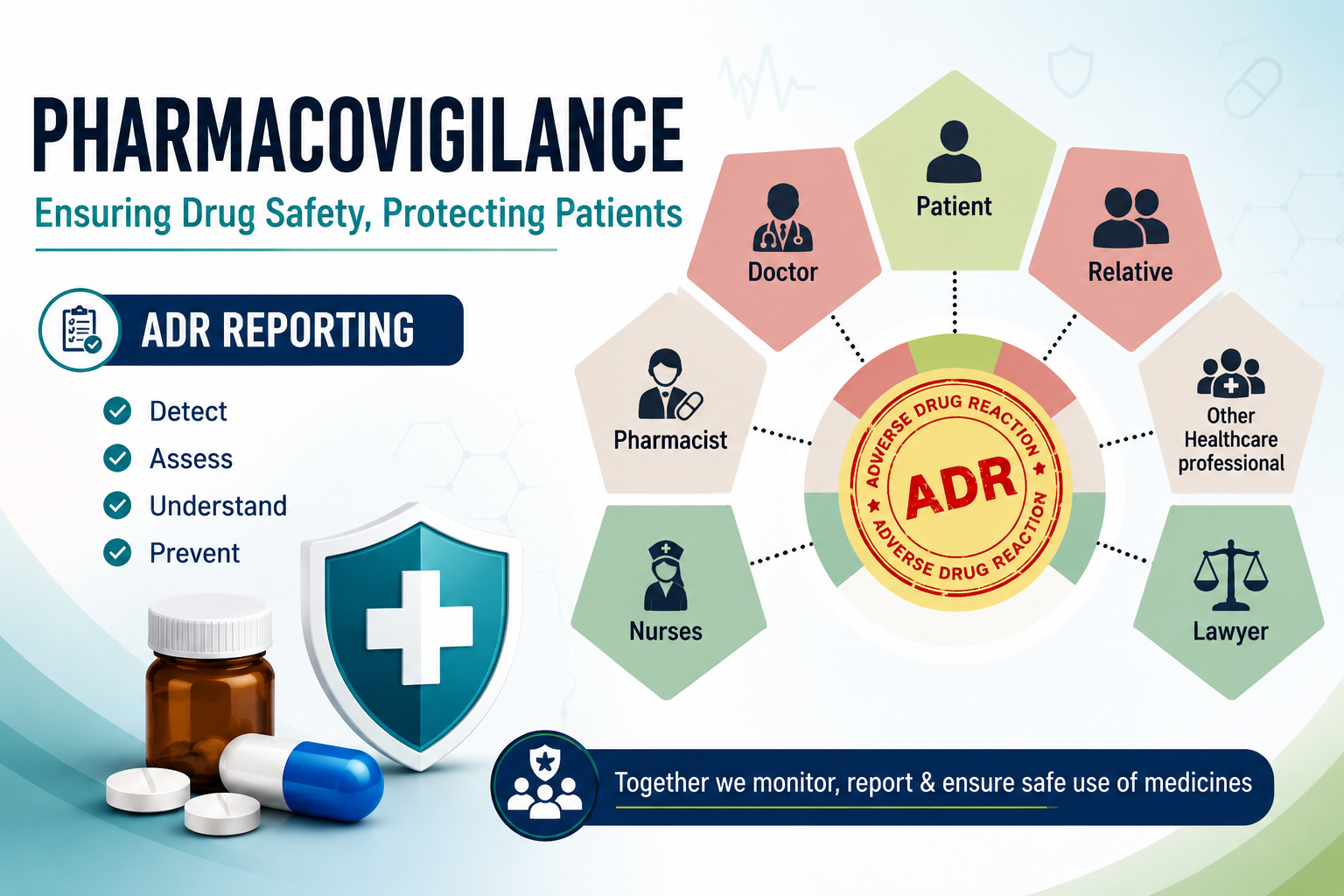
Pharmacovigilance is an important branch of pharmacy that focuses on the detection, assessment, understanding, and prevention of adverse effects caused by medicines. It plays a major role in ensuring patient safety and improving the safe use of drugs.
The word pharmacovigilance is derived from:
• “Pharmakon” meaning drug
• “Vigilare” meaning to keep watch
Pharmacovigilance is essential in modern healthcare because no medicine is completely free from side effects. Continuous monitoring of medicines helps identify harmful reactions and improve drug safety.
This topic is highly important for B.Pharm, D.Pharm, GPAT, DSSSB, PCI, and pharmaceutical industry examinations.
🔍 What is Pharmacovigilance?
According to the World Health Organization (WHO):
Pharmacovigilance is the science and activities related to the detection, assessment, understanding, and prevention of adverse effects or any other drug-related problems.
The main aim of pharmacovigilance is:
• To improve patient safety
• To detect adverse drug reactions (ADRs)
• To ensure safe use of medicines
• To minimize drug-related risks
❓ What is an Adverse Drug Reaction (ADR)?
An adverse drug reaction is any harmful or unintended response to a medicine given at normal doses for prevention, diagnosis, or treatment.
Examples:
• Skin rash after antibiotic use
• Drowsiness caused by antihistamines
• Gastric irritation due to NSAIDs
📝 Types of Adverse Drug Reactions
1. Type A Reactions (Augmented)
• Dose dependent
• Predictable
• Related to pharmacological action
Example:
• Hypoglycemia caused by insulin
2. Type B Reactions (Bizarre)
• Unpredictable
• Not dose dependent
• Rare but serious
Example:
• Penicillin allergy
3. Type C Reactions (Chronic)
• Occur after long-term use
Example:
• Adrenal suppression by corticosteroids
4. Type D Reactions (Delayed)
• Appear after a long period
Example:
• Carcinogenic effects of some drugs
5. Type E Reactions (End of use)
• Occur after sudden withdrawal
Example:
• Withdrawal symptoms with opioids
📍 Importance of Pharmacovigilance
Pharmacovigilance is important because it:
• Improves patient safety
• Detects unknown adverse reactions
• Reduces medication errors
• Promotes rational use of medicines
• Helps healthcare professionals make safer decisions
• Improves public confidence in medicines
It also helps regulatory authorities take action against unsafe drugs.
✒️ Objectives of Pharmacovigilance
Main objectives include:
• Monitoring drug safety
• Detecting new ADRs
• Assessing benefit-risk ratio
• Preventing drug-related harm
• Improving healthcare quality
⚡ Pharmacovigilance Process
The pharmacovigilance process includes several important steps.
1. Detection of ADR
Healthcare professionals identify suspected adverse drug reactions.
2. ADR Reporting
The reaction is reported to pharmacovigilance centers.
3. Data Collection
Information about the drug and patient is collected.
4. Data Analysis
Experts analyze the severity and causality of the reaction.
5. Signal Detection
New safety signals are identified.
6. Regulatory Action
Necessary safety measures are taken.
🛑 ADR Reporting System
ADR reporting is one of the most important activities in pharmacovigilance.
Healthcare professionals who can report ADRs:
• Pharmacists
• Doctors
• Nurses
• Patients
Information included in ADR reports:
• Patient details
• Suspected drug
• Description of reaction
• Dose and duration
• Outcome of reaction
🟢 Pharmacovigilance Programme of India (PvPI)
India runs a national pharmacovigilance system called:
👉 Pharmacovigilance Programme of India (PvPI)
It was launched to:
• Monitor ADRs
• Improve medicine safety
• Protect public health
The Indian Pharmacopoeia Commission (IPC) serves as the National Coordination Centre for PvPI.
🩺 Role of Pharmacists in Pharmacovigilance
Pharmacists play a vital role in pharmacovigilance activities.
Responsibilities include:
• Detecting ADRs
• Counseling patients
• Reporting adverse reactions
• Promoting safe drug use
• Preventing medication errors
Clinical pharmacists are especially important in hospital pharmacovigilance systems.
🔋 Benefits of Pharmacovigilance
• Better patient care
• Improved drug safety
• Early identification of harmful drugs
• Reduction in healthcare costs
• Safer use of medicines
🧬 Challenges in Pharmacovigilance
Despite its importance, pharmacovigilance faces some challenges:
• Underreporting of ADRs
• Lack of awareness
• Incomplete data collection
• Limited healthcare resources
Increasing awareness among healthcare professionals can improve ADR reporting.
🔬 Career Scope in Pharmacovigilance
Pharmacovigilance offers excellent career opportunities in:
• Pharmaceutical companies
• Clinical research organizations
• Hospitals
• Regulatory agencies
Job roles include:
• Drug safety associate
• Pharmacovigilance officer
• Medical reviewer
• Safety data analyst
This field is growing rapidly in the pharmaceutical industry.
📑 Important Exam Points
• WHO monitors global pharmacovigilance activities
• PvPI stands for Pharmacovigilance Programme of India
• ADR means adverse drug reaction
• Pharmacovigilance improves patient safety
• Pharmacists play an important role in ADR reporting
💊 Clinical Importance of Pharmacovigilance
Pharmacovigilance helps detect dangerous drug reactions early and prevents large-scale harm to patients. It supports safer healthcare systems and improves rational drug therapy.
Without pharmacovigilance, many harmful drug effects may remain unnoticed for years.
🎯 Conclusion
Pharmacovigilance is an essential branch of pharmacy that focuses on monitoring drug safety and preventing adverse drug reactions. It plays a major role in protecting patient health and ensuring the safe use of medicines.
ADR reporting, data analysis, and continuous monitoring help improve healthcare quality and reduce medication-related risks. Pharmacovigilance also offers excellent career opportunities in the pharmaceutical and clinical research industries.
Understanding pharmacovigilance is essential for pharmacy students, healthcare professionals, and competitive examination preparation.