📌 Introduction
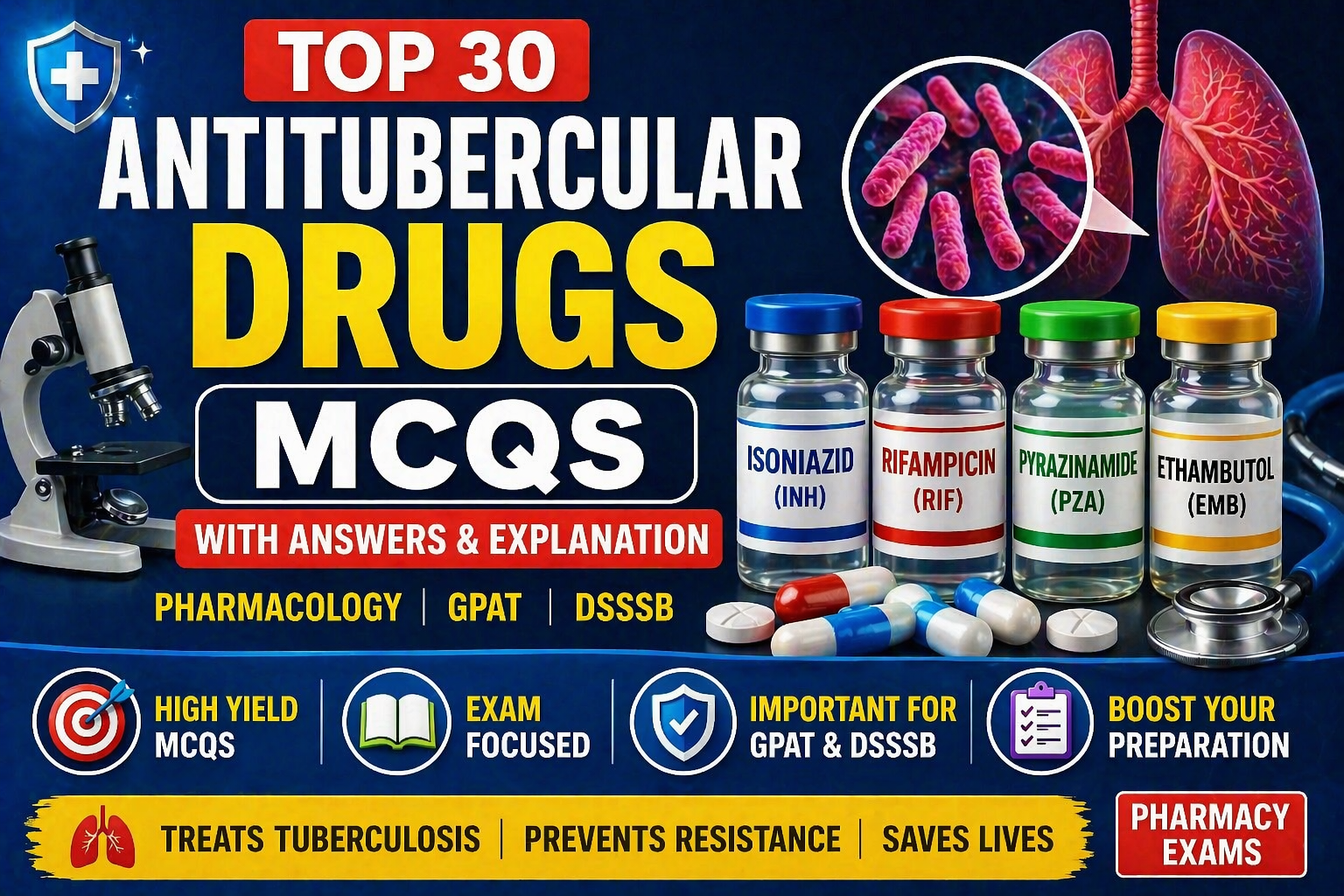
Antitubercular drugs are used in the treatment of tuberculosis (TB), a major infectious disease caused by Mycobacterium tuberculosis. This topic is very important for GPAT, DSSSB, and other pharmacy exams.
📝 MCQs on Antitubercular Drugs
1. Tuberculosis is caused by:
A) Virus
B) Fungus
C) Bacteria
D) Protozoa
✔ Answer: C) Bacteria
2. Causative organism of TB:
A) E. coli
B) Mycobacterium tuberculosis
C) Staphylococcus
D) Streptococcus
✔ Answer: B) Mycobacterium tuberculosis
3. First-line drug for TB:
A) Isoniazid
B) Paracetamol
C) Insulin
D) Aspirin
✔ Answer: A) Isoniazid
4. Isoniazid acts by:
A) Inhibiting DNA
B) Inhibiting mycolic acid synthesis
C) Blocking calcium
D) Increasing BP
✔ Answer: B) Inhibiting mycolic acid synthesis
5. Rifampicin acts by:
A) Blocking RNA synthesis
B) Blocking sodium
C) Increasing glucose
D) Blocking calcium
✔ Answer: A) Blocking RNA synthesis
6. Which is a first-line drug?
A) Isoniazid
B) Cycloserine
C) Amikacin
D) Streptomycin
✔ Answer: A) Isoniazid
7. Pyrazinamide causes:
A) Hypoglycemia
B) Hyperuricemia
C) Hypertension
D) Fever
✔ Answer: B) Hyperuricemia
8. Ethambutol causes:
A) Liver damage
B) Optic neuritis
C) Kidney damage
D) Heart attack
✔ Answer: B) Optic neuritis
9. Rifampicin is:
A) Enzyme inducer
B) Enzyme inhibitor
C) Hormone
D) Vitamin
✔ Answer: A) Enzyme inducer
10. TB spreads through:
A) Water
B) Air
C) Food
D) Blood
✔ Answer: B) Air
11. Combination therapy is used to:
A) Reduce cost
B) Prevent resistance
C) Increase pain
D) Reduce BP
✔ Answer: B) Prevent resistance
12. Which is second-line drug?
A) Isoniazid
B) Rifampicin
C) Cycloserine
D) Pyrazinamide
✔ Answer: C) Cycloserine
13. Isoniazid causes:
A) Neuropathy
B) Fever
C) Pain
D) BP increase
✔ Answer: A) Neuropathy
14. Rifampicin causes:
A) Hypoglycemia
B) Hepatotoxicity
C) Cancer
D) Stroke
✔ Answer: B) Hepatotoxicity
15. Ethambutol acts by:
A) DNA inhibition
B) Cell wall inhibition
C) Protein synthesis
D) Calcium block
✔ Answer: B) Cell wall inhibition
16. Pyrazinamide acts by:
A) DNA block
B) Membrane disruption
C) Protein block
D) Calcium block
✔ Answer: B) Membrane disruption
17. TB affects mainly:
A) Heart
B) Lungs
C) Liver
D) Brain
✔ Answer: B) Lungs
18. Which is used in latent TB?
A) Isoniazid
B) Insulin
C) Antibiotic
D) Vitamin
✔ Answer: A) Isoniazid
19. Rifampicin changes color of:
A) Blood
B) Urine
C) Bone
D) Skin
✔ Answer: B) Urine
20. Which drug causes optic toxicity?
A) Ethambutol
B) Rifampicin
C) Isoniazid
D) Pyrazinamide
✔ Answer: A) Ethambutol
21. Which drug is bactericidal?
A) Isoniazid
B) Vitamin
C) Insulin
D) NSAID
✔ Answer: A) Isoniazid
22. Which is anti-TB drug?
A) Rifampicin
B) Aspirin
C) Paracetamol
D) Insulin
✔ Answer: A) Rifampicin
23. TB treatment duration is:
A) 1 day
B) 1 week
C) Months
D) 1 year exact
✔ Answer: C) Months
24. Which increases uric acid?
A) Pyrazinamide
B) Isoniazid
C) Rifampicin
D) Ethambutol
✔ Answer: A) Pyrazinamide
25. Which drug is injectable?
A) Streptomycin
B) Isoniazid
C) Rifampicin
D) Pyrazinamide
✔ Answer: A) Streptomycin
26. TB is a:
A) Viral disease
B) Bacterial disease
C) Fungal disease
D) Genetic disease
✔ Answer: B) Bacterial disease
27. Which drug inhibits RNA synthesis?
A) Rifampicin
B) Isoniazid
C) Pyrazinamide
D) Ethambutol
✔ Answer: A) Rifampicin
28. Which drug affects vision?
A) Ethambutol
B) Rifampicin
C) Isoniazid
D) Pyrazinamide
✔ Answer: A) Ethambutol
29. Which prevents resistance?
A) Single therapy
B) Combination therapy
C) No therapy
D) Vitamins
✔ Answer: B) Combination therapy
30. Best use of anti-TB drugs:
A) Viral infection
B) TB infection
C) Pain
D) Fever
✔ Answer: B) TB infection
🎯 Conclusion
These 30 MCQs on antitubercular drugs will help you strengthen your pharmacology concepts and prepare effectively for exams.
👉 Read full notes here: https://pharmacymcq.in/antitubercular-drugs-classification-mechanism-uses/