
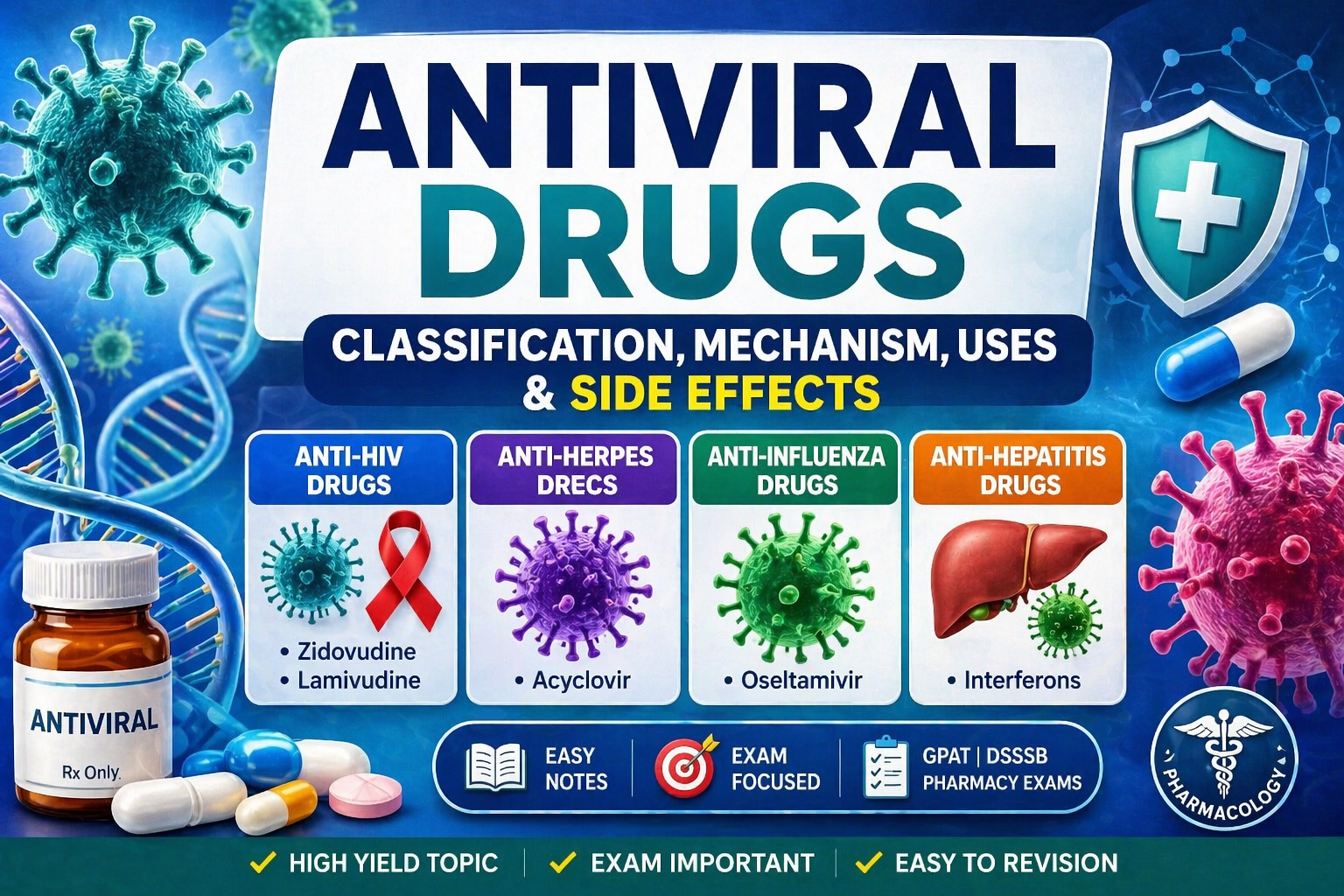
Antiviral drugs are medicines used to prevent or treat specific viral infections. They work by interfering with different stages of the viral life cycle, such as viral entry, nucleic acid synthesis, protein processing, and the release of new virus particles.
Antiviral drugs are important in the treatment of infections caused by viruses such as herpes simplex virus, human immunodeficiency virus (HIV), hepatitis B virus (HBV), hepatitis C virus (HCV), and influenza virus.
For pharmacy students, understanding the classification, mechanism of action, therapeutic uses, and adverse effects of antiviral drugs is an important part of pharmacology. These concepts are useful for B.Pharm and D.Pharm examinations, GPAT preparation, and pharmacist recruitment examinations.
In this article, we will discuss the major classes of antiviral drugs, their mechanisms of action, examples, uses, adverse effects, and important examination points.
🔍What Are Antiviral Drugs?
Antiviral drugs are pharmaceutical agents that inhibit viral replication or interfere with specific processes required for a virus to multiply in the body.
Viruses depend on host cells for many stages of their replication. Therefore, antiviral drugs are designed to target viral proteins or other processes involved in infection while limiting damage to the host.
Unlike antibiotics, which act against bacteria, antiviral medicines are designed for particular viruses or groups of viruses. An antiviral drug effective against one viral infection may not work against another.
Examples of antiviral drugs include:
- Acyclovir
- Oseltamivir
- Tenofovir
- Zidovudine
- Sofosbuvir
- Remdesivir
- Dolutegravir
Each medicine has specific indications, limitations, and safety considerations.
📑Classification of Antiviral Drugs
Antiviral drugs can be classified according to the viruses they target or their mechanisms of action.
1. Anti-Herpesvirus Drugs
These drugs are used against certain herpesvirus infections.
Examples:
- Acyclovir
- Valacyclovir
- Famciclovir
- Ganciclovir
- Valganciclovir
- Foscarnet
Uses: Selected infections caused by herpes simplex virus (HSV), varicella-zoster virus (VZV), and cytomegalovirus (CMV), depending on the drug.
2. Anti-Influenza Drugs
These drugs are used for the treatment or, in certain circumstances, prevention of influenza.
Examples:
- Oseltamivir
- Zanamivir
- Peramivir
- Baloxavir marboxil
These drugs act on different viral targets and are not interchangeable in every clinical situation.
3. Antiretroviral Drugs
Antiretroviral drugs are used in the treatment and prevention of HIV infection as part of appropriate treatment regimens.
Major groups include:
- Nucleoside/nucleotide reverse transcriptase inhibitors (NRTIs)
- Non-nucleoside reverse transcriptase inhibitors (NNRTIs)
- Protease inhibitors (PIs)
- Integrase strand transfer inhibitors (INSTIs)
- Entry and fusion inhibitors
Examples: Tenofovir, lamivudine, zidovudine, efavirenz, darunavir, dolutegravir, and raltegravir.
HIV treatment generally requires a combination of antiretroviral medicines rather than a single drug used alone.
4. Anti-Hepatitis B Drugs
These drugs suppress the replication of hepatitis B virus.
Examples:
- Tenofovir
- Entecavir
- Pegylated interferon alfa in selected cases
Uses: Management of chronic hepatitis B in patients who meet treatment criteria.
5. Anti-Hepatitis C Drugs
Direct-acting antivirals target specific proteins involved in hepatitis C virus replication.
Examples:
- Sofosbuvir
- Velpatasvir
- Ledipasvir
- Glecaprevir
- Pibrentasvir
Many hepatitis C treatment regimens combine two or more direct-acting antivirals.
6. Other Antiviral Drugs
Some antiviral medicines have specific indications for other viral infections.
Examples:
- Remdesivir: An RNA-dependent RNA polymerase inhibitor used for selected COVID-19 cases.
- Nirmatrelvir: A SARS-CoV-2 main protease inhibitor used in an appropriate oral combination regimen.
- Ribavirin: Used for selected viral infections in specific clinical circumstances.
The use of these medicines depends on the infection, current treatment guidance, patient characteristics, and local approvals.
Classification of Antiviral Drugs Based on Mechanism of Action
This classification is especially useful for pharmacology examinations.
| Drug Class | Examples | Main Mechanism |
|---|---|---|
| Viral DNA polymerase inhibitors | Acyclovir, ganciclovir | Inhibit viral DNA synthesis |
| Nucleoside/nucleotide reverse transcriptase inhibitors | Tenofovir, lamivudine, zidovudine | Inhibit reverse transcriptase |
| Non-nucleoside reverse transcriptase inhibitors | Efavirenz, nevirapine | Inhibit HIV reverse transcriptase through a different binding site |
| HIV protease inhibitors | Darunavir, atazanavir | Prevent proper processing of viral proteins |
| HIV integrase inhibitors | Dolutegravir, raltegravir | Prevent integration of viral DNA into the host genome |
| Influenza neuraminidase inhibitors | Oseltamivir, zanamivir | Inhibit the release and spread of newly formed influenza viruses |
| Influenza endonuclease inhibitor | Baloxavir marboxil | Inhibits viral RNA transcription |
| HCV NS5B polymerase inhibitor | Sofosbuvir | Inhibits hepatitis C viral RNA synthesis |
| HCV NS5A inhibitors | Velpatasvir, ledipasvir | Interfere with viral replication and assembly |
| SARS-CoV-2 protease inhibitor | Nirmatrelvir | Inhibits viral polyprotein processing |
Note: This is a simplified educational classification. Individual drugs have specific indications and should not be assumed to be effective against every virus in a class.
⚕️Mechanism of Action of Antiviral Drugs
Antiviral medicines act on different stages of the viral life cycle.
The major stages of viral replication include:
- Attachment to the host cell.
- Entry into the host cell.
- Uncoating of the viral genome.
- Replication of viral nucleic acid.
- Synthesis and processing of viral proteins.
- Assembly of new virus particles.
- Release of new virus particles.
Antiviral drugs interfere with one or more of these stages.
1. Inhibition of Viral DNA Synthesis
Examples: Acyclovir and ganciclovir.
Acyclovir is activated preferentially in herpesvirus-infected cells through initial phosphorylation by a viral enzyme. Its active form inhibits viral DNA polymerase and can terminate viral DNA chain elongation.
Ganciclovir also interferes with viral DNA synthesis and is used for selected cytomegalovirus infections.
Important point: Acyclovir is particularly associated with herpes simplex virus and varicella-zoster virus infections.
2. Inhibition of Reverse Transcriptase
HIV uses the enzyme reverse transcriptase to produce DNA from its RNA genome.
Reverse transcriptase inhibitors interfere with this process.
NRTIs: Tenofovir, lamivudine, and zidovudine interfere with viral DNA synthesis after intracellular activation.
NNRTIs: Efavirenz inhibits HIV reverse transcriptase by binding to a different site on the enzyme.
These drug classes are important components of HIV treatment regimens.
3. Inhibition of Viral Protease
Examples: Darunavir and atazanavir.
HIV produces long protein precursors that must be processed by viral protease to form functional proteins.
Protease inhibitors block this processing. Consequently, newly formed viral particles do not mature normally and are less infectious.
4. Inhibition of Viral Integrase
Examples: Dolutegravir and raltegravir.
HIV produces DNA that must be integrated into the host cell’s genome.
Integrase inhibitors block the strand-transfer step required for this integration, thereby interfering with the HIV replication cycle.
5. Inhibition of Influenza Neuraminidase
Examples: Oseltamivir, zanamivir, and peramivir.
Neuraminidase helps newly formed influenza virus particles separate from infected cells and spread to other cells.
Neuraminidase inhibitors block this enzyme and limit the release and spread of influenza viruses.
6. Inhibition of Influenza RNA Transcription
Example: Baloxavir marboxil.
Baloxavir inhibits the cap-dependent endonuclease activity of the influenza virus polymerase complex. This interferes with viral messenger RNA production and prevents efficient viral replication.
Important point: Baloxavir and oseltamivir act through different mechanisms.
7. Inhibition of Hepatitis C Virus Replication
Hepatitis C treatment uses direct-acting antivirals that target specific viral proteins.
- Sofosbuvir: Inhibits the HCV NS5B RNA-dependent RNA polymerase.
- Velpatasvir: Inhibits the HCV NS5A protein.
- Glecaprevir: Inhibits the HCV NS3/4A protease.
Appropriate combinations can achieve a sustained virological response, which generally indicates that hepatitis C virus is no longer detectable in the blood after treatment according to the relevant testing criteria.
8. Inhibition of SARS-CoV-2 Replication
Examples: Remdesivir and nirmatrelvir.
Remdesivir inhibits the SARS-CoV-2 RNA-dependent RNA polymerase, interfering with viral RNA synthesis.
Nirmatrelvir inhibits the SARS-CoV-2 main protease, which is required to process viral polyproteins.
Nirmatrelvir is used with ritonavir, which increases nirmatrelvir exposure by inhibiting its metabolism. This combination has important drug interactions and requires professional assessment before use.
📖Uses of Antiviral Drugs
Antiviral medicines are used for specific viral infections.
1. Herpes Simplex Infections
Acyclovir, valacyclovir, and famciclovir are used for selected infections caused by herpes simplex virus.
They can help reduce the duration or severity of episodes when appropriately prescribed, but they do not eliminate latent herpesvirus from the body.
2. Chickenpox and Shingles
Acyclovir and related drugs may be used for selected varicella-zoster virus infections.
The decision to treat depends on factors such as age, disease severity, immune status, and the time since symptoms began.
3. HIV Infection
Antiretroviral medicines such as tenofovir, lamivudine, and dolutegravir are used in combination regimens to suppress HIV replication.
Treatment reduces viral load and helps protect immune function. It does not currently eliminate HIV from the body.
4. Chronic Hepatitis B
Tenofovir and entecavir are used in eligible patients with chronic hepatitis B to suppress viral replication and reduce the risk of disease progression.
Treatment decisions require clinical assessment and appropriate monitoring.
5. Hepatitis C
Direct-acting antiviral combinations can cure most hepatitis C infections when the appropriate regimen is completed.
The choice of treatment depends on factors including previous treatment, liver disease, drug interactions, and other clinical considerations.
6. Influenza
Oseltamivir and other influenza antivirals may be used to treat influenza in appropriate patients.
Treatment is generally most effective when started early. Patients at increased risk of serious complications may need prompt clinical assessment.
7. COVID-19
Selected antiviral medicines may be prescribed for eligible patients with COVID-19 who meet the relevant treatment criteria.
The appropriate medicine depends on disease severity, risk factors, timing, contraindications, drug interactions, and current clinical guidance.
📌Side Effects of Antiviral Drugs
Like other medicines, antiviral drugs can cause adverse effects. The type and severity depend on the specific medicine, dose, duration of treatment, and the patient’s health.
| Drug | Important Possible Adverse Effects |
|---|---|
| Acyclovir | Nausea, headache; kidney injury or neurological effects in certain circumstances |
| Ganciclovir | Bone marrow suppression, including neutropenia |
| Tenofovir disoproxil fumarate (TDF) | Kidney toxicity and reduced bone mineral density in some patients |
| Efavirenz | Dizziness, sleep disturbances, and other central nervous system effects |
| Dolutegravir | Headache, gastrointestinal symptoms, and possible weight changes |
| Oseltamivir | Nausea and vomiting |
| Baloxavir marboxil | Diarrhea, nausea, and other reported adverse effects |
| Sofosbuvir-containing regimens | Fatigue and headache may occur, depending on the regimen |
| Remdesivir | Increased liver enzymes and infusion-related reactions |
| Nirmatrelvir/ritonavir | Altered taste, gastrointestinal effects, and clinically important drug interactions |
Some medicines require laboratory monitoring or special precautions. For example, acyclovir dosing may need adjustment in renal impairment, and ganciclovir requires monitoring for bone marrow toxicity.
Patients should not stop or change antiviral treatment without consulting their healthcare professional.
Advantages of Antiviral Drugs
- They can reduce viral replication in susceptible infections.
- Some antivirals shorten the duration of illness when used appropriately.
- Certain treatments reduce the risk of complications in eligible patients.
- Some medicines can suppress chronic viral infections over long periods.
- Effective combination treatments can cure certain infections, including most hepatitis C infections.
Limitations of Antiviral Drugs
- Many antiviral drugs act against only specific viruses.
- Some viruses can develop resistance to treatment.
- Not every viral infection has an effective antiviral medicine.
- Some medicines cause significant adverse effects or drug interactions.
- Certain treatments work best when started early.
- Some antiviral medicines suppress infection without eliminating the virus completely.
📍Difference Between Antiviral Drugs and Antibiotics
| Feature | Antiviral Drugs | Antibiotics |
|---|---|---|
| Main target | Viruses | Bacteria |
| Main action | Interfere with viral replication or other viral processes | Interfere with bacterial growth or survival |
| Examples | Acyclovir, oseltamivir | Amoxicillin, azithromycin |
| Spectrum | Often virus-specific | Varies by antibiotic and bacterial susceptibility |
| Use in viral infections | Selected antivirals may be effective | Antibiotics do not treat viruses directly |
Important: Antibiotics should not be used to treat an uncomplicated viral infection unless a healthcare professional identifies a separate bacterial infection or another appropriate indication.
📑Important Antiviral Drugs for Pharmacy Exams
The following facts are useful for pharmacology revision and competitive examinations.
- Acyclovir: Commonly used against herpes simplex virus and varicella-zoster virus.
- Ganciclovir: Used for selected cytomegalovirus infections.
- Oseltamivir: Influenza neuraminidase inhibitor.
- Baloxavir marboxil: Influenza cap-dependent endonuclease inhibitor.
- Zidovudine: Nucleoside reverse transcriptase inhibitor.
- Efavirenz: Non-nucleoside reverse transcriptase inhibitor.
- Darunavir: HIV protease inhibitor.
- Dolutegravir: HIV integrase strand-transfer inhibitor.
- Tenofovir: Used in HIV treatment regimens and in the treatment of chronic hepatitis B.
- Sofosbuvir: Hepatitis C virus NS5B polymerase inhibitor.
- Remdesivir: RNA-dependent RNA polymerase inhibitor used for selected viral infections, including COVID-19.
- Nirmatrelvir: SARS-CoV-2 main protease inhibitor, administered with ritonavir in the indicated regimen.
📋Frequently Asked Questions (FAQs)
1. What are antiviral drugs?
Antiviral drugs are medicines that inhibit viral replication or interfere with specific processes required for a virus to multiply. Each medicine has specific indications.
2. What is the classification of antiviral drugs?
Antiviral drugs can be classified by the viruses they target, such as herpesviruses, influenza, HIV, HBV, and HCV, or by their mechanisms, such as polymerase, protease, reverse transcriptase, and integrase inhibition.
3. What is the mechanism of action of acyclovir?
Acyclovir is activated preferentially in herpesvirus-infected cells. Its active form inhibits viral DNA polymerase and interferes with viral DNA chain elongation.
4. Which antiviral drug is used for influenza?
Oseltamivir, zanamivir, peramivir, and baloxavir are examples of drugs used for selected influenza infections. The appropriate choice depends on clinical circumstances and current guidance.
5. Which antiviral drugs are used for HIV?
HIV treatment uses combinations of antiretroviral medicines. Examples include tenofovir, lamivudine, dolutegravir, and selected other agents.
6. Are antiviral drugs effective against all viruses?
No. Antiviral medicines have specific activity against particular viruses or groups of viruses. A drug used for one viral infection may not work against another.
7. What is the difference between antiviral drugs and vaccines?
Antiviral drugs interfere with viral infection or replication and may be used for treatment or specific preventive indications. Vaccines stimulate the immune system to develop protection against particular infections.
8. Can antiviral drugs cause side effects?
Yes. Possible adverse effects vary by medicine and may include gastrointestinal symptoms, headache, kidney toxicity, liver abnormalities, or other drug-specific effects.
9. Are antiviral drugs important for GPAT and pharmacist examinations?
Yes. Classification, mechanisms of action, examples, uses, and adverse effects are useful pharmacology topics for GPAT and various pharmacist recruitment examinations.
🎯 Conclusion
Antiviral drugs play an important role in the treatment of selected viral infections. They work through different mechanisms, including inhibition of viral DNA or RNA synthesis, reverse transcriptase, protease, integrase, and neuraminidase.
For pharmacy students, remembering each drug’s target, representative examples, major uses, and important adverse effects provides a strong foundation for pharmacology examinations.
Because antiviral medicines have specific indications, contraindications, and drug interactions, treatment should always follow appropriate clinical guidance.
Continue revising these concepts with pharmacology notes and antiviral drug MCQs to strengthen your understanding of this important topic.
1 thought on “Antiviral Drugs: Classification, Mechanism, Uses & Side Effects”