📌 Introduction
Beta blockers are one of the most important classes of drugs in pharmacology, widely used in the treatment of cardiovascular diseases. They are frequently asked in competitive exams like GPAT, DSSSB, and other pharmacy entrance tests. Because of their high clinical importance and repeated appearance in exams, understanding beta blockers clearly can significantly improve your preparation and confidence.
These drugs mainly act on the heart and blood vessels, helping to control blood pressure and heart rate. Due to their wide range of uses, beta blockers are considered a must-know topic for every pharmacy student.
🔍What are Beta Blockers?
Beta blockers, also known as beta-adrenergic blocking agents, are drugs that block the action of adrenaline and noradrenaline on beta receptors. These receptors are present in different parts of the body, especially in the heart and lungs.
There are mainly two types of beta receptors:
• β1 receptors → present in the heart
• β2 receptors → present in lungs and blood vessels
By blocking these receptors, beta blockers reduce the workload of the heart and help in controlling various cardiovascular conditions.
📝 Classification of Beta Blockers
Beta blockers are classified based on their selectivity and action. Understanding this classification is very important for exams.
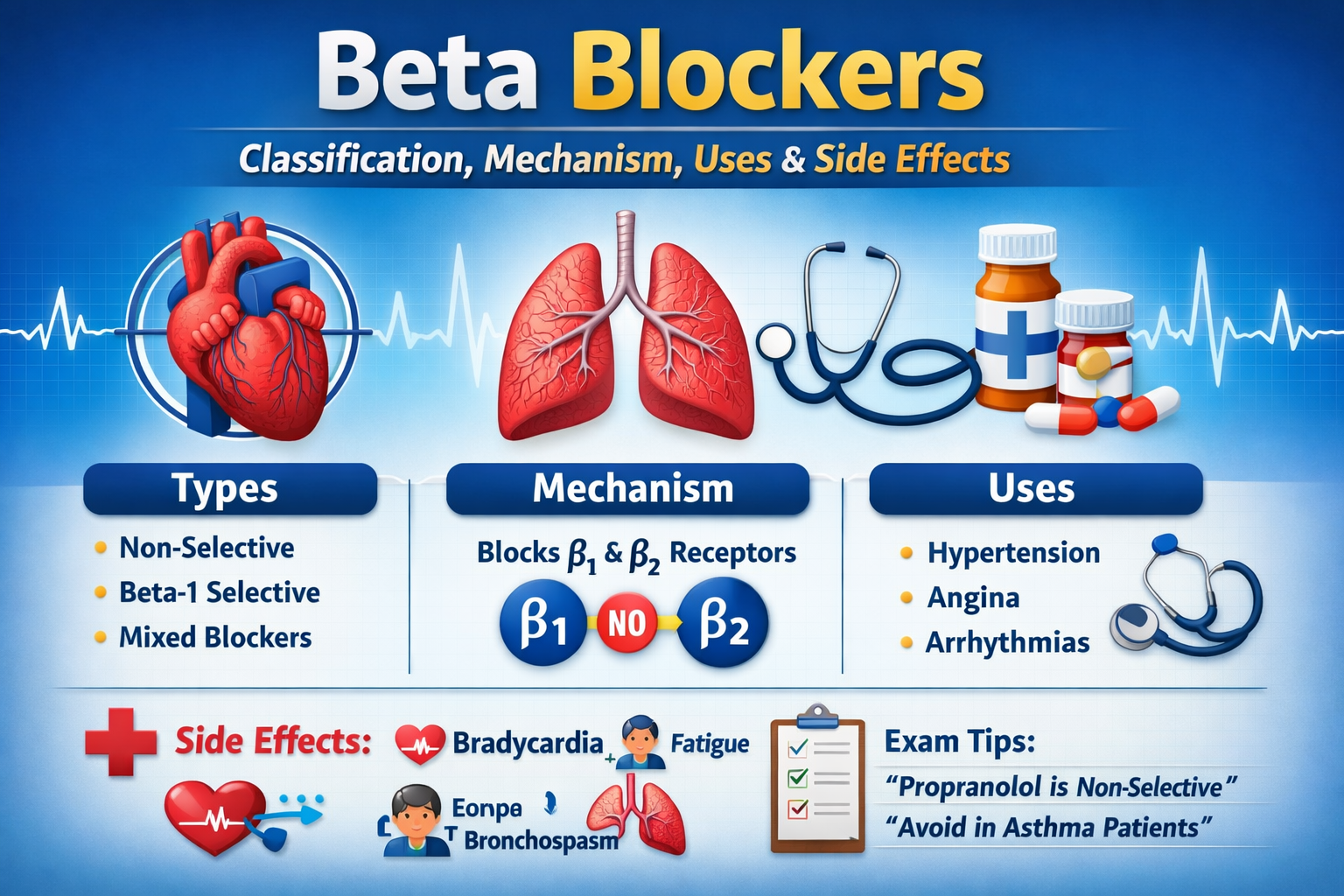
• Non-selective beta blockers
These drugs block both β1 and β2 receptors.
Examples include propranolol and timolol.
• Selective (β1 selective) beta blockers
These drugs mainly act on the heart and have less effect on lungs.
Examples include atenolol, metoprolol, and bisoprolol.
• Mixed alpha and beta blockers
These drugs block both alpha and beta receptors.
Examples include labetalol and carvedilol.
This classification helps in choosing the right drug for specific conditions.
💊 Mechanism of Action
The mechanism of action of beta blockers is simple but very important. These drugs block beta-adrenergic receptors and prevent adrenaline from binding to them.
As a result, the following effects are seen:
• Decrease in heart rate
• Reduction in force of contraction
• Lower cardiac output
• Decrease in blood pressure
Additionally, beta blockers also reduce the release of renin from the kidneys, which further helps in controlling blood pressure. This combined effect makes them very effective in treating hypertension and heart diseases.
🟢 Therapeutic Uses
Beta blockers are widely used in medical practice due to their effectiveness in managing different conditions.
They are commonly used in:
• Hypertension (high blood pressure)
• Angina (chest pain)
• Arrhythmias (irregular heartbeat)
• Heart failure
• Migraine prevention
• Anxiety and stress-related conditions
In cardiovascular diseases, beta blockers help reduce the workload of the heart and improve overall heart function.
🚨 Side Effects
Like all medicines, beta blockers can also cause some side effects. Most side effects are related to their action on the heart and blood vessels.
Common side effects include:
• Bradycardia (slow heart rate)
• Fatigue and weakness
• Cold hands and feet
• Dizziness
One important side effect is bronchospasm, especially with non-selective beta blockers. This can be dangerous for asthma patients, so these drugs should be used carefully.
🩺 Precautions and Contraindications
Beta blockers are not suitable for everyone and should be used with caution in certain conditions.
Important precautions:
• Avoid in asthma patients (risk of bronchospasm)
• Use carefully in diabetes patients
• Not recommended in severe bradycardia
• Avoid sudden withdrawal (can worsen condition)
Doctors usually select selective beta blockers for safer use in sensitive patients.
🎯 Important Exam Points
For exam preparation, some key points should always be remembered:
• Propranolol → Non-selective beta blocker
• Atenolol & Metoprolol → β1 selective drugs
• Labetalol → Mixed alpha and beta blocker
• Avoid beta blockers in asthma patients
These points are frequently asked in MCQs and competitive exams.
🖋️ Conclusion
Beta blockers are an essential topic in pharmacology with both theoretical and practical importance. Their role in controlling heart rate, blood pressure, and other cardiovascular conditions makes them highly valuable in medical treatment.
1 thought on “Beta Blockers: Classification, Mechanism, Uses & Side Effects”