📌 Introduction
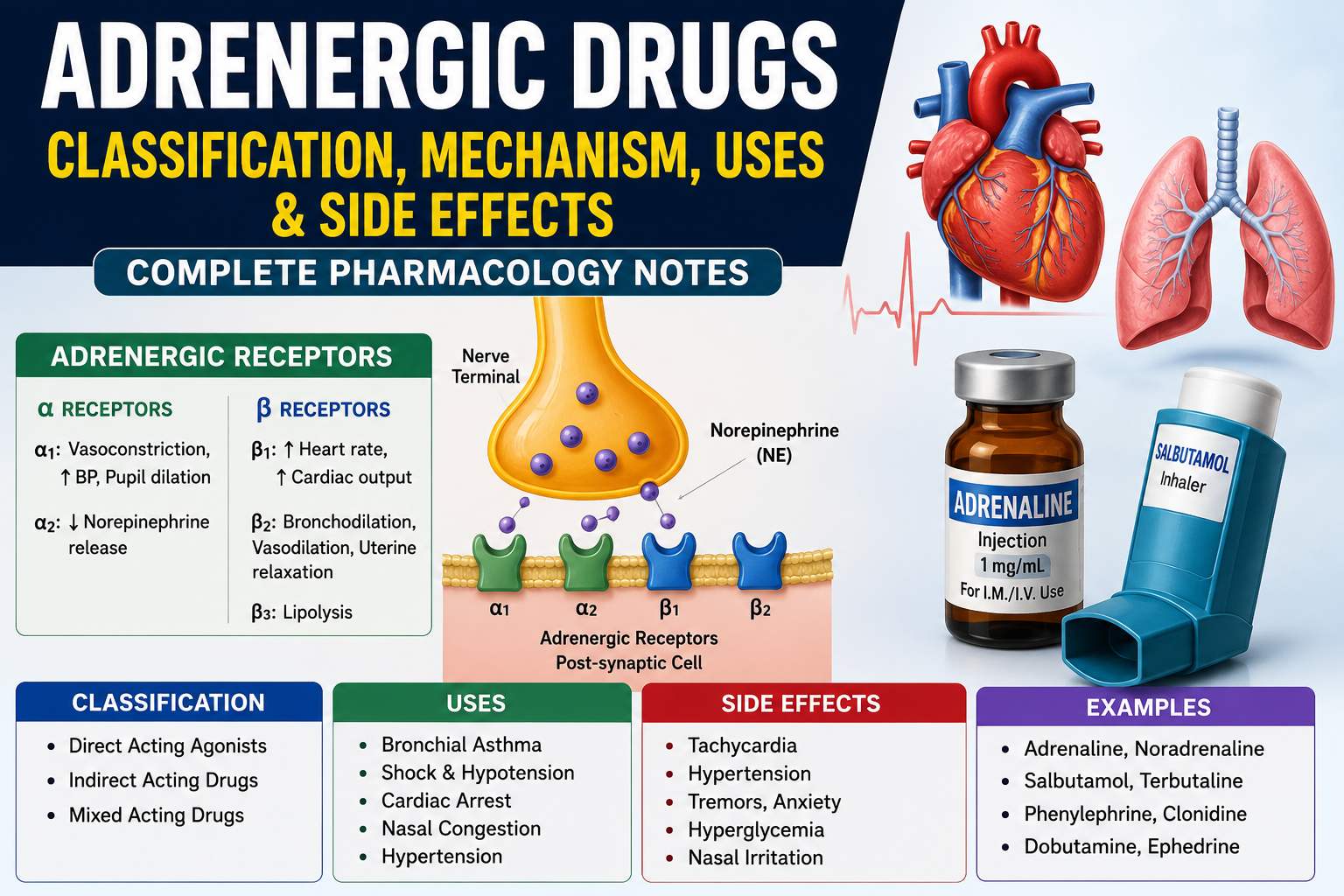
Adrenergic drugs are important agents that act on the sympathetic nervous system. These drugs either mimic or block the action of adrenaline and noradrenaline in the body. Adrenergic drugs are widely used in the treatment of asthma, hypertension, shock, cardiac arrest, nasal congestion, and many other clinical conditions.
This topic is extremely important for GPAT, DSSSB, PCI, and other pharmacy examinations because it forms the basis of autonomic nervous system pharmacology.
📍 Introduction to Adrenergic Drugs
Adrenergic drugs are also known as:
• Sympathomimetic drugs
• Adrenergic agonists
These drugs act on adrenergic receptors present in different organs and tissues. The natural neurotransmitters involved are:
• Adrenaline (epinephrine)
• Noradrenaline (norepinephrine)
Adrenergic receptors are mainly divided into:
• Alpha (α) receptors
• Beta (β) receptors
🔬 Adrenergic Receptors and Their Functions
1. Alpha Receptors
A) α1 Receptors
Mainly present in:
• Blood vessels
• Eye
• Urinary bladder
Functions:
• Vasoconstriction
• Increased blood pressure
• Pupil dilation
B) α2 Receptors
Present in:
• Presynaptic nerve terminals
• CNS
Functions:
• Decrease norepinephrine release
• Reduce sympathetic outflow
2. Beta Receptors
A) β1 Receptors
Present in:
• Heart
• Kidney
Functions:
• Increased heart rate
• Increased cardiac output
B) β2 Receptors
Present in:
• Bronchi
• Uterus
• Blood vessels
Functions:
• Bronchodilation
• Vasodilation
• Uterine relaxation
C) β3 Receptors
Present in:
• Adipose tissue
Function:
• Lipolysis
📝 Classification of Adrenergic Drugs
1. Direct Acting Adrenergic Agonists
These drugs directly stimulate adrenergic receptors.
A) Non-selective Adrenergic Agonists
• Adrenaline
• Noradrenaline
B) Selective α1 Agonists
• Phenylephrine
C) Selective α2 Agonists
• Clonidine
D) Selective β1 Agonists
• Dobutamine
E) Selective β2 Agonists
• Salbutamol
• Terbutaline
2. Indirect Acting Adrenergic Drugs
These drugs increase the release of norepinephrine.
Examples:
• Amphetamine
• Tyramine
3. Mixed Acting Adrenergic Drugs
These drugs act directly and indirectly.
Example:
• Ephedrine
🧬 Mechanism of Action
Adrenergic drugs bind to adrenergic receptors and activate intracellular signaling pathways.
• Alpha receptor activation causes vasoconstriction and increases peripheral resistance.
• Beta receptor activation produces:
– β1 stimulation → increased heart rate and force
– β2 stimulation → bronchodilation
These actions prepare the body for “fight or flight” responses.
✒️ Pharmacological Effects of Adrenergic Drugs
1. Cardiovascular Effects
• Increased heart rate
• Increased blood pressure
• Increased cardiac output
2. Respiratory Effects
• Bronchodilation
• Improved airflow
3. Ocular Effects
• Pupil dilation
4. Metabolic Effects
• Increased glycogen breakdown
• Increased blood glucose
5. CNS Effects
Some adrenergic drugs stimulate the CNS causing alertness and reduced fatigue.
🩺 Therapeutic Uses of Adrenergic Drugs
1. Bronchial Asthma
β2 agonists such as salbutamol are used for bronchodilation.
2. Cardiac Arrest
Adrenaline is used during emergency resuscitation.
3. Shock
Noradrenaline increases blood pressure in severe hypotension.
4. Nasal Congestion
Phenylephrine is used as a nasal decongestant.
5. Hypertension
Clonidine reduces sympathetic activity and lowers blood pressure.
6. Heart Failure
Dobutamine improves cardiac output.
7. Anaphylactic Shock
Adrenaline is the drug of choice.
🪫 Adverse Effects of Adrenergic Drugs
Adrenergic drugs may produce various side effects depending on receptor stimulation.
Cardiovascular Side Effects
• Tachycardia
• Hypertension
• Arrhythmias
CNS Effects
• Anxiety
• Tremors
• Insomnia
Metabolic Effects
• Hyperglycemia
Local Effects
• Nasal irritation with decongestants
📑 Important Exam Points
• Adrenaline acts on α and β receptors
• Noradrenaline mainly acts on α receptors
• Salbutamol is a selective β2 agonist
• Clonidine is an α2 agonist
• Dobutamine is a β1 agonist
• Adrenergic drugs mimic sympathetic stimulation
🔋 Advantages of Adrenergic Drugs
• Rapid bronchodilation
• Effective in emergency conditions
• Improve cardiac function
• Useful in shock and hypotension
🛑 Precautions
• Use cautiously in hypertension
• Monitor heart rate and blood pressure
• Avoid excessive use of nasal decongestants
• Use carefully in diabetic patients
🟢 Contraindications
Adrenergic drugs should be used cautiously in:
• Severe hypertension
• Cardiac arrhythmias
• Hyperthyroidism
• Ischemic heart disease
🎯 Conclusion
Adrenergic drugs are important pharmacological agents that stimulate the sympathetic nervous system. They act on alpha and beta adrenergic receptors to produce cardiovascular, respiratory, and metabolic effects. These drugs are widely used in asthma, shock, cardiac arrest, and hypertension.
Understanding adrenergic drugs is essential for pharmacology exams and clinical practice because they form a fundamental part of autonomic nervous system pharmacology.
👉 Practice MCQs in evening post
2 thoughts on “Adrenergic Drugs: Classification, Mechanism, Uses & Side Effects”